Why Don’t I Feel Like Myself? How to Find the Pattern in Your Symptoms
Your responsibilities have not changed, but your energy, memory, digestion, sleep, or ability to recover has. Learn how to turn “I don’t feel like myself” into observable patterns so you can stop chasing symptoms separately and identify the most useful place to begin.

My day-to-day life has not changed, but my ability to work through the day definitely has.
In my mind, I still feel like I can do all the things I have always done. But when it gets right down to brass tacks, I do not have nearly the energy I had even ten years ago.
Then there is the brain fog.
Doctors may call it normal for my age.
I call bullshit.
Because “common as we age” does not automatically mean normal, inevitable, or something we should quietly accept.
Maybe you feel it too. You are still you, but your energy, memory, digestion, sleep, patience, or ability to recover no longer feels like yours.
You cannot point to one dramatic symptom. You just know something has changed.
“I don’t feel like myself” may not give you the answer, but it gives you a place to begin: What changed, which symptoms appeared together, and what pattern have you been missing?
Is not feeling like yourself a normal part of aging?
Changes in energy, memory, sleep, and recovery may become more common with age, but “common” does not automatically mean inevitable or unimportant. When you notice a meaningful change from your usual baseline, it is worth paying attention to what changed, when it began, and which other symptoms appeared with it.
Can symptoms that seem unrelated actually be connected?
Yes. Fatigue, brain fog, poor sleep, digestive changes, mood shifts, and slower recovery can overlap because the body’s systems influence one another. That does not prove they share one cause, but tracking when they appear, worsen, or improve may reveal connections that are easy to miss when each symptom is considered separately
When should I take changes in how I feel seriously?
Take changes seriously when they persist, worsen, interfere with daily life, or appear with other new symptoms. Sudden or severe symptoms require prompt medical attention. For gradual changes, begin documenting what feels different, when it happens, and what accompanies it so you have something more useful than “I just feel off.”
In This Article
You’ll learn:
- What may cause you to stop feeling like yourself
- Why you can feel off even when nothing is obviously wrong
- How to identify connections between symptoms that seem unrelated
- What changes in your personal baseline may be telling you
- How to begin tracking patterns instead of chasing individual symptoms
- How to choose the most useful place to start without trying to fix everything at once




What Causes You to Not Feel Like Yourself?
Not feeling like yourself can happen when changes in energy, sleep, digestion, memory, stress tolerance, hormones, or recovery gradually alter how you function. Sometimes one issue stands out. More often, several smaller shifts overlap until you realize your body no longer responds the way you expect it to.
The disconnect often begins between what your mind expects and what your body can currently deliver.
You still expect to work all day, remember the details, handle the stress, sleep it off, and start fresh tomorrow. When that becomes harder, it is tempting to blame age, motivation, or a lack of discipline.
But your body may have been communicating these changes for years. As I explain in The Body Whispers Before It Screams, gradual symptoms can become so familiar that we stop recognizing them as changes at all.
What most people think:
Each symptom is a separate problem.
What may actually be happening:
Several systems may be influencing one another.
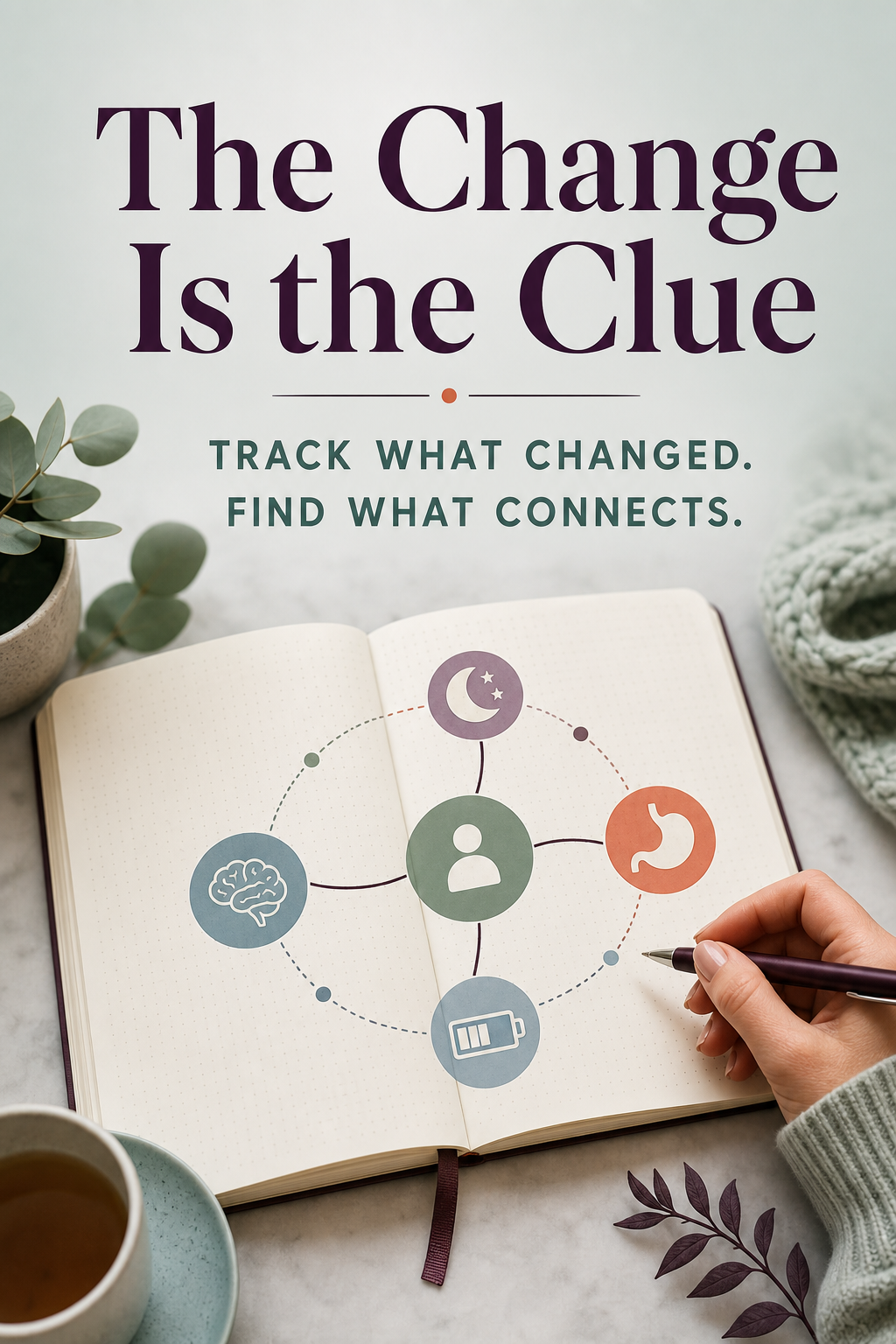
Poor sleep can affect energy and memory. Stress can affect digestion and recovery. Digestive problems can interfere with nutrient absorption. Inflammation can influence how your body and brain feel.
That does not mean every symptom has one hidden cause. It means symptoms should not automatically be treated as strangers.
Pay attention to changes involving:
- Energy and recovery
- Thinking, memory, and focus
- Sleep, digestion, mood, and stress tolerance
Brain fog is a good example. It may feel like a single problem with memory or concentration, but several overlapping factors can contribute to brain fog.
Stress and nervous system patterns may also influence sleep, digestion, pain, energy, and recovery. That is why this conversation belongs within the broader stress and nervous system patterns discussion without assuming everything is “just stress.”
A wearable such as the Oura Ring may help collect sleep, recovery, stress, temperature, and activity trends. I am considering buying one myself, but I have not personally tested it yet. It is a data-gathering tool, not an explanation for why you feel different.
The numbers are clues. They are not the conclusion.
Why Do I Feel Off Even When Nothing Is Obviously Wrong?
You can feel 'off' without an obvious problem because dchanges often develop gradually. Your individual symptoms may seem minor, your routine may look unchanged, and standard testing may not reveal a clear explanation. The pattern becomes visible only when you compare how you function now with your own previous baseline.
Your life may not have changed much at all.
You still have the same job, responsibilities, family, and ambitions. What changed is how much effort it takes to keep doing everything.
Your personal baseline matters.
The better question is not whether someone your age commonly experiences fatigue or forgetfulness. The better question is whether your energy, memory, digestion, sleep, or recovery has changed meaningfully for you.
This is where people get stuck. One symptom is blamed on age. Another is blamed on stress. Another is blamed on food. Nothing seems important enough to investigate, yet together they are changing how you live.
Learning to read your body’s signals begins with noticing those changes without rushing to diagnose them.
Ask yourself:
- What can I no longer do as easily as I once did?
- Which symptoms tend to worsen together?
- What happens before a better or worse day?
What most people think:
If nothing dramatic is wrong, there is nothing useful to investigate.
What is actually happening:
The most useful clues may be hiding in ordinary fluctuations.
For example, bloating may appear after certain meals, during stressful periods, or alongside fatigue and brain fog. It may become so familiar that you mistake it for your normal body instead of noticing it as part of a larger pattern. That is what happened in Bloated, Tired, and Feeling Sick.
This is where data becomes useful. The Oura Ring can record changes you may not remember clearly, including sleep timing, readiness, resting heart rate, temperature trends, and recovery.
But collecting more data does not automatically create clarity.
A tracker tells you what happened. Pattern recognition helps you ask why it may have happened.
How Do I Start to Feel Like Myself Again?
Start feeling like yourself again by identifying what has changed. Track a few meaningful signals, look for timing and symptom clusters, and compare better days with worse ones. The goal is not immediate certainty. It is finding the most useful starting point for your next decision.
You do not need to track every bite, mood, bowel movement, supplement, and heartbeat for the rest of your life.
You need enough information to answer three questions:
- What has changed?
- What tends to happen together?
- What seems to make the pattern better or worse?
Start with the symptoms affecting your life most. Record when they happen, what preceded them, and what else was happening in your body that day.
Do not begin by naming the cause.
If you immediately decide the problem must be hormones, your gut, inflammation, or aging, you may unconsciously notice only the evidence supporting that theory.
Observation must come before interpretation.
For seven days, consider tracking:
- Energy, sleep, and mental clarity
- Digestion, meals, and hydration
- Stress, activity, and unusual exposures
Then compare your better and worse days.
Did poor sleep come before the brain fog? Did bloating and fatigue appear after the same meals? Did symptoms worsen after several stressful days rather than immediately after one stressful event?
That is how scattered symptoms begin becoming a usable pattern.
If you want objective sleep and recovery information, the Oura Ring is the wearable I am currently considering. I would use it alongside symptom tracking, not instead of it, because no wearable knows the full context of your life or body.
You are not trying to prove what is wrong with you. You are trying to determine what deserves your attention first.
Ready to Stop Guessing?
“I don’t feel like myself” is not a diagnosis, but it is enough reason to become curious.
The free Body Signal Starter will help you organize what has changed, notice which symptoms may be connected, and identify a clearer place to begin.
Start with the Body Signal Starter
You do not have to solve everything today. You only need to stop treating every clue as if it appeared alone.
The article continues below for Restoration Framework members, with deeper education on how this system works and how to think through next steps responsibly.
How to Separate a Symptom From a Pattern
A symptom is one observation. A pattern is a repeated relationship between observations.
Feeling tired one afternoon is a symptom. Feeling exhausted after every poor night of sleep is a possible pattern. Developing brain fog, bloating, and fatigue after similar meals is another pattern worth examining.
A useful pattern is:
- Repeated
- Specific enough to observe
- Connected to timing, triggers, or another symptom
One occurrence may be noise. Repetition gives the clue more weight.
How to Decide Which Clue Matters First
Do not automatically begin with the symptom that frightens or frustrates you most. Begin with the clue that appears most consistently and affects the greatest number of other symptoms.
Sleep may deserve priority if poor nights reliably precede fatigue, brain fog, cravings, and irritability. Digestion may deserve attention if meals consistently precede bloating, discomfort, energy crashes, or cognitive changes.
The first clue is not necessarily the final cause.
It is simply the most useful place to begin investigating.
How to Avoid Creating a False Pattern
Tracking can create clarity, but it can also tempt you to draw conclusions too quickly.
One bad day after eating a particular food does not establish a food reaction. One improved night after taking a supplement does not prove the supplement solved the problem.
Before acting on a pattern, ask:
- Has this happened repeatedly?
- Could another variable explain it?
- Did the pattern change when the suspected factor changed?
The goal is not to collect evidence for your favorite theory. The goal is to become more accurate about what your body is doing.
What If You Could Stop Guessing What Your Body Needs?
You do not need another pile of health information or a longer list of things to try.
You need a way to decide what matters first.
Inside the Restoration Framework, we look beyond isolated symptoms to understand how sleep, energy, digestion, inflammation, stress, and recovery may be influencing one another.
You will learn how to:
- Recognize the patterns hiding inside your symptoms
- Decide which clue deserves your attention first
- Take practical next steps without changing everything at once
You do not have to solve your entire body today. You need a clearer place to begin.