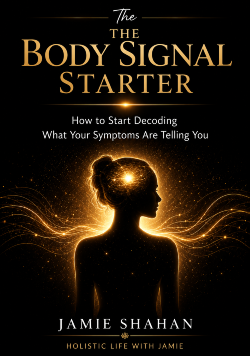
The Body Whispers Before It Screams: How Symptoms Become “Normal” Before Diagnosis
Fatigue, brain fog, poor sleep, and inflammation are often symptom whispers long before diagnosis. Learn why the body speaks before it screams.

The body rarely goes from health to disease overnight.
Most people experience years of whispers first.
Fatigue becomes normal. Recovery changes. Inflammation increases. Brain fog appears. Stress tolerance shrinks. Sleep stops feeling restorative.
But because these changes happen gradually, people adapt to them instead of investigating them.
Until one day the body finally screams loudly enough to receive a diagnosis.
That is the part many people never fully realize.
Symptoms often appear long before disease is finally named.
The body frequently communicates through patterns first:
reduced resilience,
slower recovery,
energy changes,
digestive shifts,
inflammation,
brain fog,
poor sleep,
or feeling physically “off” in ways people struggle to explain.
But modern culture teaches people to normalize dysfunction instead of becoming curious about it.
People push through.
Compensate.
Adapt.
And over time, many symptoms simply become part of everyday life.
This article is about learning to recognize those whispers earlier.
Frequently Asked Questions
Why do people ignore symptoms for years before diagnosis?
Many chronic conditions develop gradually over time instead of appearing overnight. The body often shows earlier warning signs such as fatigue, inflammation, brain fog, poor recovery, digestive changes, or reduced resilience long before enough dysfunction accumulates to receive a formal diagnosis.
Why do people normalize feeling bad?
People often normalize symptoms because changes happen slowly. Fatigue, poor sleep, stress, inflammation, and reduced energy gradually become part of daily life, causing many individuals to adapt to dysfunction instead of recognizing it as meaningful communication from the body.
Why do people ignore early warning signs from the body?
Many people stay functional while struggling underneath the surface. Because they continue working, parenting, paying bills, and handling responsibilities, symptoms are often dismissed as stress, aging, busyness, or “normal life” instead of being investigated earlier.
In This Article
In this article, we’ll explore why people often normalize symptoms before diagnosis, how the body frequently communicates through patterns long before disease becomes obvious, why modern life teaches people to ignore early warning signs, and how learning to recognize those signals earlier may change the way people view health entirely.
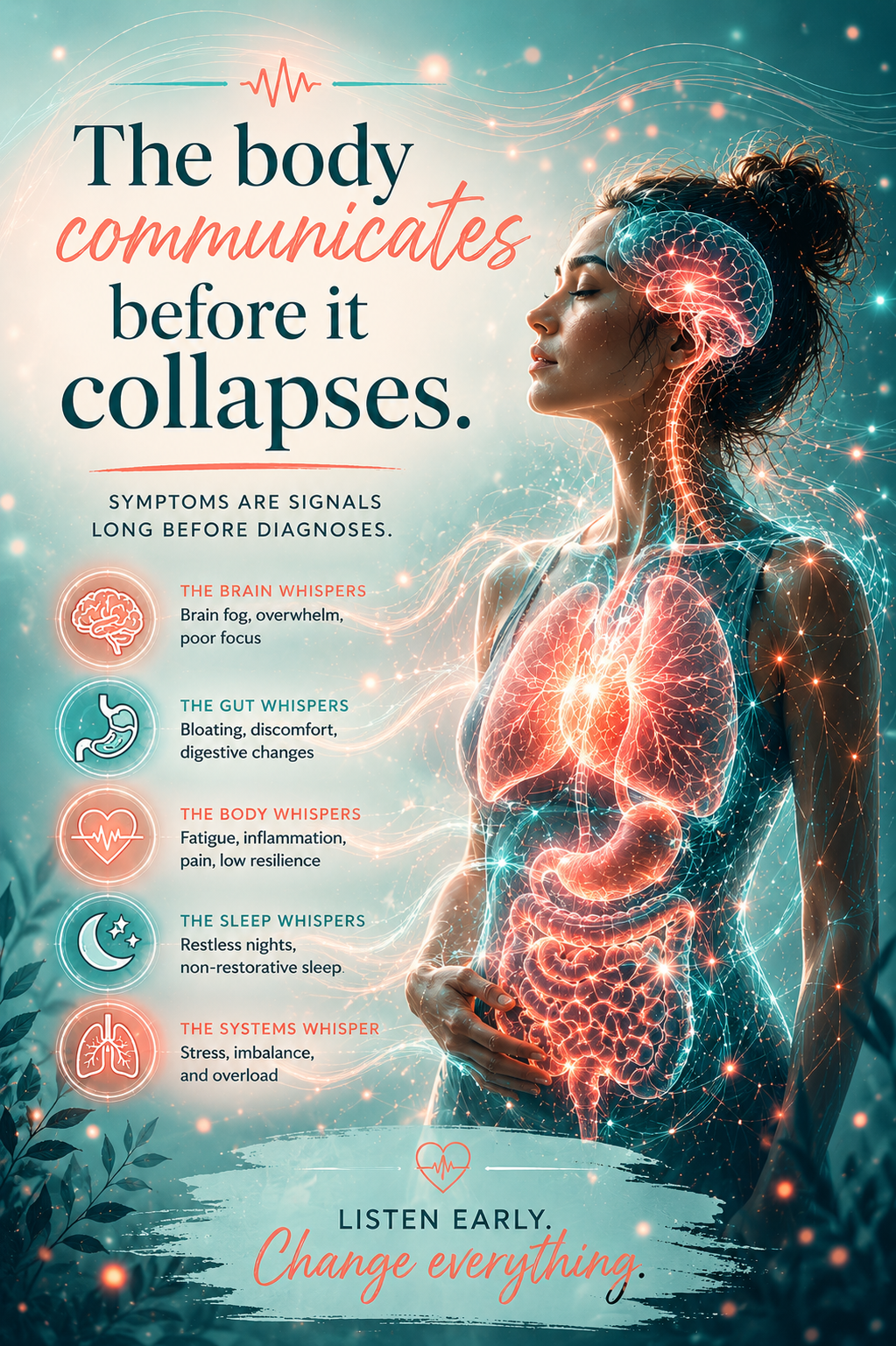
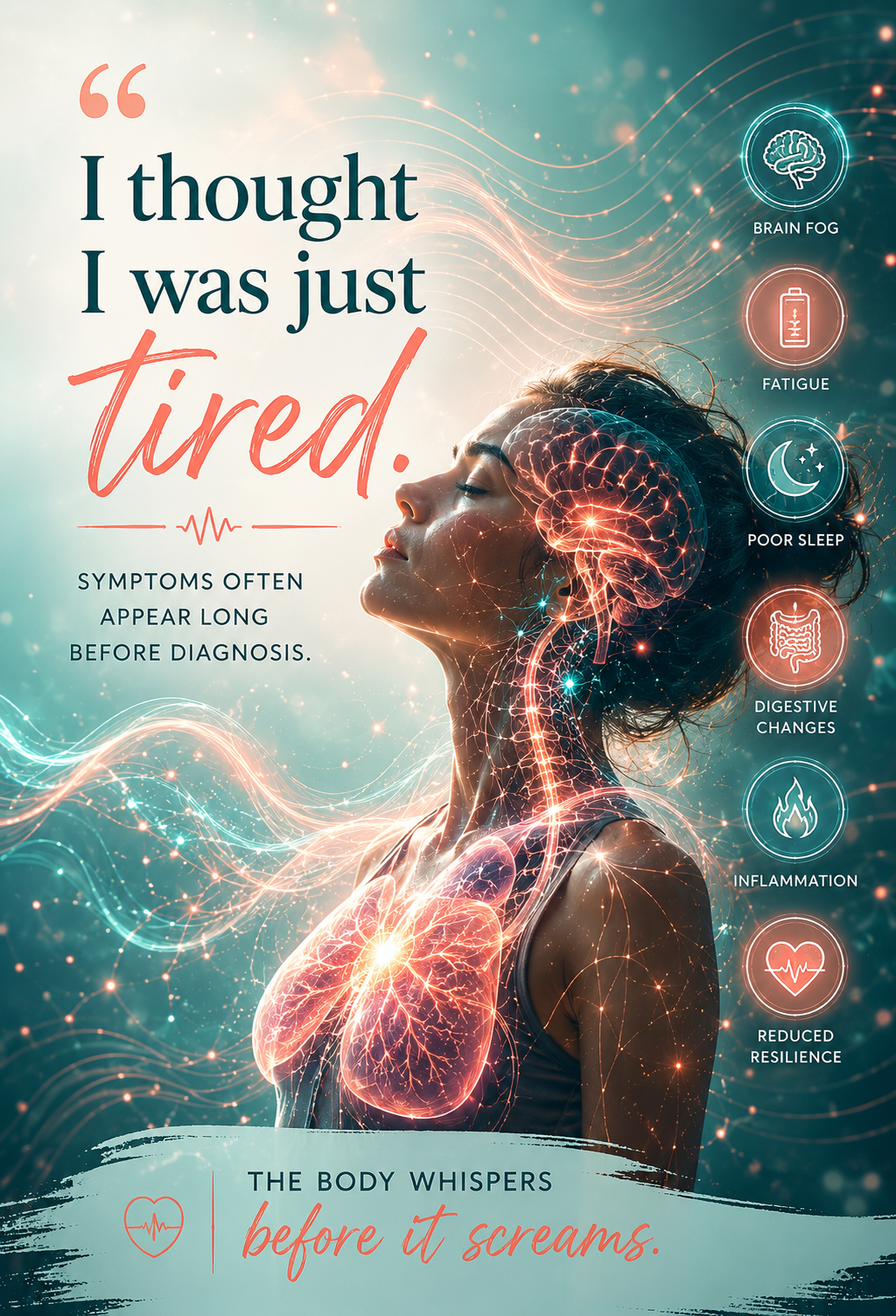




Symptoms are often signals long before diagnoses.
Why Do People Normalize Symptoms Before Diagnosis?
Many people normalize symptoms because dysfunction often develops gradually instead of dramatically. Fatigue, poor sleep, inflammation, brain fog, reduced resilience, and slower recovery slowly become familiar, causing people to adapt to symptoms instead of recognizing them as possible warning signs from the body.
This is one of the most important reasons symptoms get ignored for years.
The changes rarely happen overnight.
Most people do not wake up one morning suddenly unable to function.
Instead, the body slowly becomes harder to recover.
Energy becomes less consistent.
Stress becomes harder to tolerate.
Sleep becomes less restorative.
And because these changes happen gradually, people adapt to them.
That adaptation is powerful.
People continue going to work.
Taking care of responsibilities.
Showing up for everyone else.
Paying bills.
Managing life.
So externally, everything may still appear functional.
Meanwhile, internally, the body may already be struggling.
This is where many people begin saying things like:
“I thought this was just stress.”
“I assumed it was aging.”
“I figured everyone felt this way.”
And over time, symptoms that once felt unusual begin feeling normal.
Many people do not realize these subtle patterns may already be the body trying to communicate deeper stress underneath the surface. I explored this more deeply in Your Body Is Talking: How to Read the Signals Before They Become Bigger Problems.
These whispers are often the subtle symptoms and changes people learn to live with long before they realize the body may already be struggling underneath the surface.
That normalization is what makes the whispers so easy to miss.
The Body Often Signals Problems Long Before Disease Appears
The body often communicates through symptoms and changing patterns long before disease becomes severe enough to diagnose. Exhaustion, inflammation, brain fog, poor recovery, digestive changes, and reduced resilience frequently appear earlier than many people realize.
This does not mean every symptom automatically points to serious disease.
But it does mean symptoms are often meaningful.
The body frequently shifts long before people finally receive a diagnosis.
For some people, it starts with exhaustion that never completely improves.
For others, it looks like brain fog, inflammation, digestive changes, poor sleep, reduced stress tolerance, or feeling physically heavier than they used to.
The important part is not obsessing over every symptom.
The important part is recognizing patterns.
Many chronic symptoms make more sense when viewed as interconnected systems instead of isolated problems, which is exactly why I wrote Why Gut Healing Fails When You Treat Symptoms Instead of Systems.
Because the body rarely struggles in isolated compartments.
Energy affects recovery.
Recovery affects resilience.
Stress affects inflammation.
Sleep affects everything.
And over time, these patterns often begin clustering together long before people fully recognize how much the body may already be compensating underneath the surface.
This is why symptoms are often signals long before diagnoses.
Why People Ignore the Whispers
Many people ignore early warning signs because modern culture rewards pushing through exhaustion, stress, and overload instead of investigating them. As long as someone remains functional enough to continue meeting responsibilities, symptoms are often minimized, dismissed, or normalized.
This is one of the biggest problems in modern health culture.
People are taught to override the body constantly.
More caffeine.
More productivity.
More pushing through.
More distraction.
Very few people are taught to stop and ask:
“What is my body trying to communicate?”
In many cases, the nervous system itself has been stuck in chronic stress adaptation for so long that exhaustion, hypervigilance, tension, poor sleep, and overwhelm begin feeling normal. I discussed this more deeply in What It Really Means to Regulate Your Nervous System.
Part of the problem is that modern medicine is largely designed around identifying diagnosable disease once dysfunction becomes measurable enough to meet clinical criteria. But many people live in the gray zone long before that happens.
They feel exhausted, inflamed, foggy, overstimulated, or physically “off,” yet are often told everything looks normal because the body may not yet be screaming loudly enough to produce obvious disease markers.
This pattern becomes especially visible in digestion, where many people continue chasing diets and supplements without realizing the body may not feel safe enough to fully repair in the first place. I explain this more in Why Nervous System Safety Comes Before Gut Repair.
That does not necessarily mean nothing is wrong.
It may simply mean the whispers began long before the diagnosis phase.
And because many symptoms are common, people assume they must also be normal.
But common does not always mean healthy or normal.
A person can remain highly functional while still struggling underneath the surface.
That is what makes these whispers so deceptive.
People may continue functioning for years while recovery slowly worsens, energy declines, inflammation increases, and resilience gradually shrinks.
The body keeps compensating until eventually compensation is no longer enough.
Diagnosis Is Often the End of a Long Conversation
Many diagnoses are not the beginning of dysfunction but the point where dysfunction becomes visible enough to finally identify. The body often spends years communicating through symptoms, changing patterns, and reduced resilience before disease is formally recognized.
This is the part many people look back on later and suddenly realize.
The diagnosis was rarely the first conversation.
It was often the loudest one.
Before the diagnosis came:
the exhaustion,
the sleep changes,
the inflammation,
the digestive shifts,
the reduced recovery,
the feeling that something was “off.”
But because the body adapts so gradually, people often learn to live inside dysfunction instead of investigating it earlier.
That does not mean every symptom leads to catastrophe.
But it does mean the body frequently whispers before it screams.
And sometimes the most important shift is learning to stop dismissing the whispers simply because they have become familiar.
Learning to Recognize Signals Earlier
Learning to recognize signals earlier starts with becoming more aware of patterns instead of automatically dismissing symptoms as stress, aging, or normal life. Many people begin feeling less confused once they start viewing symptoms as communication instead of inconvenience.
The goal is not fear.
The goal is awareness.
Not obsession.
Not panic.
Not overanalyzing every sensation.
Awareness.
Because once people begin recognizing patterns earlier, they often stop viewing themselves as lazy, broken, undisciplined, or failing.
They begin asking better questions instead.
That shift matters.
Because symptoms are often communication long before diagnoses.
And learning to recognize those patterns earlier may completely change the way people understand their body moving forward.
If this article resonated with you, The Body Signal Starter was designed to help people begin recognizing common patterns the body often communicates long before dysfunction becomes impossible to ignore.
Inside, we explore how symptoms may connect across multiple systems, why people normalize dysfunction for years, and how to start becoming more aware of the signals the body may already be sending.