
My 90-Day Body Signal Experiment: How I’m Tracking Symptoms Instead of Guessing
I’m starting a 90-day Body Signal Experiment to track symptoms, simplify food, watch movement patterns, and stop guessing what my body keeps repeating. If brain fog, bloating, cravings, gut changes, or low energy feel confusing, this is a calmer place to begin.
For 90 days, I’m doing something I’ve been putting off for a long time.
And why have I put it off when I know it’s probably what’s best for me?
Because the starting point is always a guess.
And there’s no guarantee.
When you have multiple things going on at once, where do you start?
Brain fog, gut dysbiosis, gluten intolerance, insulin resistance, a spare-tire belly, arthritis, asthma, poor eating habits, aging muscle loss.
See what I mean?
Where would you start?
That’s why I’ve put this off. Not because I don’t know things need to change. I do. But when everything feels connected, every starting point feels like a guess.
And I’m tired of guessing.
Before I get into what I’m doing, let’s define the thing I’m actually practicing here: body signal tracking.
Frequently Asked Questions
What is body signal tracking?
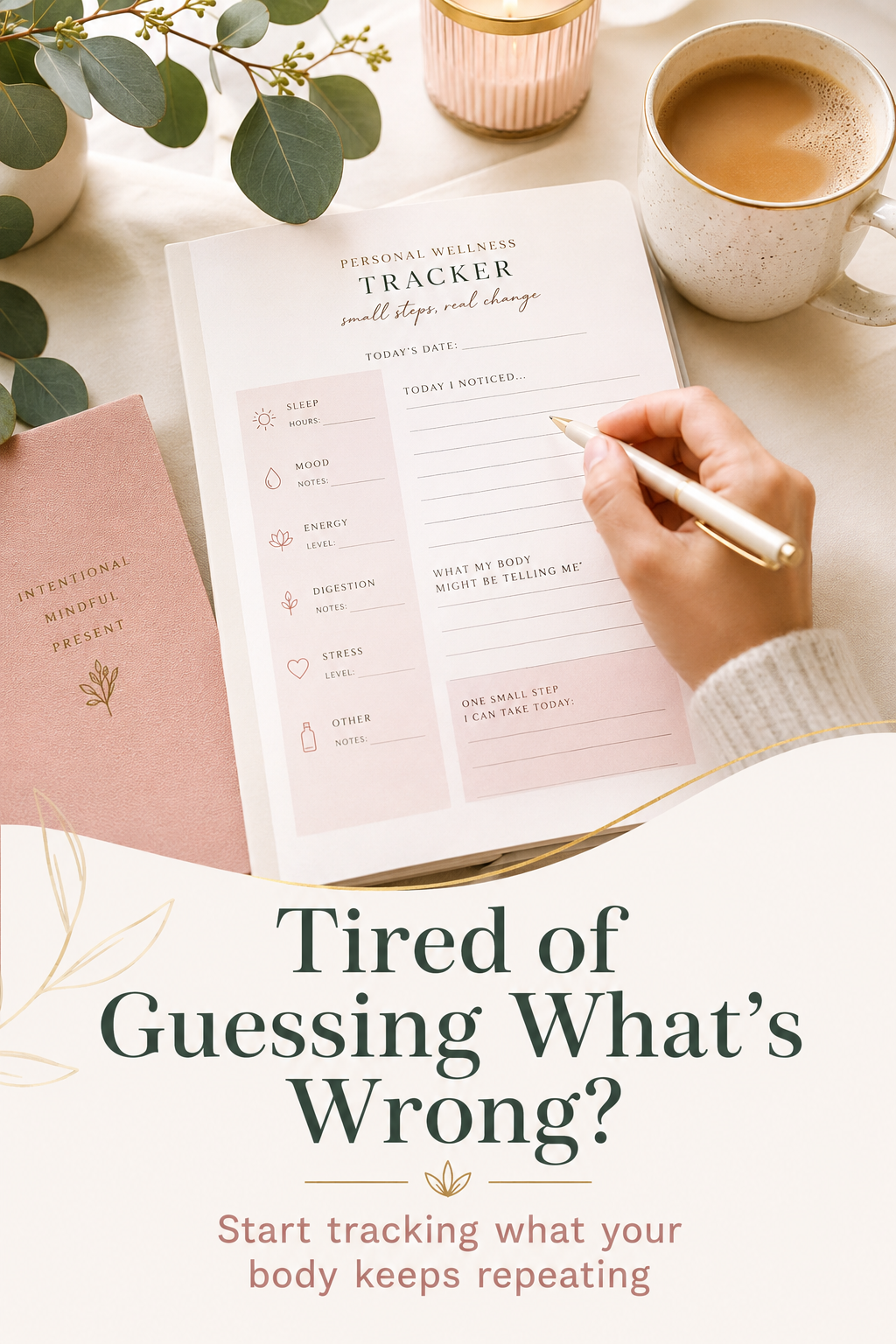
Body signal tracking is the practice of noticing symptoms, habits, food, sleep, stress, energy, digestion, and daily rhythm so you can start seeing patterns. It’s not about diagnosing yourself. It’s about paying attention long enough to stop treating every symptom like a random event.
How do you track symptoms without getting overwhelmed?
Start small. Track the symptoms that are loudest right now instead of trying to record every detail of your life. Energy, digestion, brain fog, sleep, pain, food, hydration, and stress are good places to begin. The goal isn’t perfect data. The goal is noticing what keeps repeating.
How do you know if your body is trying to tell you something?
Your body may be trying to tell you something when the same symptoms keep showing up, especially around certain foods, stress, poor sleep, hormonal shifts, or daily habits. One symptom may not explain much by itself, but repeated patterns can reveal where your body is under strain.
Why do I have so many symptoms at once?
Many symptoms can show up together because the body doesn’t work in separate boxes. Digestion, inflammation, blood sugar, sleep, stress, hormones, immune response, and energy production all influence each other. When one system struggles, others may start signaling too. That’s why tracking patterns matters.
In This Article
In this article, I’m sharing why I’m starting a 90-day Body Signal Experiment, what body signal tracking means, and how I’m using symptom tracking to stop guessing where to start.
We’ll look at:
- why symptoms can feel so confusing when more than one thing is going on
- how tracking helps you notice patterns instead of relying on memory
- why I’m simplifying my food and habits so I can reduce the noise
- how body signals like brain fog, gut changes, inflammation, and low energy may be connected
- why you don’t have to start with 90 days if seven days is enough to begin
This isn’t about diagnosing yourself or trying to fix everything at once.
It’s about slowing down long enough to see what your body keeps repeating.


Why I’m Starting With Tracking
I don’t think the first step is fixing everything.
I think the first step is seeing what’s actually happening.
That sounds simple, but it’s not how most of us approach our health. We feel bad, so we start reaching for answers. A supplement. A diet. A protocol. A test. A podcast episode.
I’ve done that.
Actually, I do that.
And sometimes those things help. I’m not against taking action. I just don’t want to keep taking action from a place of confusion.
Because when you don’t know your own patterns, everything starts sounding urgent.
Maybe it’s your gut. Maybe it’s blood sugar. Maybe it’s your nervous system, sleep, inflammation, hormones, food, stress, or some messy combination of all of it.
All true, probably.
But all at once?
That’s where I freeze.
So for this experiment, I’m starting with tracking. Not because tracking is glamorous. It’s not. I have failed at food journaling more times than I can count, and I hate it with a passion.
But if I don’t track what’s happening, I won’t see the patterns. And if I don’t see the patterns, I’ll keep making decisions from memory.
Which is a terrible plan.
Memory gets selective when you’re tired. You don’t remember exactly what you ate, how you slept, when the brain fog started, whether the bloating came before or after lunch, or whether the same symptom keeps showing up after the same kind of day.
At least I don’t.
Tracking gives me something my memory doesn’t.
A record.
And I need that, because this is how symptoms become “normal” before we realize they’ve been trying to get our attention. I wrote more about that here: The Body Whispers Before It Screams.
So yes, I’m making changes.
But this time, I want to watch what those changes actually do.
What I’ll Be Watching
And what am I tracking?
A lot.
Because yes, I really do have all of this going on.
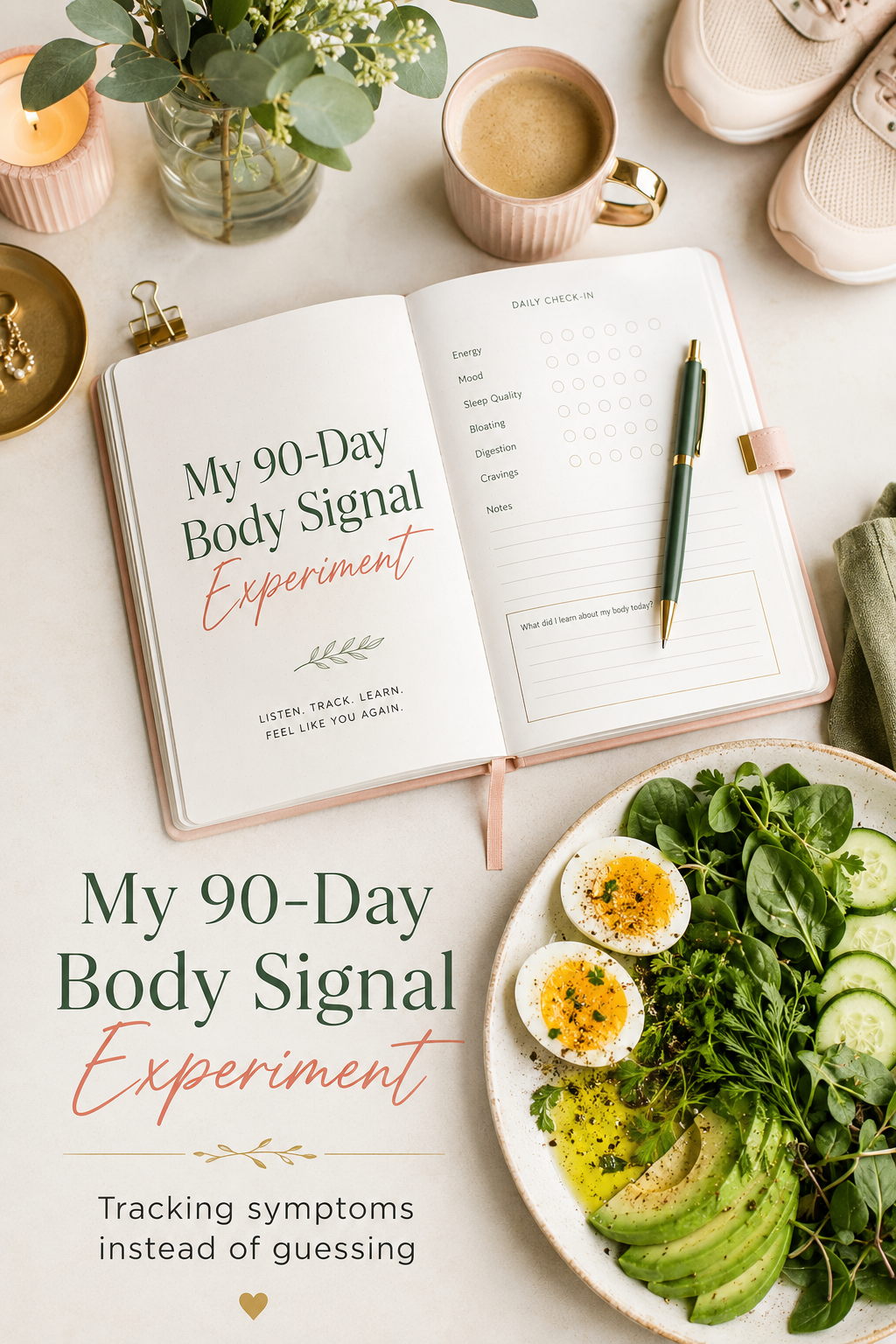
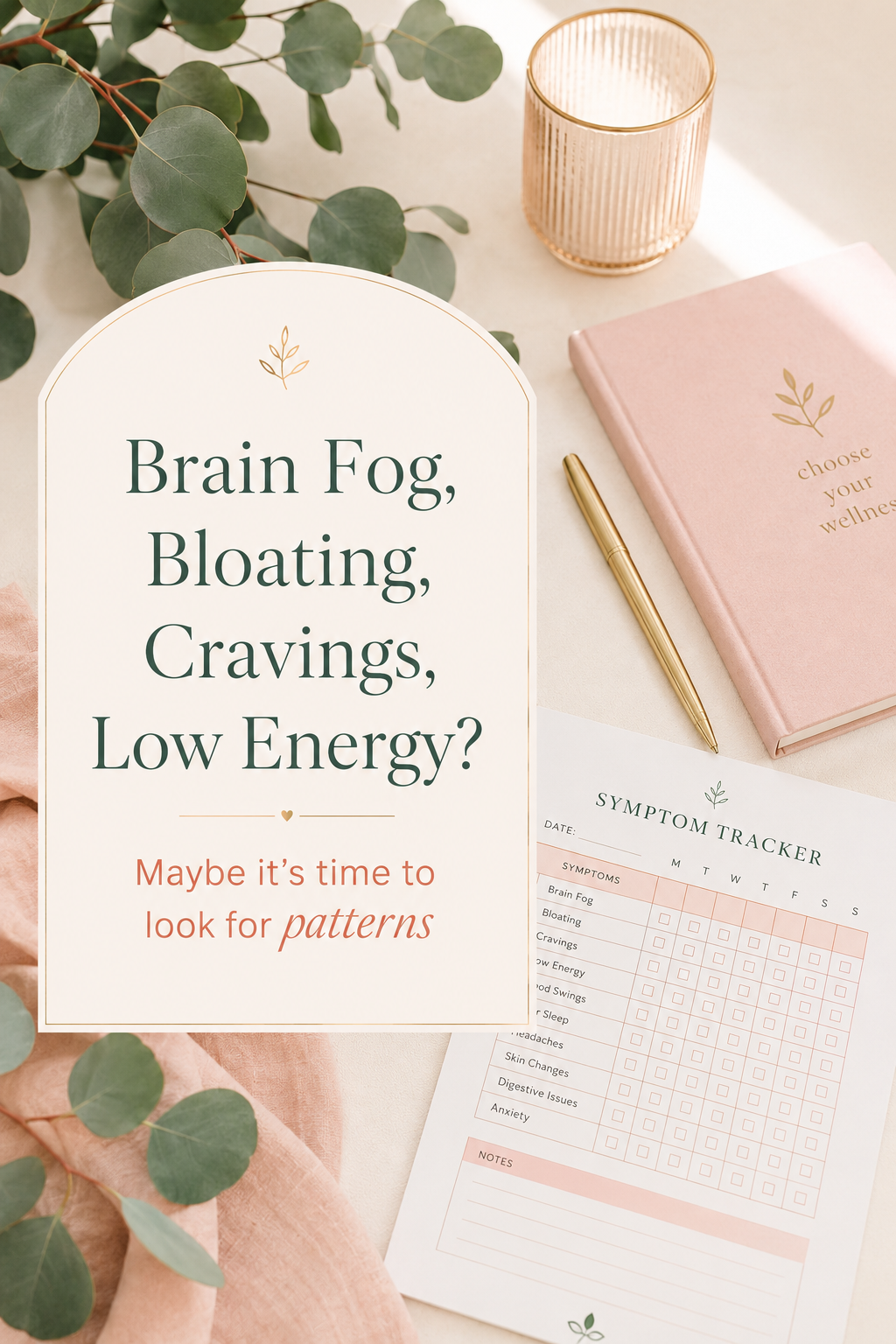
I’m tracking the things that seem to run the show in my body right now: brain fog, bloating, bathroom urgency, energy dips, joint pain and stiffness, cravings, food choices, gluten exposure, and steps taken and when.
And then there’s the harder-to-name thing:
How do I feel in this body today?
That one matters too, even if it doesn’t fit neatly into a checkbox.
Because honestly, how did I end up with so many things going on at once?
That’s the question I keep circling.
Is it my gut? My blood sugar? Inflammation? Aging? Food choices? Autoimmune stuff? Not moving enough?
Or is it all of the above, holding hands and acting like a committee?
That’s why tracking matters here. Not because I want to turn my life into a spreadsheet, but because I need to stop looking at each symptom like it wandered in alone.
I want to see what travels together.
What gets louder together.
What improves together.
What keeps showing up no matter what I do.
That’s the kind of information I can actually use.
Why I’m Simplifying Food First
Food is where I’m starting because food is one of the biggest daily inputs I can control.
Not perfectly.
Not forever.
But enough to reduce some noise.
For the first phase, I’m going to simplify my food dramatically. I’m looking at a short no-carb reset followed by a very simple food plan so I can watch what changes when the food variables drop way down.
I’m not presenting that as a prescription.
I’m not telling anyone else to do it.
I’m doing it because my gut has been one of the loudest signals in my life, and I want to see what happens when I stop giving it so much variety to react to.
That’s the point.
Not punishment. Not perfection. Not “new me by Monday.”
Just fewer variables.
I’m also paying attention to movement differently. Not just how many steps I get, but when I get them. Especially around meals. Because if my energy, cravings, blood sugar swings, digestion, or brain fog shift when I walk after eating, I want to know that too.
Food is the first thing I’m simplifying.
Movement is one of the things I’m observing.
If either one is making my body louder or quieter, I want to know.
This is also why I created Just Tell Me What to Eat. Sometimes you don’t need another theory. You just need food to feel simpler so you can stop spinning and start noticing what your body does when there are fewer variables.
What I’m Not Doing
I’m not trying to fix my whole life in 90 days.
That sentence needs to be said out loud because this is where wellness can get weird.
Everything becomes a transformation. A reset. A glow-up. A full-body overhaul. A before-and-after story waiting to happen.
I don’t want to turn this into that.
I’m 62 years old. I have a real life, a real job, a real history, real symptoms, and a real tendency to overthink things until the starting line disappears.
So I’m not doing the fantasy version.
I’m not adding 27 supplements.
I’m not building a six-day workout plan.
I’m not pretending I’ll suddenly become a woman who batch cooks beautifully labeled meals while drinking herbal tea in linen pants.
I’m simplifying food, tracking symptoms, and paying attention.
I’m walking more, and I’m tracking when I walk.
I’m watching what happens.
That’s enough to start.
And honestly, enough to start is what I’ve been missing.
What I Hope 90 Days Will Show Me
I don’t expect 90 days to answer everything.
But I do expect it to show me more than I know right now.
I want to see what happens when I stop relying on memory and start looking at patterns.
Does my gut calm down when food gets simpler?
Does brain fog change?
Does my energy feel steadier when my blood sugar has less chaos to manage?
Does walking after meals affect my cravings, stiffness, digestion, sleep, or mood?
What symptoms are loud at the beginning?
What symptoms are still loud at the end?
Mostly, I want to feel less confused.
That’s the honest goal.
Not perfect labs.
Not a perfect body.
Not a perfect routine.
Less confusion.
Because confusion is exhausting. It keeps you spinning. It makes every health decision feel bigger than it needs to be. It turns simple choices into research projects.
And I’m tired of needing a research project just to know what to eat for breakfast.
So for 90 days, I’m going to collect evidence from my actual life.
Not from someone else’s protocol.
Not from someone else’s body.
Mine.
If 90 Days Feels Like Too Much
I’m doing 90 days because I need the longer runway.
But you don’t have to start there.
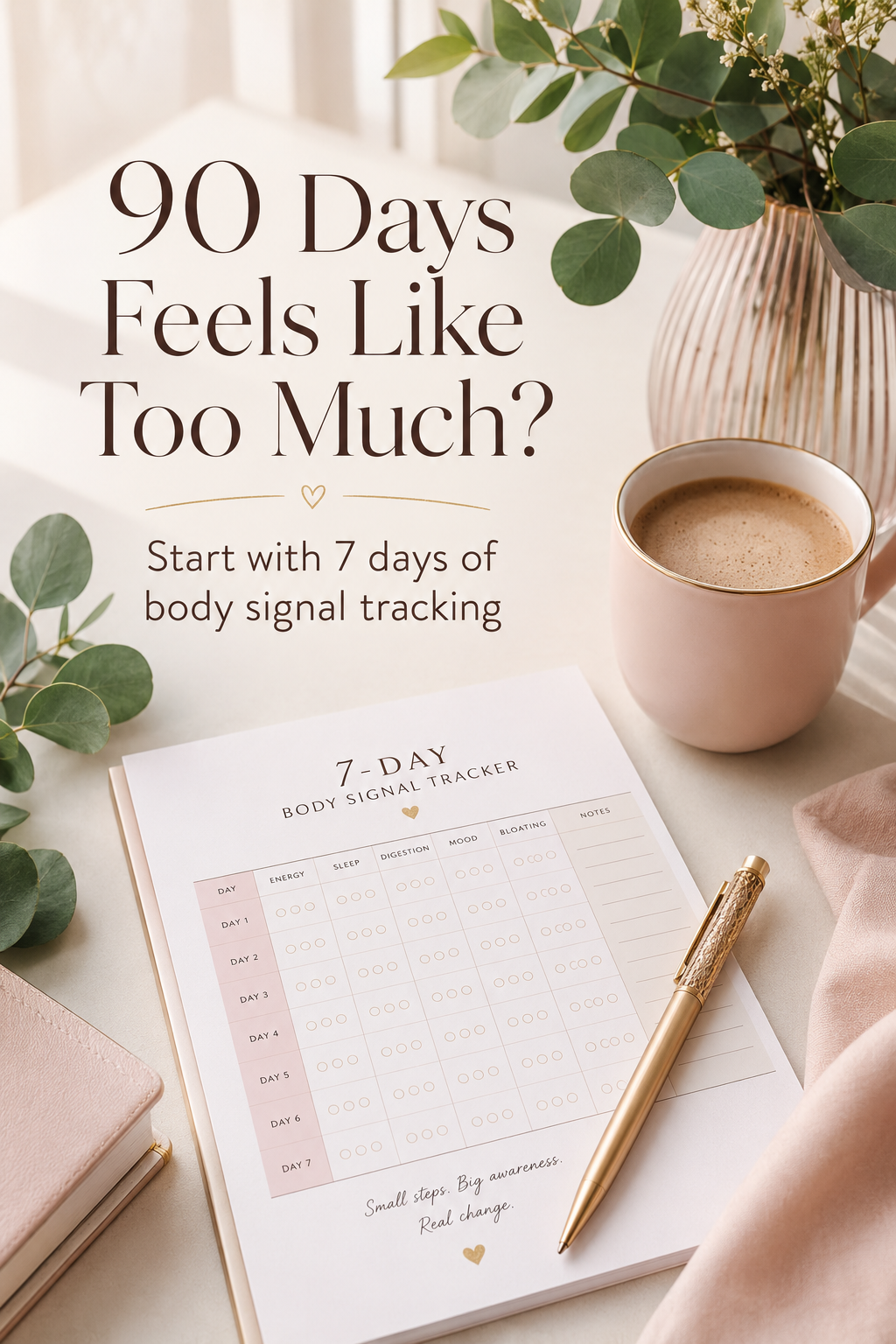
If 90 days feels like too much, start with seven.
Seven days is enough to notice what repeats. Maybe your energy crashes at the same time every day. Maybe digestion changes after certain meals. Maybe poor sleep makes pain louder. Maybe brain fog has a pattern you’ve been too tired to see.
You don’t need to solve everything in seven days.
You just need to start seeing.
That’s why I created the 7-Day Signal Tracker. It gives you a simple way to track energy, digestion, brain fog, sleep, pain, food, hydration, movement, and daily rhythm without trying to fix your entire life at once.
If you’re tired of guessing too, start here:
Get the 7-Day Signal Tracker
If you’re a paid subscriber, I’m taking you behind the scenes of the actual experiment below.
I’m sharing the 90-Day Body Signal Experiment Tracker I’m using, what I’m tracking each day, how I’m simplifying food, and what I’ll be watching during the first week.
Not theory.
The real starting point.