Bloated, Tired, and Feeling Sick: Have You Been Calling It Fat?
Chronic bloating is not always obvious. It can feel like pressure, swelling, heaviness, digestive backup, fluid shifts, hormone changes, fatigue, nausea, or brain fog. This article explores what bloating can actually feel like and how to start noticing the pattern instead of guessing.

What if you spent years calling it belly fat because you didn’t know what bloating could actually feel like?
Not the occasional “I ate too much” bloating.
The chronic kind. The kind that becomes so normal you stop questioning it.
You just think, “This is my stomach.”
But bloating can be a signal. And when it comes with fatigue, heaviness, nausea, constipation, gas, or brain fog, it may be worth looking at differently.
This is not about pretending body fat does not exist.
It does.
This is about asking a better question before you blame your body again:
What if some of what you have been calling fat was actually pressure, swelling, fluid, digestive backup, hormone shifts, or chronic bloating?
That question matters because the answer changes what you do next.
If you think the only problem is fat, you may diet harder.
If you realize your body may be bloated, backed up, inflamed, reactive, or fluid-shifted, you start looking for patterns.
That is where the body signal conversation begins.
FAQ
What is bloating?
Bloating is the feeling of fullness, pressure, swelling, tightness, or distention in the abdomen. It is not always trapped gas. Bloating can be digestive, hormonal, fluid-related, stress-related, constipation-related, or part of a larger body pattern.
Can bloating be mistaken for belly fat?
Yes. Chronic bloating can be mistaken for belly fat, especially when it has been present for years. If you have never known what a non-bloated baseline feels like, you may assume the shape, pressure, or heaviness is just your body.
Why do I feel bloated, tired, and sick?
Bloating can come with tiredness, nausea, heaviness, constipation, gas, or brain fog when digestion, elimination, hormones, stress, hydration, minerals, or inflammation are involved. The goal is not to guess one cause. The goal is to notice the pattern
How do I stop feeling sluggish and bloated?
Start by tracking when symptoms worsen. Notice meals, bowel movements, hydration, minerals, stress, sleep, hormones, and whether the bloating feels like gas, pressure, swelling, or fluid. You need clues before you need another complicated protocol.

What Is Bloating, and How Is It Different From Belly Fat?
Bloating is the feeling of abdominal fullness, pressure, swelling, tightness, or visible distention. It can come from gas, constipation, slowed digestion, food reactions, gut irritation, fluid shifts, hormones, stress, or inflammation. Belly fat is stored tissue. Bloating is more about pressure, swelling, movement, fluid, or digestive response.
That distinction matters.
Because if every bigger-feeling belly gets labeled as fat, you may keep reaching for fat-loss solutions when your body is actually asking for something else.
Maybe your digestion is sluggish.
Maybe your bowels are not moving well.
Maybe hormones are shifting fluid.
Maybe certain foods are creating pressure or gas.
Maybe stress is changing how your gut moves.
This does not mean body fat is never part of the picture. It means bloating deserves its own attention.
What most people think:
“If my belly is bigger, I must be gaining fat.”
What may actually be happening:
Your belly may be giving you a signal about digestion, fluid, hormones, elimination, or stress.
Bloating deserves its own conversation because it is not always about fat. Sometimes it points to digestion, elimination, hormones, stress, or fluid balance.
What Can Bloating Signal About Your Body?
Bloating can signal that your body is dealing with pressure, gas, constipation, fluid shifts, hormone changes, digestive irritation, stress, or sluggish elimination. It does not point to one cause by itself. It becomes more useful when you notice what it shows up with, when it worsens, and what keeps repeating.
Bloating is often treated like something to flatten, hide, or ignore.
But if it keeps returning, or if it has been present for so long that you think it is just your body, it may be giving you information.
The signal is not just, “My belly is bigger.”
The signal may be:
- my digestion feels backed up
- my body feels swollen or heavy
- my symptoms change with hormones
- my belly feels worse when I am stressed
- my energy drops when my bloating worsens
That is the difference between chasing a symptom and reading a pattern.
What most people think:
“I need to make my stomach flatter.”
What may actually be happening:
Your body may be asking you to notice what keeps creating pressure, swelling, heaviness, or digestive discomfort.
That does not mean you need to obsess over every sensation.
It means you stop dismissing the signals that have been repeating for years.
Why Can Bloating Make You Feel Tired or Sick?
Bloating can come with fatigue, nausea, heaviness, or brain fog when digestion, elimination, blood sugar, stress, hydration, minerals, or inflammation are involved. The bloating may not be the whole problem. It may be one signal in a larger pattern your body is trying to manage.
This is where people often get stuck.
They think the bloating is the problem.
But the real clue may be what shows up with it.
If you feel bloated and also feel tired, sick, heavy, foggy, or backed up, your body may be showing you that more than one system is under strain.
Bloating plus fatigue is a different conversation than bloating by itself.
It may point toward:
- sluggish digestion
- constipation or poor elimination
- blood sugar swings
- stress load
- poor sleep
- low hydration or minerals
This is not about jumping to a diagnosis.
It is about noticing the cluster.
If bloating shows up with brain fog or scattered symptoms, it may help to look at the larger pattern instead of treating every symptom like a separate problem.
A bloated belly may be uncomfortable.
But a bloated belly with fatigue, nausea, and brain fog is more useful information.
That combination tells you to stop asking only, “What did I eat?”
A better question is:
What pattern keeps showing up with the bloating?
If your bloating changes with food, bowel movements, or digestion, gut stabilization may be a better first question than another cleanse.
This is also where basic support can matter. If hydration, minerals, or elimination seem to be part of your pattern, something like BEAM Minerals may be worth considering as support, not as a magic bloating cure.
Can Hormones Cause Bloating Outside the Digestive Tract?
Yes, hormones can influence bloating through fluid retention, bowel motility, inflammation, cravings, sleep changes, and shifts in how the body handles water and electrolytes. This kind of bloating may not feel like trapped gas. It may feel more like swelling, puffiness, heaviness, or pressure.
This matters because many women only think of bloating as a gut problem.
Gas.
Food.
Constipation.
Something they ate.
And sometimes that is true.
But hormonal bloating can feel different. It may feel less like air trapped in the gut and more like your body is holding onto fluid, pressure, or heaviness.
Bloating is not always inside the digestive tract.
It can also be influenced by the way hormones affect:
- fluid balance
- bowel movement
- inflammation
- sleep quality
- stress tolerance
- cravings and blood sugar
This is especially worth noticing if your bloating changes with your cycle, perimenopause, menopause, hormone therapy, sleep disruption, or stress.
What most people think:
“If I’m bloated, it must be something I ate.”
What may actually be happening:
Your body may be responding to hormone shifts, fluid changes, or stress patterns that also affect digestion.
Stress can also change how the gut moves and how safe the body feels to digest and repair.
That does not mean food does not matter.
It means food may not be the whole story.
What Should You Track Before Blaming Your Body?
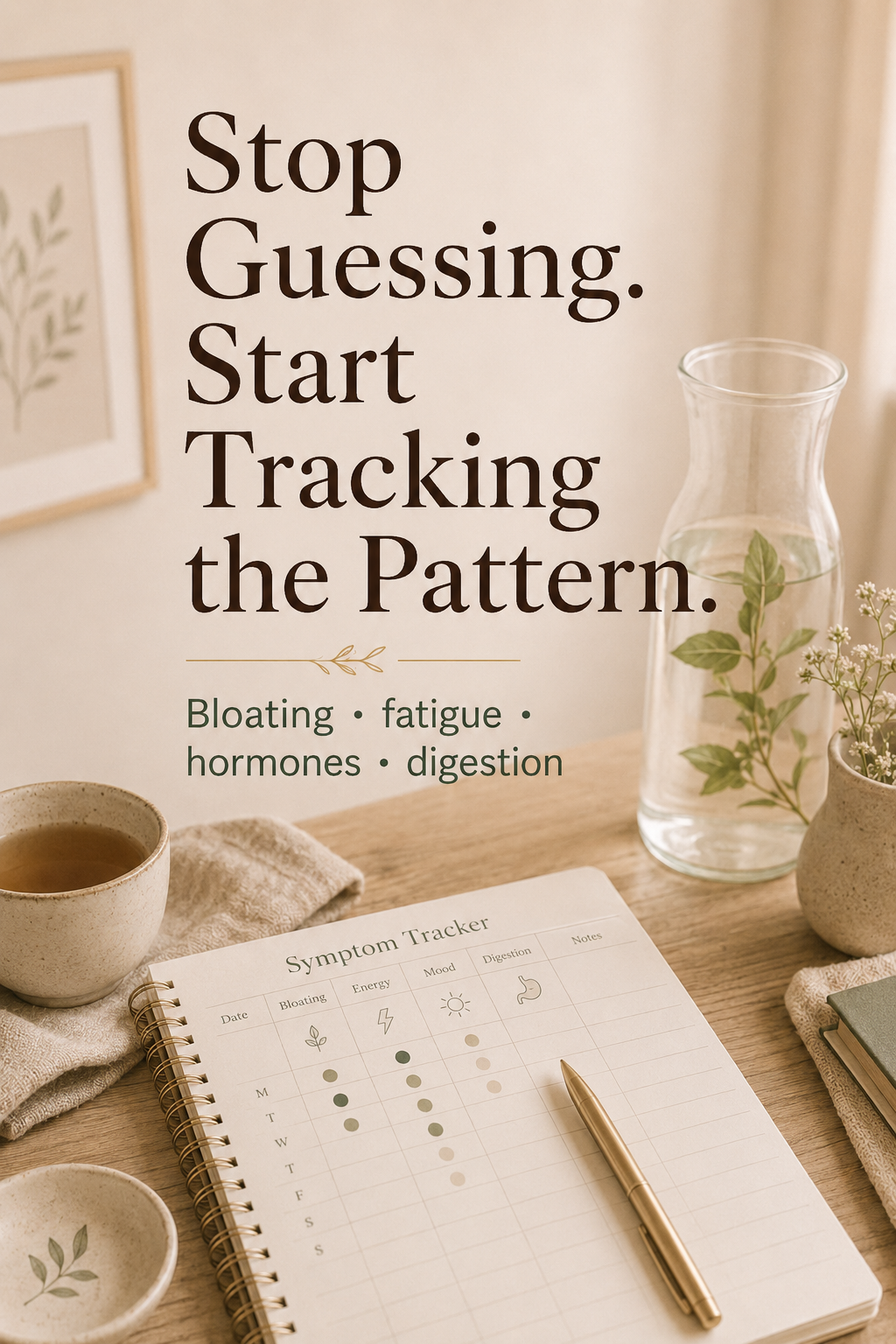
Before you blame your body, track what keeps repeating. Bloating becomes more useful when you notice when it worsens, what it shows up with, and whether it feels digestive, hormonal, fluid-related, or stress-related. The goal is not perfection. The goal is to collect clues.
Start simple.
For a few days, notice:
- when the bloating feels worse
- whether bowel movements change it
- whether certain meals make it louder
- whether fatigue or nausea show up with it
- whether sleep, stress, or hormones shift the pattern
- whether hydration or minerals seem to matter
This is where most people skip ahead.
They restrict harder.
They try another cleanse.
They add more supplements.
They assume the answer is to attack the gut harder.
But before you restrict more foods, chase another cleanse, or try to kill pathogens, it may help to understand the order your gut actually needs.
Tracking gives you a starting point.
Not because your symptoms are your fault.
Because your symptoms may be leaving a trail.
When Should Bloating Be Checked?
Bloating should be checked by a healthcare provider if it is severe, persistent, worsening, painful, unexplained, or paired with red flags like vomiting, fever, blood in stool, unintentional weight loss, fainting, chest pain, shortness of breath, severe abdominal pain, or a major change in bowel habits.
Most bloating is not an emergency.
But that does not mean every bloating pattern should be ignored.
The goal is not fear. The goal is discernment.
If your symptoms are new, intense, getting worse, or feel different from your normal, get checked.
If bloating comes with severe pain, blood, vomiting, fever, unexplained weight loss, or a major bowel change, do not try to decode that alone.
This is where body signals matter most.
Some signals are invitations to observe.
Some signals are invitations to get help.
If this article made you wonder whether you have been mislabeling chronic bloating as belly fat, the next step is not to panic, restrict harder, or start another random protocol.
Inside the Holistic Life Membership, we’ll walk through how to think through digestive vs hormonal vs systemic bloating, what clues help separate those patterns, and why the first step is not always another protocol.
The article continues below for Holistic Life members, with deeper education on how this system works and how to think through next steps responsibly.