How to Rebuild Gut Health Naturally (In the Right Order)
If you’ve tried cleanses, probiotics, or a 7-day gut reset and your symptoms keep returning, the issue may not be bacteria. Learn how to rebuild gut health naturally using a structured sequence that restores regulation, digestion, barrier integrity, and long-term microbial stability.
We are breathing polluted air.
Eating chemically altered food.
Drinking water that isn’t as clean as we assume.
Sleeping under artificial light.
Living in chronic stress.
And then we wonder why our digestion is a mess.
It’s no surprise so many people are searching for how to improve gut health naturally, how to fix their gut microbiome, what destroys your gut biome, or whether they need a 7-day gut reset.
But this is where we oversimplify the problem.
We assume gut symptoms are just about bad bacteria.
So we try to kill something.
Remove something.
Flush something.
Reset the microbiome.
As if improving gut health naturally is simply about rearranging microbes.
But the modern environment doesn’t just irritate gut bacteria.
It disrupts digestive signaling.
It alters motility.
It weakens stomach acid and bile flow.
It shifts immune balance.
It destabilizes the gut lining.
What most people are experiencing is not just microbiome imbalance.
It is digestive dysregulation.
And dysregulation is not corrected through eradication.
It is corrected through order.
In How to Improve Gut Health Naturally: Why Killing Pathogens Isn’t the First Step, we break down why declaring war on microbes often backfires. If you haven’t read that yet, start there before moving forward.
Frequently Asked Questions About Rebuilding Gut Health
How do you improve gut health naturally in a lasting way?
To improve gut health naturally in a way that actually lasts, you must restore digestive regulation in sequence.
Most advice focuses on removing inflammatory foods or adding probiotics. While those can help temporarily, long-term gut stability depends on restoring nervous system signaling, strengthening mechanical digestion, supporting gut lining integrity, and only then addressing microbial balance.
Lasting gut health is built through coordination, not just elimination.
Why does gut health improve temporarily but symptoms return?
Temporary improvement often happens when irritants are removed. But if digestive signaling remains unstable, symptoms tend to cycle back.
If stress remains elevated, motility becomes inconsistent.
If bile flow is sluggish, microbial balance shifts.
If stomach acid is weak, fermentation increases.
Without restoring digestive coordination, the gut microbiome rarely stabilizes long term. Improvement fades because the terrain underneath it was never rebuilt.
What actually destroys your gut microbiome?
Several factors can weaken gut microbiome diversity and function:
- Ultra-processed foods
- Excess sugar
- Repeated antibiotic use
- Chronic stress
- Poor sleep
- Lack of dietary diversity
But these exposures do more than shift bacteria. They alter digestive signaling, immune tone, and gut lining integrity. Over time, this creates digestive dysregulation, not just microbial imbalance.
Can you heal your gut microbiome in 7 days?
A 7-day gut reset may reduce inflammation temporarily, especially if processed foods and common irritants are removed. However, rebuilding gut health naturally is not a one-week process.
True gut repair requires restoring nervous system regulation, improving digestion, strengthening the gut lining, and stabilizing microbial balance in sequence.
Short-term resets may reduce irritation. Long-term stability requires structured rebuilding.
Are probiotics enough to fix gut health?
Probiotics can support microbial diversity, but they are not a complete gut healing strategy.
If digestive signaling is unstable, bile flow is inconsistent, or motility is impaired, introduced microbes often fail to hold.
Probiotics work best when the terrain is already improving. They are a supportive layer, not the foundation.
What are signs your gut is dysregulated?
Common signs of digestive dysregulation include:
- Bloating even with “healthy” eating
- Recurring IBS flare ups
- Brain fog after meals
- Shifting food sensitivities
- Alternating constipation and loose stools
- Symptoms that improve temporarily but return
These patterns often signal coordination breakdown within the digestive system, not simply bad bacteria.
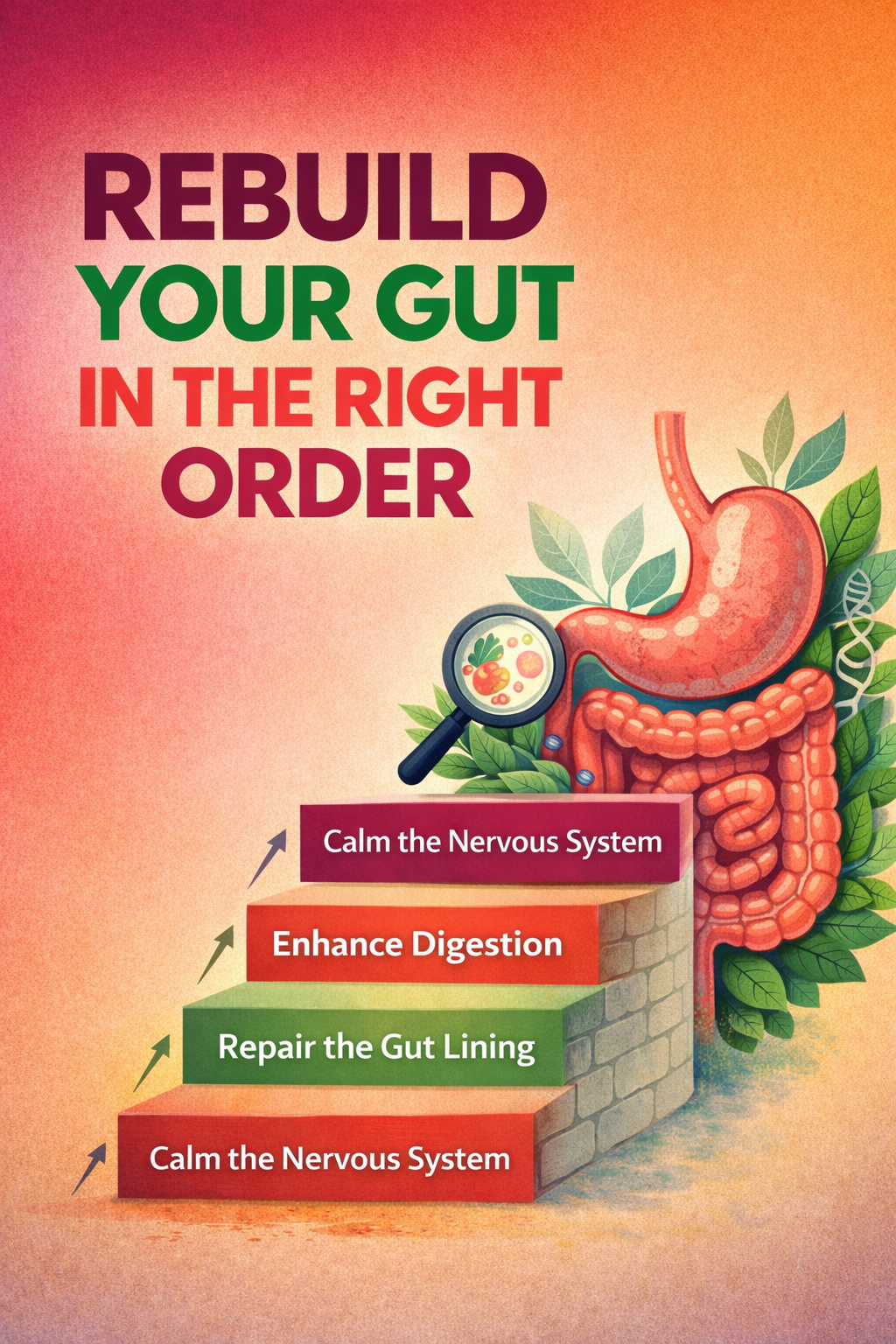
Why Order Matters
Your gut is not just bacteria.
It is a regulated system governed by:
- Autonomic tone
- Digestive secretions
- Motility
- Blood flow
- Immune signaling
- Microbial diversity
If you strengthen these layers in the wrong order, improvement becomes fragile.
Layer One: Nervous System Regulation
Digestion begins with signaling.
When the body stays in fight-or-flight mode:
- Acid production shifts
- Enzymes weaken
- Motility becomes irregular
- Inflammatory signaling rises
You can remove every “bad food” and still struggle if signaling remains unstable.
This is why chronic stress quietly disrupts digestion, even when diet looks clean.
If this concept is new, it connects directly with Antibiotics: When They Save You… and When They Wreck You, because rebuilding after disruption requires regulation first.
Without parasympathetic access, digestion does not coordinate properly.
This layer must stabilize first.
Layer Two: Mechanical Digestion
Once signaling improves, mechanical digestion can strengthen.
Mechanical digestion includes:
- Adequate stomach acid
- Enzyme release
- Bile flow
- Intestinal motility
When this layer is weak:
- Food ferments
- Gas increases
- Bloating becomes predictable
Many symptoms blamed on “bad bacteria” are actually incomplete digestion.
If you want a practical example of terrain-supportive rebuilding, see Spore-Based Probiotics: Why They’re Smarter Than the Fridge Kind.
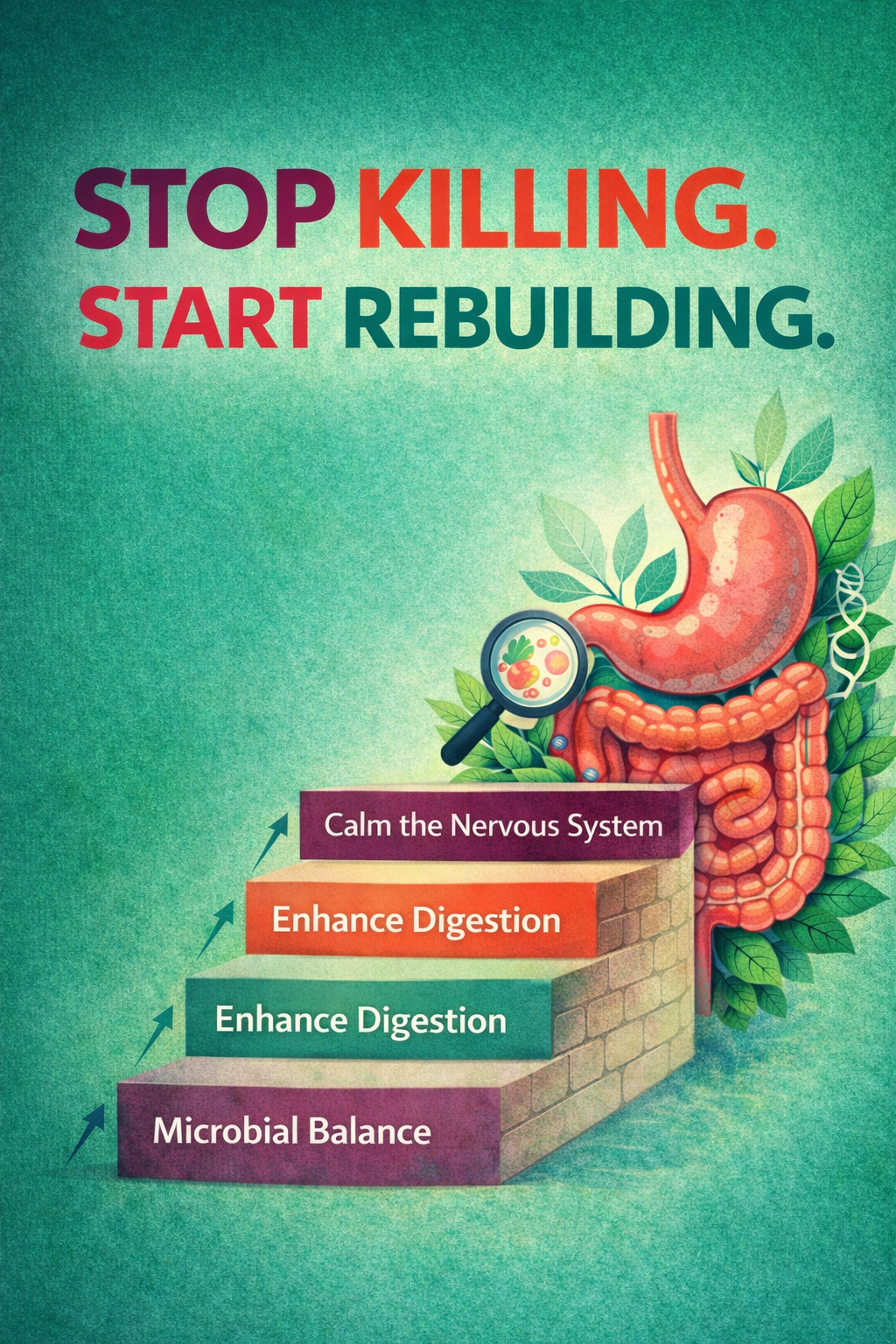
Layer Three: Barrier Integrity
The gut lining regulates permeability and immune signaling.
When barrier integrity weakens:
- Food sensitivities increase
- Skin flares
- Brain fog rises
- Joint discomfort appears
Barrier repair requires:
- Protein sufficiency
- Micronutrients
- Stable blood flow
- Functional digestion
Without the first two layers, barrier repair remains fragile.
When barrier integrity weakens, inflammation increases, sensitivities multiply, and symptoms extend beyond digestion. If you haven’t yet explored why the mucosal layer determines long-term digestive resilience, read Healing the Mucosal Barrier: The Forgotten Layer of Gut Health before moving forward.
Layer Four: Microbial Balance
This is where most people begin.
Probiotics.
Antimicrobials.
Cleanses.
But microbes respond to terrain.
If motility is slow or bile is inconsistent, imbalance returns.
Microbial correction is the final layer, not the first.
The Restoration Framework Shift
Most people collect gut information.
Few follow structured sequencing.
The Restoration Framework translates this terrain layering model into:
- Clear order
- Practical regulation strategies
- Digestive strengthening steps
- Decision-making structure
No intensity spirals.
No protocol stacking.
No guessing what to fix first.
Just sequence.
If you’re ready to stop cycling through temporary fixes and rebuild your gut health naturally in the right order, start here.
In Case You Skimmed
If you want to rebuild gut health naturally:
- Stabilize nervous system signaling
- Strengthen mechanical digestion
- Repair barrier integrity
- Then address microbes
Most people start at step four.
That’s why symptoms cycle.
Sequence creates stability.
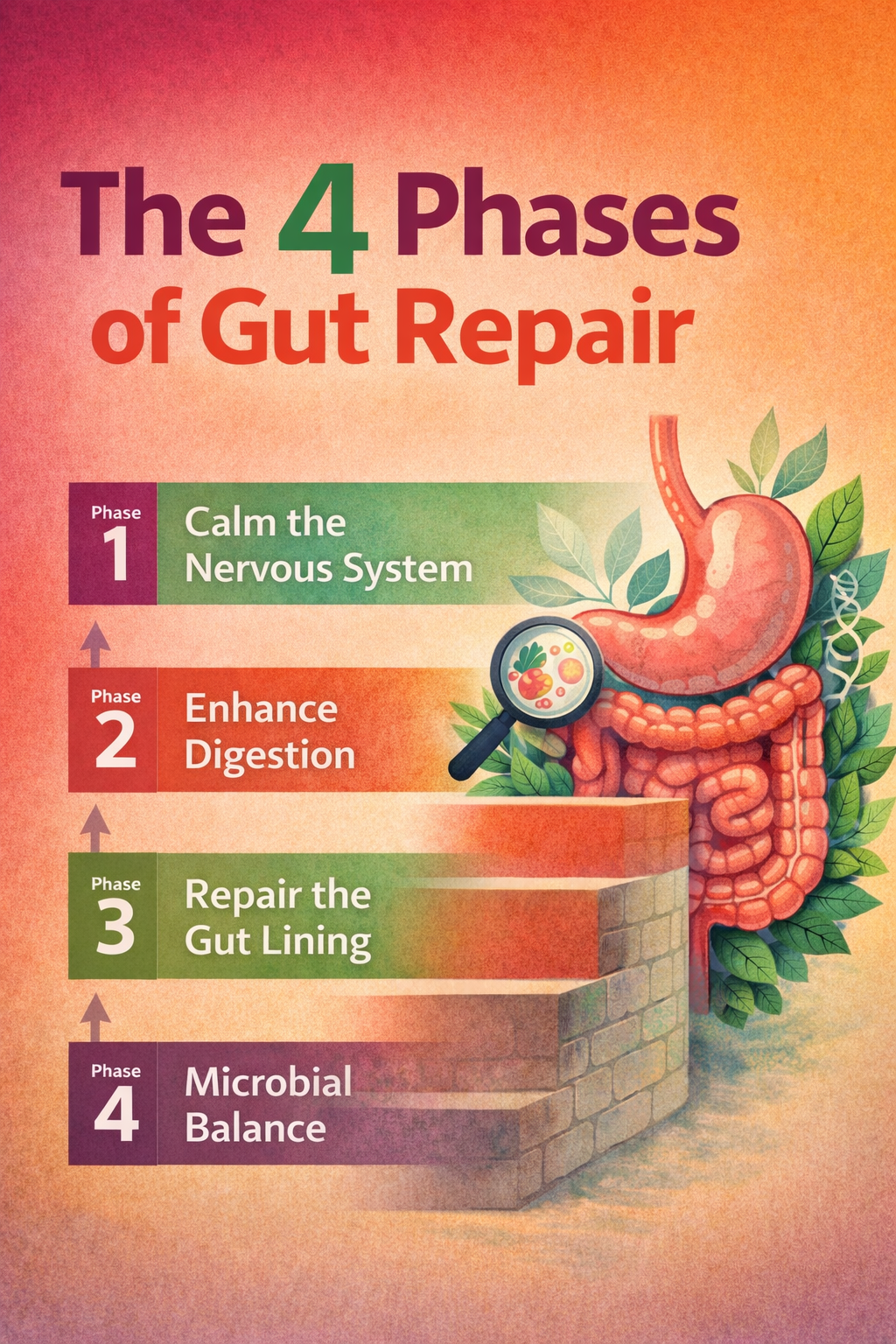
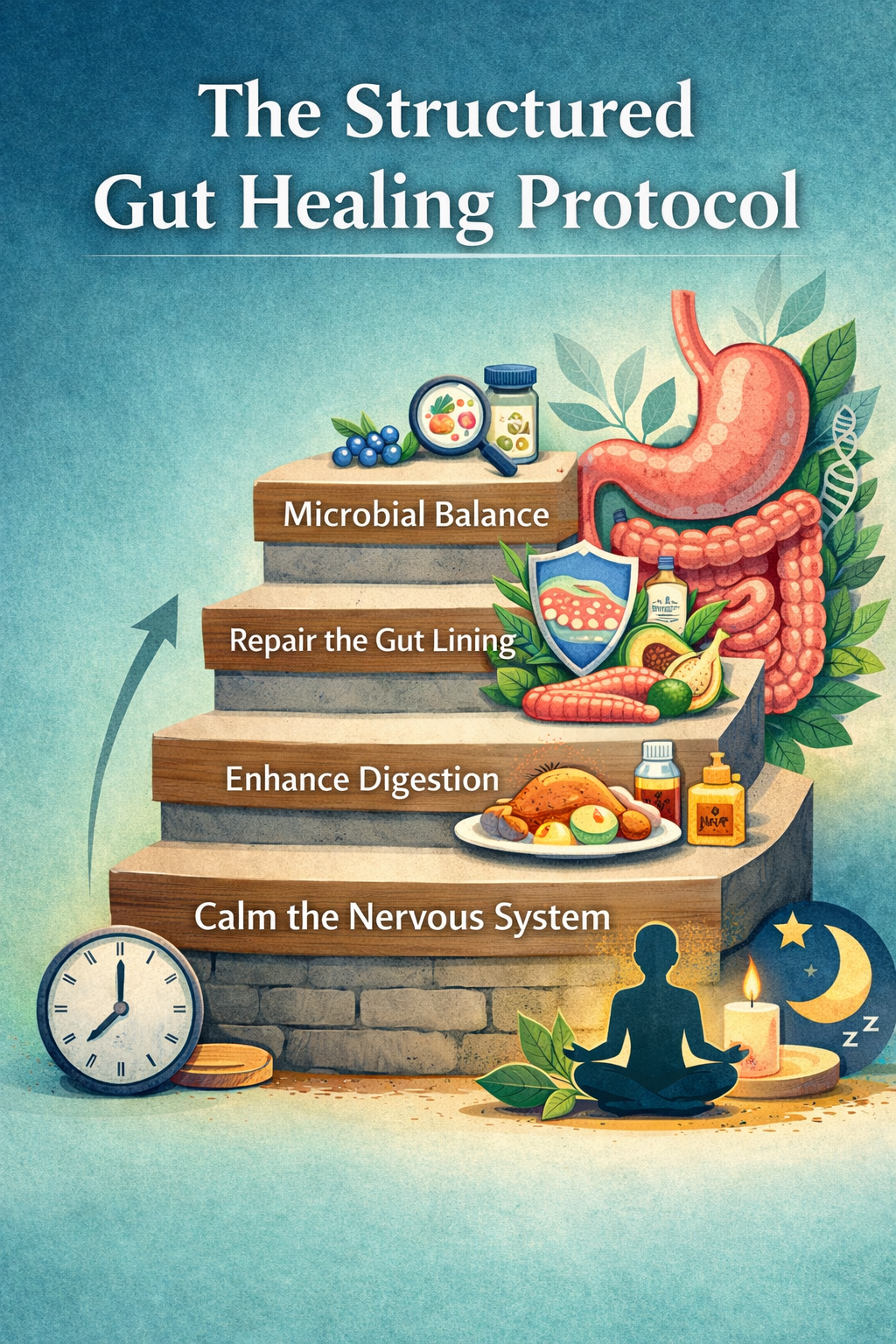
Restoration Framework: The Structured Gut Rebuild Protocol
This protocol follows the exact layering model discussed above.
Do not start at the bottom.
Work from the top down.
Phase 1: Stabilize Nervous System Signaling (Weeks 1-2 Minimum)
You do not fix digestion in fight-or-flight.
Your first job is to create predictable parasympathetic access daily.