
Your Body Is Talking: How to Read the Signals Before They Become Bigger Problems
Fatigue, brain fog, poor sleep, inflammation, cravings, and feeling older than your age are often connected. Learn how to recognize the signals your body may be sending before they become bigger problems.
I am so tired of being told, “It’s just aging.”
For goodness’ sake, that is a whole lot of signaling being dismissed as “normal.”
I’m more tired than I’ve ever been.
My motivation feels zapped.
My to-do list lives in my mind instead of my actual life.
I strain my back easier than I used to… from sneezing. Sneezing. What the heck is that?
Then there's the arthritis.
The asthma.
The gluten intolerance.
My hormones feel chaotic.
The outer half of my eyebrows has slowly disappeared.
My hair is thinning.
My fat distribution suddenly looks like a spare tire I never asked for.
And over and over, I hear the same thing:
“It’s just your age.”
Maybe some changes do happen with aging.
But exhaustion, inflammation, poor recovery, stress intolerance, sleep problems, brain fog, and feeling disconnected from your own body are not random experiences that should automatically be dismissed without asking why they are happening.
That is signaling.
Your body communicates through symptoms long before it completely breaks down.
The problem is that most people were never taught how to interpret those signals before they become bigger problems.
Frequently Asked Questions
What are signs your body needs help?
Common signs your body needs help can include fatigue, brain fog, poor sleep, inflammation, digestive issues, mood changes, hormone shifts, low stress tolerance, and feeling older than your age. These symptoms are often signals that the body is under strain or struggling to adapt.
Why do I feel off all the time?
Feeling “off” all the time can happen when multiple systems in the body are under stress simultaneously. Poor sleep, chronic inflammation, nervous system dysregulation, blood sugar instability, stress overload, and poor recovery can all contribute to vague but persistent symptoms.
Why am I always tired even after sleeping?
Constant exhaustion despite sleep may be related to poor sleep quality, chronic stress, inflammation, nutrient deficiencies, nervous system overload, blood sugar instability, or low cellular energy production. Fatigue is often a signal that the body is struggling to recover efficiently.
Can symptoms be warning signs?
Yes. Symptoms are often the body’s way of communicating that something is under stress, inflamed, depleted, or out of balance. Many people experience symptoms long before they experience a diagnosis.
How do I start listening to my body again?
Start by slowing down enough to notice patterns. Pay attention to energy, sleep, digestion, cravings, stress tolerance, recovery, and inflammation patterns. Your body often leaves clues before bigger problems develop.
In This Article
- Why feeling “off” is often ignored for too long
- What it means when the body starts sending signals
- Why exhaustion is not always solved by more sleep
- Why isolated symptom treatment often fails
- Common signs your body needs help
- How to start understanding your body again
- What progress actually looks like
Table of Contents
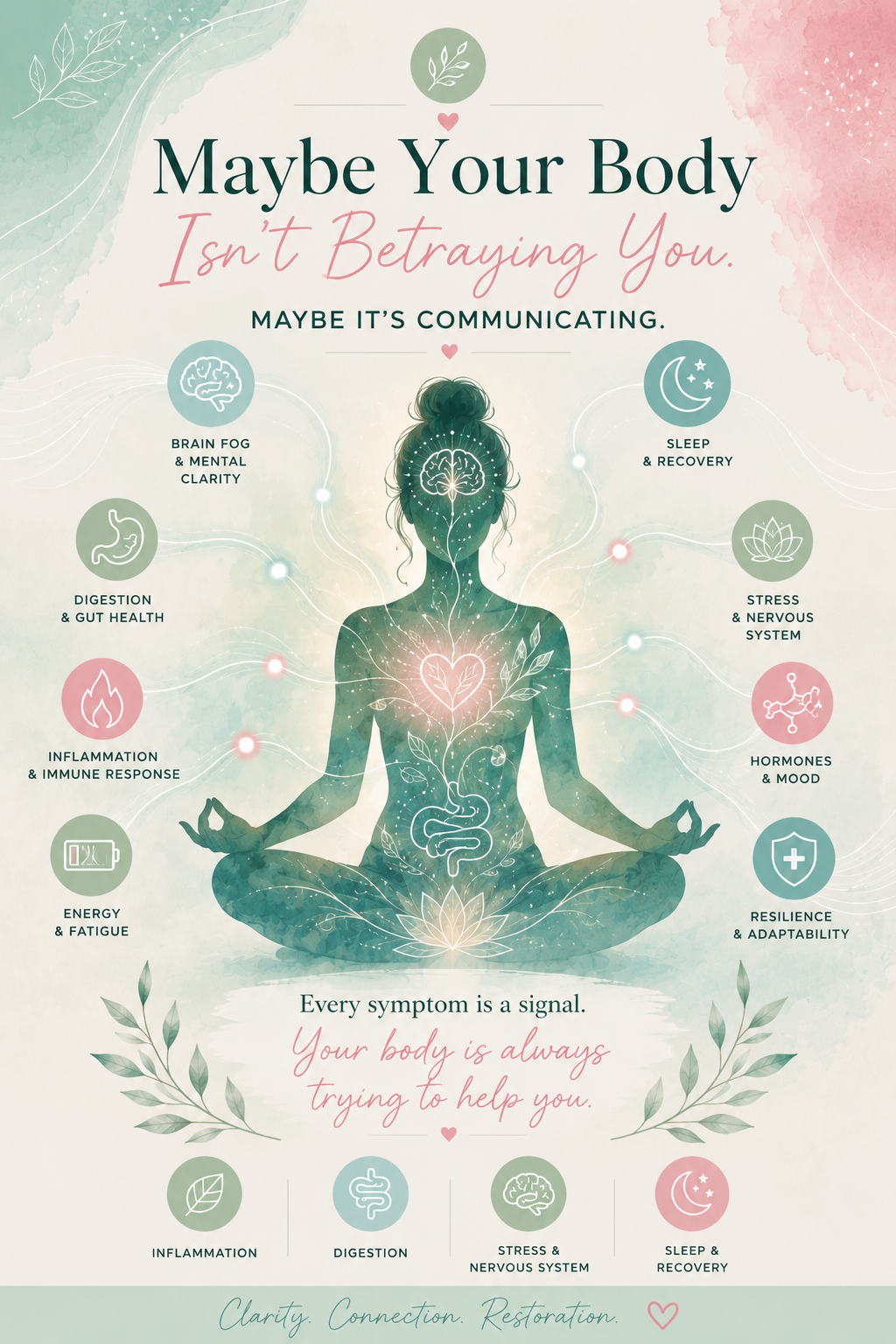

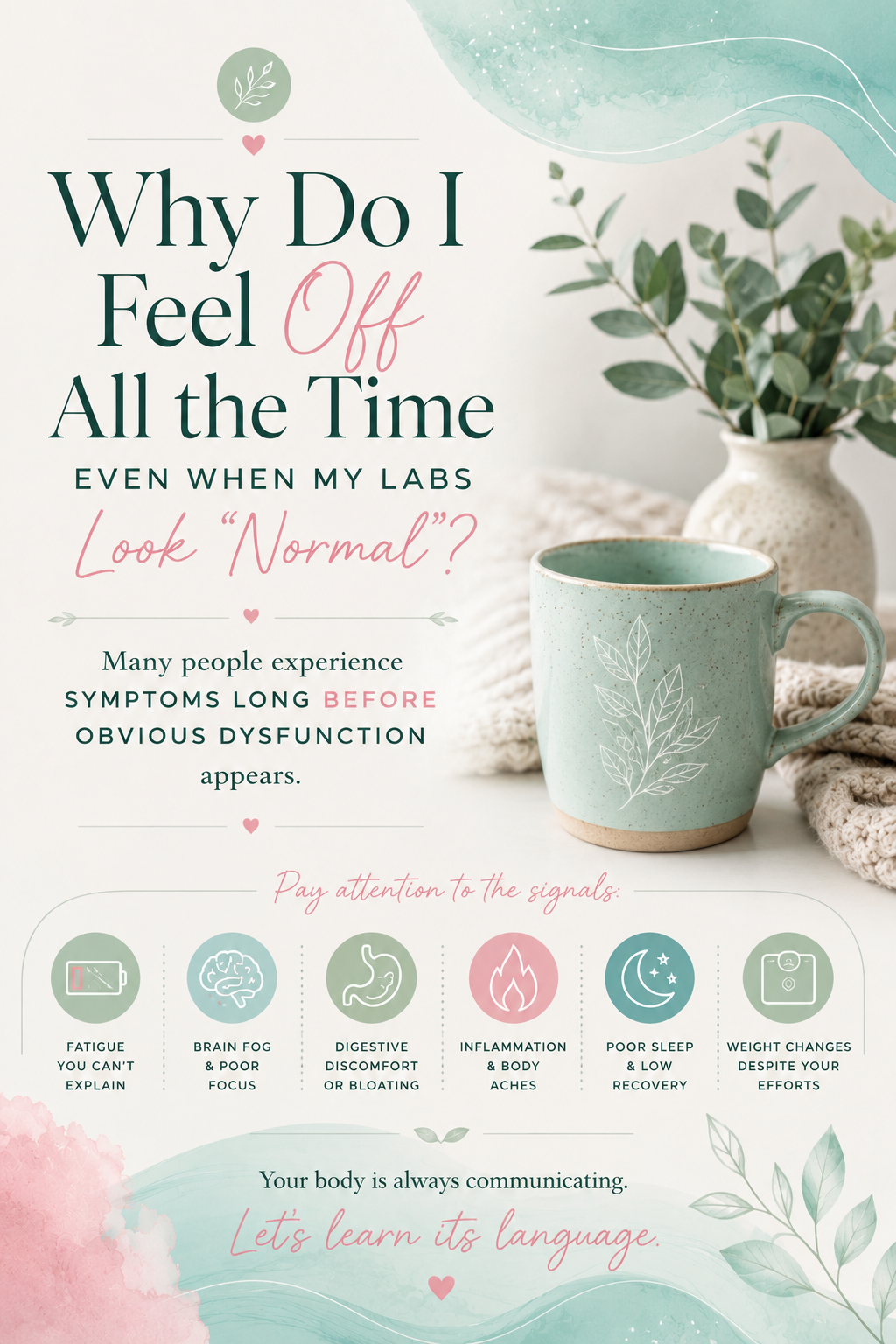

Why Do I Feel Off All the Time Even When Nothing Seems “Wrong”?
Feeling “off” all the time is often the result of multiple systems in the body struggling simultaneously. Stress, inflammation, poor recovery, nervous system overload, unstable blood sugar, poor sleep quality, and nutrient depletion can create symptoms long before something obvious appears on a lab test.
One of the most frustrating parts of modern health struggles is how disconnected symptoms are often treated.
You go to one specialist for hormones.
Another for digestion.
Another for joint pain.
Another for sleep.
Another for anxiety.
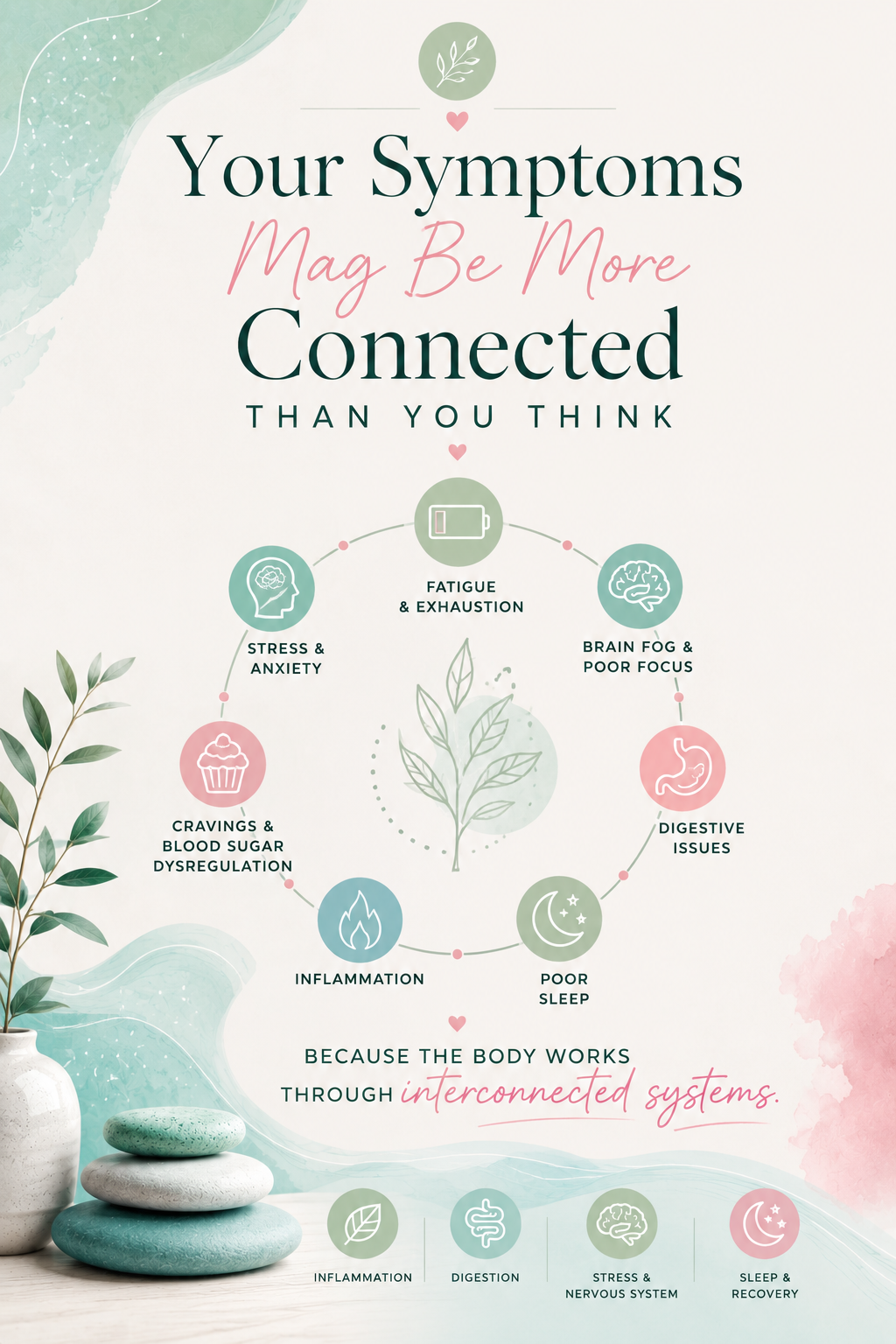
But the body does not operate in isolated compartments.
Everything is connected through communication.
Energy affects hormones.
Stress affects digestion.
Inflammation affects sleep.
Poor sleep affects cravings and blood sugar.
Nervous system overload affects recovery.
This is why so many people feel like they are constantly chasing symptoms without ever understanding the bigger picture.
Many people experiencing chronic stress and exhaustion are also dealing with deeper nervous system dysregulation that affects healing, recovery, inflammation, and stress tolerance throughout the body. I discuss this further in Why the Body Can’t Heal Without Nervous System Regulation
What It Means When Your Body Starts Sending Signals
Symptoms are often the body’s way of communicating stress, imbalance, inflammation, depletion, or poor adaptation. Fatigue, cravings, pain, digestive problems, sleep disruption, mood changes, and poor recovery are not always random problems. Many times, they are patterns that point toward deeper dysfunction.
Your body is constantly adapting to the environment you place it in.
Poor sleep.
Processed foods.
High stress.
Low movement.
Overstimulation.
Blood sugar swings.
Inflammation.
Nutrient depletion.
Chronic survival mode.
Over time, the body starts compensating.
Then eventually, it starts signaling.
The problem is that many people have been taught to silence symptoms instead of understanding what they may be trying to communicate.
That does not mean every symptom represents something catastrophic.
But it also does not mean every symptom should automatically be dismissed as “just aging” without asking why the body is struggling in the first place.
Much of what people experience as “aging” may actually reflect declining repair capacity, poor recovery, inflammation, stress overload, and reduced cellular communication over time. This is why topics like fasting, repair, and recovery matter so much in the broader conversation around health and resilience. Explore more in Anti-Aging, Fasting & Cellular Repair
Why Am I Always Tired No Matter How Much I Sleep?
Constant fatigue is not always caused by a lack of sleep. Poor recovery, inflammation, chronic stress hormones, nervous system overload, unstable blood sugar, nutrient depletion, poor sleep quality, and low cellular energy production can all contribute to waking up exhausted despite spending enough hours in bed.
Many people are sleeping…
but not recovering.
There is a difference.
You can spend eight hours unconscious and still wake up inflamed, depleted, wired, foggy, and exhausted.
This is one reason so many people become dependent on:
- caffeine
- sugar
- stimulation
- constant dopamine hits
- pushing through exhaustion
The body begins operating like a phone stuck at 12% battery life while still trying to run twenty apps at once. 📱
And eventually the body adapts to survival mode so deeply that exhaustion starts feeling “normal.”
Energy production is deeply connected to mitochondrial signaling, inflammation, stress adaptation, and recovery capacity throughout the body. I discuss this more deeply in What Are Peptides? How the Body’s Signaling Molecules Control Repair, Metabolism, and Aging
Why Treating Symptoms One at a Time Often Fails
Treating symptoms one at a time often fails because the body functions as an interconnected system. Digestion, inflammation, stress response, sleep, hormones, immune function, detoxification, and energy production constantly influence one another.
This is why people often feel trapped in cycles like:
- fixing digestion while energy still crashes
- improving sleep while inflammation remains high
- treating hormones while stress overload continues
- chasing supplements while daily habits remain chaotic
The body is not asking for random isolated fixes.
It is asking for improved communication and better conditions for adaptation and repair.
Digestion itself is not an isolated event. The gut influences inflammation, immunity, detoxification, mood, nutrient absorption, hormones, and nervous system signaling throughout the body. I explain this further in The Gut Is Not a Single Organ: How Digestion, Immunity, and Detox Interlock
What Are the Most Common Signs Your Body Needs Help?
Common signs your body needs help may include fatigue, poor sleep, inflammation, digestive symptoms, low stress tolerance, cravings, poor recovery, hormone shifts, stubborn weight gain, brain fog, mood instability, and feeling older than your age.
Sometimes the signals are loud.
Sometimes they are subtle.
People often normalize symptoms for years:
- waking exhausted
- afternoon crashes
- bloating after meals
- joint pain
- headaches
- constant stress
- low motivation
- hair thinning
- feeling inflamed all the time
- needing increasing amounts of caffeine to function
Eventually many people stop asking:
“What is my body trying to tell me?”
And instead start assuming:
“This is just who I am now.”
Repair itself depends heavily on signaling, recovery coordination, inflammation control, and communication between systems. This becomes increasingly important when the body has been under stress for years. I discuss this more in TB-500 and BPC-157: Why Your Body Stops Repairing Itself and What Controls the Process
How to Start Listening to Your Body Again?
Listening to your body starts with slowing down enough to recognize patterns. Energy, digestion, cravings, sleep quality, inflammation, mood, stress tolerance, and recovery patterns often provide clues about what the body may be struggling with.
Most people are overwhelmed because they are trying to fix everything at once.
The body usually responds better to:
- simplification
- consistency
- reduced stress load
- stable meals
- hydration and minerals
- improved sleep rhythm
- nervous system regulation
- reducing constant overstimulation
Healing is rarely about finding one magical supplement.
More often, it is about creating conditions where the body can finally stop fighting to survive long enough to adapt and recover.
The Body Signal Starter was created to help you stop guessing and start understanding what your body may actually be trying to communicate.
If you feel overwhelmed, exhausted, inflamed, disconnected from your body, or unsure where to start… this is your next step.
If you are tired of trying random health advice without understanding what your body may actually be communicating, I go much deeper into pattern recognition, symptom interpretation, nervous system regulation, inflammation, energy, recovery, and implementation inside the Restoration Framework.