
What Is Causing My Brain Fog? How Interrupting Signaling Patterns Can Leave You Feeling Mentally “Off”
Brain fog is not always just a focus problem. Learn how inflammation, stress, poor sleep, blood sugar swings, and disrupted signaling patterns may contribute to feeling mentally “off.”
I was 19 when I first noticed brain fog.
I was working my first full-time job in the meat department of a grocery store, wrapping and pricing meat products, and I kept asking my boss to repeat the price per pound he wanted me to label the package with.
Over and over.
For the life of me, I could not remember the number long enough to actually finish the task.
One day he laughed and said, “I knew you were going to ask again.”
Evidently, it had become a pattern.
And deep down, I knew it too.
It wasn’t because I couldn’t hear him.
It was because my brain felt slow.
Foggy.
Like information wouldn’t fully “stick.”
At the time, I didn’t think about inflammation, nervous system stress, sleep quality, blood sugar swings, nutrient deficiencies, or signaling patterns throughout the body.
I just thought something was wrong with me.
Looking back now, I can see the pattern much more clearly.
I grew up in a single-parent home with constant financial stress and food insecurity. Not long afterward, allergies and asthma started showing up. Pine trees. Bermuda grass. Dust. Constant inflammation. Constant stress on the body.
And somewhere along the way, I started feeling mentally “off.” I cannot identify that moment because it was brewing all throughout my childhood.
At the time, I didn’t understand what I understand now:
Brain fog is often not one isolated brain problem.
It can be the result of multiple stressed systems interrupting signaling patterns throughout the body.
FAQ
What Is Causing My Brain Fog?
Brain fog can be influenced by many overlapping factors, including inflammation, poor sleep, nutrient deficiencies, chronic stress, blood sugar instability, nervous system overload, gut dysfunction, and low energy production at the cellular level. Often, brain fog is less about one isolated issue and more about multiple systems struggling to communicate efficiently.
Can Inflammation Cause Brain Fog?
Yes. Inflammation may influence brain signaling, neurotransmitter balance, energy production, and nervous system regulation. Many people notice worsening brain fog during periods of chronic stress, poor diet, illness, gut dysfunction, or ongoing inflammatory burden.
What Deficiencies Can Contribute to Brain Fog?
Low levels of nutrients involved in energy production and nervous system function may contribute to brain fog. This can include B vitamins, magnesium, iron, vitamin D, omega-3 fatty acids, and other nutrients connected to cellular energy and neurological signaling.
Is Brain Fog Permanent?
Brain fog is not always permanent. In many cases, mental clarity improves when underlying stressors affecting sleep, inflammation, nervous system balance, metabolism, hydration, and nutrient status are addressed consistently over time.
How Do You Clear Brain Fog?
Supporting brain fog often starts with reducing inflammatory inputs, improving sleep quality, stabilizing blood sugar, increasing hydration and minerals, managing stress, and supporting overall nervous system and metabolic function. The goal is usually improving communication between systems rather than chasing one “magic fix.”
Table of Contents
In This Article
In this article, we’ll look at why brain fog can feel so confusing, how inflammation and nervous system strain may affect mental clarity, why energy production matters for brain function, and how learning to recognize signaling patterns may help you stop guessing where to start.

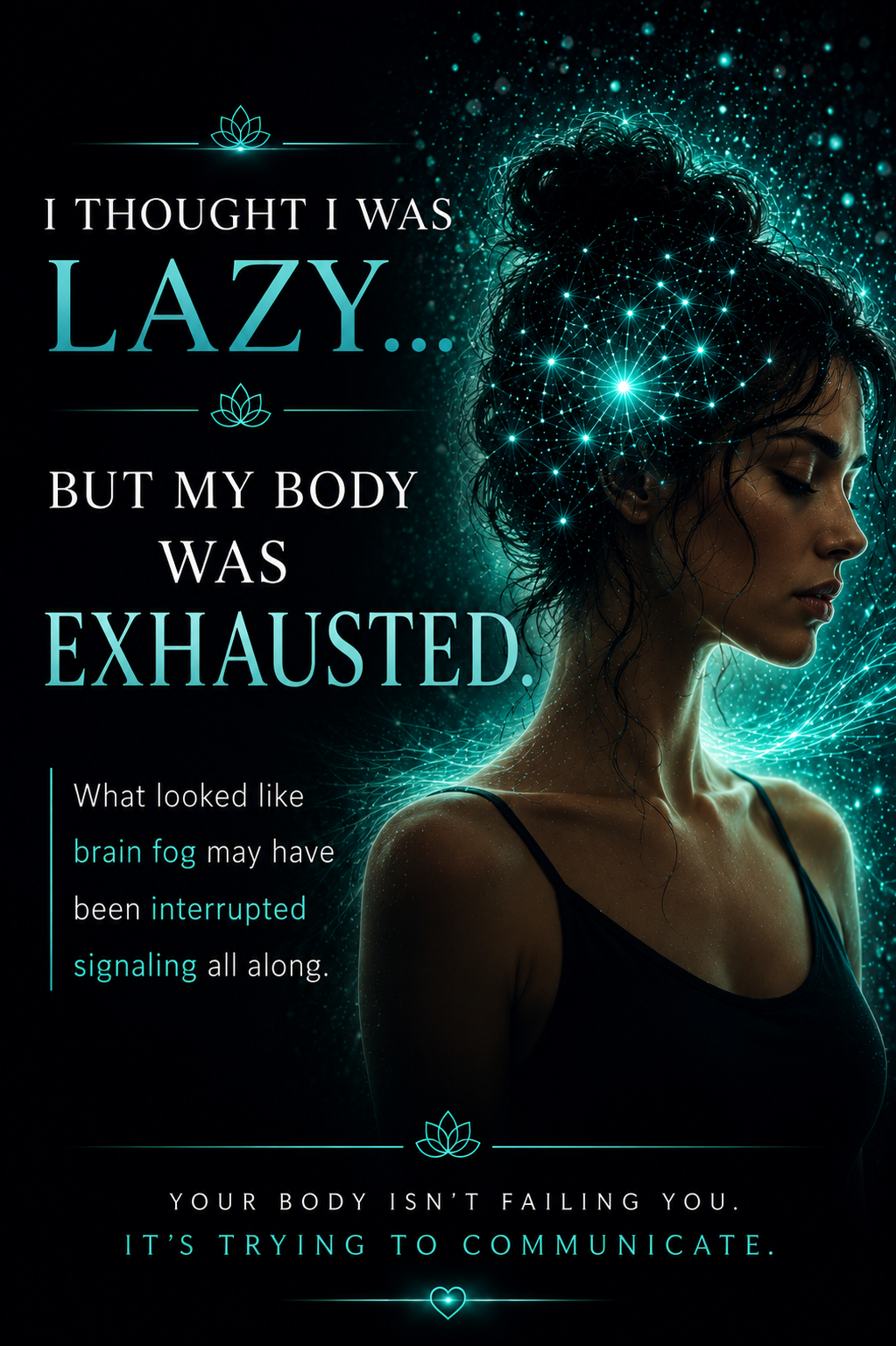

When communication between systems becomes strained, your body may start signaling it long before you understand why you feel mentally “off.”
What Is Brain Fog?
Brain fog is a broad term people use to describe reduced mental clarity, poor focus, memory problems, slower thinking, mental fatigue, or feeling cognitively “off.” It is not usually one single symptom. It is often a collection of communication problems happening across multiple body systems.
Many people describe brain fog as feeling disconnected from themselves.
Not fully sharp.
Not fully present.
Not fully able to process information the way they used to.
For some people, it shows up as forgetfulness.
For others, it feels like exhaustion, difficulty concentrating, word-finding issues, or mental heaviness.
And this is where many people get stuck:
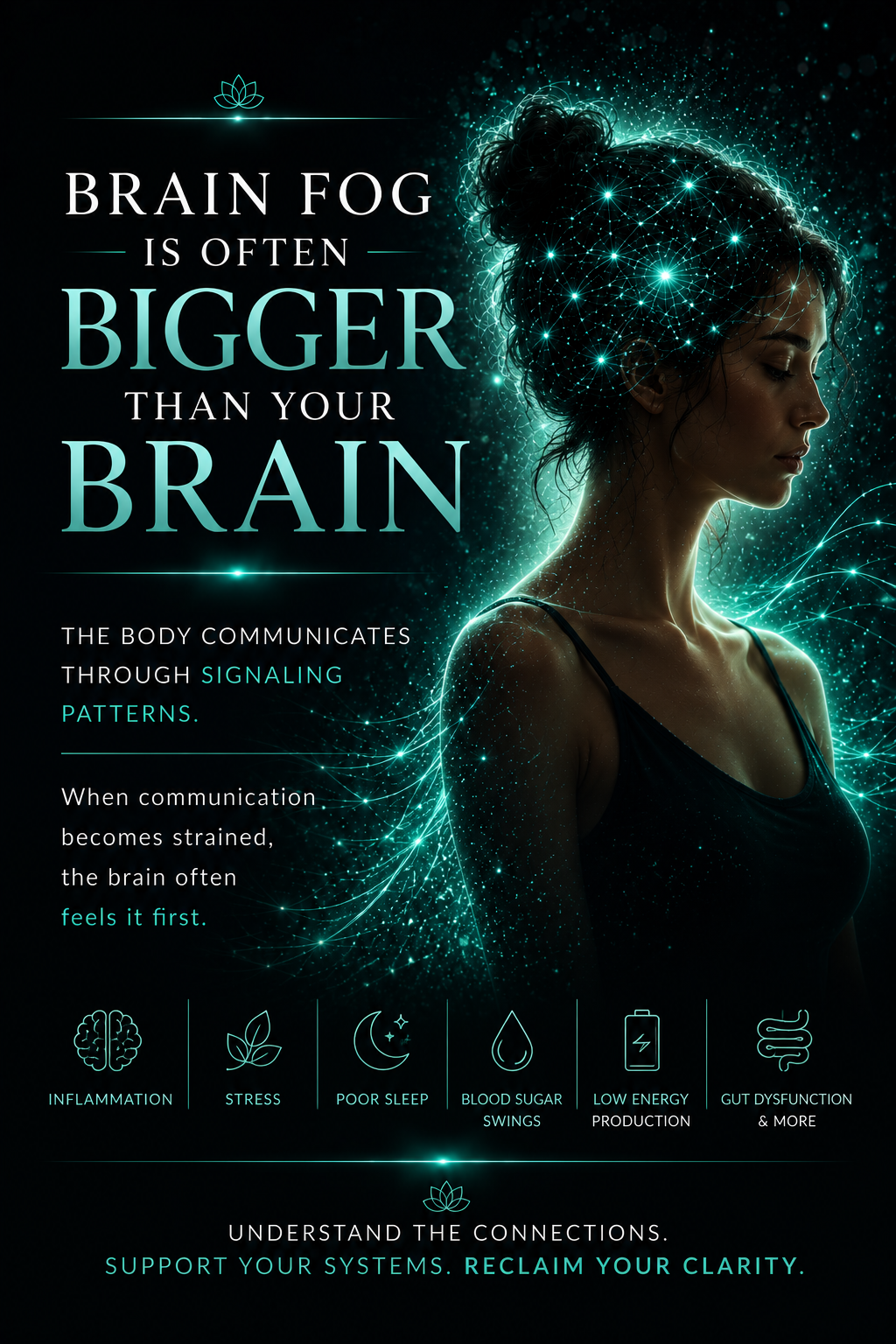
They begin treating brain fog like an isolated brain problem when the body may actually be signaling distress from multiple directions at once.
Inflammation.
Poor sleep.
Stress overload.
Blood sugar instability.
Low cellular energy.
Nervous system dysregulation.
Gut dysfunction.
Nutrient depletion.
The brain is one of the most energy-demanding organs in the body.
So when signaling becomes strained elsewhere, the brain often notices quickly.
This is also why articles like What Are Peptides? How the Body’s Signaling Molecules Control Repair, Metabolism, and Aging matter so much in this conversation.
The body is constantly communicating.
And symptoms are often information.
What Is Causing My Brain Fog?
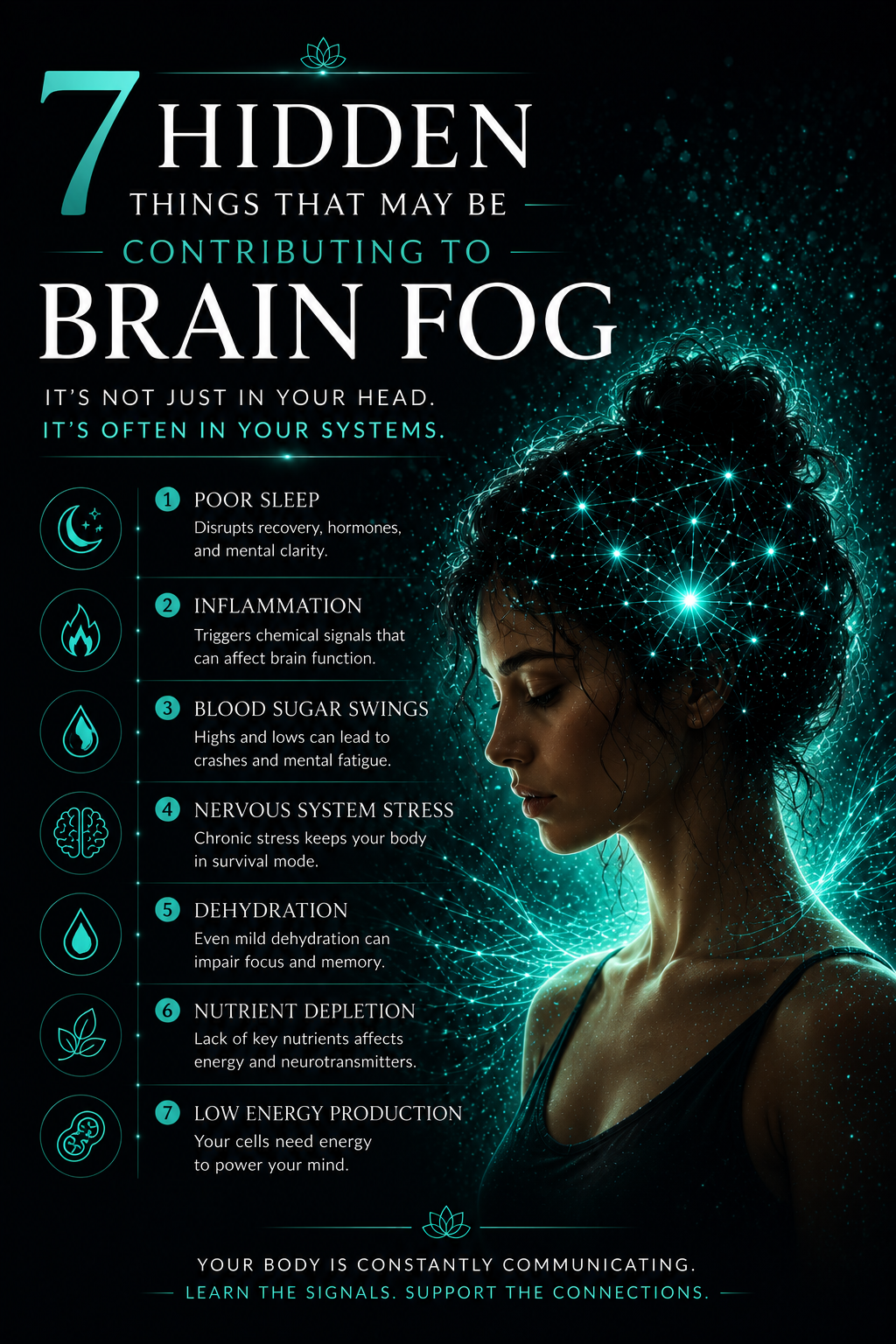
Brain fog is often caused by overlapping stressors affecting inflammation, nervous system regulation, sleep quality, metabolic health, and energy production. Instead of one isolated cause, many people experience brain fog when several systems become strained simultaneously and communication between those systems becomes less efficient.
This is why brain fog can feel so frustrating.
Because there usually is not one obvious answer.
Most people are looking for:
- one deficiency
- one supplement
- one medication
- one diagnosis
- one quick fix
But the body rarely works that way.
The body works in patterns.
A person sleeping 4 hours a night, living under chronic stress, eating ultra-processed food, dehydrated, inflamed, sedentary, and nutrient depleted may not have “one” cause of brain fog.
They may have multiple stressed systems all interrupting signaling at the same time.
And when signaling quality drops, the brain often feels it first.
This is also why people sometimes improve mentally when they support systems that do not initially seem “brain related.”
Gut health.
Sleep.
Blood sugar.
Inflammation.
Movement.
Stress regulation.
Hydration.
Mitochondrial energy production.
This article on Mitochondrial Signaling: How Peptides Influence Energy Production at the Cellular Level connects deeply to this concept because the brain depends heavily on energy availability.
And low energy signaling can feel like low mental clarity.
Why Can Brain Fog Feel So Different From Person to Person?
Brain fog feels different from person to person because different systems may be contributing to the problem. One person may be struggling primarily with inflammation and sleep disruption, while another may be dealing more with blood sugar instability, nervous system overload, poor energy production, or nutrient deficiencies.
Symptoms are often shaped by the systems under the most stress.
One person may feel:
- mentally slow
- exhausted
- heavy
Another may feel:
- anxious
- overstimulated
- unable to focus
Another may experience:
- memory problems
- word-finding difficulty
- poor concentration
This variability is one reason people become confused.
They compare symptoms with someone else and assume:
“Well mine doesn’t look exactly like that.”
But systems biology is messy.
The body adapts differently under different pressures.
And sometimes brain fog is less about the brain itself and more about the body struggling to maintain stability under chronic stress.
Can Inflammation Cause Brain Fog?
Inflammation may contribute to brain fog by influencing nervous system signaling, neurotransmitter balance, energy production, sleep quality, and stress regulation. Chronic inflammatory stress can affect how efficiently the brain processes information and responds to environmental demands.
Inflammation changes communication inside the body.
And the brain is incredibly sensitive to those changes.
Many people notice worsening brain fog during periods of:
- poor sleep
- stress overload
- gut dysfunction
- illness
- highly processed diets
- chronic pain
- autoimmune activity
The body begins prioritizing survival and defense.
And cognitive sharpness often suffers during that process.
This is one reason inflammation-focused strategies sometimes improve mental clarity even when the intervention is not “for the brain.”
The brain does not exist independently from the rest of the body.
It responds to the state of the system.
This article on Melatonin for Inflammation, Brain Fog, and Immune Support: A Deeper Look explores some of these signaling connections more deeply.
What Deficiencies Can Contribute to Brain Fog?
Deficiencies in nutrients involved in neurological signaling, oxygen transport, stress regulation, and cellular energy production may contribute to brain fog. Low levels of B vitamins, magnesium, iron, vitamin D, and omega-3 fatty acids are commonly discussed in relation to cognitive function and mental clarity.
The brain is metabolically expensive.
It requires:
- oxygen
- minerals
- stable energy
- hydration
- healthy signaling
When those resources become limited, mental clarity may decline.
For example:
- low iron may reduce oxygen delivery
- low magnesium may affect nervous system regulation
- low B vitamins may influence energy metabolism
- low omega-3 intake may affect membrane signaling
And importantly:
Deficiencies often do not happen in isolation either.
Many people experiencing chronic stress, poor digestion, inflammation, or restrictive eating patterns may have multiple nutritional gaps occurring simultaneously.
Why Do Stress and Poor Sleep Make Brain Fog Worse?
Stress and poor sleep can worsen brain fog because both strongly affect inflammation, nervous system balance, hormone regulation, blood sugar stability, and cellular recovery. Chronic stress keeps the body in a prolonged defensive state, which may reduce mental clarity and cognitive resilience over time.
The brain does not recover well in survival mode.
And many people are living in survival mode constantly.
This is also why nervous system regulation matters so much in conversations around healing, inflammation, energy, and mental clarity. When the body remains stuck in a prolonged stress response, communication between systems often becomes strained over time. I talked more about this in Why the Body Can’t Heal Without Nervous System Regulation.
Poor sleep alone can dramatically affect:
- attention
- memory
- emotional regulation
- focus
- reaction time
Add chronic stress on top of that, and the nervous system may remain stuck in a hyper-alert state for long periods of time.
This creates another important distinction:
Sometimes brain fog is not laziness.
Sometimes it is overload.
Can Blood Sugar and Energy Problems Affect Brain Function?
Blood sugar instability and poor energy production can significantly affect brain function because the brain relies heavily on a stable energy supply. Rapid glucose swings, insulin resistance, and impaired mitochondrial function may all contribute to mental fatigue, poor focus, and reduced cognitive clarity.
The brain is an energy-hungry organ.
When energy becomes unstable, the brain often feels unstable too.
Many people notice:
- afternoon crashes
- poor focus after meals
- mental fatigue
- shakiness
- irritability
- difficulty concentrating
And in many cases, this may relate to unstable metabolic signaling.
This is also why mitochondrial health has become such an important topic in longevity and cognitive performance conversations.
Energy production influences function.
And function influences clarity.
Is Brain Fog a Signaling Problem?
Brain fog may involve signaling problems because the body depends on constant communication between the nervous system, immune system, hormones, metabolism, gut, and brain. When those communication pathways become strained, mental clarity can decline even without one obvious disease process being present.
The body is constantly communicating.
Hormones signal.
Neurotransmitters signal.
Inflammation signals.
The nervous system signals.
The immune system signals.
The gut signals.
And when communication quality declines, symptoms often appear.
This does not mean every case of brain fog is identical.
And it does not mean people should ignore serious medical evaluation when appropriate.
But it does mean that many people may benefit from stepping back and looking at patterns instead of chasing isolated symptoms one by one.
This growing interest in signaling pathways is also one reason some people explore compounds being researched for cognitive and neurological communication.
One example is N-Acetyl Semax Amidate, a peptide being studied for its potential influence on:
- focus
- neuroplasticity
- cognitive signaling
- stress adaptation pathways
Peptides are not magic cures.
They are signaling molecules being researched for how they may influence communication pathways throughout the body.
If you would like to purchase from a reliable source👉 N-Acetyl Semax Amidate
How Do You Start Supporting Brain Fog Naturally?
Supporting brain fog naturally often begins with reducing stress on the body and improving overall system stability. Sleep quality, blood sugar regulation, hydration, nutrient intake, nervous system regulation, inflammation support, movement, and consistent routines may all help improve signaling efficiency and mental clarity over time.
Most people do not need more overwhelm.
They need orientation.
Start by looking for patterns:
- When is the brain fog worse?
- What makes it better?
- Is sleep involved?
- Is stress involved?
- Is food involved?
- Is energy crashing?
- Is inflammation high?
Then simplify.
Because random guessing often creates even more confusion.
Start Here With the Body Signal Starter
You know something feels “off,” but it’s hard to know where to begin when symptoms overlap and everything feels connected.
The Body Signal Starter helps you begin recognizing patterns connected to fatigue, inflammation, digestion, brain fog, energy crashes, and nervous system strain so you can stop guessing and start understanding what your body may be communicating.
Show Me Where to Start
Go Deeper Inside the Holistic Life Membership
If this is starting to click, the Holistic Life Membership goes deeper into how systems connect, why symptoms often overlap, and how to think through patterns more clearly without spiraling into overwhelm.
You’ll learn how inflammation, stress, metabolism, nervous system regulation, sleep, and signaling pathways interact beneath the surface of symptoms like brain fog.
Continue With the Holistic Life Membership
The article continues below for Holistic Life members, with deeper education on how this system works and how to think through next steps responsibly.