
TB-500 and BPC-157: Why Your Body Stops Repairing Itself and What Controls the Process
If your body isn’t healing like it used to, it’s not just aging. Repair depends on signaling, coordination, and inflammation resolution. This article explains why healing fails and how TB-500 and BPC-157 support the process at both the local and systemic level.

You’re not imagining it.
Things that used to heal quickly… don’t anymore.
A sore muscle lingers.
Inflammation hangs around longer than it should.
Recovery feels incomplete no matter what you try.
At some point, you start wondering if this is just aging.
But that explanation doesn’t hold up.
Because your body doesn’t randomly forget how to heal.
Something else changed.
And until you understand what that is, nothing you try will fully work.
What People Are Asking
Why does the body stop repairing itself?
The body doesn’t stop healing because it’s broken. Repair slows when signaling between systems becomes inefficient. Inflammation lingers, communication weakens, and coordination fails. When signals that initiate and resolve healing don’t function properly, recovery becomes delayed, incomplete, or stuck in cycles that never fully finish.
What controls healing and tissue repair in the body?
Healing is controlled by coordinated signaling between the immune system, nervous system, and circulatory system. These systems regulate inflammation, cell movement, and tissue rebuilding. When communication between them breaks down, the body struggles to initiate, coordinate, or complete repair effectivel
What is the difference between TB-500 and BPC-157?
BPC-157 primarily supports local repair, especially in the gut and soft tissues, helping stabilize and initiate healing signals. TB-500 works more systemically, supporting cell migration, inflammation regulation, and broader repair coordination throughout the body rather than focusing on one specific area.
Can you take TB-500 and BPC-157 together?
Yes, TB-500 and BPC-157 are often used together because they support different phases of healing. BPC-157 helps initiate and stabilize local repair, while TB-500 supports systemic coordination and cell movement, making them complementary in addressing both localized damage and whole-body recovery processes.
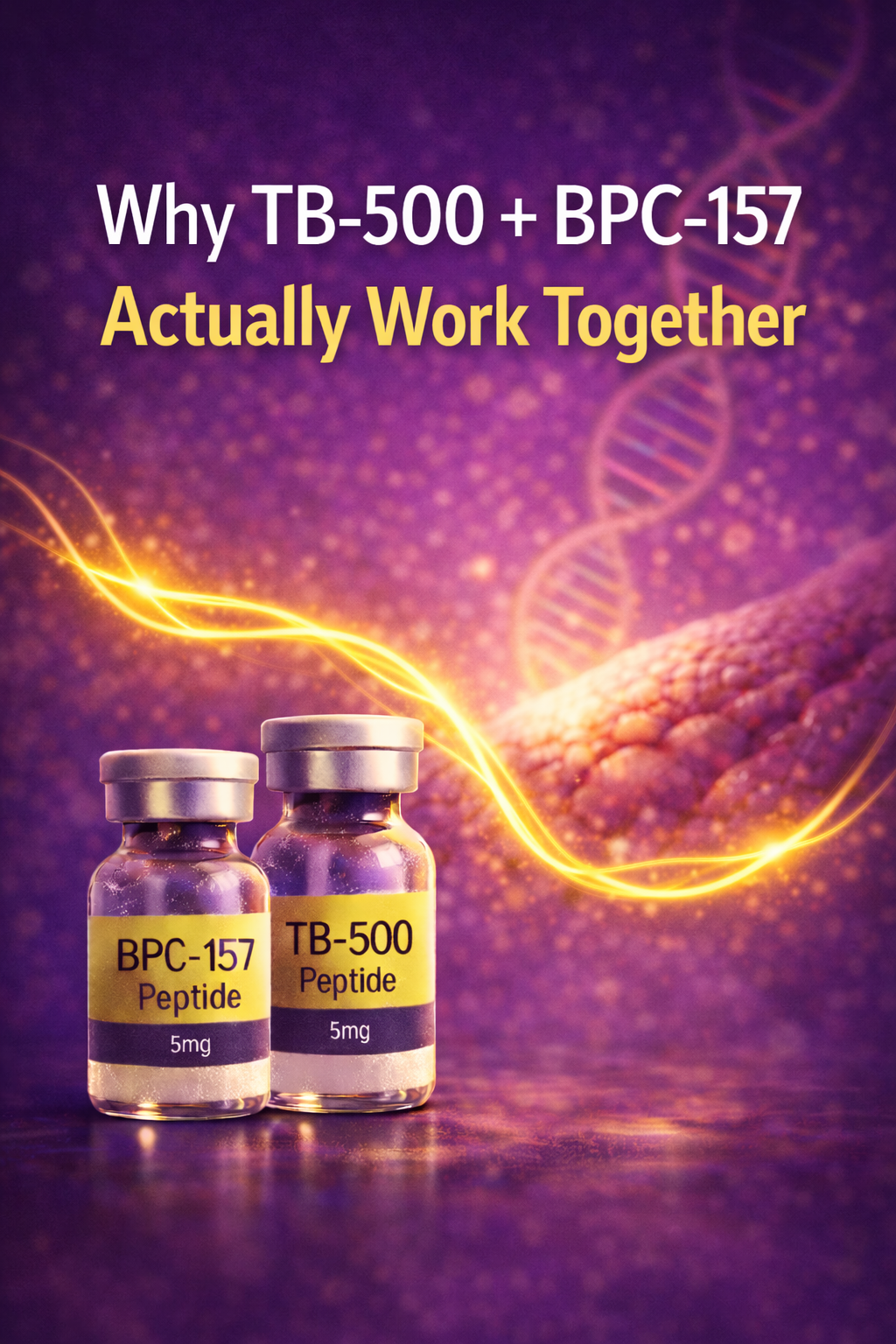
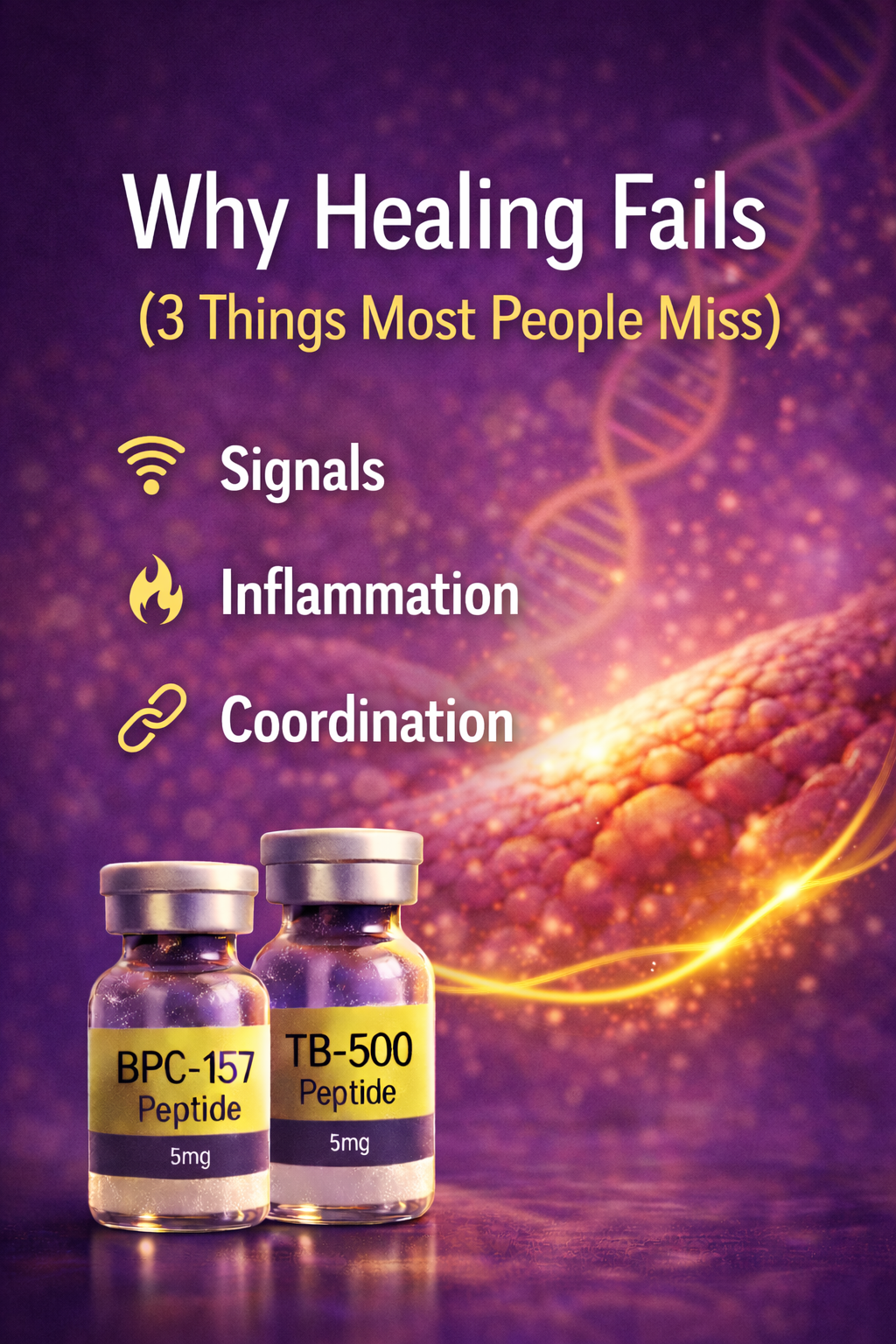
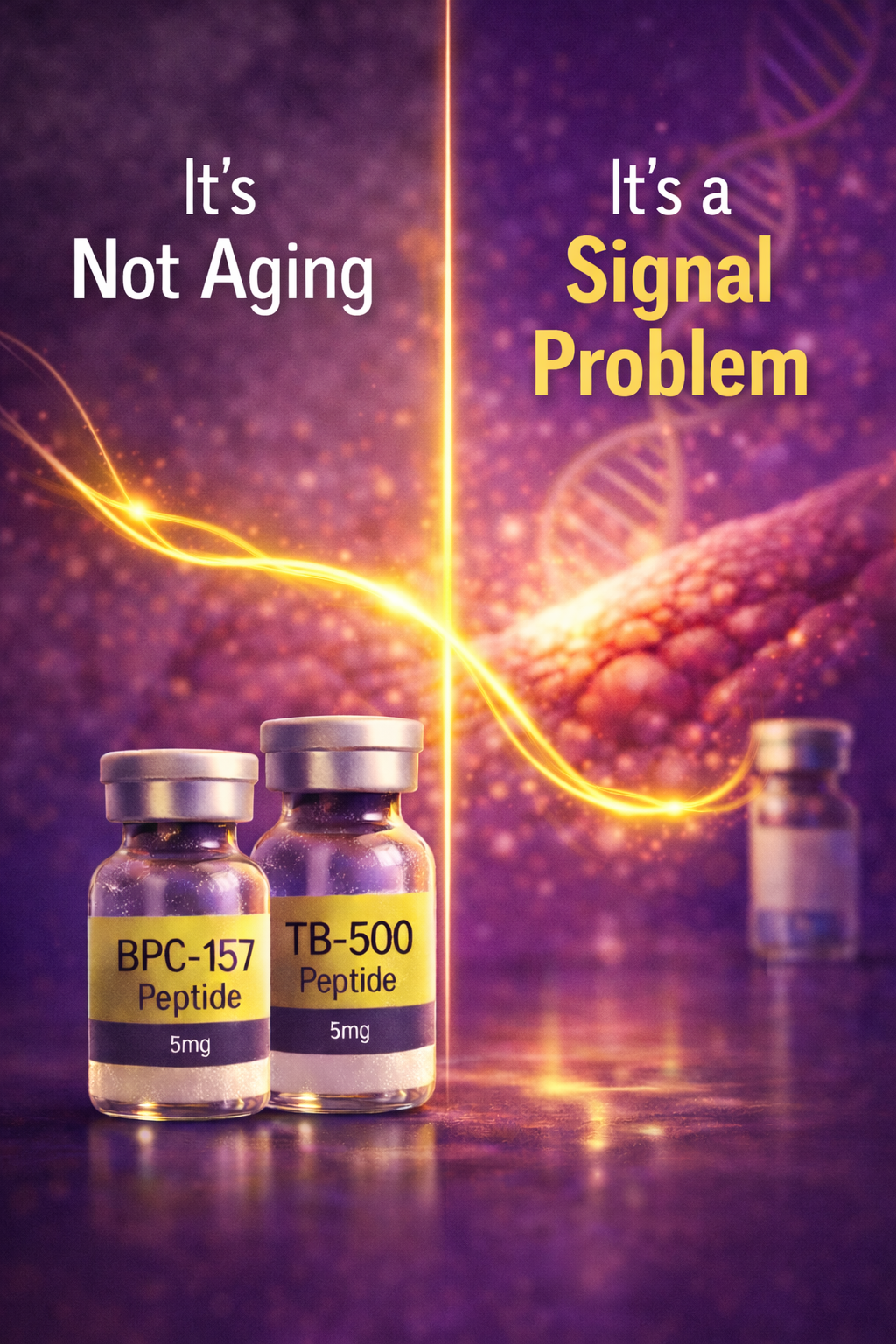

Why your body isn’t healing has less to do with age… and more to do with how well your systems communicate. TB-500 and BPC-157 are getting attention for a reason. This is the missing link most people never hear about. #peptides #healing #inflammation #recovery #antiaging #guthealth #biohackin
Table of Contents
- Why does your body stop repairing itself?
- What controls healing and tissue repair?
- What is the difference between TB-500 and BPC-157?
- Can TB-500 and BPC-157 be used together?
In This Article
This article breaks down why healing slows even when you’re doing everything right, what actually controls repair inside the body, and how TB-500 and BPC-157 fit into the larger system of signaling, inflammation, and recovery.
Why does your body stop repairing itself?
The body doesn’t stop repairing because of age alone. Healing slows when signaling becomes inefficient, leaving inflammation unresolved and repair incomplete. When the body cannot properly coordinate the sequence of healing, recovery becomes delayed, fragmented, and stuck in cycles that fail to fully resolve.
Most people think healing is about what you take.
But healing is actually about what your body can coordinate.
Here’s what people THINK is happening:
- “I’m older”
- “My body is worn down”
- “I just don’t heal like I used to”
What’s ACTUALLY happening:
- signals are delayed
- communication between systems is weaker
- inflammation is not resolving properly
Healing doesn’t fail because the body forgot.
It fails because the message isn’t getting through clearly anymore.
To understand how signaling pathways influence repair at a deeper level, explore how communication drives recovery in Growth Hormone Peptides: How Signaling Controls Tissue Repair.
What controls healing and tissue repair?
Healing is controlled by coordinated signaling between multiple systems, including the immune system, nervous system, and circulatory system. These systems regulate inflammation, direct cell movement, and rebuild tissue. When communication between them breaks down, the body struggles to properly initiate, coordinate, or complete repair.
Healing is not one event.
It’s a sequence:
Detection of damage
Inflammatory response
Signal amplification
Cell recruitment
Tissue rebuilding
Resolution
Most people get stuck in step 2 or 3, where the process starts but doesn’t fully move forward or finish.
If that pattern sounds familiar, here’s a clear way to figure out what phase is breaking and what to do next → BPC-157 and TB-500: What to Do When Your Body Isn’t Healing Properly
That’s why:
- inflammation lingers
- swelling doesn’t fully resolve
- recovery feels partial
The problem is not inflammation itself.
The problem is failure to transition out of it.
To see how these signaling systems connect across the body, explore the full Peptides and Bioregulators category.
What is the difference between TB-500 and BPC-157?
BPC-157 supports local repair by stabilizing tissue and improving signaling at the injury site, particularly in the gut and soft tissues. TB-500 works systemically by supporting cell migration, inflammation regulation, and broader repair coordination, helping the body complete healing processes across multiple systems.
People tend to lump these together.
But they solve different parts of the same problem.
BPC-157 → local response
- gut lining
- tissue integrity
- early repair signaling
To understand how gut integrity shapes healing outcomes, read why BPC-157 comes up in gut repair conversations and when it’s premature.
TB-500 → systemic coordination
- cell movement
- inflammation regulation
- repair completion
To see how TB-500 supports full-body repair, explore TB-500 benefits, uses, and how it compares to BPC-157.
Together, they represent:
- starting the repair signal
- finishing the repair process
That gap is where most people stay stuck.
Can TB-500 and BPC-157 be used together?
TB-500 and BPC-157 can be used together because they support different phases of healing. BPC-157 helps initiate and stabilize local repair, while TB-500 supports systemic coordination and cell migration, making them complementary in addressing both localized injury and overall recovery processes.
This is where search behavior and physiology align.
People ask this because:
- healing feels incomplete
- one approach doesn’t fix everything
- recovery is inconsistent
And they’re right to question it.
Because healing is not one pathway.
It’s layered.
When local repair starts but systemic coordination fails:
- tissue begins to heal
- but the process doesn’t finish
That’s when people feel:
“I’m better… but not fully.”
If you want a deeper breakdown of how BPC-157 fits into serious healing conversations, read BPC-157 Peptide: What It Is, What It Does, and Why It Comes Up in Serious Healing Conversations.
At this point, most people start asking a different question.
Not “what is this?”
But:
“Is this what I’ve been missing?”
Because when healing feels incomplete, the issue is rarely that you need to do more. It’s that what you’re doing isn’t matching where your body actually is in the process.
That’s where peptides like TB-500 and BPC-157 start to make sense. Not as a first step, but as a tool when your body is doing the right things and still not finishing the job.
If you’re at that stage and want to explore your options, this is the source I trust:
👉 https://go.biolongevitylabs.com/SH7D
Take your time with it. The goal isn’t to jump into something new, it’s to move forward with clarity instead of repeating the same cycle.
If this is starting to click, the next section walks you through how to think about your body’s repair process more clearly so you can stop guessing and start making decisions that actually move healing forward.
The article continues below for Restoration Framework members, with deeper education on how this system works and how to think through next steps responsibly.