Where Did My Energy Go? The Real Role of MOTS-C in Metabolism and Aging
Where did your energy go? If your body doesn’t respond the way it used to, the answer may not be effort. This breakdown explains mitochondrial signaling, metabolic flexibility, and how MOTS-C is being studied in energy regulation.

Where did the energy I had in my 20’s go?
I used to go all day.
Work, kids, laundry, meals… and still keep going.
Now I go to work… come home… and sit.
Everyone says that’s just aging.
I don’t think that’s the whole story.
Because energy doesn’t just disappear.
FAQ
What does the MOTS-C peptide do?
MOTS-C is a mitochondrial-derived peptide studied for its role in metabolic signaling, insulin sensitivity, and energy regulation. It helps the body respond to energy demands more efficiently by influencing how cells use fuel, particularly glucose, and activating pathways involved in cellular energy balance.
Can MOTS-C help with weight loss?
MOTS-C is not a direct fat loss compound. It is being studied for how it improves metabolic flexibility and insulin sensitivity, which may indirectly support weight regulation by helping the body respond more efficiently to food intake and energy demands.
What are the side effects of MOTS-C?
Research on MOTS-C is still emerging. Reported side effects are limited but may include mild fatigue, changes in energy levels, or temporary metabolic shifts. As with all peptides, individual responses vary and long-term safety data is still being studied.
In This Article
This article breaks down why your energy changes over time, what role your mitochondria play in that shift, and how a mitochondrial signaling peptide like MOTS-C is being studied in the context of metabolism, insulin sensitivity, and energy regulation.


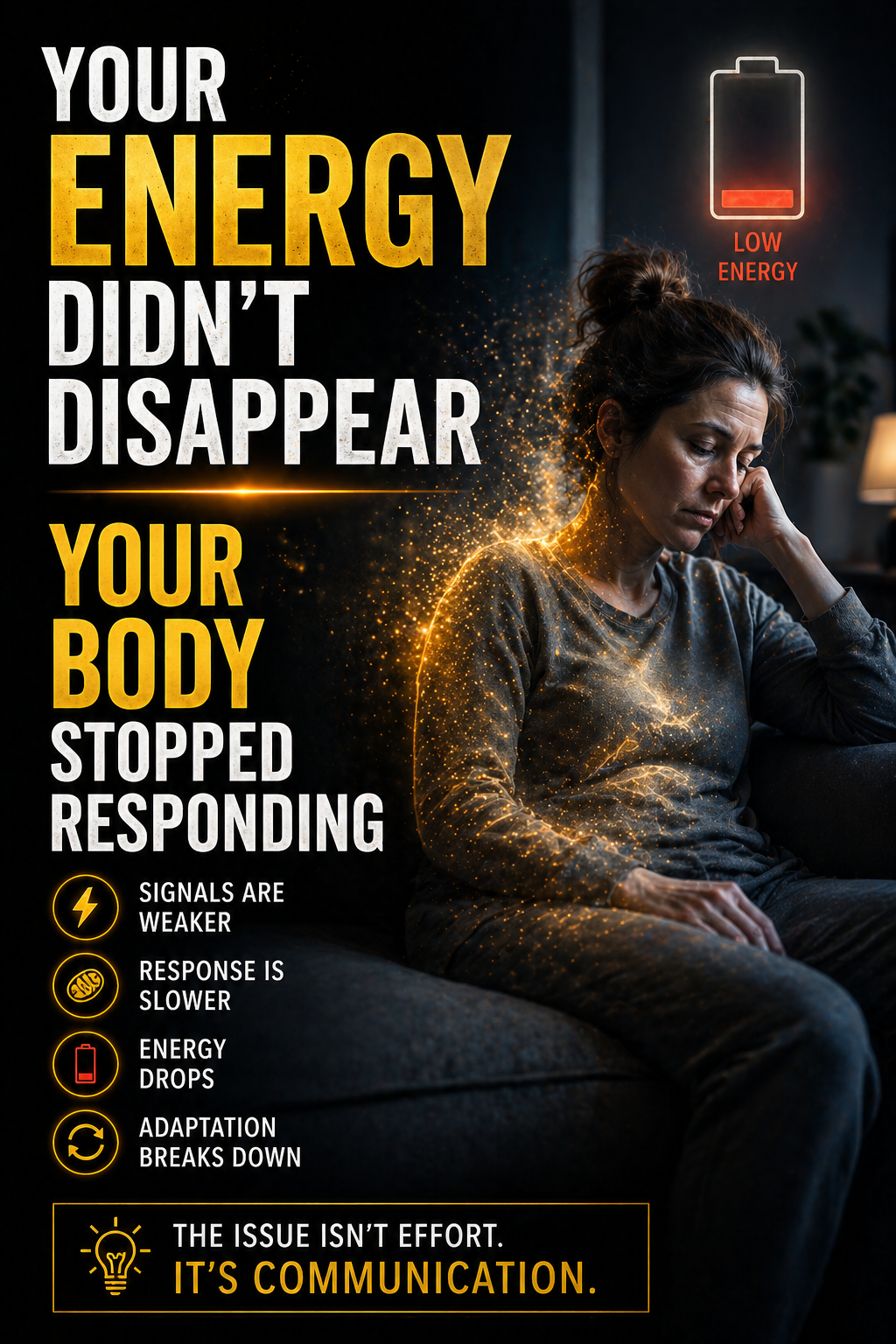
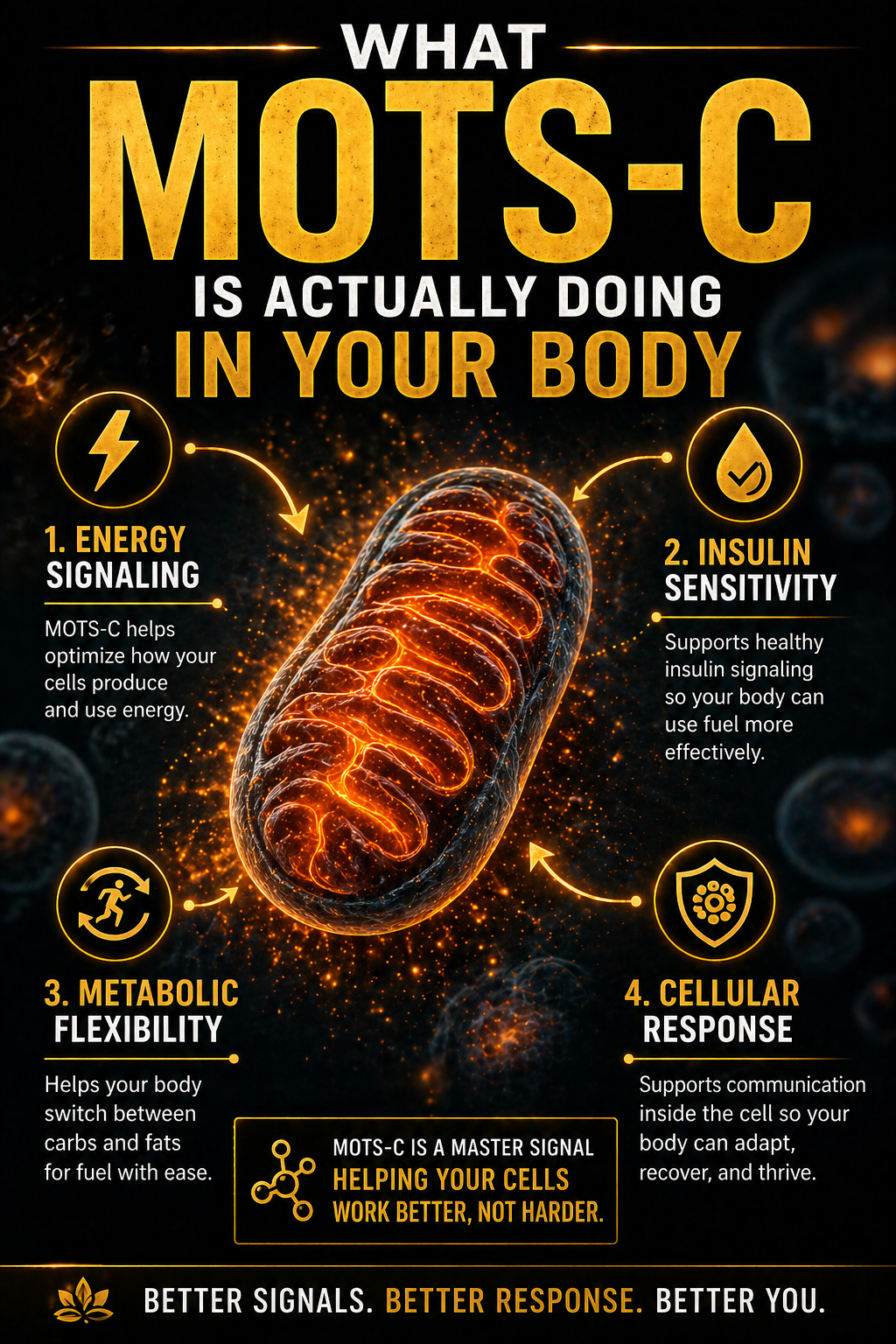
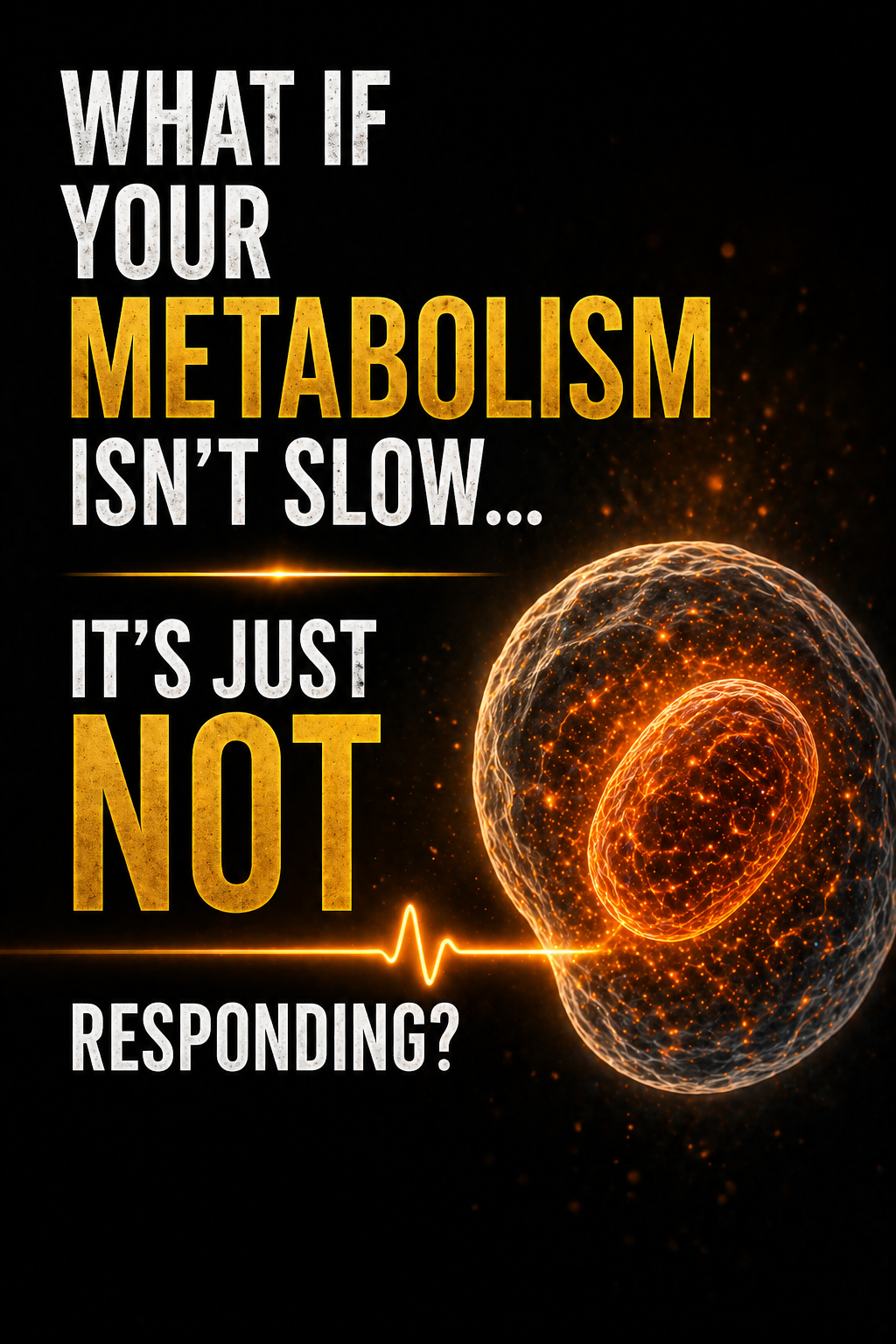

These visuals break down what’s actually happening beneath the surface when your energy changes, how your body signals that shift, and where MOTS-C fits into the bigger picture of metabolism and cellular response.
What Changed About Your Energy Over Time?
Energy changes over time because the body’s ability to produce, regulate, and respond to energy demand can shift with age, stress, metabolic strain, and mitochondrial function. It is not always “just aging.” Often, the deeper issue is that cellular energy production and signaling are no longer working as efficiently.
Most people assume energy loss is just part of aging.
But that explanation is lazy.
Because energy doesn’t just disappear.
It’s produced.
And when production changes, your entire experience of your body changes with it.
What Are Mitochondria and Why Do They Matter?
Mitochondria are the parts of your cells responsible for producing usable energy. They also help regulate stress response, metabolic flexibility, inflammation, and cellular repair. When mitochondrial function declines or signaling becomes less efficient, your body may feel slower, less resilient, and less able to respond to normal demands.
Your mitochondria are responsible for producing energy inside your cells.
But they don’t just produce energy.
They sense demand, respond to stress, and coordinate how your body adapts.
When this system is working:
- you recover faster
- you tolerate stress better
- your body responds to effort
When it’s not:
- everything feels harder
- effort doesn’t match results
- your body becomes less responsive
👉 This is where deeper signaling issues begin
→ Mitochondrial Signaling: How Peptides Influence Energy Production at the Cellular Level
What Is MOTS-C and Why Is It Important?
MOTS-C is a mitochondrial-derived peptide your body naturally makes to help regulate energy use, metabolic stress, and cellular adaptation. It is important because it acts like a communication signal between the mitochondria and the rest of the cell, helping influence glucose use, AMPK activation, and metabolic flexibility.
MOTS-C is a peptide produced inside your mitochondria.
Not injected.
Not external.
Your body makes it.
Its role?
To communicate.
To signal when energy production and fuel usage need to adjust.
It activates pathways like AMPK, the body’s internal energy sensor, which helps regulate:
- glucose use
- energy balance
- metabolic stress
This is not about forcing fat loss.
This is about restoring response.
Under conditions of metabolic stress, MOTS-C doesn’t just circulate. It actually moves into the nucleus of the cell, where it helps regulate how genes involved in energy and stress response are expressed.
That’s not a surface-level effect.
That’s direct influence on how the cell adapts.
How Does MOTS-C Connect to Metabolic Flexibility?
MOTS-C connects to metabolic flexibility because it is involved in how the body responds to fuel demand, especially glucose use and energy stress. Metabolic flexibility means your body can shift between fuel sources efficiently. When that flexibility declines, energy, metabolism, and physical response may all feel less reliable.
Metabolic flexibility is your body’s ability to switch between fuel sources efficiently.
Glucose. Fat. Stored energy.
When this works:
- your body adapts easily
- energy stays stable
- systems stay responsive
When it doesn’t:
- energy crashes
- responses slow
- results stall
👉 This is where many people get stuck
→ What Is Metabolic Flexibility? What Causes Inflexibility and How Fasting Helps Restore It
MOTS-C is being studied for how it may help improve this adaptability.
Not by forcing change.
But by restoring communication between systems.
Why Does Your Body Stop Responding the Same Way?
Your body may stop responding the same way when cellular signaling, mitochondrial energy production, insulin sensitivity, or stress adaptation becomes less efficient. The issue is not always effort. Sometimes the body no longer receives or responds to signals clearly, which can affect energy, recovery, metabolism, and resilience.
This is the part most people miss.
When your body stops responding, the instinct is to:
- try harder
- do more
- push further
But response isn’t controlled by effort.
It’s controlled by signaling.
And signaling is coordinated across multiple systems.
👉 Including repair pathways
→ BPC-157: Supporting Repair, Communication, and the Body’s Ability to Respond
👉 And broader signaling networks
→ Peptides and Bioregulators
When these signals weaken or become inconsistent:
- output drops
- adaptation slows
- recovery lags
Where Does MOTS-C Fits Into a Bigger System?
Your body may stop responding the same way when cellular signaling, mitochondrial energy production, insulin sensitivity, or stress adaptation becomes less efficient. The issue is not always effort. Sometimes the body no longer receives or responds to signals clearly, which can affect energy, recovery, metabolism, and resilience.
MOTS-C is not a solution by itself.
It’s part of a network.
A signal within a system that includes:
- mitochondria
- metabolic pathways
- repair signaling
- nutrient availability
That’s why focusing on one outcome, like weight loss, misses the point.
The real shift happens when:
the body starts responding again
Where This Becomes Practical
MOTS-C isn’t something your body is unfamiliar with.
It’s a signal your mitochondria already produce, especially in response to stress, energy demand, and exercise.
What changes over time isn’t just how much energy you have.
It’s how clearly those signals are being sent and received.
That’s where peptides like MOTS-C are being studied.
Not as a shortcut.
Not as a replacement.
But as a way to better understand and potentially support how the body communicates around energy, metabolism, and response.
If you’re looking at this from a practical standpoint, this is one of the research-grade options currently available:
👉 https://go.biolongevitylabs.com/SH79
If this is starting to click, you’re already seeing the difference.
This isn’t about chasing symptoms or trying harder.
It’s about understanding how your body is communicating… and what happens when that communication changes.
Inside the Holistic Life Membership, we go deeper into how these systems work together, how to recognize where breakdowns are happening, and how to think through next steps without jumping between random solutions.
The article continues below for Holistic Life members, with deeper education on how this system works and how to think through next steps responsibly.