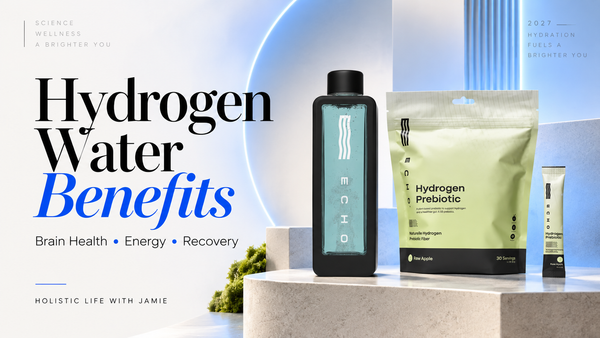
Hydrogen Water Benefits: What the Research Says
Explore hydrogen water benefits, molecular hydrogen, brain health, energy, exercise recovery, oxidative stress, and hydration. Learn what the research shows, how hydrogen water works, and my personal experience using the Echo Flask.
Water should be simple.
Drink it. Stay hydrated. Move on with your day.
But then I started looking into hydrogen water, and what I found made me stop and pay attention.
This wasn't just another wellness trend with a fancy bottle attached to it. Molecular hydrogen has been investigated in thousands of scientific publications, including laboratory, animal, and human research. A 2023 review identified more than 2,000 publications related to hydrogen gas in medical databases, although the number of rigorous human trials is much smaller. (PubMed)
And then I actually started drinking it.
My experience during those first few days was strange enough that I almost stopped.
So let's talk about what hydrogen water actually is, what researchers are learning about it, what happened when I started drinking it, and why I've continued using it.
Frequently Asked Questions About Hydrogen Water
What is hydrogen water?
Hydrogen water, also called hydrogen-rich water, is regular water containing additional dissolved molecular hydrogen gas, H₂.
The water itself is still H₂O. Molecular hydrogen gas has simply been dissolved into it.
A 2024 systematic review describes hydrogen-rich water as ordinary water with molecular hydrogen added to it and reviewed 25 human studies examining its potential effects. (PubMed Central (PMC))
What are the potential benefits of hydrogen water?
Research has investigated molecular hydrogen in relation to oxidative stress, antioxidant capacity, inflammation, exercise, metabolism, cardiovascular health, neurological function, and other areas.
That does not mean all of those benefits have been proven.
The current human evidence is interesting but still developing. The 2024 systematic review of hydrogen-rich water concluded that preliminary results are encouraging while emphasizing the need for larger studies with more rigorous methods. (PubMed Central (PMC))
That's an important distinction.
There's enough here for me to pay attention.
There isn't enough here for me to call hydrogen water a miracle.
Can molecular hydrogen cross the blood-brain barrier?
Yes. Molecular hydrogen is extremely small, electrically neutral, and nonpolar. Scientific reviews describe those properties as allowing it to rapidly diffuse across biological membranes, including the blood-brain barrier. (PubMed Central (PMC))
Research involving molecular hydrogen and the central nervous system is one of the areas scientists have been exploring. That does not mean drinking hydrogen water has been proven to prevent or treat neurological disease, but the ability of H₂ to reach the central nervous system is biologically important and well described in the scientific literature. (PubMed Central (PMC))
Is hydrogen water the same as alkaline water?
No.
Alkaline water refers primarily to the pH of water.
Hydrogen water refers to water containing dissolved molecular hydrogen, H₂.
They are two separate characteristics and shouldn't be used interchangeably.
Is hydrogen water an antioxidant?
Molecular hydrogen has been studied extensively for its relationship with oxidative stress and redox biology.
A major turning point in hydrogen research came in 2007, when researchers reported that molecular hydrogen could selectively reduce highly reactive oxygen species in laboratory experiments and rapidly diffuse across biological membranes. (Nature)
Research since then suggests the story is more complicated than simply calling hydrogen a conventional antioxidant. Scientists are investigating effects involving redox signaling, inflammation, mitochondrial function, gene expression, and other cellular processes. (PubMed Central (PMC))
So, molecular hydrogen is being studied for antioxidant and redox-regulating effects rather than reducing the entire conversation to "it's an antioxidant."
My Personal Experience With Hydrogen Water
When I first started drinking hydrogen water, I noticed something very specific.
And honestly, I wasn't sure I liked it.
I had a strange sensation in my head that almost felt like I had been drinking alcohol.
Not exactly drunk, but altered enough that by day three I was genuinely wondering whether I was going to be able to continue drinking it.
Then the sensation went away.
Now I can drink hydrogen water without experiencing it at all.
What made that experience especially interesting to me was learning more about molecular hydrogen itself.
H₂ is an exceptionally small molecule that can rapidly diffuse through biological membranes, and scientific reviews describe it as being able to cross the blood-brain barrier. (PubMed Central (PMC))
That immediately caught my attention because the sensation I was experiencing was so distinctly in my head.
Was molecular hydrogen crossing my blood-brain barrier the reason I felt that sensation?
I don't know.
My experience can't prove that.
But knowing that molecular hydrogen can reach the brain made the experience considerably more interesting to me.
What I do know is that the sensation was very real, very specific, and temporary.
By the end of those first few days it had resolved, and now hydrogen water is something I can drink without any problem.
What Is Hydrogen?
Hydrogen is the smallest molecule there is.
Molecular hydrogen consists of two hydrogen atoms, which gives us H₂.
Because it's so small and nonpolar, it behaves differently from many compounds we consume. It can diffuse through cell membranes and into cellular compartments, including mitochondria and the nucleus. Reviews also describe its ability to cross biological barriers such as the blood-brain barrier. (PubMed Central (PMC))
That's one of the reasons researchers became so interested in it.
If a molecule can distribute rapidly throughout the body and enter places many larger compounds cannot easily reach, the obvious next question becomes:
What is it doing once it gets there?
That's the question researchers are still working to answer.
Why Molecular Hydrogen Has Attracted So Much Research
Molecular hydrogen has more than 1,000 published studies behind it, and the broader research base is even larger.
A 2023 review reported more than 2,000 publications related to hydrogen gas, while another review noted more than 2,000 articles in the field of hydrogen medicine by the end of 2022. (PubMed)
That body of research spans laboratory studies, biological mechanisms, animal research, and a growing number of human studies exploring how molecular hydrogen may influence oxidative stress, inflammation, cellular signaling, recovery, and other areas of health.
What makes molecular hydrogen especially interesting is how broad that research has become.
Scientists are continuing to study how this tiny molecule interacts with the body, how it reaches different tissues, and what role it may play in supporting normal cellular function.
Molecular hydrogen is one of the most actively researched emerging areas in wellness, with a substantial scientific foundation and a growing body of human evidence.
That is exactly why it caught my attention.
Hydrogen Water and Oxidative Stress
Our bodies produce reactive oxygen species every day.
That's normal.
In fact, reactive oxygen species are involved in cell signaling and normal physiology.
The problem isn't that oxidation exists.
It's when oxidative activity becomes excessive or poorly regulated that cellular damage can occur.
The early hydrogen research that generated so much attention suggested that H₂ could interact with particularly damaging reactive species while leaving some physiologically useful reactive oxygen species alone. (Nature)
Later research has suggested molecular hydrogen may also influence antioxidant defenses, inflammatory pathways, cellular signaling, and mitochondrial function. (PubMed Central (PMC))
And that is a much more interesting biological conversation than:
Take this antioxidant and it eliminates free radicals.
Our biology is more complicated than that.
What About Hydrogen Water for Exercise and Recovery?
Recovery is another area being investigated.
A 2024 systematic review and meta-analysis examined molecular hydrogen supplementation and exercise-induced oxidative stress in healthy adults.
The researchers included six studies involving 76 participants.
Hydrogen supplementation did not significantly reduce the primary measure of exercise-induced oxidative stress they evaluated, but it did produce a statistically significant improvement in measured antioxidant capacity. The researchers concluded that more rigorous studies are needed. (PubMed)
Another 2024 systematic review and meta-analysis examined molecular hydrogen and physical performance and found enough evidence to warrant further investigation, while also noting substantial variation among studies and protocols. (PubMed)
That's why I wouldn't tell you:
Drink hydrogen water and you'll recover faster.
We aren't there.
But research into hydrogen, exercise, oxidative balance, and recovery is legitimate and ongoing.
Why Use a Hydrogen Water Generator?
Here's something important about hydrogen.
It's a gas.
And once it is dissolved in water, it doesn't necessarily stay there forever.
That makes how the water is produced and when you drink it relevant.
Instead of buying bottles of hydrogen water that may have been sitting around, a hydrogen water generator allows the molecular hydrogen to be produced shortly before you drink it.
That practicality is what made the idea of the Echo Flask appealing to me.
The Echo Flask Hydrogen Water Bottle
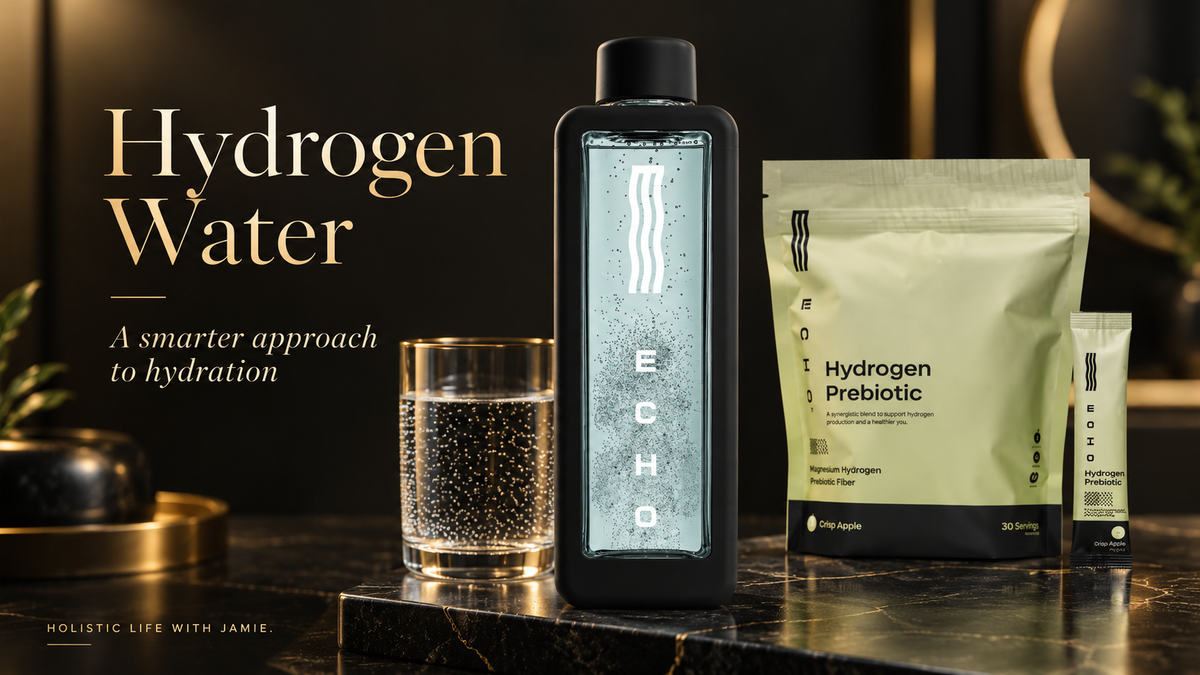
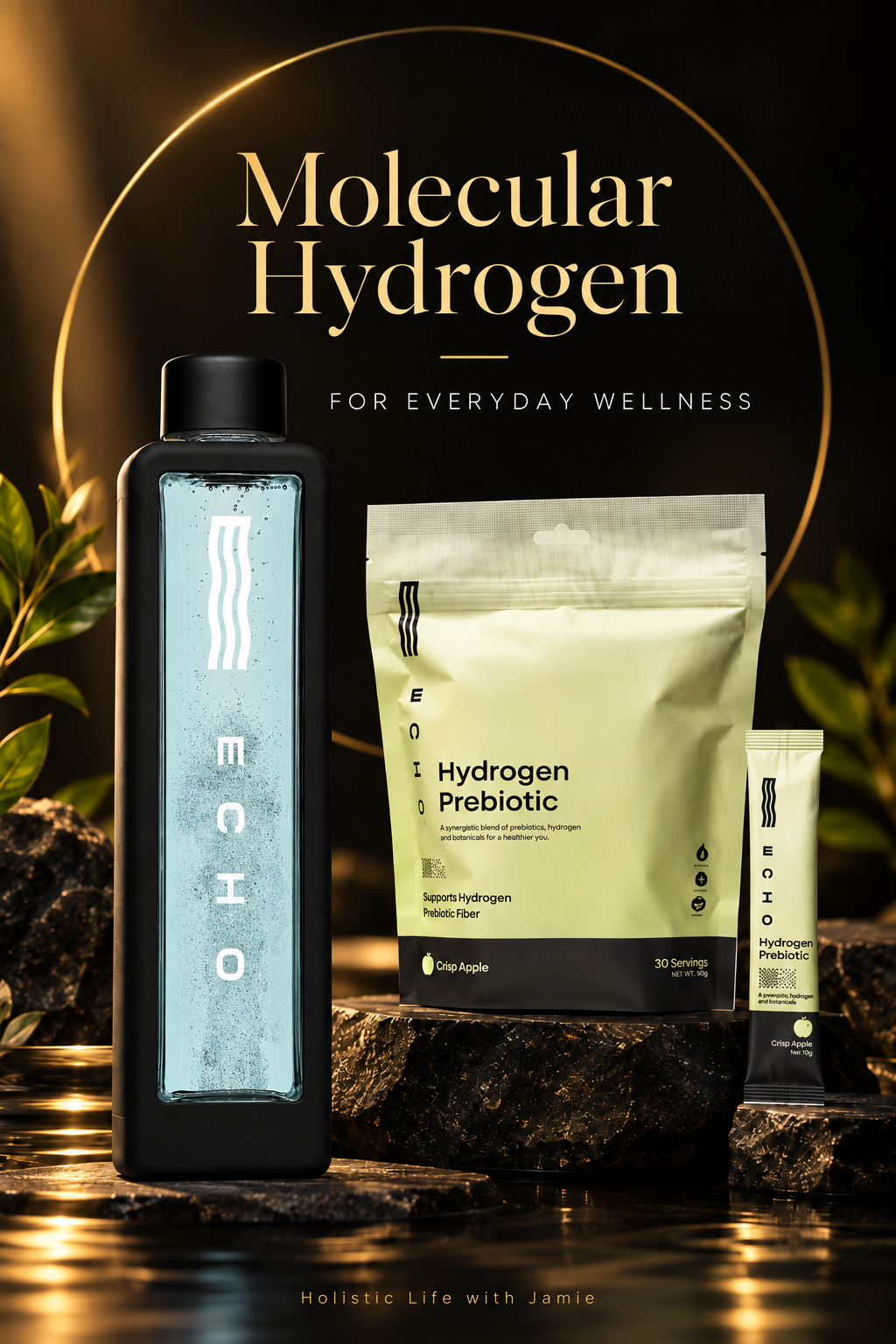
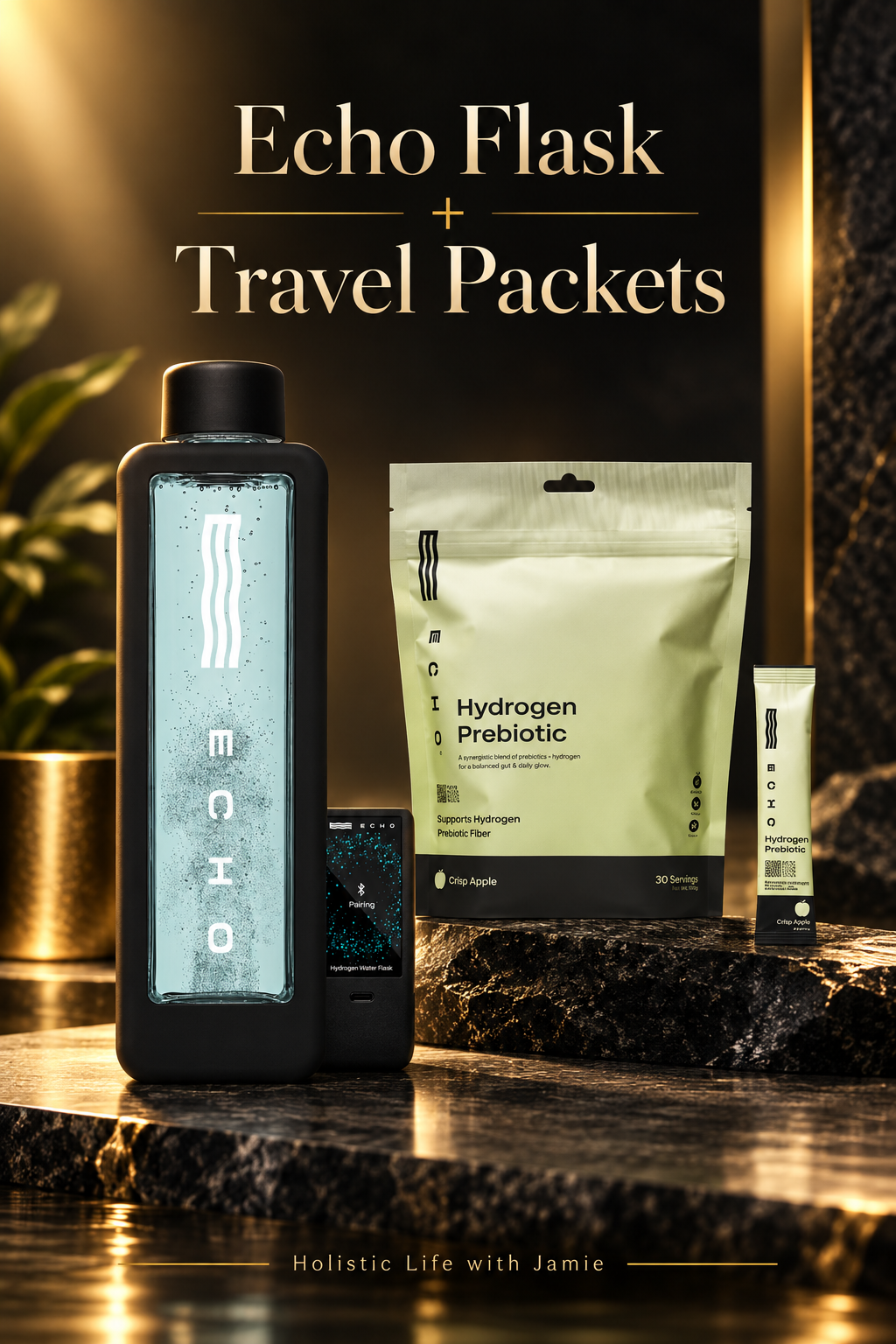
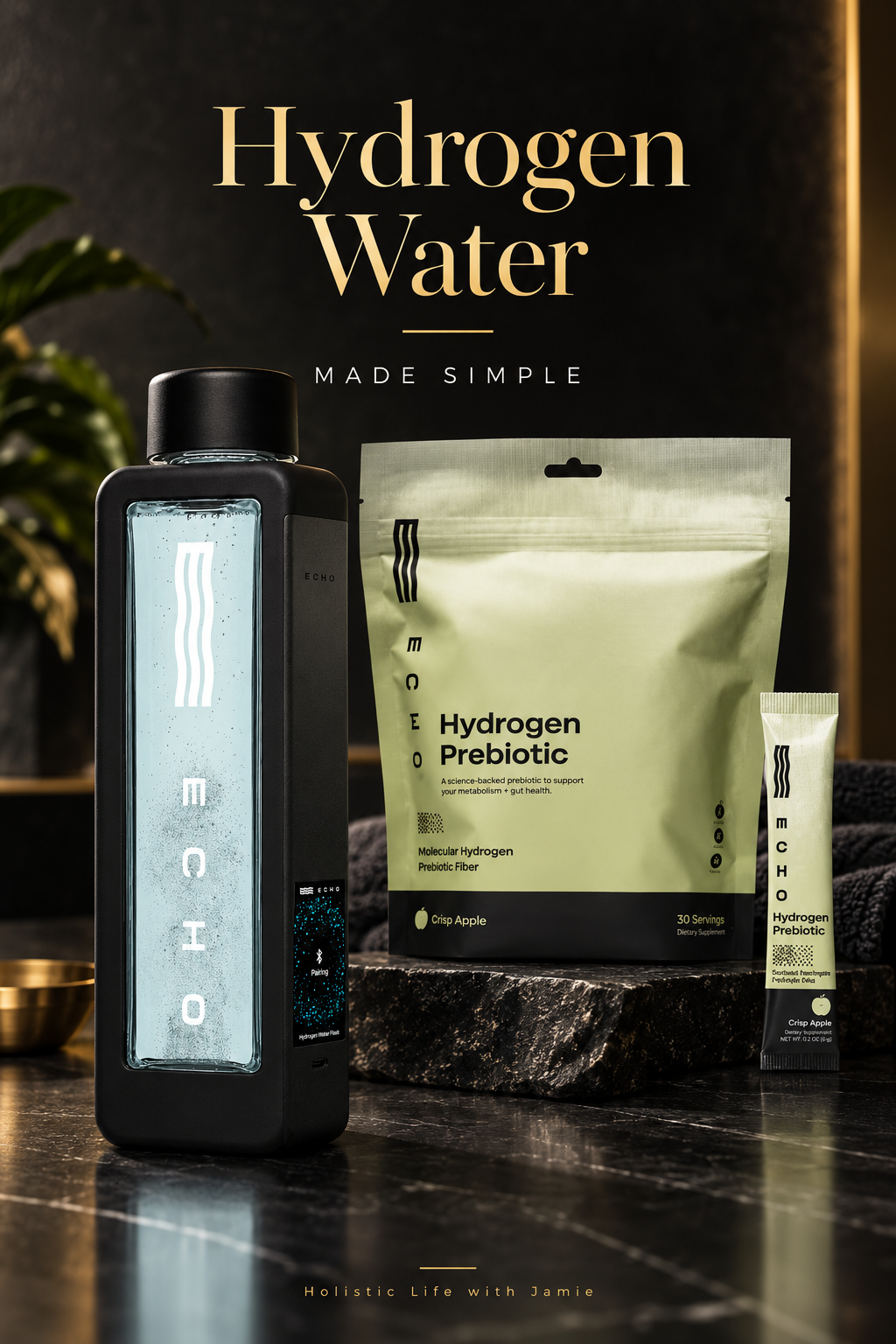
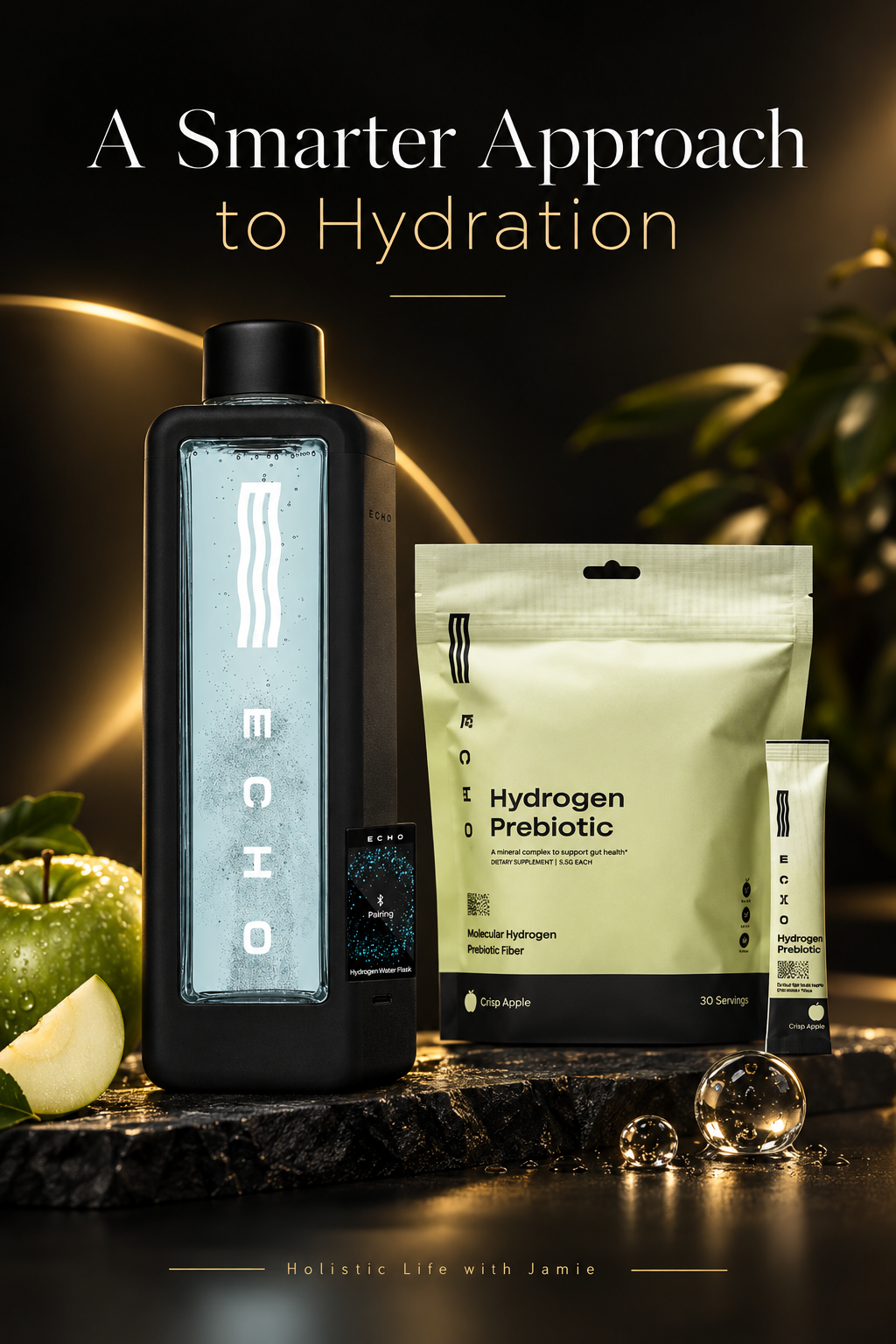
The Echo Flask is a rechargeable hydrogen water generator.
It uses SPE/PEM electrolysis technology with platinum-coated titanium plates to produce hydrogen-rich water. The Flask can generate concentrations of up to 8 ppm and holds 12 ounces of water. It also includes app-connected hydration tracking.
SPE stands for solid polymer electrolyte, while PEM refers to a proton exchange membrane. The technology is used to separate gases during electrolysis while producing dissolved molecular hydrogen in the water.
What I appreciate most about it is considerably less technical.
It's easy.
Fill the flask.
Press the button.
Drink it.
I don't need another wellness habit with fourteen steps and something I have to remember to prepare the night before.
For me, simplicity matters because the perfect wellness practice you don't consistently use isn't particularly useful.
Shop the Echo Flask
Another Option: Echo Molecular Hydrogen Drink Mix
Echo also makes a powdered Molecular Hydrogen Drink Mix.
Each packet is designed to turn 12 to 16 ounces of water into a hydrogen drink and includes molecular hydrogen along with magnesium and prebiotic fiber. The Crisp Apple version comes in individual packets and is marketed as sugar-free and caffeine-free.
I see the Flask and the packets differently.
The Flask makes sense to me for regular daily use.
The packets solve another problem entirely:
convenience.
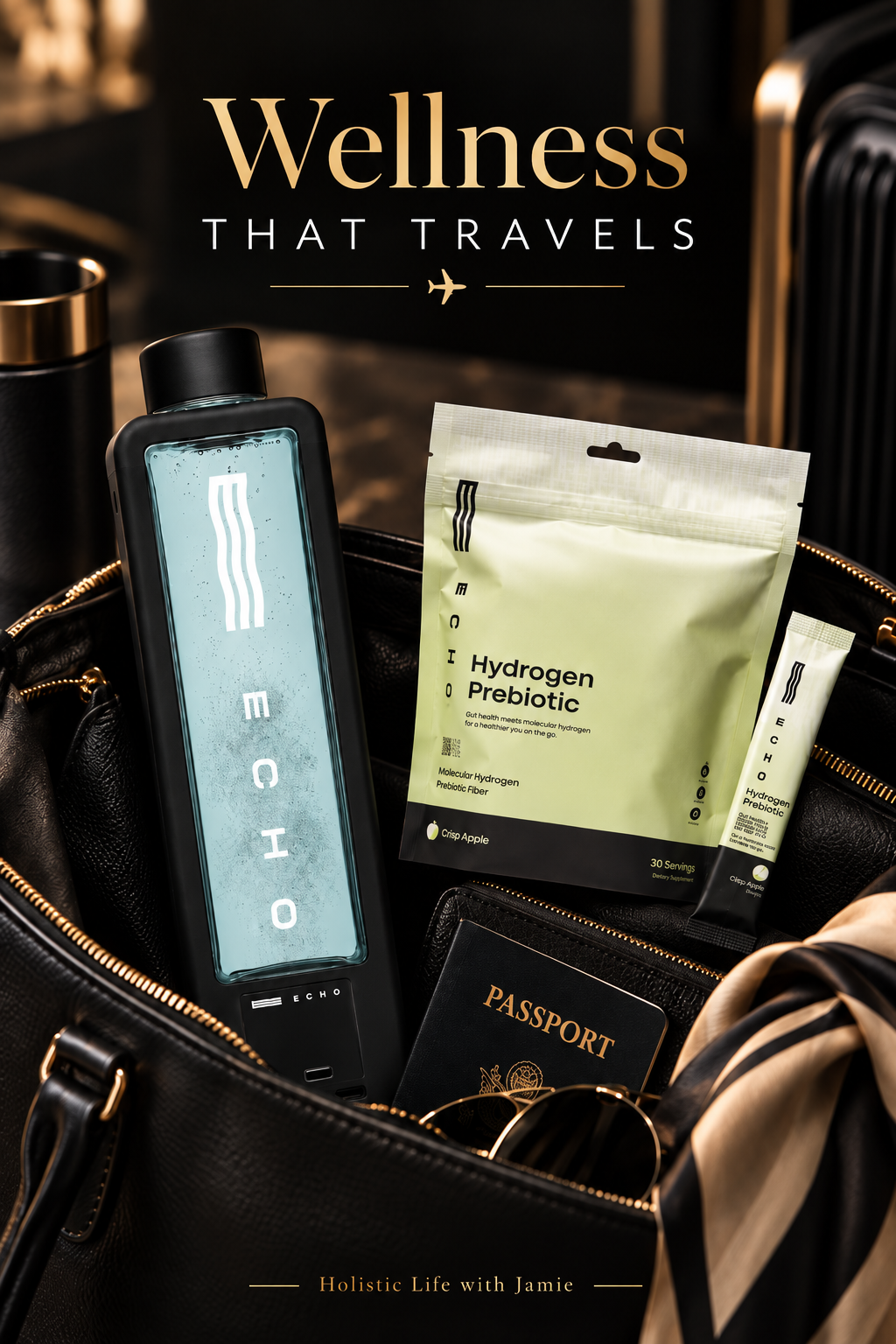
Travel.
Work.
Throwing something in your purse.
Being away from your normal routine.
It gives someone a way to use molecular hydrogen without carrying the Flask everywhere.
Shop Echo Molecular Hydrogen Drink Mix
A Smarter Approach to Hydration?
This is ultimately what interests me about hydrogen water.
I'm already going to drink water.
So the question becomes whether there is something useful we can do with that habit without turning it into something complicated.
A filter focuses primarily on what we can remove from water.
Hydrogen technology asks a different question:
Is there something potentially useful we can add?
Molecular hydrogen is small enough to travel throughout the body, cross biological membranes, enter cells, and cross the blood-brain barrier. Researchers are investigating how it may affect oxidative balance, cellular signaling, mitochondria, inflammation, exercise, and other aspects of physiology. (PubMed Central (PMC))
That doesn't automatically mean more is better.
And it certainly doesn't mean we can guarantee a particular outcome.
It means there's enough legitimate science here to make me curious.
Is Hydrogen Water Worth Trying?
For me, it has been.
But I wouldn't put hydrogen water ahead of the basics.
Sleep still matters.
Food still matters.
Movement still matters.
Hydration itself still matters.
The body is constantly working to repair, regulate, and adapt. Our job is to identify what may be helping or interfering with those processes.
Hydrogen water isn't a substitute for those fundamentals.
I see it as something that can potentially be layered onto a foundation that already matters.
And that's where I think wellness gets interesting.
Not searching for the next miracle.
Not dismissing something simply because it's unfamiliar.
Learning enough to understand what something actually does, looking at the evidence, paying attention to how your own body responds, and deciding whether it earns a place in your routine.
That's exactly what I'm doing with hydrogen water.
I'm paying attention.
And so far, I'm interested enough to keep drinking it.
Amazon Creator Connections Disclosure: I participate in Amazon Creator Connections and may earn a commission from qualifying purchases made through the Echo product links in this article. As an Amazon Associate, I earn from qualifying purchases.
Affiliate Disclosure: This post contains affiliate links, including Amazon Creator Connections links. As an Amazon Associate, I earn from qualifying purchases. If you purchase through one of my links, I may earn a commission at no additional cost to you. All opinions and personal experiences are my own.
Jamie Shahan, MSN, CRNA, RN
Empowering Holistic Health
🌐 Connect with me on Social Media:
Disclaimer
The information provided on this website, in associated blogs, courses, and materials, is for general educational and informational purposes only. It is not medical advice and should not be interpreted as such.
I am not a medical doctor. The content I share reflects my personal opinions, experiences, and research. It is not intended to diagnose, treat, cure, or prevent any disease, condition, or illness.
You should not rely on the information here as a substitute for professional medical care, advice, or treatment. Always consult with a licensed healthcare provider before making any decisions regarding your health, especially if you are pregnant, nursing, taking prescription medications, or managing a medical condition.
By reading this website or using any related materials, you acknowledge and agree that:
- You are fully responsible for your own health decisions.
- The author and publisher of this content assume no liability for any harm, loss, or adverse effects arising directly or indirectly from the use, misuse, or interpretation of the information provided.
- No guarantees are made regarding the outcomes of applying any ideas, suggestions, or protocols discussed. Results will vary for each individual.
Affiliate Disclosure
Some products or tools mentioned may include affiliate links. This means that if you choose to purchase through those links, I may earn a small commission at no extra cost to you. I only recommend products I have personally used, researched, or would recommend to someone I love.
Use at Your Own Risk
By accessing this website and its materials, you agree that you are doing so voluntarily and that you assume full responsibility for any decisions you make regarding your health, lifestyle, or purchases.