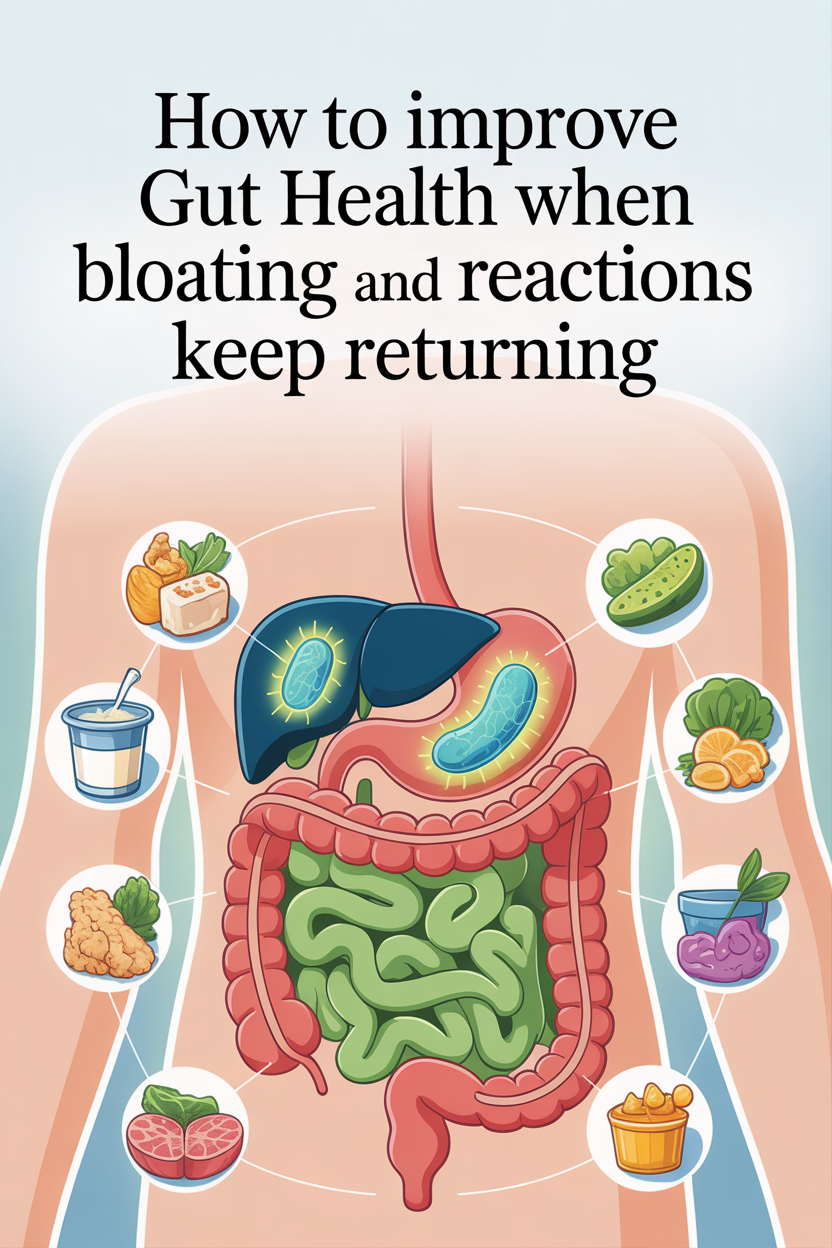
How to Improve Gut Health When Bloating and Reactions Keep Returning
Struggling with bloating, gas, diarrhea, or constipation? Learn how to improve gut health naturally by reducing digestive workload. This guide explains why gut symptoms persist and how consistent meals and digestion support can help bloating and food reactions improve.
If your gut stays bloated, gassy, or uncomfortable even though you eat well, sleep reasonably, and keep trying gut protocols, the problem is often not what you’re missing.
It’s that you may be doing too much.
When digestion is already strained, layering elimination diets, prolonged fasting, antimicrobials, or heavy supplement stacks can increase workload instead of reducing it.
Before adding more, the order needs to change
FAQ
Why does bloating keep coming back even when I clean up my diet?
Because digestion depends on processing capacity, not just food quality.
Does constant bloating mean I’m eating the wrong foods?
Not always. It often means food is not being broken down efficiently.
Should I start antimicrobials or a cleanse if symptoms persist?
Not until digestion stabilizes. Forcing tools into an overloaded system usually backfires.
Can fasting fix bloating?
It can temporarily reduce pressure. It does not automatically restore breakdown capacity.
The Real Issue Most People Miss
Ongoing gut symptoms are not always a sign that you need stronger gut work.
Very often, they mean digestion is inefficient and overburdened.
When digestion is inefficient:
- food is not broken down well
- bile flow is poorly timed
- fermentation increases
- bloating becomes constant
- food tolerance narrows
Adding more restriction in this state increases demand on a system that is already struggling.
This is why so many “healthy” protocols backfire, especially when stress and cortisol are already influencing digestion. Stress and Cortisol: Your Gut’s Worst Frenemy
Why Many People Don’t Realize This Is Happening
You don’t feel sick.
You’re functioning. You’re working. You’re handling life.
The bloating is annoying, but it’s not dramatic.
The heaviness after meals feels normal.
Energy dips get blamed on being busy.
When symptoms build slowly, they become baseline. And when your nervous system stays in a mild stress pattern, subtle digestive signals get pushed to the background. You don’t ignore them on purpose. You just adapt.
That’s how constant bloating becomes invisible.
And once it feels normal, the solution seems obvious:
“I must need stronger gut protocols.”
But persistent bloating usually means digestion is inefficient, not that it needs more force.
#1 Observe
Before starting another plan, take 7–10 days to observe.
Track:
- When bloating appears
- How long it lasts
- Stool frequency and consistency
- Heaviness after meals
- Energy after eating
- Sleep quality
This is not about fixing. It is about identifying your dominant pattern.
That awareness changes how you respond.
If you haven’t read how digestive signaling interacts with the nervous system, revisit: Gut Health Starts in the Nervous System
What Constant Bloating Usually Means
Constant or near-constant bloating usually means digestion is not processing food efficiently.
It does not automatically mean:
- you’re eating the wrong foods
- you’re eating too many vegetables
- your diet isn’t clean enough
- you need to cut out more foods
More often, it means:
- food is sitting too long before being broken down
- bile flow is sluggish or poorly timed
- fermentation is happening instead of digestion
- the gut is working harder than it needs to
In other words, bloating is often a processing problem, not a food-quality problem.
#2 Reduce
Before adding anything new, remove what increases digestive workload.
Pause or scale back:
- strict elimination diets
- very low calorie eating
- prolonged fasting
- aggressive antimicrobial or cleanse protocols
- large supplement stacks
This is not quitting.
It is reducing demand so digestion has room to function.
If you’ve been aggressively targeting “overgrowth,” review: Terrain vs. Bugs
#3 Stabilize
This is where progress begins.
The goal is not perfect digestion.
The goal is easier digestion.
Start with these foundations:
- eat meals at consistent times each day
- avoid grazing or skipping meals
- choose simpler meals with fewer ingredients
- eat enough food to meet basic needs
If food feels like it sits heavy after meals, digestive enzymes can help reduce the effort required to break food down.
If bloating is worse after fatty foods, bile support can help fats move and digest properly instead of lingering and fermenting.
If you’re unsure whether bile flow is part of your pattern, read Bitters and Bile Flow: Why Fat Digestion Matters More Than You Think, where we break down how sluggish bile alters fat digestion and increases fermentation.
Rule:
If something increases digestive effort, it is the wrong move for this phase.
#4 Assess
You are moving in the right direction when:
- bloating still happens but resolves faster
- meals feel lighter afterward
- stools become more predictable
- food reactions decrease
- you think about digestion less, not more
#5 Sequence
Antimicrobials, cleanses, extended fasting, and aggressive gut protocols are not wrong.
They are demanding.
These tools:
- increase digestive workload
- require strong breakdown capacity
- ask the body to adapt quickly
When digestion is already inefficient, these approaches often:
- worsen bloating
- increase fermentation
- narrow food tolerance
- create cycles of flare and crash
Holding off is not avoidance. It is strategy.
What you gain by waiting:
- better food breakdown
- improved bile flow
- less fermentation
- wider tolerance
- fewer reactions
When these foundations are in place, advanced gut tools work more effectively and with fewer side effects.
Digestive Stabilization Protocol
The real work begins with structure.
The full Digestive Stabilization Protocol - including enzyme types, bile support distinctions, fasting placement, liver protection, and phased progression - is available to Holistic Life members.