
The Truth About Indoor Air Quality: Why You’re Still Tired Even After Sleeping 8 Hours
Waking up tired even when you sleep well? Your indoor air might be the problem. Winter turns your home into a toxin trap that drains your energy and overloads your detox pathways. Here is how to clear the air and feel rested again. Click to read

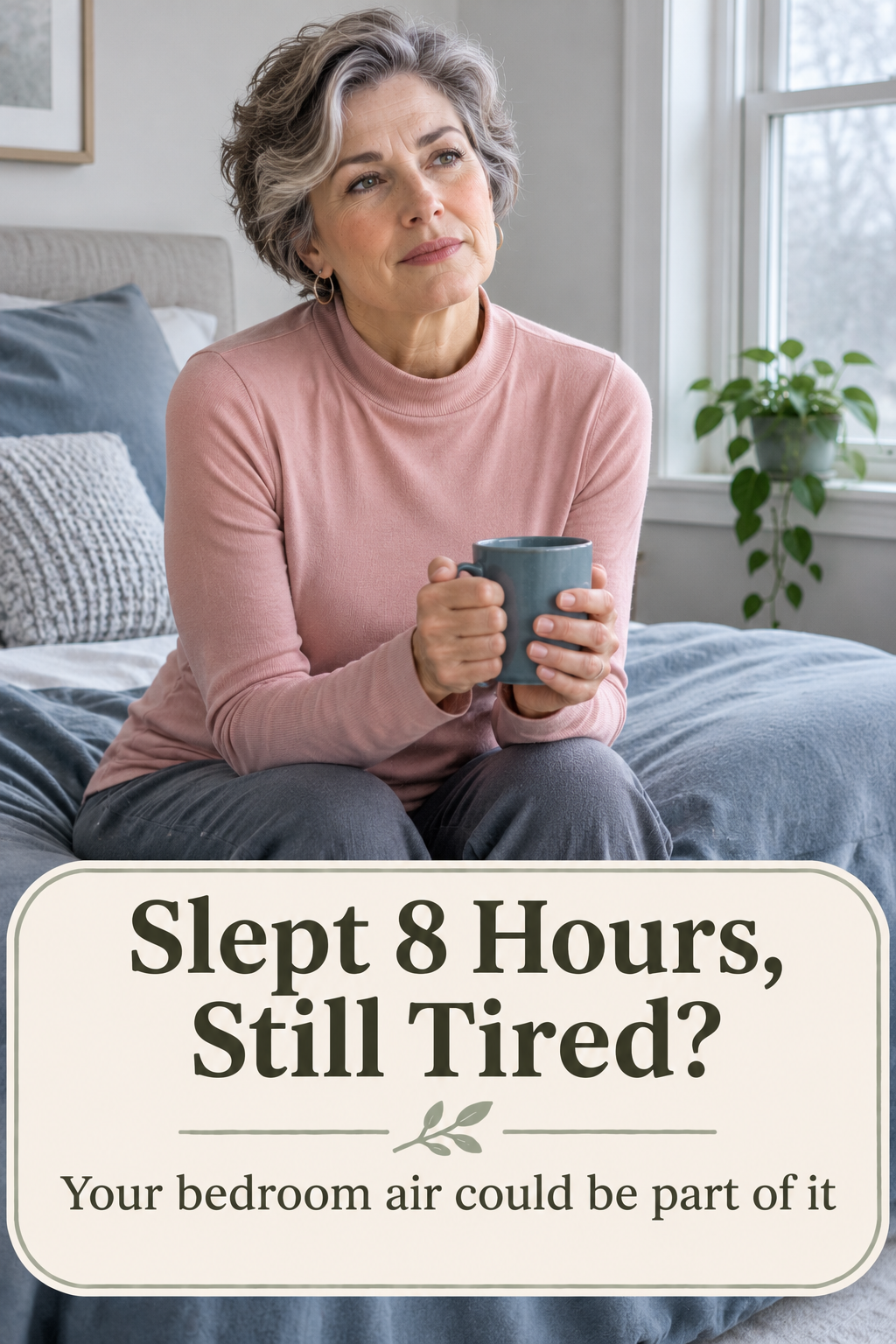
You did everything right before bed. Cool room, dark room, phone face down. And you still woke up like your body didn't get the memo.
Your eyes are open. Your brain is on. Your body? She's on strike. All you want is your coffee, your chair, and a few quiet minutes watching the sun come up. Then a few minutes turns into an hour, and you're still sitting there, awake but not exactly working.
You're not lazy. You've done the work. You cut the sugar and the processed food, cleaned up your products, and supported your detox. So why does something still feel off?
What if part of the answer is the air you breathe all night long?
In this post
- What Causes Poor Indoor Air Quality?
- Can Bad Indoor Air Make You Tired?
- What Are the Signs of Poor Air Quality at Home?
- How Can I Improve Indoor Air Quality Naturally?
- Tools I Use
- Frequently Asked Questions
- Members: My Bedroom Air Reset
- Members: Room-by-Room Clean Air Checklist
- Members: How I Use My Air Purifiers (and What I'd Skip)
- Members: Smell-Good Swaps Without the Fragrance
What Causes Poor Indoor Air Quality?
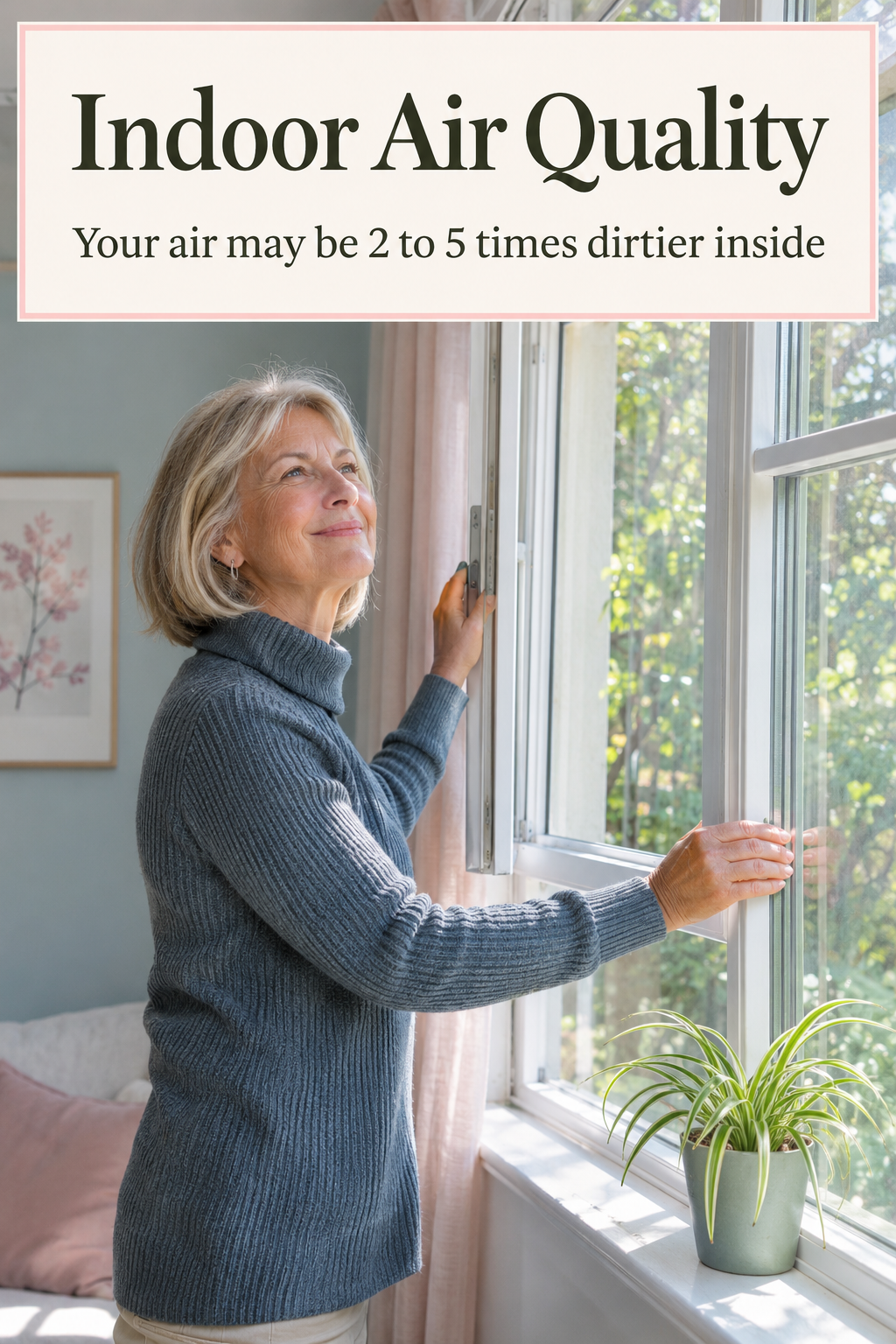
You breathe about 11,000 liters of air a day, and most of it is inside your house. Indoor air often holds two to five times more of some pollutants than the air outside. That surprises most people, because we think of pollution as highways and smokestacks.
Here's what builds up inside:
- Sealed-up homes. We close everything tight for heat and air conditioning, so nothing gets out.
- Chemical fumes (VOCs). Furniture, carpet, paint, candles, plug-ins and cleaning sprays let off gases all day long.
- Dust and dander. Pet hair, skin flakes and fabric fibers float around and carry mold spores with them.
- Cooking and heating. Gas stoves, fireplaces and burnt food add tiny particles to the air.
- No fresh air. In winter, windows can stay shut for months.
Can Bad Indoor Air Make You Tired?
It can play a part. When a bedroom stays closed all night, the carbon dioxide from your own breathing builds up. Higher carbon dioxide is linked to grogginess, lighter sleep and that heavy-headed feeling in the morning.
Fumes and particles also irritate your nose, throat and lungs, and your body has to deal with that irritation all night. I believe your liver and lymph system carry extra work when the air is full of junk, like running a cleanup shift while you're supposed to be resting.
Bad air isn't the only reason you might wake up tired. But if you've already cleaned up your food and your sleep habits, it's worth looking at.

What Are the Signs of Poor Air Quality at Home?
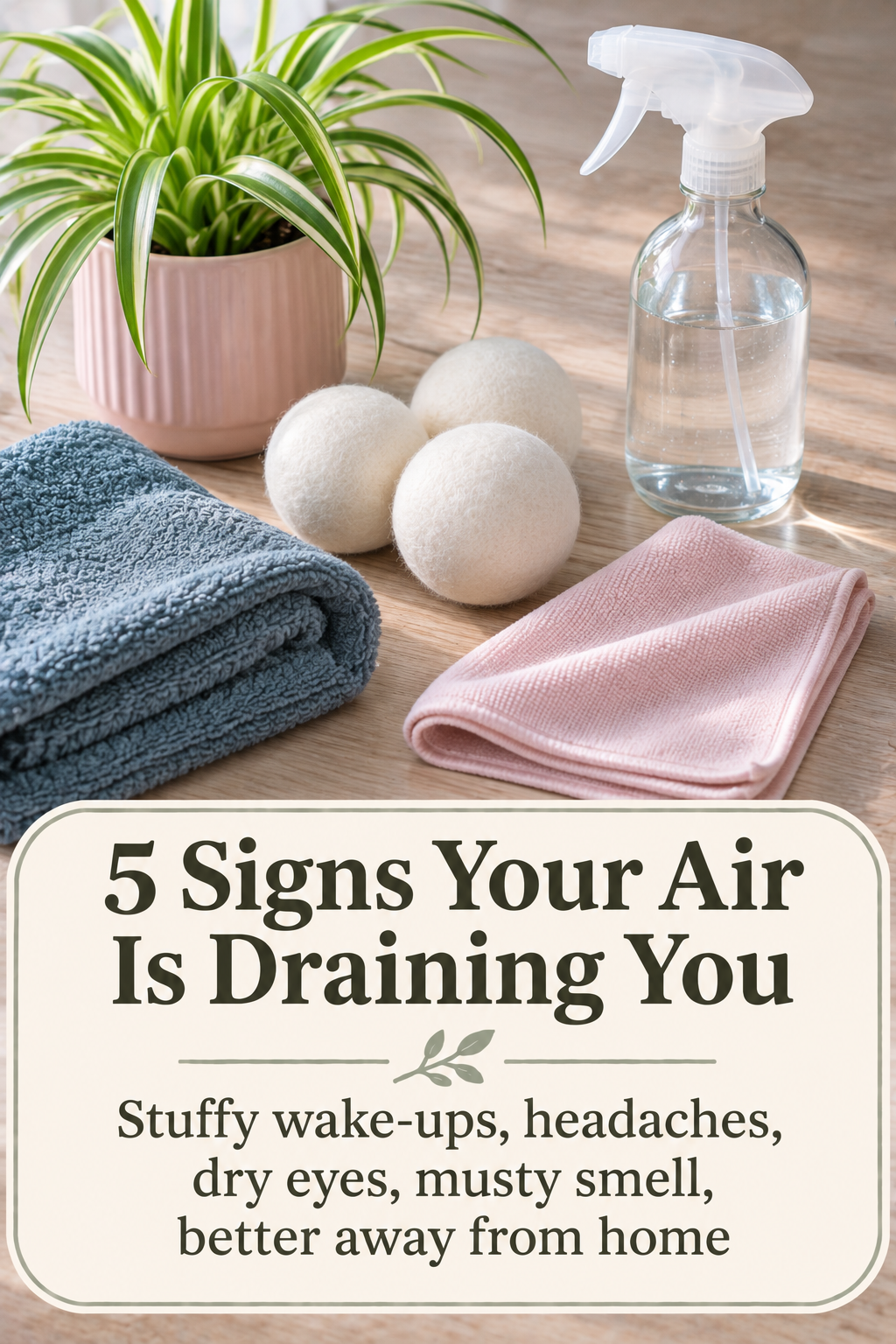
- You wake up stuffy or with a scratchy throat
- You get headaches that ease up when you leave the house
- Your eyes feel dry or itchy indoors
- The house smells stale or a little musty
- You feel better on vacation or after a day outside
How Can I Improve Indoor Air Quality Naturally?
You don't need a remodel. The goal isn't a perfect house. It's less junk floating in the air you breathe.
- Open the windows for 10 to 15 minutes a day, even in winter. Fresh air breaks up the stale air fast.
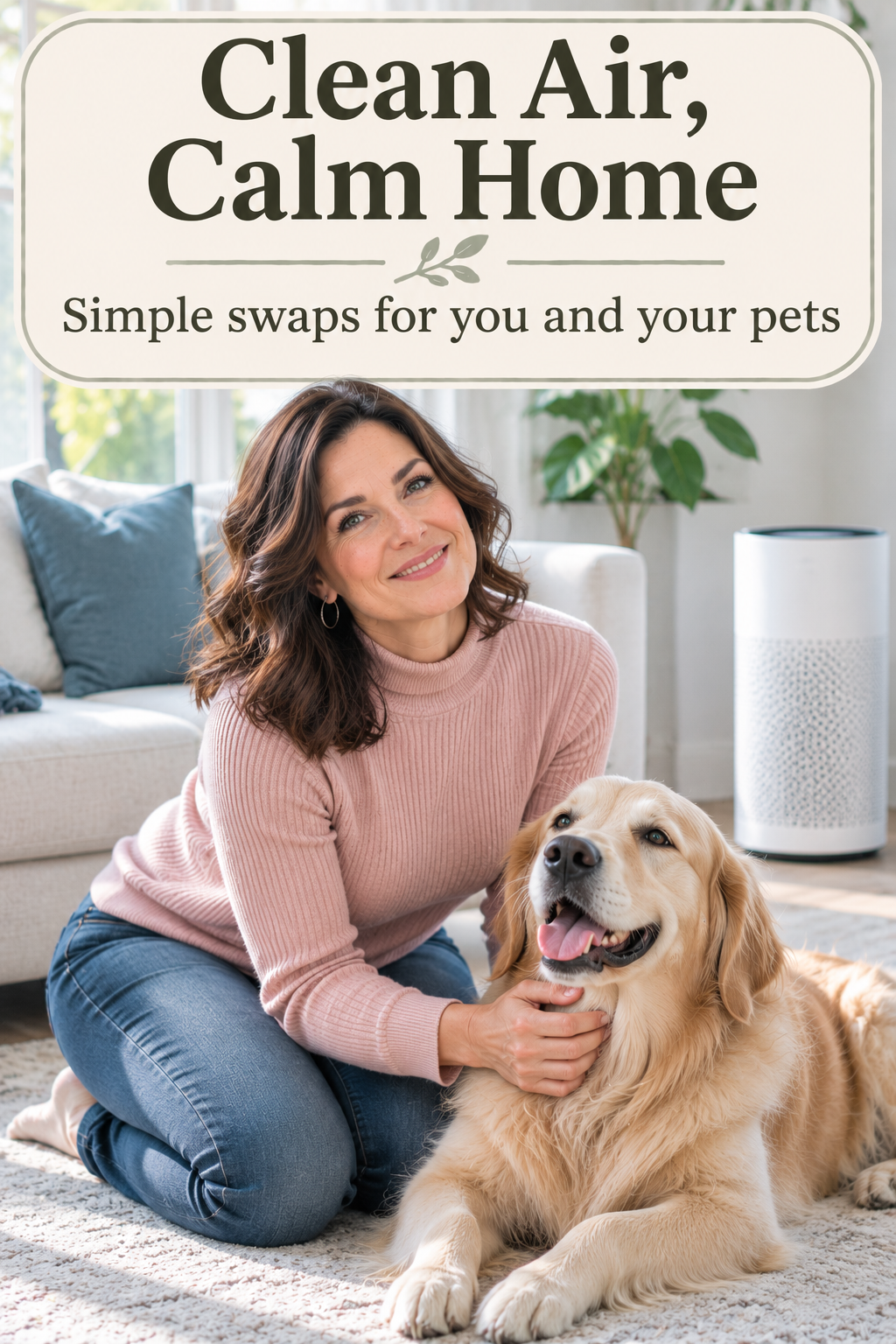
- Run an air purifier with a true HEPA filter and activated carbon. HEPA catches particles, and carbon soaks up fumes. Start with your bedroom.
- Skip scented candles, plug-ins and air freshener sprays. If you love candles, beeswax burns cleaner than paraffin, but any flame still makes some smoke. If you diffuse essential oils, keep it short and skip oils that aren't safe for pets, like tea tree.
- Dust with a damp cloth and vacuum with a HEPA vacuum. A dry duster just moves the dust around.
- Use your exhaust fans when you cook and shower, and keep humidity between 30 and 50 percent so mold can't take hold.
- Switch to fragrance-free cleaning and laundry products. Fragrance is one of the biggest sources of indoor fumes.
- Add plants if you enjoy them. They won't clean the air the way a purifier does, but many people say a room with plants feels calmer. If you have pets, choose pet-safe plants like spider plants or Boston ferns.
- Support your body's drainage. I believe water, movement and a good sweat help your body clear what it takes in.
I have an air purifier running in my bedroom and another one right next to my favorite chair in the living room. I also gave up scented candles, plug-ins and scented laundry beads. I'll be honest, I still miss sweet-smelling clothes.

Tools I Use
- Air Doctor air purifier. I have one in my bedroom and one in my living room.
- Truly Free fragrance-free home products. I use their laundry detergent, fabric softener, dishwasher detergent and dish soap.
- Mini Monthly Detox Planner for a simple monthly detox routine.
Frequently Asked Questions
How do I know if my indoor air quality is bad?
Common signs include waking up stuffy, headaches that improve when you leave the house, dry or itchy eyes, and a stale or musty smell. An indoor air quality monitor can measure particles, carbon dioxide and fumes (VOCs) so you can see the numbers instead of guessing. Many monitors cost less than a nice dinner out.
Do air purifiers help with fatigue?
Air purifiers don't treat fatigue, but they can reduce the dust, dander, smoke and fumes that irritate your airways and disturb sleep. Choose one with a true HEPA filter for particles and activated carbon for odors and fumes. Size it for your room and run it in the bedroom, where you spend the most hours.
Are ozone generators safe to use at home?
Ozone irritates the lungs, even at low levels, and it doesn't clean the air the way a HEPA filter does. Ozone generators are designed for empty rooms only, with people, pets and plants removed and the room aired out afterward. For everyday breathing air, a HEPA and carbon purifier is the safer choice.
Do houseplants clean indoor air?
Houseplants absorb small amounts of fumes, but you'd need a huge number of plants to match what a window or air purifier does. Enjoy them for how they make a room feel. If you have dogs or cats, choose pet-safe plants like spider plants, Boston ferns and parlor palms, since peace lilies and snake plants are toxic to pets.
How often should I open windows in winter?
Opening windows for 10 to 15 minutes once or twice a day lets stale indoor air out without chilling the house much. Short, wide-open airing works better than leaving a window cracked all day. It's especially helpful after cooking, cleaning or showering, when fumes and moisture build up fastest in a closed home.
Your Turn
Tonight, open your bedroom window for 15 minutes before bed, or run a purifier with the door closed. Then pay attention to how you feel when you wake up.
My free Body Signal Starter walks you through the simple body signals that tell you whether a change is working for you. Grab your free Body Signal Starter here.
Every path to healing counts. Take what fits, and let your body have the final say.
Jamie
About Jamie
I'm Jamie, and I'm rebuilding my health in my 60s, one real swap at a time. I share what I change, why I change it, and what my body tells me, so you can decide what fits you.
Follow along on Pinterest
Disclaimer
Everything on this site, including posts, guides and member materials, is for education and information only. It is not medical advice. I am not a medical doctor, and nothing I share is meant to diagnose, treat, cure or prevent any disease. What I write reflects my own experience, research and opinions.
Please talk with your healthcare provider before making changes to your health, especially if you are pregnant or nursing, take prescription medications, or are managing a medical condition. You are responsible for your own health decisions, and results vary from person to person. By using this site, you agree that the author and publisher are not liable for any harm or loss arising from the use or misuse of this information.
Affiliate Disclosure
Some links are affiliate links. If you buy through them, I may earn a small commission at no extra cost to you. I only share products I've used, researched, or believe in. As an Amazon Associate, I earn from qualifying purchases.