How to Stop Sugar Cravings When Stress Hits: What a Whole Bag in Three Days Taught Me
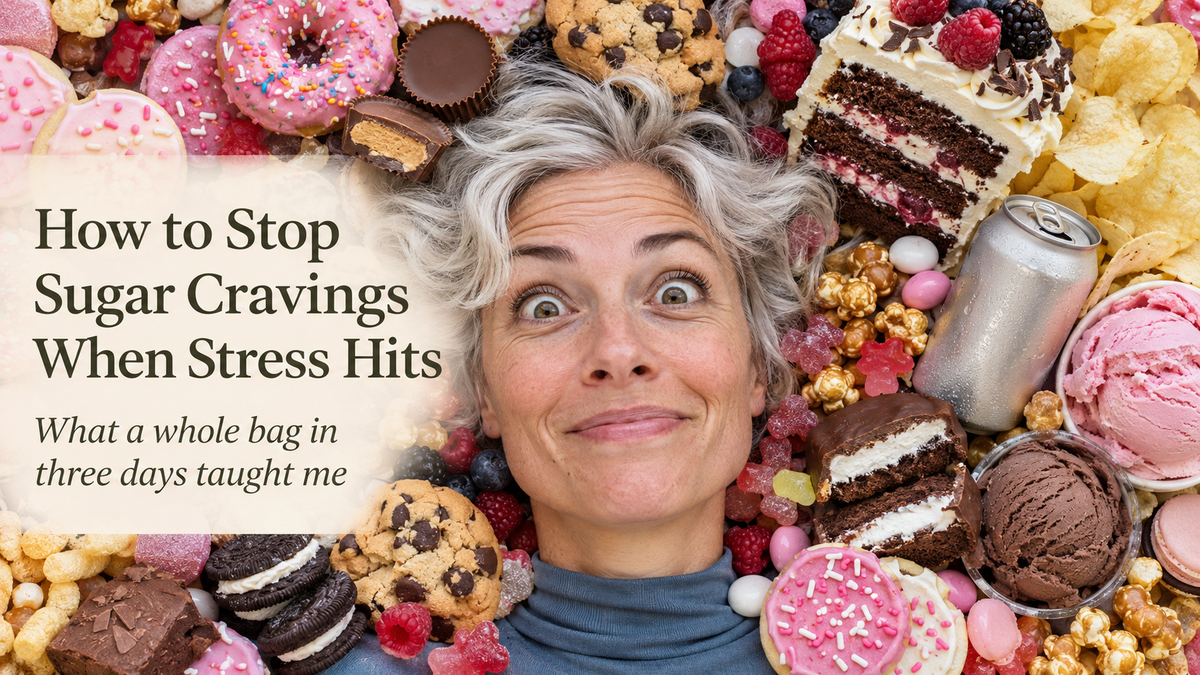
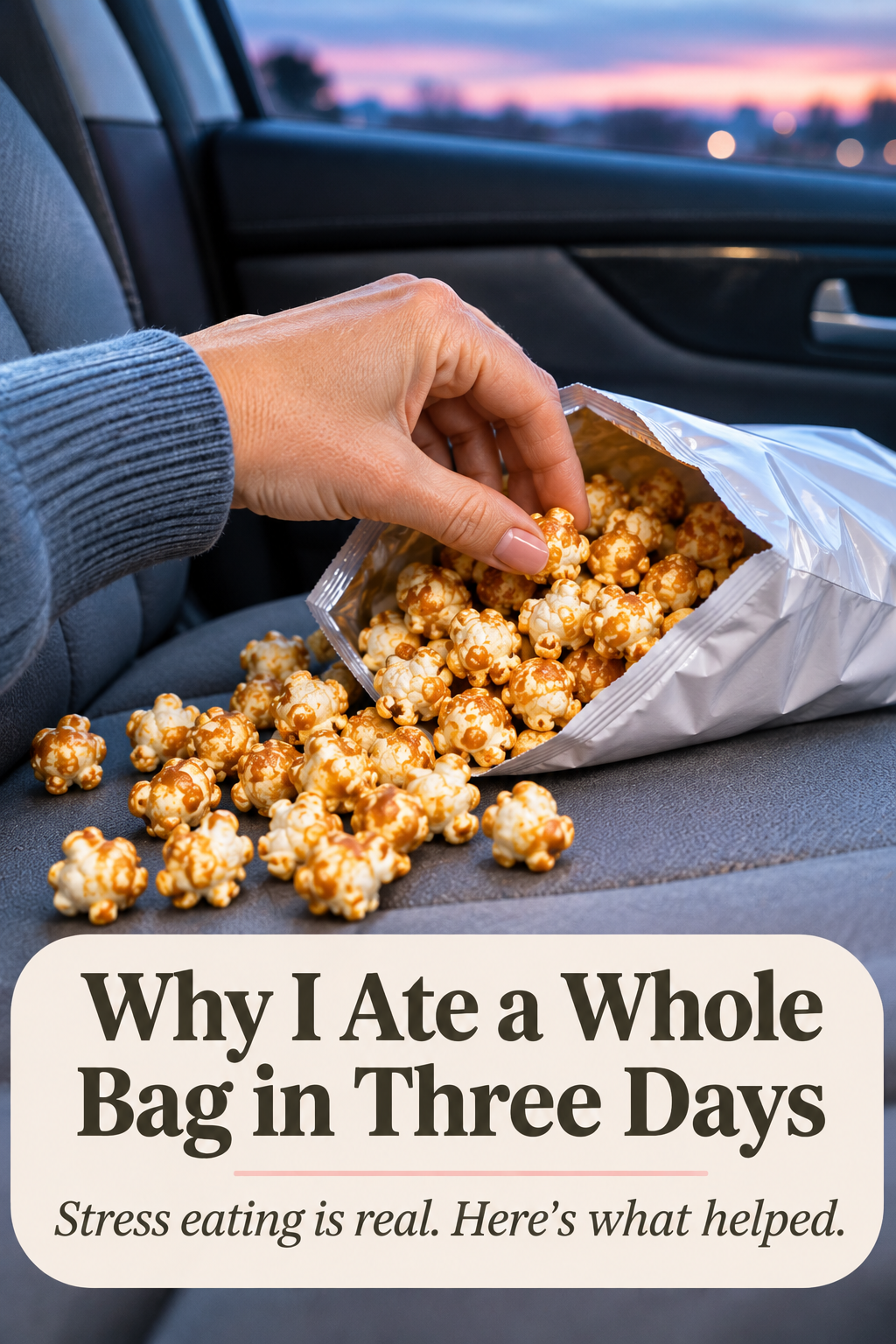
It was a bag of Beaver Nuggets. One bag, from Buc-ee's. I ate half of it on the drive home from Dallas, and two days later the rest was gone. Every last sweet, crunchy, caramel-coated puff.
Here's the part that stopped me cold: I was on Mounjaro. The medication that turns the food noise down for me. The one that finally gave me a stop signal. And I still ate the whole bag.
I'd been in a hard stretch of caregiving for a family member, the kind of stress that doesn't clock out when you do. Mounjaro turned the food noise down. Stress turned it right back up. If you've been fighting sugar cravings and losing, especially when life gets heavy, this is what that bag taught me.
In this post
- This Isn't New for Me
- Why Do People Stress Eat?
- Why Does Sugar Calm My Anxiety?
- What Are the Signs of Emotional Eating?
- Why Do I Crave Something Sweet After Dinner?
- The Bliss Point: Why You Can't Eat Just One
- It Isn't Just Stress: What Else Breaks Your Stop Signal
- Where Mounjaro Fits
- How to Stop Sugar Cravings When Stress Hits
- Tools I Use
- Frequently asked questions
- Members: The 10-Minute Craving Plan
- Members: My Stress-Proof Kitchen
This Isn't New for Me
I've had a sweet tooth my whole life.
In my twenties, with my second baby at home, I bought a package of vanilla cream-filled cookies. I ate the whole package in one day. Then I went back to the store, bought another package, and put it in the pantry so no one would know.
I wasn't thinking about cookies all day long. That's not what food noise was for me. It was that once I started, there was no stop signal. Two cookies turned into four, and four turned into the whole package.
If you've ever finished a bag and thought what is wrong with me, nothing is wrong with you. Something is happening in your body, and it has a name.
Why Do People Stress Eat?
When stress hits, your body releases cortisol, your main stress hormone. Cortisol's job is to get you ready to fight or run, so it raises your blood sugar to give your muscles quick fuel.
The problem is that most of our stress today doesn't involve running from anything. We sit with it. The blood sugar goes up, insulin brings it back down, and when it drops, your brain asks for the fastest fuel it knows: sugar.
When stress hangs around for days or weeks, cortisol stays high, and high cortisol turns up your appetite, especially for sweet and fatty foods. Your body thinks it's preparing for a famine. It's really preparing for the next phone call.
Why Does Sugar Calm My Anxiety?
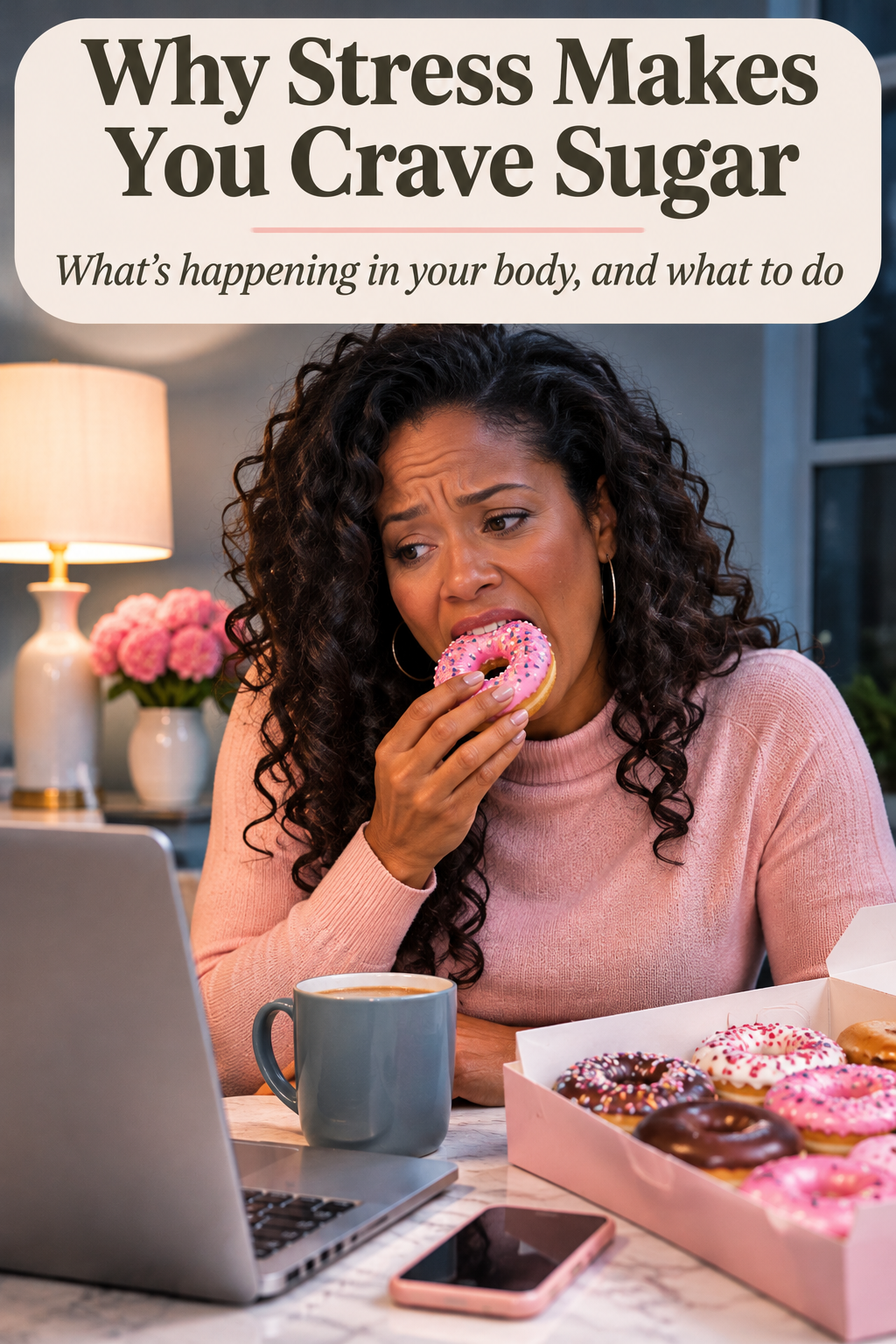
Because it works, for about 15 minutes.
Sugar releases dopamine in your brain's reward center, the same feel-good pathway that alcohol and other habits light up. It also helps your brain make more serotonin, the chemical that helps you feel calm. So for a little while, you really do feel better.
Then the relief fades, and the stress is still sitting right there. Your brain remembers what worked last time, so it asks again. That's the cycle. Over time it takes more sugar to get the same lift, which is how one cookie becomes four.
What Are the Signs of Emotional Eating?
Emotional hunger and physical hunger feel different once you know what to look for:
- It comes on suddenly instead of building slowly
- You want one specific food, usually sweet or salty, and nothing else will do
- You're eating when you aren't actually hungry
- You keep eating past full
- It shows up right after a hard moment, a hard conversation, or a long day
- You feel guilty afterward
Physical hunger is patient. Emotional hunger wants it right now.
Why Do I Crave Something Sweet After Dinner?
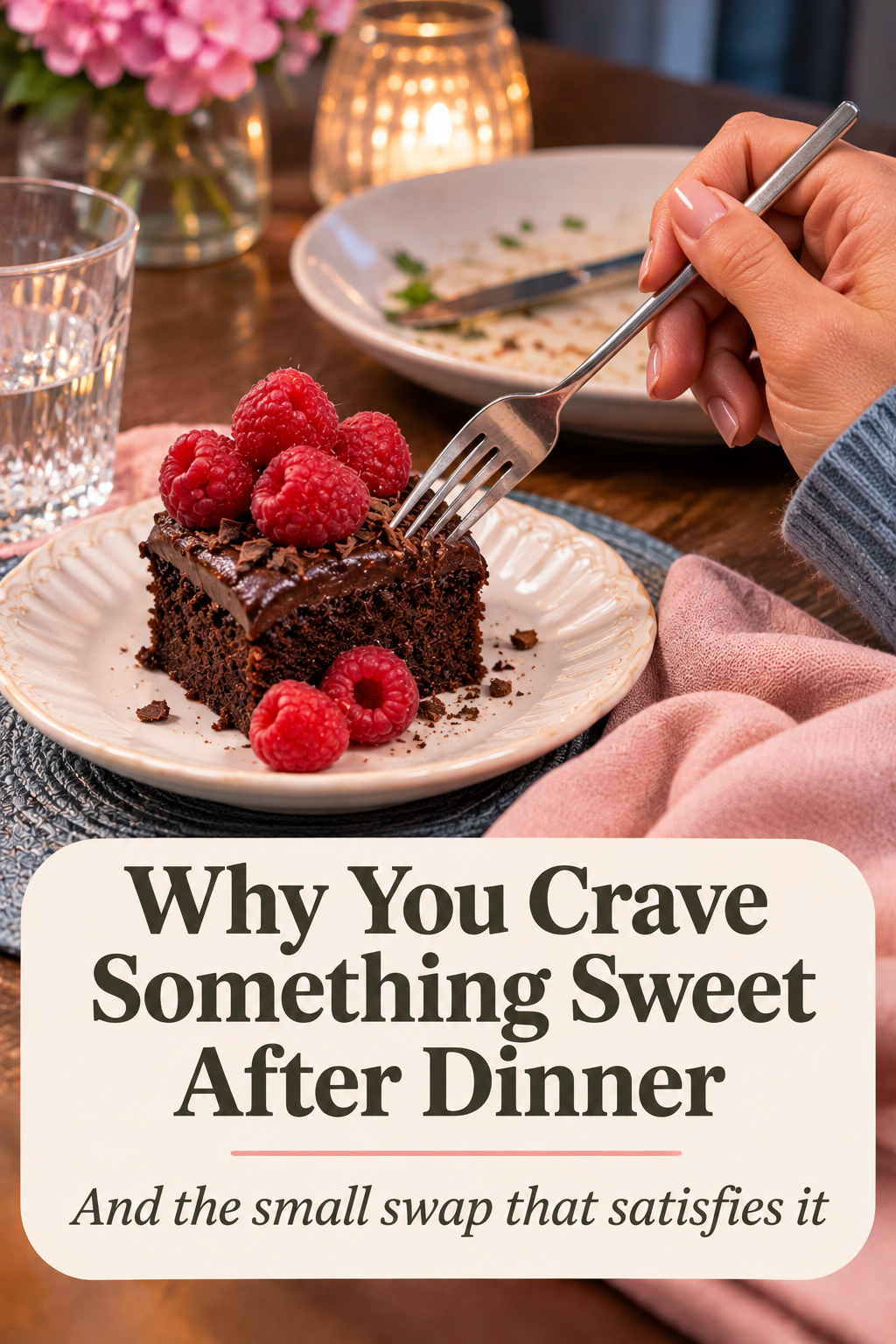
I don't fully understand it, but I have it. After dinner, I want a little somethin somethin. It doesn't take much, just a little.
Here's what's going on. Your taste buds get tired one flavor at a time. After a savory dinner, your brain is done with savory, but it isn't done with sweet. That's why there's always room for dessert.
On top of that, years of dessert after dinner trained your brain to expect it. The dopamine starts firing before you even get up from the table. Add in the fact that evening is when you're most worn down, and the craving lands hard.
The good news is that the craving is for the sweet signal, not a pile of food. A small amount can do the job.
The Bliss Point: Why You Can't Eat Just One
This is the part that made me mad when I learned it.
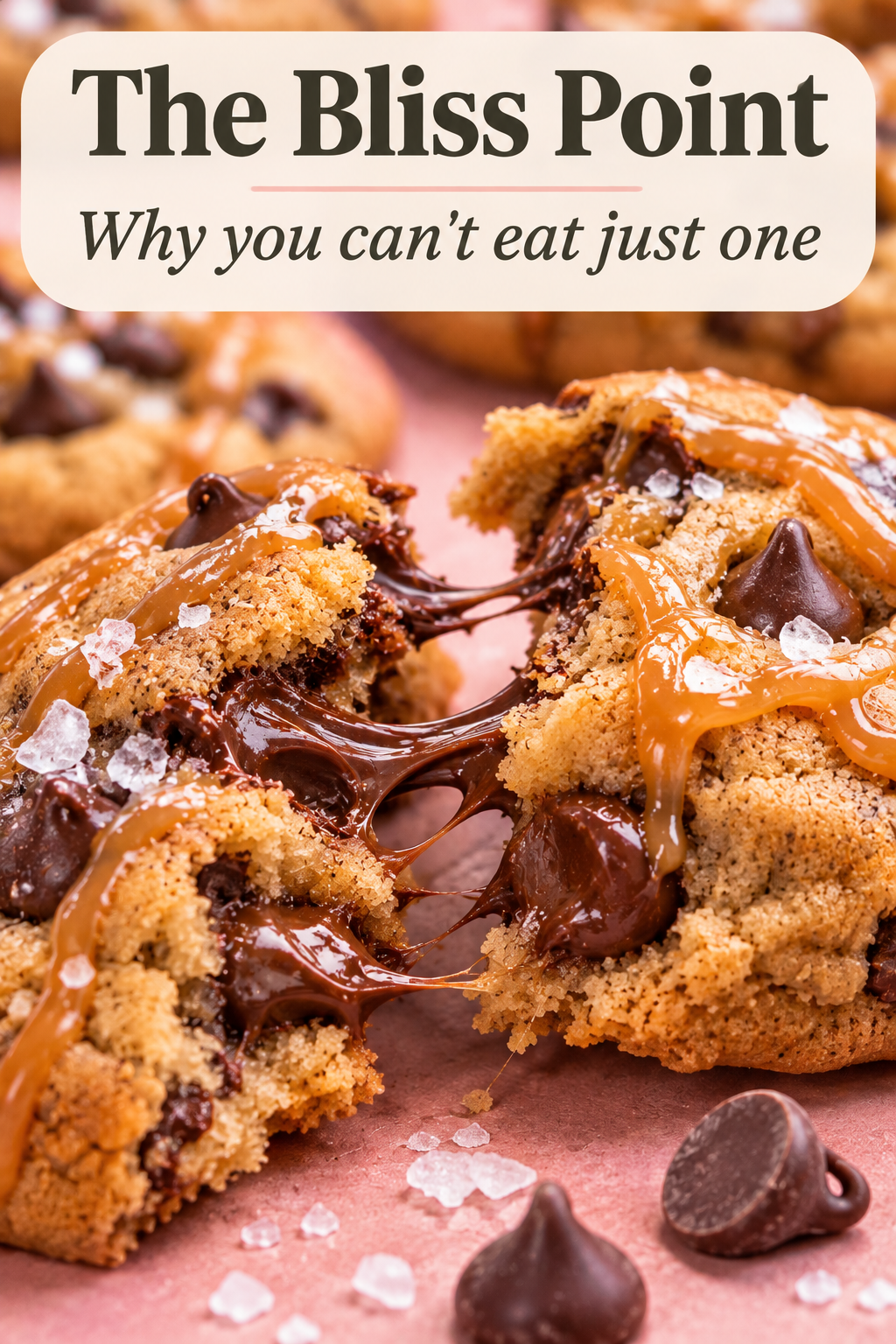
Food companies pay scientists to find the bliss point: the exact mix of sugar, fat and salt that makes a food so satisfying you keep eating past full. Too little and it's boring. Too much and it's overwhelming. Right at the bliss point, your brain never gets the "that's enough" message.
Beaver Nuggets didn't beat me because I'm weak. They beat me because somebody designed them to.
That's the second front in the battle for your health. The first front is your own stress, your sleep and your habits. The second front is food built to hook you in one bite. You didn't start that fight, but you have to know you're in it.
It Isn't Just Stress: What Else Breaks Your Stop Signal
Stress is one instrument in this orchestra. It's not the whole band.
Your fullness signals don't come from willpower. They come from hormones, and a lot of them are made in your gut. When your body is overloaded, those signals get scrambled. Here's what else is playing:
- Ultra-processed food. Emulsifiers, artificial sweeteners and other additives disrupt the gut bacteria that help make your "I'm full" hormones.
- Chemicals all around us. BPA in plastics and phthalates in fragrance act like hormones in your body. They're in what we eat, drink, breathe, clean with and put on our skin.
- Glyphosate residue on our food. Glyphosate is the weed killer sprayed on many GMO crops, and on some non-GMO crops like wheat and oats right before harvest. Residue ends up in the food. It works by blocking a pathway that plants use, and many gut bacteria use that same pathway. Harm those bacteria, and you harm the signals they help your body send.
- Inflammation. When your body runs inflamed, your brain stops hearing leptin, the hormone that says you've had enough.
So if you've been blaming yourself, stop. A body carrying this much load can't send clean signals. Stress was my trigger with the Beaver Nuggets, but it landed on a body that was already fighting more than one battle.
Each of these deserves its own post, so for now I'm just naming them.
Where Mounjaro Fits
GLP-1 is a hormone your own body makes. It tells your brain you're full and slows down how fast food leaves your stomach. Mounjaro works like that hormone, and it doesn't stop at your stomach. It also works in the reward areas of your brain, which is why researchers are now looking at drugs like it for alcohol cravings.
For me, it quieted the no-stop-signal problem I'd had my whole life. For the first time, I could eat two cookies and walk away.
But the Beaver Nuggets showed me something important. When stress gets loud enough, it can push right past the medication. Mounjaro isn't a force field.
And I won't be on it forever. So this is my window: while the food noise is quiet, I'm building the habits I want to keep after it's gone.
How to Stop Sugar Cravings When Stress Hits
I don't have a perfect plan, and I'm not going to pretend I do. Here's what I'm doing right now:
- I keep it out of the house. No cookies, no Little Debbie cakes, no ice cream. If it's in the house, stress will find it.
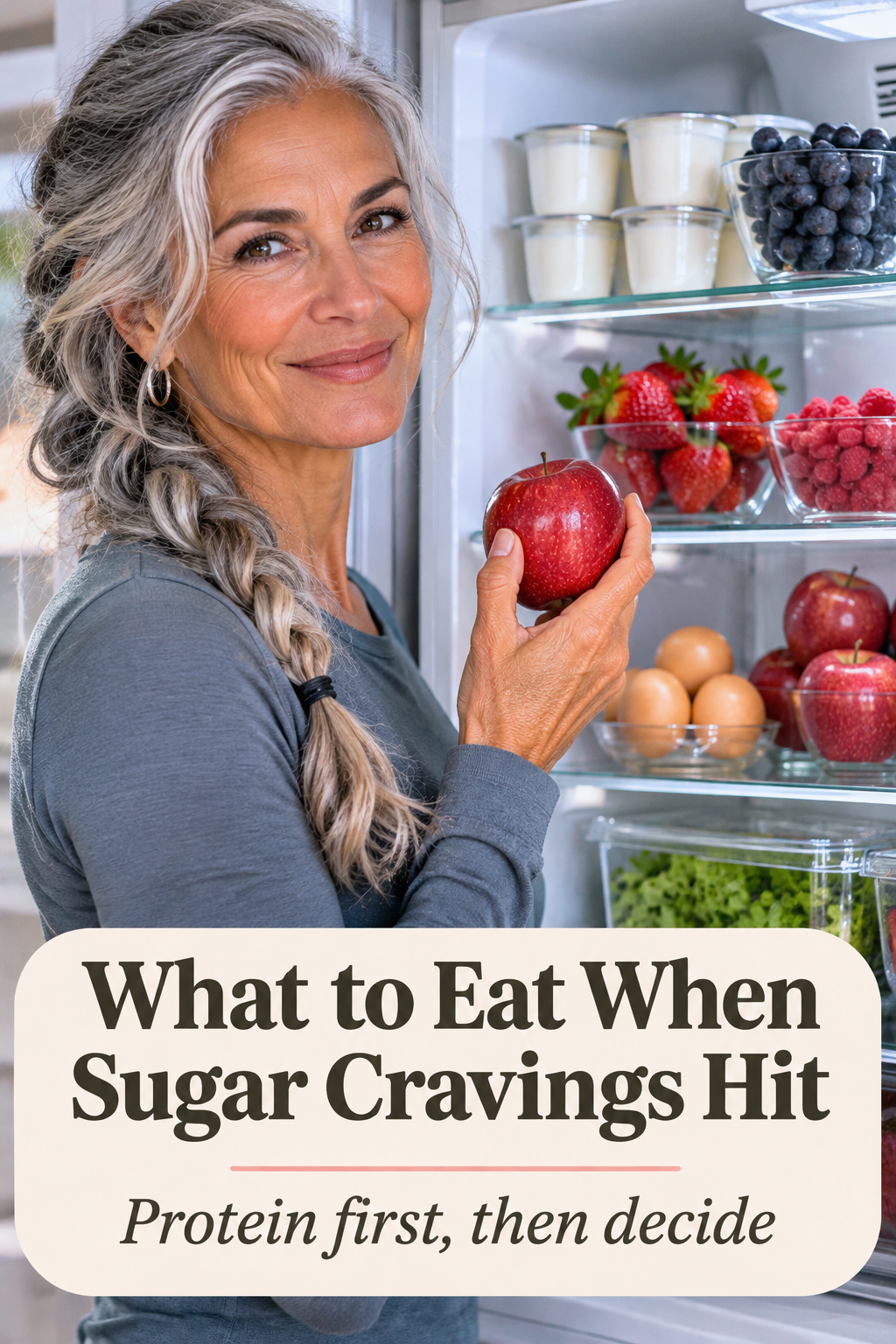
- Protein comes first. When a craving hits, I reach for protein in place of the sweet treat. Protein slows the blood sugar roller coaster and actually tells your body it's full.
- I keep whole fruit where I can see it. Apples are going in my refrigerator, so the first sweet thing I see is one I won't regret.
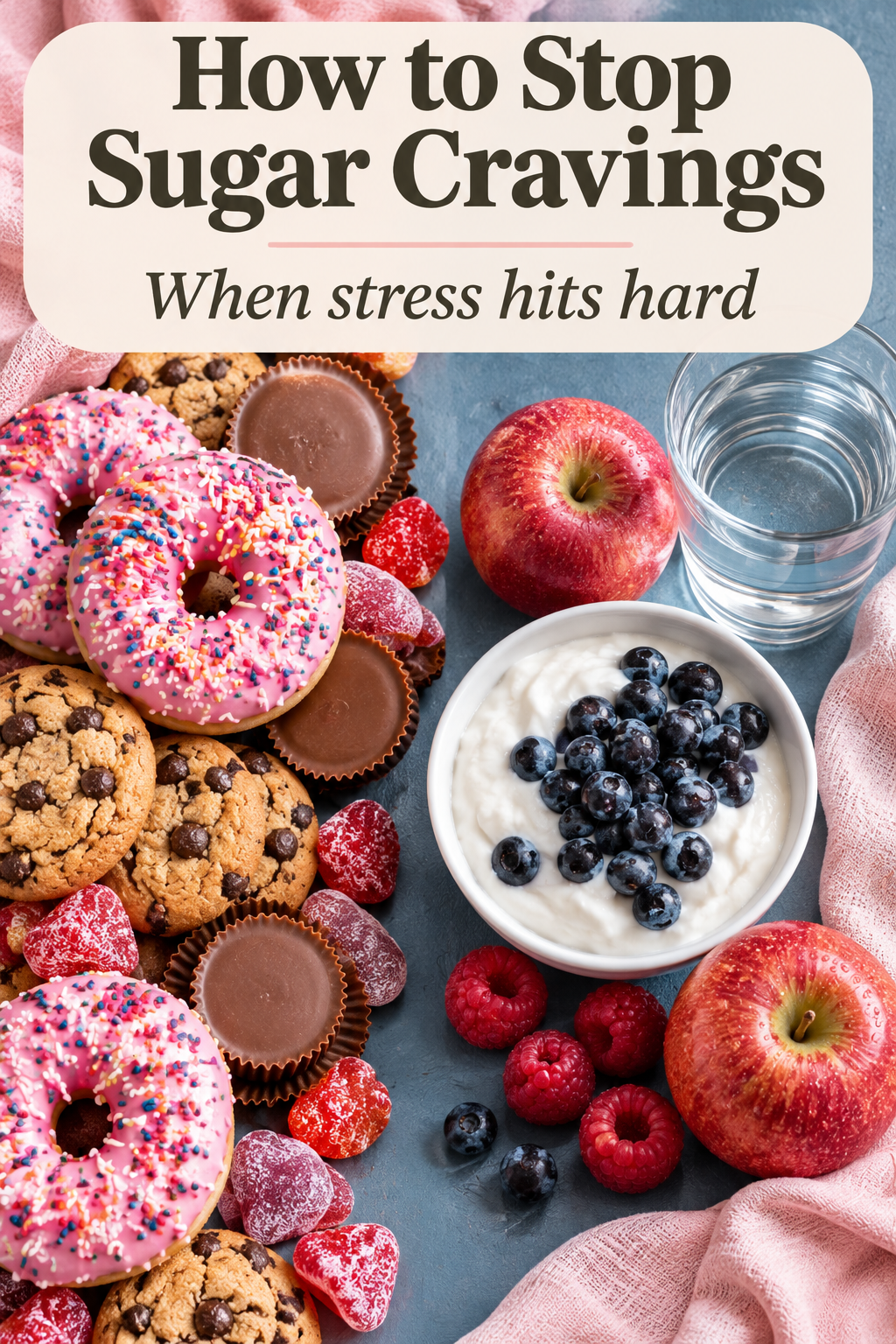
- I ask what the craving really is. Most of the time it's one of three things: thirst, real hunger, or stress. Each one needs something different, and only one of them needs food.
The exact step-by-step plan I use the moment a craving hits is in the members section below.
Tools I Use
- Paleo Valley Bone Broth Protein (Salted Caramel and Pumpkin Spice). What I stir into Greek yogurt when only something sweet will do.
Frequently asked questions
Is eating a coping mechanism for stress?
Yes, and it's one of the most common. Stress raises cortisol, which turns up appetite and pulls you toward quick energy like sugar. Sweet food releases dopamine in the brain's reward center, which briefly takes the edge off stress, so the brain learns that food equals relief. The relief fades fast, so the cycle repeats.
What deficiency causes sugar cravings?
No single deficiency explains most sugar cravings. The most common drivers are not eating enough protein, going too long between meals, and short sleep. When blood sugar dips, the brain asks for its fastest fuel, and too little sleep raises your hunger hormone (ghrelin) while lowering your fullness hormone (leptin). Magnesium and chromium help the body handle blood sugar, which is why they often come up, but they aren't a quick fix for cravings on their own.
Why am I craving sweets all of a sudden?
A sudden change usually traces back to something else that changed: more stress, less sleep, skipped meals, less protein, a new medication, or hormone shifts. In perimenopause and menopause, falling estrogen affects how well your body uses insulin, which can make cravings louder. If cravings come with extreme thirst, frequent urination, or unexplained weight loss, get your blood sugar checked.
Is it normal to crave sugar every day?
It's common, but it's a signal worth paying attention to. Daily cravings tend to follow a pattern: the same time of day, after a certain meal, or at the end of a stressful day. Regular sugar trains the reward system to expect it, and over time it takes more to get the same lift. Writing down when the craving hits is the fastest way to find what's driving it.
Am I diabetic if I crave sugar?
Cravings on their own don't mean you have diabetes. Insulin resistance, a step on the road toward diabetes, can make them worse, though: when cells don't take in sugar well, blood sugar swings up and down and the brain keeps asking for quick fuel. Thirst, frequent urination, and being tired after meals are worth mentioning to your doctor, and an A1C test shows your average blood sugar over about three months.
How do I break my addiction to sugar?
Start with what's easiest to control. Keep sweets out of the house, eat enough protein at meals so you aren't running on empty, and protect your sleep. Have a go-to swap ready, like a piece of fruit, for when a craving hits. Plan ahead for your hardest moments, which for most people are stress and late evening.
How long does it take to get rid of sugar addiction?
Many people find the strongest cravings ease after the first one to two weeks of cutting back. Taste changes more slowly: over several weeks to a few months, foods start to taste sweeter, so fruit satisfies you more. Stress can bring cravings back, so it works best when you also manage the triggers.
Your turn
Every one of us has our Beaver Nuggets, the food that never makes it past day two in our house. Tell me yours in the comments. No judgment here. I just told you mine.
I'm not a doctor, and I never will be. If you have diabetes, take medication for your blood sugar, or have any health condition, talk with your doctor before you change how you eat. This is what I did. Take what fits and leave the rest.
My free Body Signal Starter walks you through the simple body signals that tell you whether a change is working for you. Grab your free Body Signal Starter here.
Every path to healing counts. Take what fits, and let your body have the final say.
Jamie
About Jamie
I'm Jamie, and I'm rebuilding my health in my 60s, one real swap at a time. I share what I change, why I change it, and what my body tells me, so you can decide what fits you.
Follow along on Pinterest
Disclaimer
Everything on this site, including posts, guides and member materials, is for education and information only. It is not medical advice. I am not a medical doctor, and nothing I share is meant to diagnose, treat, cure or prevent any disease. What I write reflects my own experience, research and opinions.
Please talk with your healthcare provider before making changes to your health, especially if you are pregnant or nursing, take prescription medications, or are managing a medical condition. You are responsible for your own health decisions, and results vary from person to person. By using this site, you agree that the author and publisher are not liable for any harm or loss arising from the use or misuse of this information.
Affiliate Disclosure
Some links are affiliate links. If you buy through them, I may earn a small commission at no extra cost to you. I only share products I've used, researched, or believe in. As an Amazon Associate, I earn from qualifying purchases.