How Stress Affects Your Heart: Cortisol, Blood Pressure and What I'm Doing About Mine
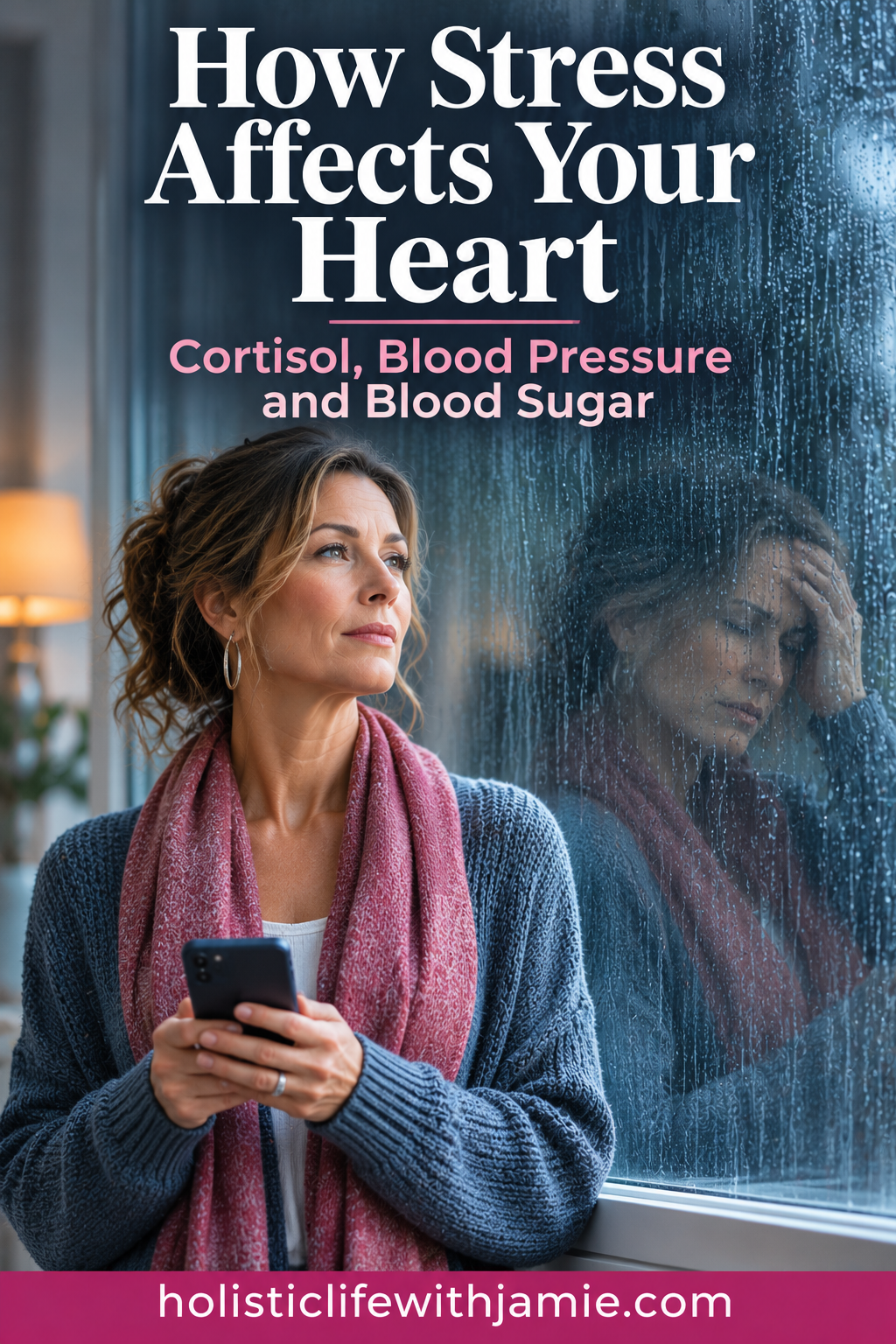
Chronic stress raises cortisol, blood pressure and blood sugar, and over time it wears on your heart and arteries. Here's how stress affects your heart, the signs to watch for, and what I'm doing about mine.

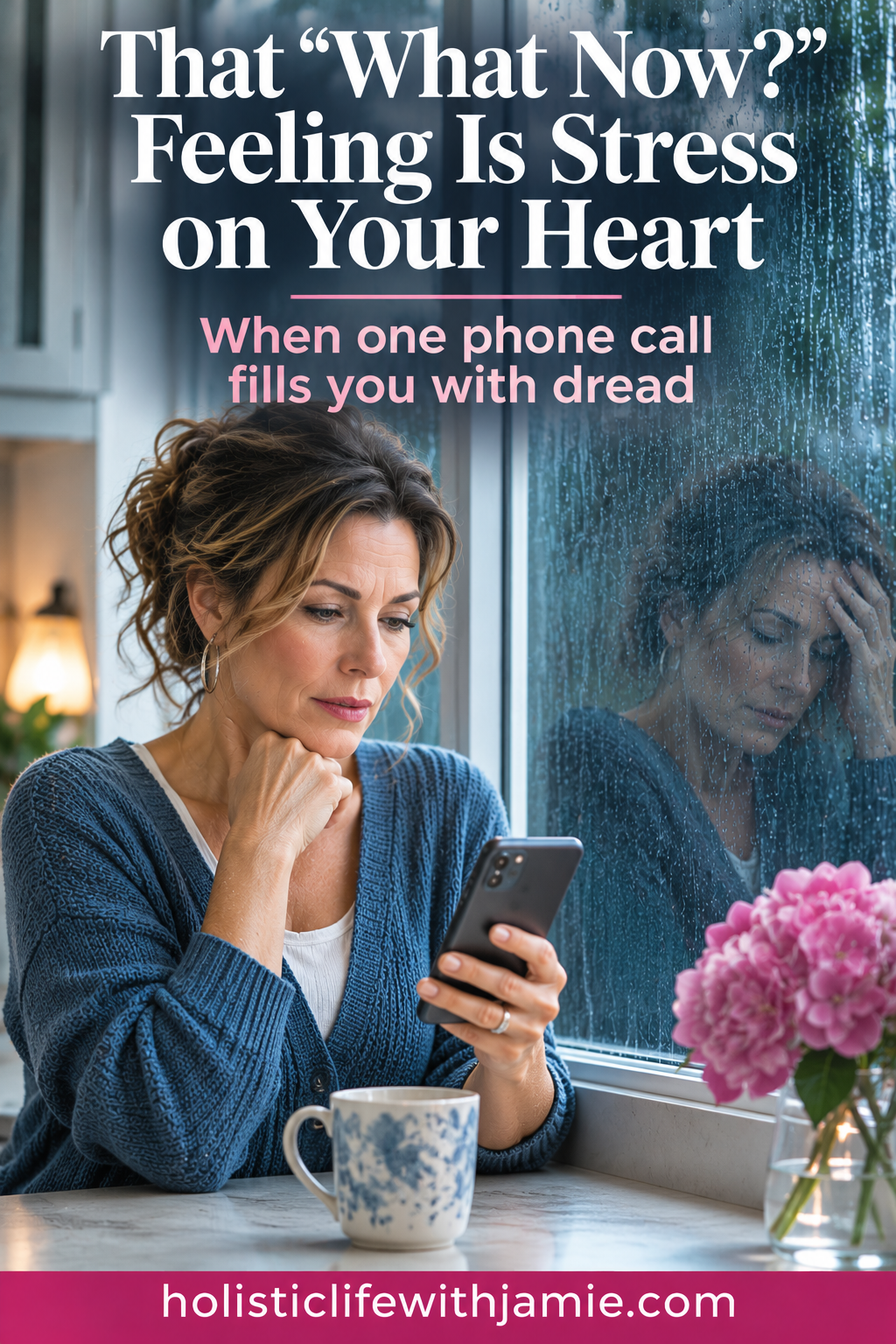
When my phone lights up with "Mom," I feel it before I even answer. A sinking dread. My eyes roll to the ceiling. And one thought: what now? Mom has early-stage dementia, and every call could mean another problem I have to fix. That feeling is chronic stress, and even though my heart isn't pounding, it's still working on my heart.
Mom is 84. She still lives on her own and still drives. In her mind, nothing is wrong. So now I'm the one making sure her bills get paid and her medicine gets taken, things she handled perfectly well her whole life.
Stress isn't new to me. I worked 40 hours a week while raising three kids. But this kind is different. It doesn't end at 5 o'clock, and it doesn't take weekends off.
Your phone call might look different. A job, a marriage, a child, money, your own health. Whatever it is, your heart feels it the same way. Here's what's actually happening inside, and what I'm doing about mine.
What Stress Does Inside Your Body
When something stresses you, your body doesn't know the difference between a phone call and a bear. It sends out two hormones.
Adrenaline works in seconds. Your heart beats faster and harder, and your blood vessels tighten. You may feel it as a racing heart. I feel it as dread in my gut. Either way, your body is reacting.
Cortisol works over minutes to hours. It keeps you on alert and tells your liver to release sugar into your blood, so your muscles have fuel to fight or run.
That system is brilliant for a short emergency. The trouble starts when the emergency never ends.
How Chronic Stress Affects Your Heart
When stress becomes a daily state instead of a moment, those hormones stay switched on.
- Your blood pressure stays higher. Tight blood vessels and a hard-working heart push pressure up. Over months, that steady push wears on artery walls.
- Inflammation rises. Long-term stress keeps the immune system on low alert, and that inflammation shows up inside your blood vessels too.
- Your arteries take the hit. Pressure and inflammation together damage the smooth inner lining of the arteries. Damaged spots are where plaque likes to build.
- Your heart works overtime. A heart that's always revved up never gets its rest.
Your brain is part of this loop too. The same stress hormones affect sleep, memory and mood, which is why stress and brain fog so often travel together.
Stress and Blood Sugar: The Part I Didn't Expect
This one hit home for me. Every time cortisol rises, it raises your blood sugar. When stress is constant, so is that extra sugar, and over time your cells can stop responding well to insulin.
My last A1C was 5.8, which sits in the prediabetes range. I've been focused on food, but stress is part of that number too. High blood sugar and heart disease are closely linked, which I wrote about in my post on heart disease being more than cholesterol.
Why This Matters More for Women Over 50
Before menopause, estrogen helps keep blood vessels flexible. As it drops, that protection fades, and heart disease risk climbs. Add years of stress on top, and it adds up.
Women also carry most of the caregiving. Research on women caring for sick family members has linked heavy caregiving to a higher risk of heart disease. And the condition known as broken heart syndrome, where sudden stress weakens the heart muscle, happens mostly in women after menopause.
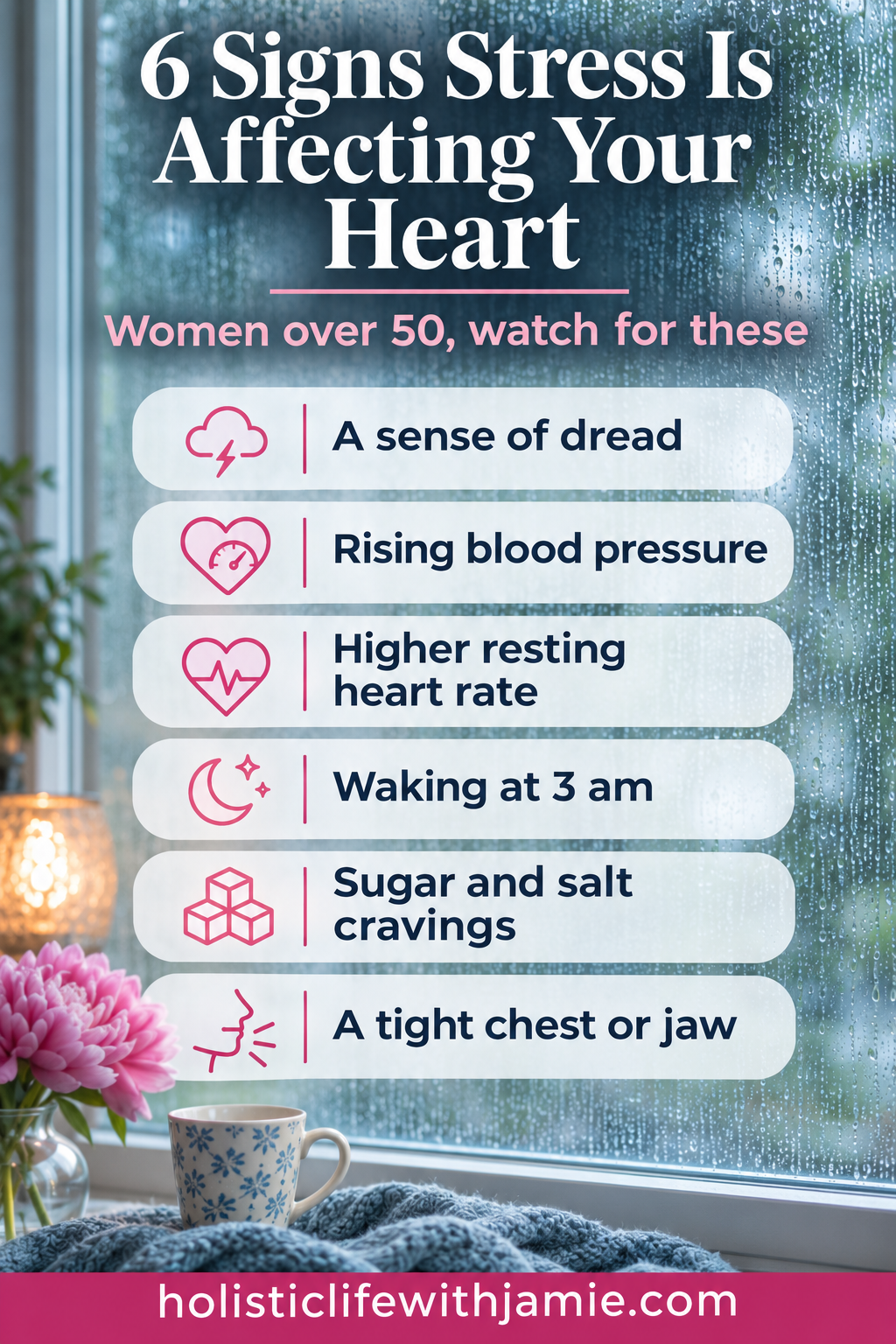
Signs Stress Is Affecting Your Heart
- A feeling of dread, a racing heart, or a knot in your stomach when a certain name or situation comes up
- Your blood pressure readings are creeping up
- Your resting heart rate is higher than it used to be
- You wake at 3 am and can't get back to sleep
- You crave sugar or salty food when things get hard
- Your chest, jaw or shoulders feel tight
Important: chest pain, pressure, or pain spreading to your arm, jaw or back is never something to wait out. Women's heart attack symptoms can also be shortness of breath, nausea or unusual tiredness. Call 911.
What I'm Doing About Mine
I'll be honest: I haven't figured this out. I'm at the beginning, just like you may be. Here's where I'm starting.
- I've started praying. Before I pick up the phone, and when I lie down at night. It slows me down and reminds me I'm not carrying this alone.
- I'm cleaning up my diet. Less sugar and processed food, since stress is already pushing my blood sugar up.
- No more Diet Cokes. That swap has its own story.
- Plenty of water every day.
- Gratitude. For the knowledge I'm gaining, and for every breath I take. Some days that breath is the only calm moment I get, so I'm learning to notice it.
- Breathing, when I remember. I know deep breathing exercises work, and I rarely use them. That's the next habit I'm working on: one slow breath before I answer Mom's call.
None of these will change the phone call. But they change what happens in my body after I hang up.
Frequently Asked Questions
Can stress damage your heart?
Yes. Short bursts of stress are normal, and for most healthy people they don’t cause lasting harm. Long-term stress keeps blood pressure, heart rate and inflammation higher than normal. Over time, that can damage the lining of the arteries and raise the risk of heart disease. Short bursts of stress are normal and don't cause lasting harm.
Stress and high blood pressure: what's the connection?
Stress hormones make the heart pump harder and tighten blood vessels, which raises blood pressure. A single stressful moment raises it temporarily. Chronic stress can keep it elevated, and it also feeds habits that raise blood pressure, like poor sleep and salty comfort food.
Can high cortisol cause heart problems?
Cortisol that stays high over time is linked to higher blood pressure, higher blood sugar, belly fat and inflammation, all of which strain the heart and blood vessels.
Can stress cause plaque in your arteries?
Stress doesn't create plaque by itself, but it helps set the stage. High blood pressure and inflammation damage the artery lining, and damaged areas are where plaque builds. Stress also raises blood sugar, which adds to the damage.
Can your heart recover from stress?
In many cases, yes. When stress eases, blood pressure and heart rate can come back down. Even broken heart syndrome usually improves within weeks to months. The earlier you lower your stress load, the more your heart can recover.
What is stress cardiomyopathy?
Stress cardiomyopathy, also called broken heart syndrome, is a sudden weakening of the heart muscle triggered by intense emotional or physical stress. It can feel like a heart attack, with chest pain and shortness of breath. It mostly affects women after menopause and usually heals with treatment.
Your Turn
What's your phone call? The one that brings that "what now" feeling before you even know what's coming? You don't have to fix it today. Just notice what it does to your body.
If you'd like help reading those signals, my free Body Signal Starter shows you how to track what your body is telling you, so you can see patterns like this for yourself.
Get the free Body Signal Starter
Every path to healing counts. Take what fits, and let your body have the final say.
Jamie
About Jamie
I'm Jamie, and I'm rebuilding my health in my 60s, one real swap at a time. I share what I change, why I change it, and what my body tells me, so you can decide what fits you.
Follow along on Pinterest
Disclaimer
Everything on this site, including posts, guides and member materials, is for education and information only. It is not medical advice. I am not a medical doctor, and nothing I share is meant to diagnose, treat, cure or prevent any disease. What I write reflects my own experience, research and opinions.
Please talk with your healthcare provider before making changes to your health, especially if you are pregnant or nursing, take prescription medications, or are managing a medical condition. You are responsible for your own health decisions, and results vary from person to person. By using this site, you agree that the author and publisher are not liable for any harm or loss arising from the use or misuse of this information.
Affiliate Disclosure
Some links are affiliate links. If you buy through them, I may earn a small commission at no extra cost to you. I only share products I've used, researched, or believe in.
Members: My Stress and Heart Check-In
Here's the simple daily check-in I'm using to watch how stress shows up in my body, plus the numbers worth asking your doctor about.