Seed Oils and Heart Health: The Healthy Fats I Cook With Instead
Seed oils to avoid and do seed oils cause inflammation: my healthy fats list for heart health, with beef tallow, butter, ghee and extra virgin olive oil replacing vegetable oil, canola oil and soybean oil in my kitchen. #SeedOils #HeartHealth #HealthyFats
In 2023, I was puffing on my inhaler like a locomotive.
Ten times a day. At least.
My asthma had been under control for twenty years. I used that inhaler maybe twice a year. Twice. A. Year.
I was in the middle of my first round of Mounjaro, and it was going about as bad as it could go. Twelve weeks of diarrhea. Critically malnourished, the kind where you have to eat whether you want to or not. My whole body was inflamed, and my lungs were just one more place it was showing up.
I started worrying about my heart
Here's the thing. My lungs weren't the first sign.
I have celiac disease. I have asthma. I have rheumatoid arthritis. Every one of those is inflammation, just wearing a different outfit.
And the reason I was on Mounjaro in the first place? My A1C kept climbing. That's your average blood sugar over the last few months, for anyone who doesn't live in lab results.
Now I'm 62. Stack all of that up, and it isn't a far jump to start worrying about my heart.
And inflammation's got a closet full of disguises.
What inflammation has to do with your heart
We've all been told heart disease is a cholesterol problem. Lower the number, save the heart.
I believe inflammation is the bigger piece. Picture the inside of your arteries like a garden hose. When the lining gets irritated and inflamed, that's where plaque starts to build. Cholesterol shows up at the scene, sure. But something had to start the fire.
And I’m not just making that up while lounging in my La-Z-Boy recliner. In 2017, a big study gave heart attack survivors a drug that calmed inflammation without lowering their cholesterol. They had fewer repeat heart problems. People with rheumatoid arthritis, like me, also carry a higher risk of heart disease. So do people with high blood sugar.
I wrote all about this in Heart Disease Is More Than Cholesterol.
So if inflammation feeds heart disease, the next question is what feeds inflammation. That's where my frying pan comes in.
Do seed oils cause inflammation?
I wasn't just lying around sick. I was dragging my sick ass to work every day because I was the breadwinner of the family. Being ill lit a fire under me to search for answers, so I listened to health podcasts on my drive to work, sped up to 1.5x so I could get it all in. And I kept hearing the same things about seed oils.
That they cause inflammation and they're close to rancid sitting right there on the grocery store shelf. That they get built into the fat layer around every single cell in your body.
Rancid. In my cells. Feeding the exact fire I was trying to put out.
Well, hell.
We're from the South. We fry things. A lot of things. Ain't that a pickle.
Here's what's actually known, the short version:
- They're fragile. Heat them over and over, like in a restaurant fryer, and they break down into some nasty stuff that soaks right into your fried chicken.
- They move in and stay. Americans carry more than twice as much of this fat in their body fat as they did 50 years ago, and it takes about two years for half of it to leave. Like a houseguest who won't take the hint.
- Do they cause inflammation all by themselves? Scientists are still arguing about that.
I wasn't waiting for them to agree. When your house is on fire, you don't wait for a double-blind, placebo-controlled study before you stop pouring gas on it.
The seed oils to avoid
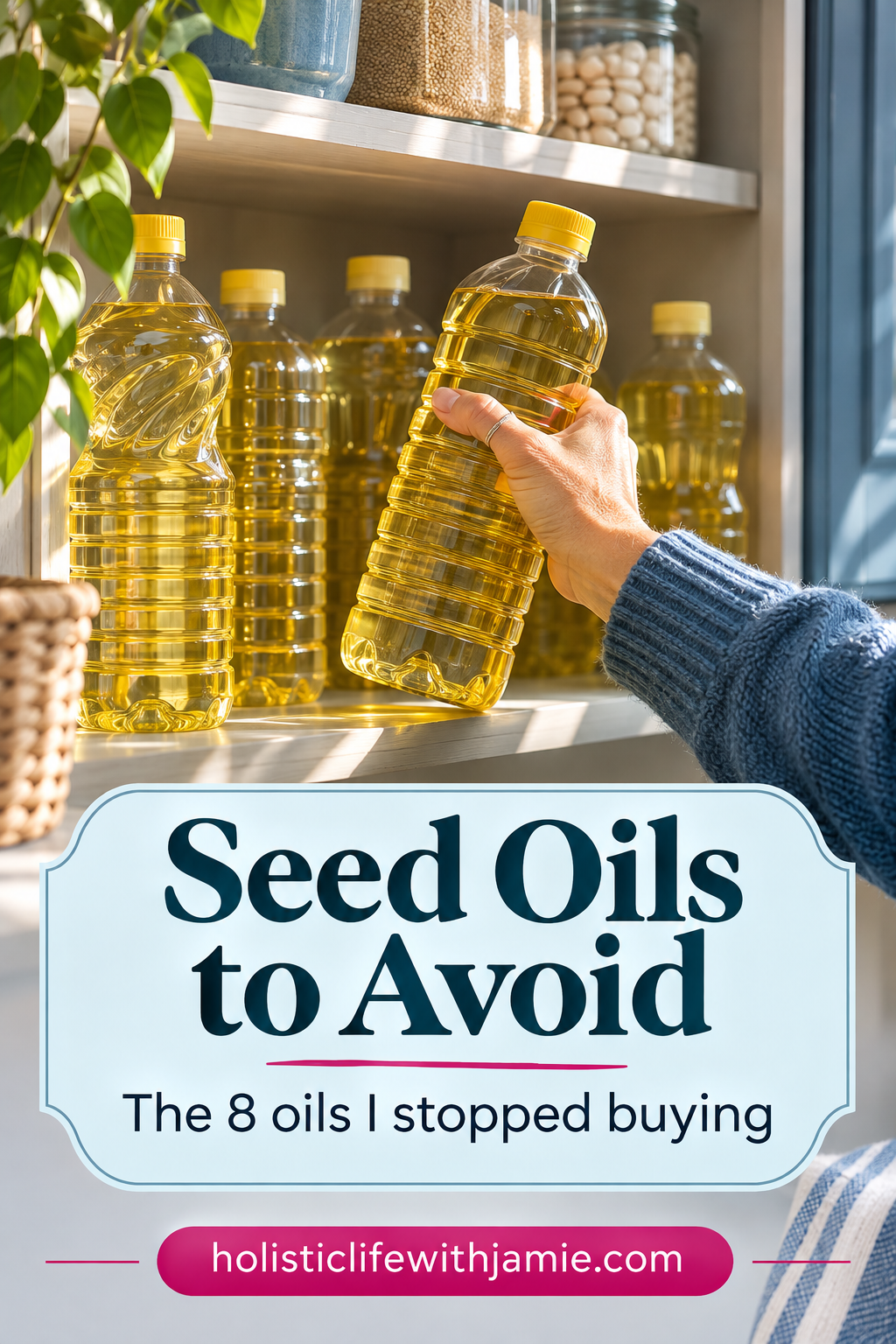
When people say "seed oils," they usually mean these eight:
- Canola oil
- Soybean oil
- Corn oil
- Cottonseed oil
- Sunflower oil
- Safflower oil
- Grapeseed oil
- Rice bran oil
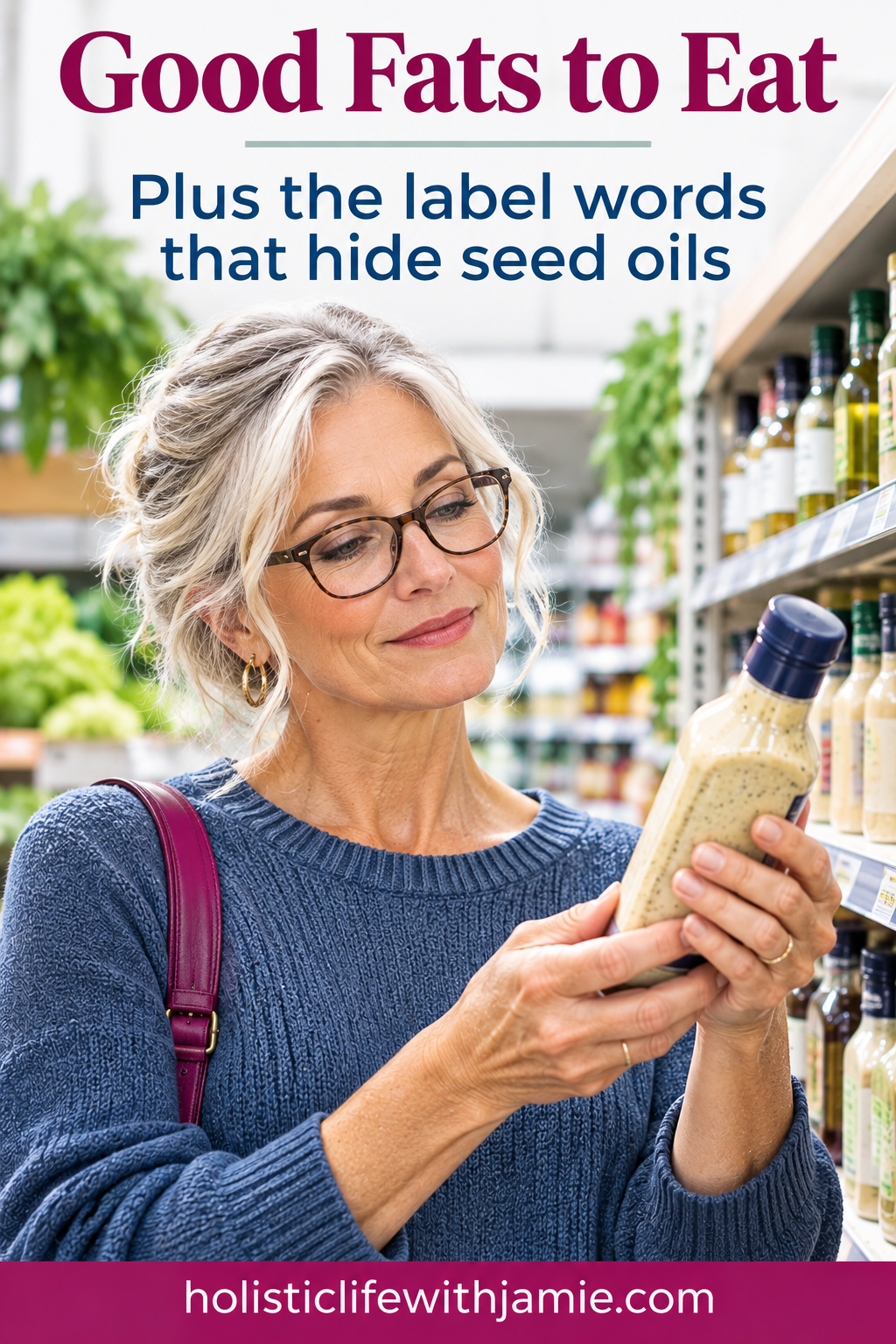
On a label, most of them hide behind two words: "vegetable oil." If the bottle says vegetable oil, it's almost always soybean oil or a blend. They're cheap, so they're in nearly everything. Salad dressing, mayo, chips, crackers. And it's what most restaurants fry in.
My healthy fats list
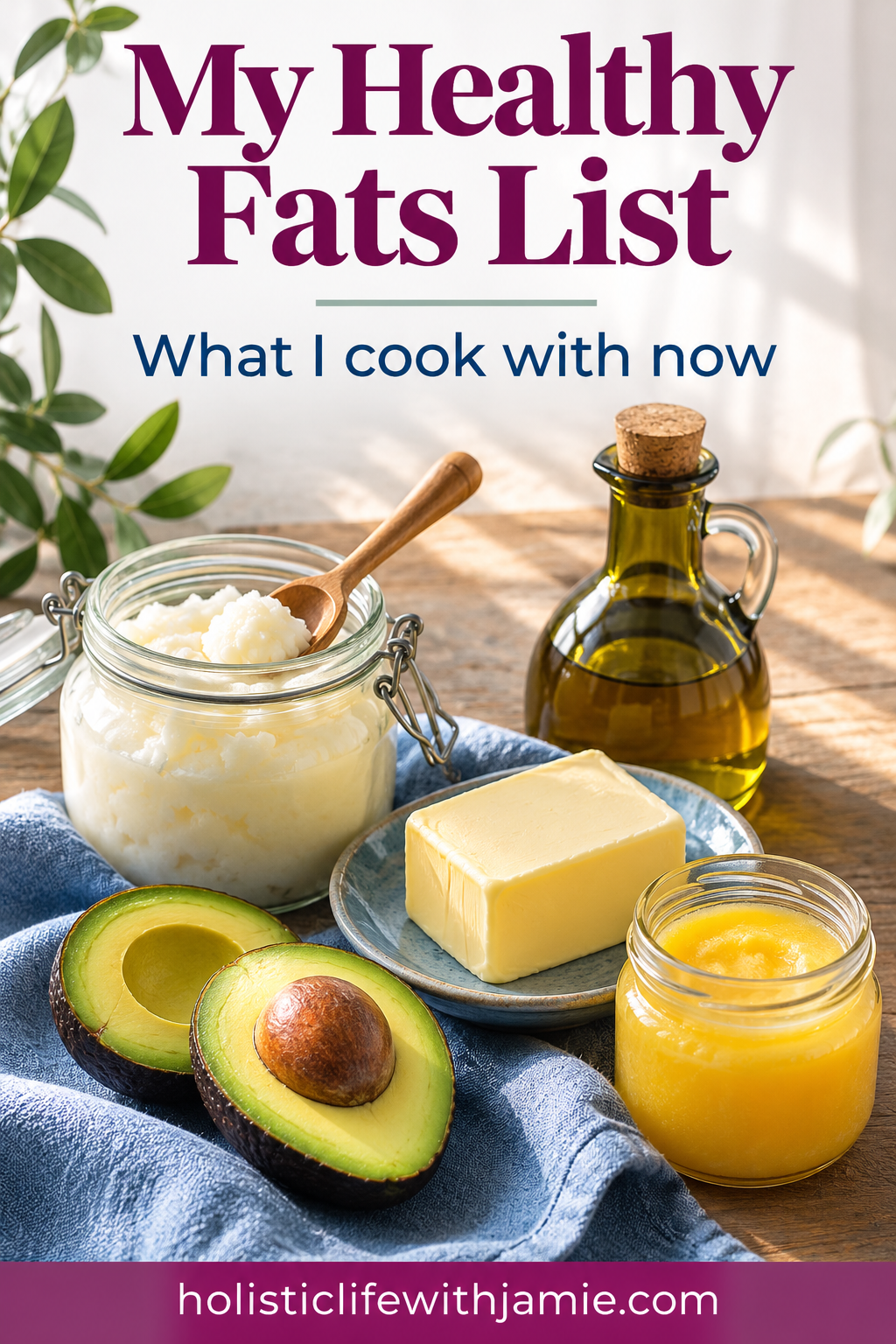
We don't buy "cooking oil" anymore. Not one bottle. These are the healthy fats in my kitchen now:
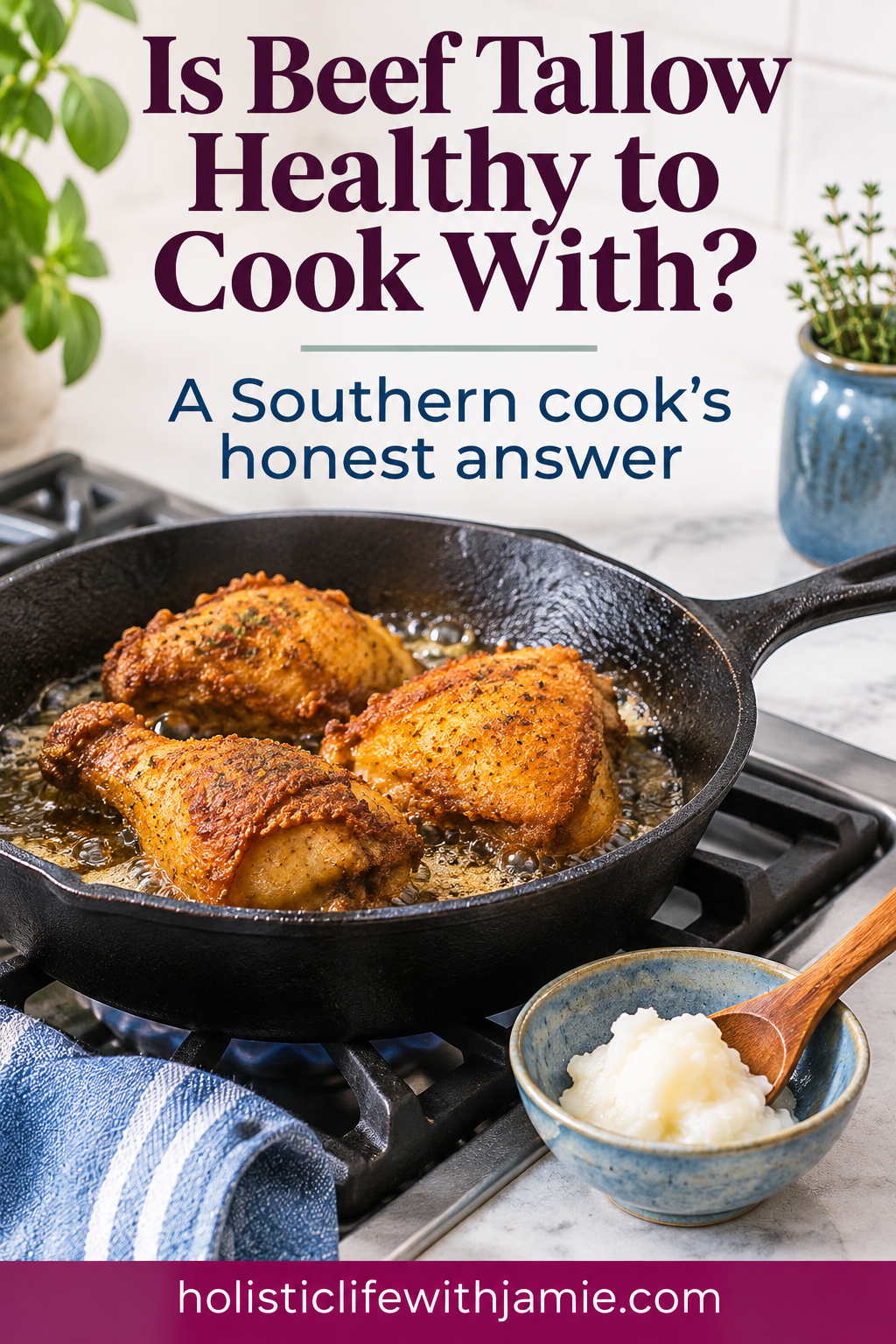
- Beef tallow. This is what our frying pan gets now. It holds up to heat instead of breaking down.
- Butter. The real thing.
- Ghee. Butter with the milk solids cooked off, so it can take more heat than butter can.
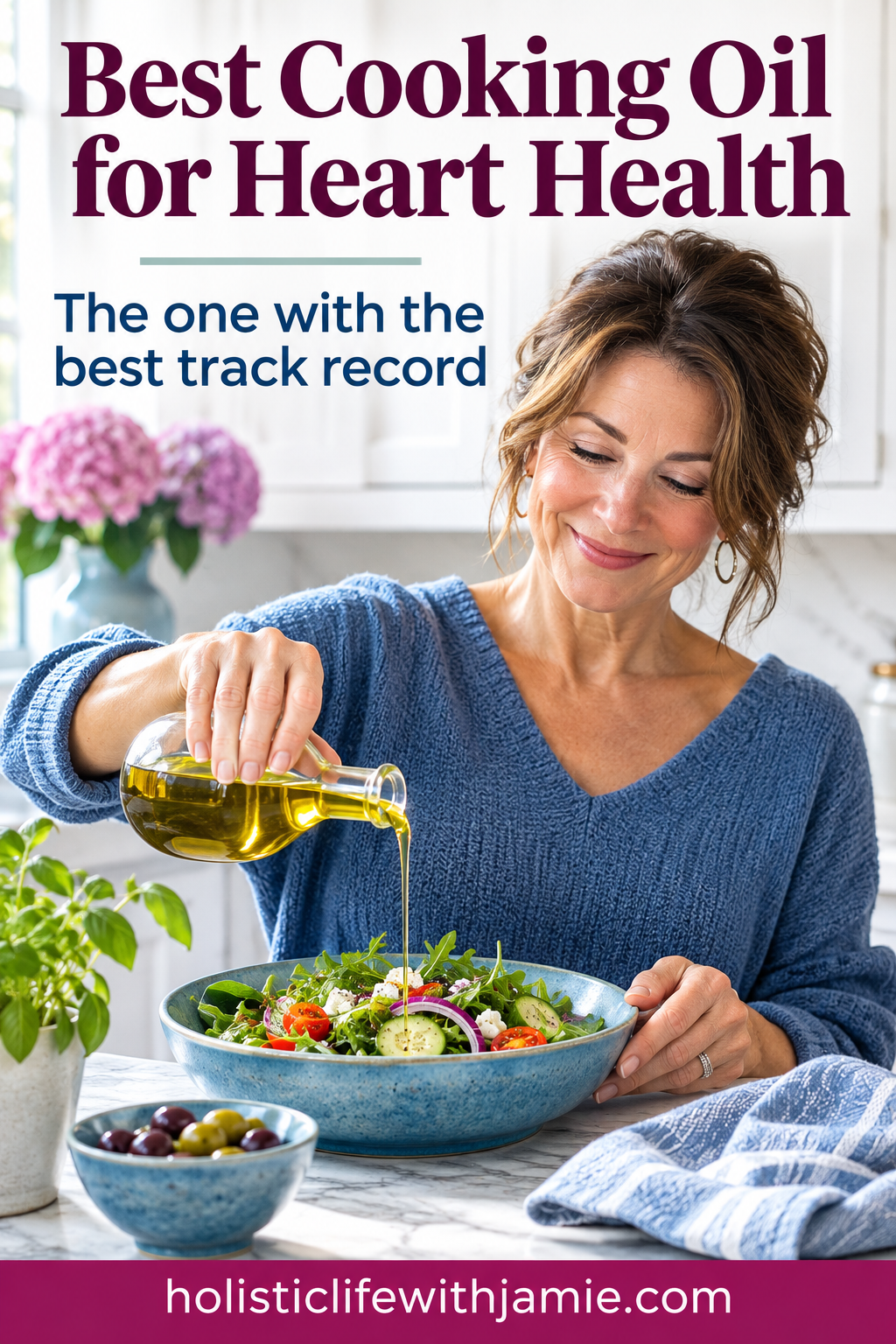
- Extra virgin olive oil. The fat with the best heart track record of all. In a big study in Spain, people eating a Mediterranean diet with plenty of extra virgin olive oil had about 30 percent fewer heart attacks, strokes and heart-related deaths.
- Avocado oil. With one catch. When UC Davis tested store-bought avocado oils in 2020, 82 percent were stale or mixed with cheaper oils. A few bottles labeled pure were almost all soybean oil. Of all things.
Is beef tallow healthy to cook with?
I know what you're thinking. Beef tallow? With my heart worries? Isn't that the stuff that clogs your arteries?
Here's the honest answer. Tallow is mostly saturated and monounsaturated fat, with very little of the fragile kind. That's why it can sit in a hot skillet without falling apart.
The other honest part: saturated fat raises LDL cholesterol in a lot of people, and the American Heart Association still says vegetable oils beat butter and tallow. Smart people are still arguing about this one.
So here's where I land. I fry in tallow, and I use olive oil for everything that doesn't need high heat. I'd rather eat a stable fat than a fragile one that's been fried to pieces. If your heart is already a concern, get your labs checked and talk with your doctor before you go all in. That's what I'd want someone to tell me.
Your one swap this week
Go open your pantry and find the bottle that says vegetable oil, canola or corn oil.
Replace it with one fat from my list. Just one.
And don't expect to feel like a new woman in two weeks. This isn't that kind of swap. It took my lungs about two years to settle down.
Was it only the seed oils? I can't say that. I was healing from a lot at once.
Lowering inflammation is an orchestra. Removing seed oils is only one instrument in that orchestra. But it was one of the first instruments I picked up, and I'm not putting it down.
Make the swap, keep it, and let time do the rest.
Frequently asked questions
Are seed oils bad for your heart?
The evidence is mixed. Major health groups say replacing saturated fat with vegetable oils lowers LDL cholesterol. Critics point to recovered data from older trials where people who switched to vegetable oil lowered their cholesterol but did not live longer. Seed oils that are reheated break down into harmful compounds, which is one reason many people limit them.
Do seed oils cause inflammation?
Seed oils are high in linoleic acid, an omega-6 fat. Studies disagree on whether eating linoleic acid raises inflammation on its own. When these oils are heated repeatedly, as in restaurant fryers, they form oxidized compounds such as HNE that can damage cells. Many people cut back on seed oils to avoid those oxidized fats.
What do cardiologists say about seed oils?
Most mainstream cardiology groups, including the American Heart Association, recommend unsaturated vegetable oils over saturated fats like butter and tallow because they lower LDL cholesterol. A smaller number of doctors question that advice, pointing to inflammation, oxidized fats and older trials. Cardiologists most consistently recommend extra virgin olive oil.
What is the healthiest fat for the heart?
Extra virgin olive oil has the strongest research behind it for heart health. In the PREDIMED trial, a Mediterranean diet rich in extra virgin olive oil lowered the risk of heart attack, stroke and heart-related death by about 30 percent. It is mostly monounsaturated fat and contains polyphenols that help protect against oxidation.
What oil is most inflammatory?
No single oil is proven to be the most inflammatory. Oils highest in linoleic acid, such as soybean, corn, sunflower, safflower and grapeseed oil, are the most fragile under heat. Oil that is reheated again and again, as in commercial fryers, forms the most oxidized compounds, regardless of which seed oil it started as.
Is beef tallow healthier than olive oil?
They do different jobs. Beef tallow is mostly saturated and monounsaturated fat, so it stays stable at high frying heat. Extra virgin olive oil has the stronger research for heart health. Saturated fat raises LDL cholesterol in many people, so many cooks use tallow for frying and olive oil for everything else.
Is olive oil a seed oil?
No. Olive oil is pressed from the fruit of the olive, not from a seed, and it is mostly monounsaturated fat. Extra virgin olive oil is cold pressed without chemical solvents. The same is true of avocado oil, which comes from the flesh of the avocado. Both are considered healthy alternatives to seed oils.
What happens when you stop eating seed oils?
Linoleic acid from seed oils is stored in body fat and leaves slowly. Researchers estimate it takes about two years for half of it to turn over. Cutting seed oils also usually means eating fewer fried and packaged foods, so changes tend to build gradually over months rather than showing up in a few weeks.
Your turn
Which fat are you swapping in first? Start there, and give it time. This is a long game, and that's okay.
I'm not a doctor, and I never will be. If you have a heart condition or any health condition, talk with your doctor before you change how you eat. This is what I did. Take what fits and leave the rest.
New here? Start with my free Body Signal Starter.