Why Your Body Feels Out of Sync: Coherence and Whole-Body Healing
When your energy, sleep, digestion and mood all go sideways at once, your body may be out of sync. Here's what coherence means and why rhythm comes before more supplements.

Tired in the afternoon, wired at bedtime, bloated after meals that never used to bother you. Each problem gets its own fix. A supplement for energy, another for sleep, a probiotic for the bloating. The list keeps growing, and you keep feeling the same.
When symptoms show up in several places at once, they usually aren't several separate problems. More often, it's one problem showing up in several places: your body's systems have stopped working together.
There's a word for working together. Coherence.
In this post
- What Coherence Means in Your Body
- Signs Your Body Is Out of Sync
- What Throws Your Rhythms Off
- Why Adding More Often Backfires
- Where to Start: Rhythm Before Remedies
- Frequently Asked Questions
- Members: Your 14-Day Coherence Reset, day by day
- Members: The 5 Body Signals That Tell You It's Working
- Members: Troubleshooting when nothing changes
What Coherence Means in Your Body
Coherence is how well your body's systems talk to each other and stay in rhythm. Your heart, breathing, nervous system, hormones and digestion all run on cycles, and those cycles are meant to line up.
- Your heart speeds up a little when you breathe in and slows down when you breathe out. That gentle variation is called heart rate variability (HRV), and it's a sign of a flexible, responsive nervous system.
- Cortisol rises in the morning to wake you up and falls at night so melatonin can take over.
- Your gut moves food along on a schedule set partly by when you eat.
When these rhythms line up, your body handles stress, recovers, and gets back to baseline. When they drift apart, you feel it everywhere.
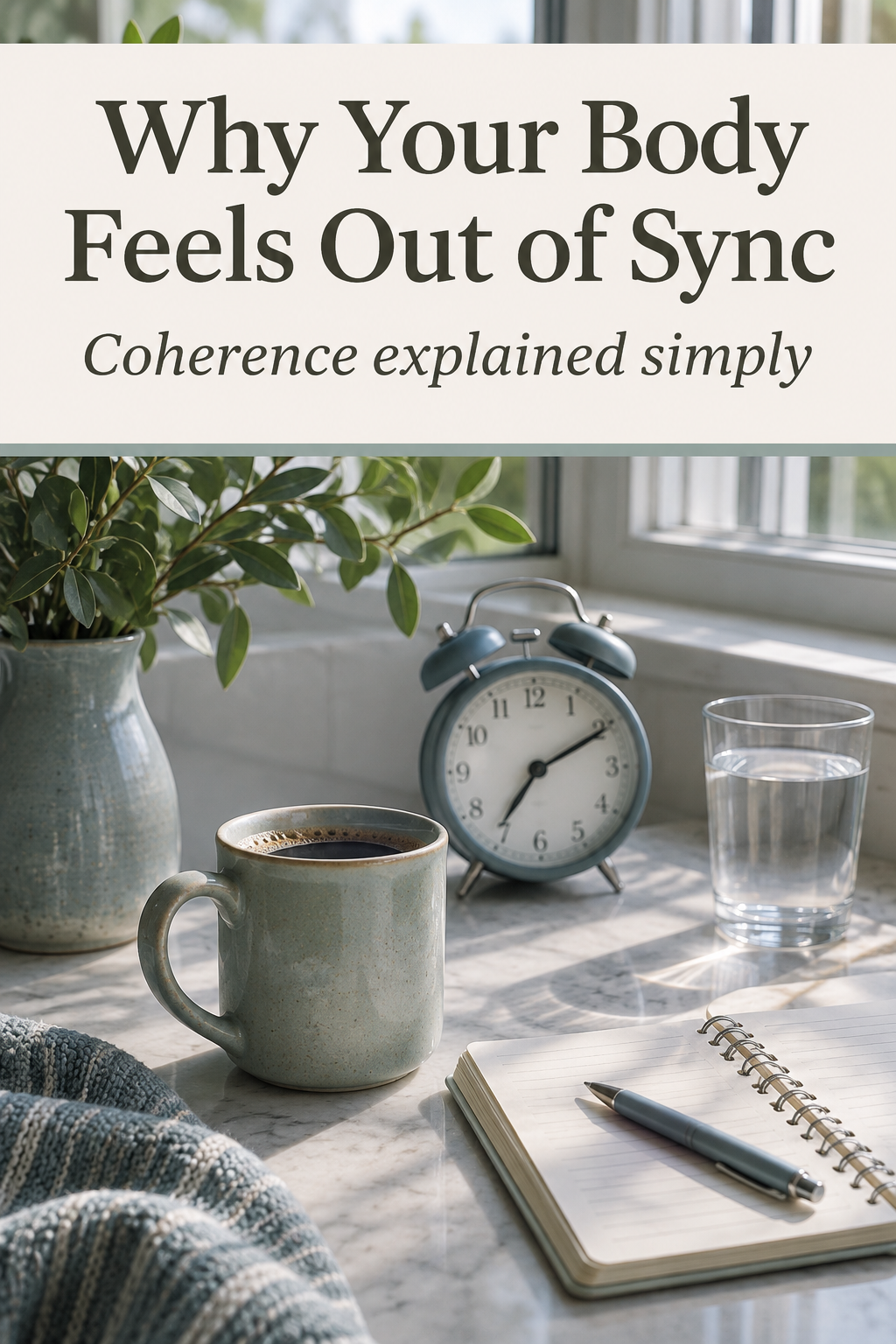
Signs Your Body Is Out of Sync
- You're tired when you wake up and wide awake at bedtime
- Your energy crashes in the afternoon no matter what you eat
- Your digestion changes with your stress level
- You wake at 2 or 3 am
- Small stresses feel bigger than they should
- New supplements or protocols work for a week, then stop
None of these proves anything on its own. Several together make a pattern worth paying attention to.

What Throws Your Rhythms Off
Modern life pulls your rhythms apart from several directions at once:
- Bright screens late at night and very little daylight in the morning
- Wake-up times and bedtimes that shift between weekdays and weekends
- Eating at different times every day, or late at night
- Shallow, fast breathing through a stressful day
- Constant input with no quiet in between
Any one of these is manageable. Stack several, and your body spends its energy compensating instead of healing.
Why Adding More Often Backfires
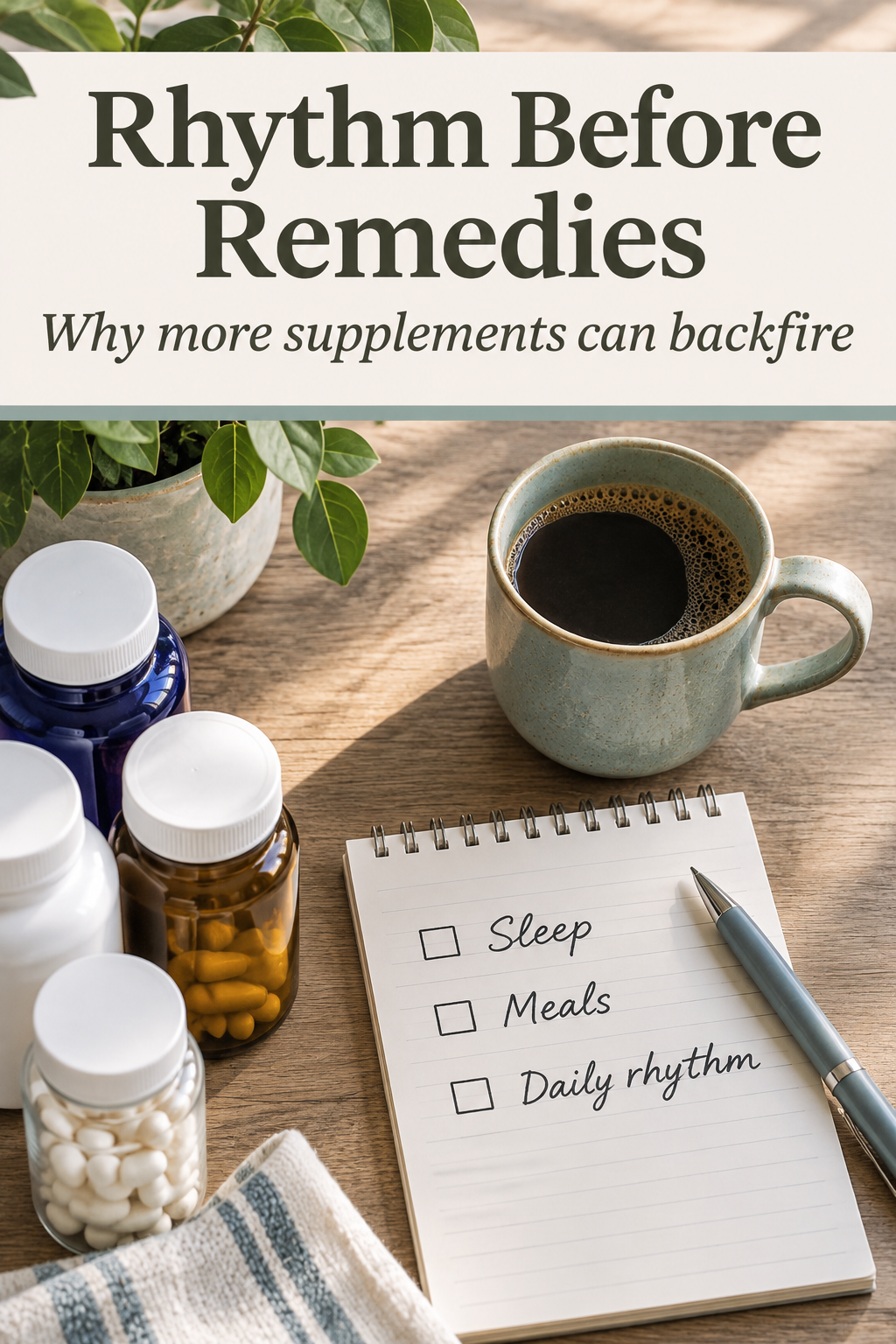
When a system is out of sync, adding more inputs adds more noise. Start five new supplements at once and you can't tell which one helps, which one hurts, and which one does nothing.
It's also why two people can follow the same protocol and get completely different results. The plan isn't always the difference. The state of the body receiving it is.
This is the whole reason I make one swap at a time and watch my body signals before I change anything else. One change, one set of signals to watch. A body that's in rhythm can actually tell you what's working.

Where to Start: Rhythm Before Remedies
Three things help almost any body sync back up, and none of them cost money:
- Wake up at the same time every day, weekends included. Your wake time anchors the rest of your daily clock.
- Get daylight in your eyes soon after waking. Morning light tells your brain the day has started, which sets up the evening wind-down that leads to sleep.
- Breathe slowly. Slow breathing, around six breaths a minute, brings your heart rhythm and breathing into step and is one of the quickest ways to move your nervous system out of high alert. My Breathwork for Beginners post walks you through it, and my Vagus Nerve Reset post adds more ways to calm things down.
Start there for one week before adding anything new.

Frequently Asked Questions
What is coherence in health?
Coherence describes how well the body's systems communicate and stay in rhythm with each other. In a coherent state, heart rhythm, breathing, nervous system activity and hormone cycles line up, which helps the body adapt to stress and return to baseline. Low coherence tends to show up as symptoms in several systems at once.
What is heart rate coherence?
Heart rate coherence is a smooth, wave-like pattern in heart rate variability, where heart rate rises with each inhale and falls with each exhale in a steady rhythm. It is most easily produced by slow, even breathing at about six breaths per minute and is associated with a calmer nervous system state.
How do you get your body back in rhythm?
Start with daily anchors: wake at the same time every day, get daylight in your eyes soon after waking, eat at consistent times, and finish eating a few hours before bed. Slow breathing and a consistent bedtime also help the body's daily clock and stress response line up again.
Can too many supplements make you feel worse?
They can. Taking several new supplements at once makes it impossible to tell which one is causing a benefit or a side effect, and some interact with each other or with medications. Adding one at a time, with several days in between, makes results much easier to read.

Your Turn
Pick one anchor from the list above (wake time, morning light, or slow breathing) and do it every day this week. Then notice your energy, your sleep and your digestion. Your body will tell you if it's helping.
My free Body Signal Starter walks you through the simple body signals that tell you whether a change is working for you. Grab your free Body Signal Starter here.
Every path to healing counts. Take what fits, and let your body have the final say.
Jamie
About Jamie
I'm Jamie, and I'm rebuilding my health in my 60s, one real swap at a time. I share what I change, why I change it, and what my body tells me, so you can decide what fits you.
Follow along on Pinterest
Disclaimer
Everything on this site, including posts, guides and member materials, is for education and information only. It is not medical advice. I am not a medical doctor, and nothing I share is meant to diagnose, treat, cure or prevent any disease. What I write reflects my own experience, research and opinions.
Please talk with your healthcare provider before making changes to your health, especially if you are pregnant or nursing, take prescription medications, or are managing a medical condition. You are responsible for your own health decisions, and results vary from person to person. By using this site, you agree that the author and publisher are not liable for any harm or loss arising from the use or misuse of this information.
Affiliate Disclosure
Some links are affiliate links. If you buy through them, I may earn a small commission at no extra cost to you. I only share products I've used, researched, or believe in. As an Amazon Associate, I earn from qualifying purchases.