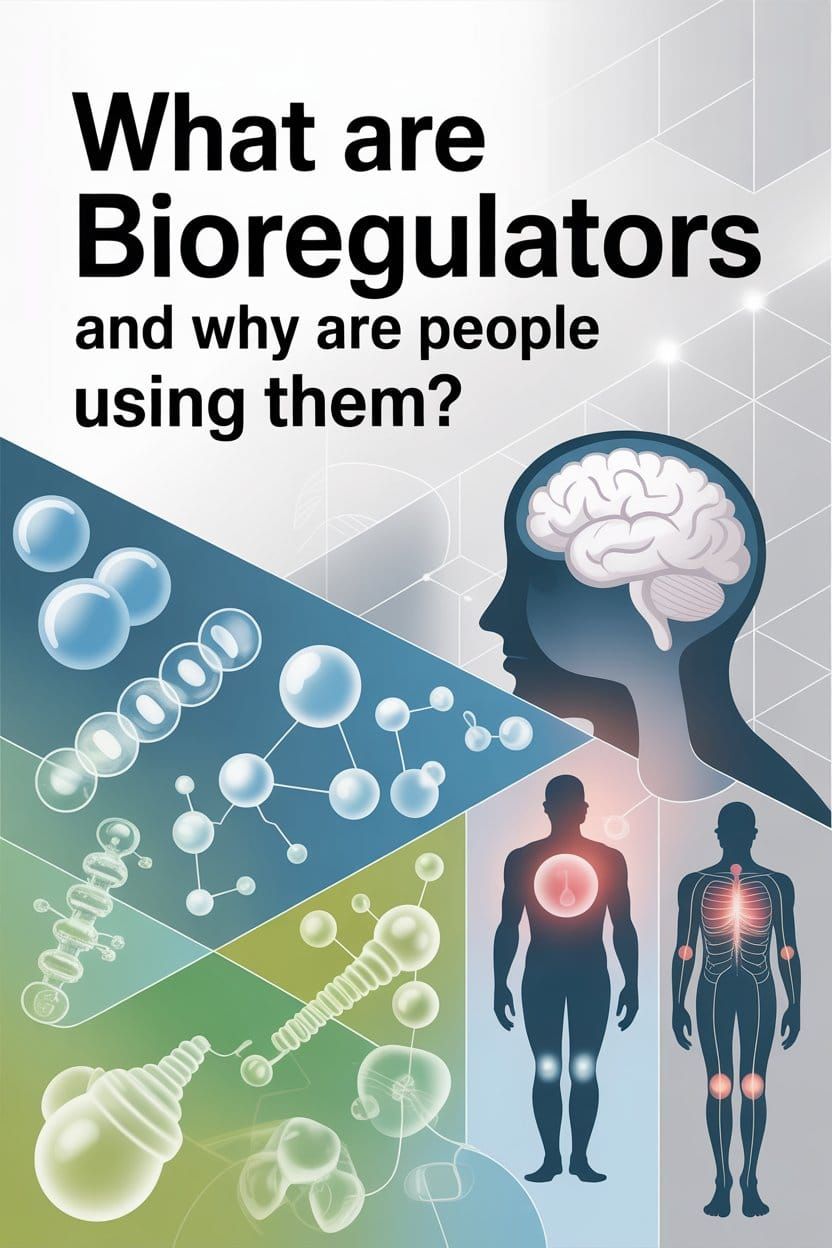
What Are Bioregulators and Why Are People Using Them?
What are bioregulators? Learn how peptide bioregulators differ from traditional peptides, why people are searching for pineal and organ-specific bioregulators, and how they support cellular regulation instead of forcing change.
If you’ve been researching peptides, gut health, or nervous system regulation, you’ve likely come across the term bioregulators.
People are searching for:
- bioregulators examples
- peptide bioregulators
- Khavinson peptide bioregulators
- pineal bioregulator
- bioregulators for brain, prostate, kidney
- the difference between peptides and bioregulators
The interest isn’t random.
It’s coming from people who feel dysregulated, not deficient, and are looking for ways to support the body without forcing outcomes.
FAQ
What are bioregulators?
Short tissue specific peptides involved in cellular signaling and regulation.
Are bioregulators the same as peptides?
No. All bioregulators are peptides, but not all peptides are bioregulators.
Do bioregulators change DNA?
They are discussed in the context of supporting gene expression and signaling, not altering DNA structure.
Why are people interested in them now?
Because many are moving away from aggressive approaches and toward regulation based strategies.
What Are Bioregulators
Bioregulators are short peptide molecules involved in cellular signaling and regulation.
They are often described as tissue-specific peptides, meaning they correspond to particular organs or systems in the body.
Rather than stimulating or suppressing a response, bioregulators are used with the intention of supporting normal cellular communication, especially when signaling has become inefficient with age, stress, or chronic load.
This is why you’ll often see searches like:
- bioregulators peptides
- bioregulators list
- peptide bioregulators supplements
Bioregulators Examples
Many bioregulators are named based on the tissue they are associated with.
Common examples people search for include:
- Pineal bioregulator - associated with circadian rhythm and sleep-wake signaling
- Brain bioregulators - discussed in the context of cognitive support and neural signaling
- Prostate bioregulators - associated with prostate tissue regulation
- Kidney bioregulators - associated with renal tissue signaling
- Thymus bioregulators - discussed in immune regulation contexts
- Ovary or testicular bioregulators - associated with reproductive tissue signaling
These are often referred to collectively as organ-specific bioregulator peptides.
Peptides vs Bioregulators
This is one of the most searched questions, and the confusion is understandable.
Peptides is a broad term that simply means a short chain of amino acids.
Bioregulators are a specific subset of peptides.
In simple terms:
- Peptides (general):
- Can stimulate, inhibit, replace, or amplify processes
- Often act systemically
- May push a biological response
- Bioregulators:
- Are tissue-specific
- Focus on regulation and signaling
- Aim to normalize function rather than override it
This is why people often search:
- bioregulators vs peptides
- peptide bioregulators
- bioregulators peptides
A helpful way to think about it:
All bioregulators are peptides, but not all peptides are bioregulators.
Why Are People Using Bioregulators
Most people looking into bioregulators are not beginners.
They have already explored:
- diet and gut health
- probiotics and supplements
- stress management
- lifestyle changes
Yet something still feels off.
This is because many chronic issues are not caused by missing inputs, but by poor communication between systems.
Bioregulators are being explored because they address signaling, not just supply.
Chronic stress disrupts communication between systems, which is why regulation becomes inefficient over time. Stress and Cortisol: Your Gut’s Worst Frenemy explains how stress alters signaling throughout the body.
This idea connects closely with stress physiology and nervous system regulation, which is why chronic stress plays such a large role. Stress and Cortisol: Your Gut’s Worst Frenemy explains how stress disrupts signaling throughout the body.
Do Bioregulators Work
This depends on expectations.
Bioregulators are not designed to:
- act like drugs
- suppress symptoms
- create immediate effects
They are discussed as tools that may support:
- cellular communication
- tissue-level regulation
- coordinated system function over time
This is why the question “do bioregulators work?” is better framed as:
Do they support regulation when signaling is impaired?
Bioregulators and Whole Body Regulation
Interest in bioregulators often overlaps with gut health and immune health.
That’s because digestion, immunity, and repair are all regulated by nervous system signaling.
When regulation is off, digestion fails even with a clean diet. Gut Health Starts in the Nervous System: The Real Cause of Bloating and IBS walks through why this happens.
Signaling breakdown in the gut can influence immune behavior throughout the body. How Gut Health Shapes the Immune System explains this connection in more detail
Gut Health Starts in the Nervous System: The Real Cause of Bloating and IBS explains why digestion fails when regulation is off, even with a clean diet.
Similarly, How Gut Health Shapes the Immune System shows how signaling breakdown in the gut can influence immune behavior throughout the body.
Bioregulators fit into this conversation because they are discussed as regulatory tools, not digestive aids.
A Shift Away From Killing Strategies
Many people searching for bioregulators have already tried aggressive approaches:
- antimicrobial protocols
- parasite cleanses
- elimination diets
These strategies often focus on removing something.
Bioregulators reflect a different philosophy:
that terrain and regulation matter more than eradication.
This terrain-first approach is explored further in Terrain vs. Bugs: Why Killing Isn’t the First Step, where strengthening regulation often produces better long-term outcomes.
This idea is explored further in Terrain vs. Bugs: Why Killing Isn’t the First Step, which explains why strengthening regulation often leads to better long-term outcomes.
Khavinson Peptide Bioregulators
Searches for Khavinson bioregulators or Khavinson peptide bioregulators refer to research led by Vladimir Khavinson, who studied short peptides involved in tissue-specific regulation.
These terms are often used interchangeably with:
- bioregulator peptides
- organ-specific peptides
They describe a category of signaling peptides, not a single product.
Are Bioregulators Supplements
You may see searches like:
- bioregulators for sale
- peptide bioregulators supplements
- bioregulator company
Bioregulators can appear in different forms depending on country, regulation, and context, including supplements, research compounds, or clinical discussions.
This article is not recommending products.
It is explaining why people are searching and how bioregulators differ conceptually from traditional supplements.
If you want to understand how regulation, signaling, and tissue specific support actually fit into a layered healing strategy, keep reading.⬇️⬇️