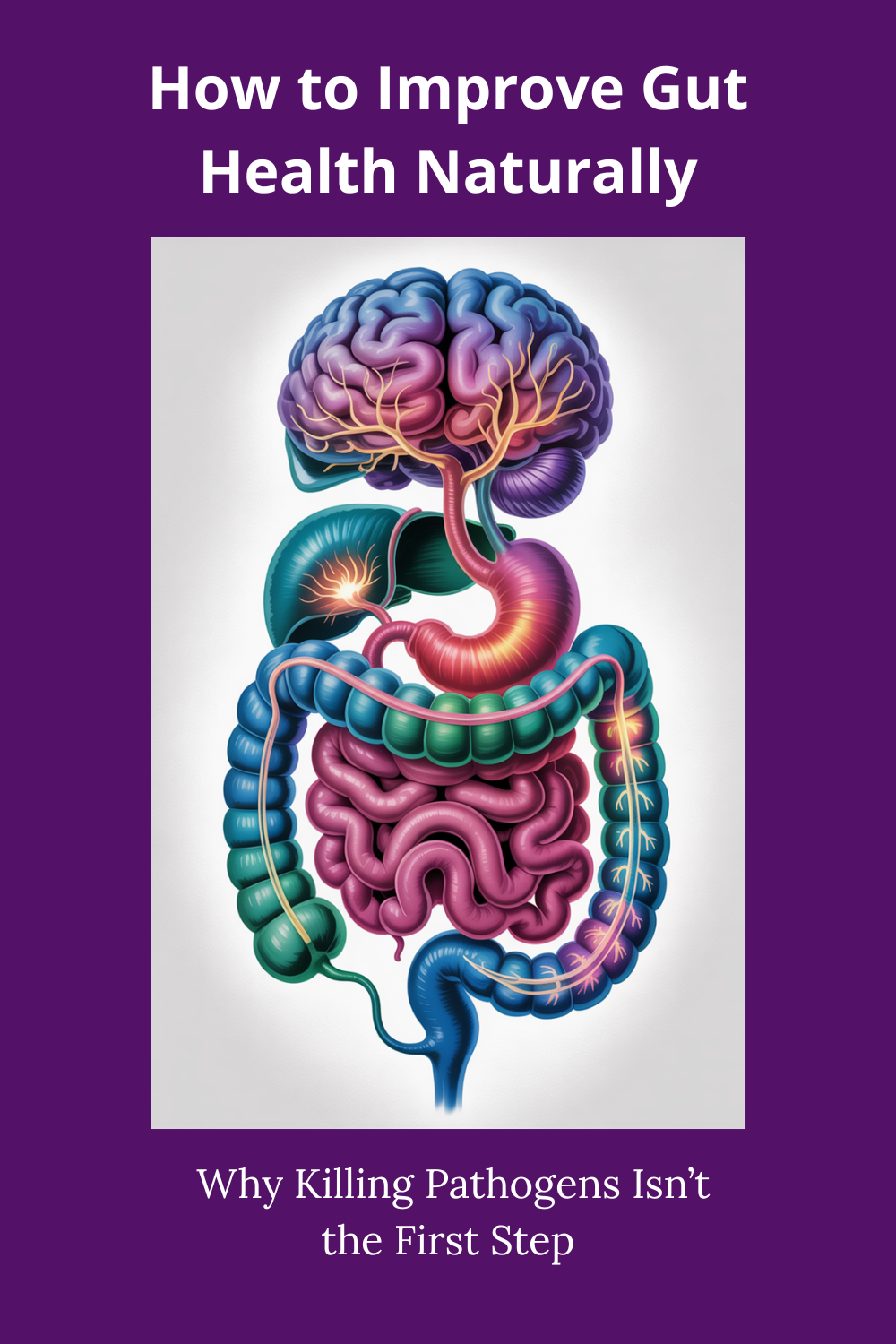
How to Improve Gut Health Naturally: Why Killing Pathogens Isn’t the First Step
How to improve gut health naturally starts with strengthening the terrain, not waging war on microbes. Learn why nervous system regulation and digestive coordination come first.
If you’ve been searching for how to improve gut health naturally, you’ve probably seen advice about detoxes, parasite cleanses, a 7 day gut reset, or lists of the worst foods for gut health. Maybe you’ve wondered what destroys your gut biome in the first place, or whether certain foods that heal gut inflammation can fix everything quickly.
It’s tempting to believe that gut problems are simply caused by “bad bacteria” that need to be eliminated. But if you’ve tried antibiotics, restrictive diets, or aggressive protocols and your symptoms keep returning, you’re not alone. Many people trying to heal their gut microbiome naturally discover that killing isn’t the same as rebuilding. This idea is explored further in Terrain vs. Bugs: Why Killing Isn’t the First Step, where we break down why environment matters more than eradication.
So what actually improves gut health?
The answer isn’t just removing what’s harmful. It’s strengthening what’s weak.
Your gut is not just a collection of microbes. It’s a coordinated system that includes your microbiome, gut lining, immune signaling, bile flow, digestive enzymes, and nervous system regulation. When this system is strong, harmful bacteria struggle to overgrow. When it’s weak, even “normal” microbes can create symptoms.
If you truly want to improve gut health naturally, the first step isn’t war.
It’s terrain.
Before you worry about flushing out a “bad gut” or chasing the next gut health supplement, you need to understand what actually makes the gut resilient in the first place.
Let’s break that down.
Frequently Asked Questions About Gut Health
What is the quickest way to heal your gut?
There is no true overnight fix for gut health. While removing inflammatory foods can reduce symptoms quickly, long-term healing requires restoring coordination between your gut, immune system, and nervous system. Digestion is not just about bacteria. It is controlled by signaling between the brain and the gut.
The fastest way to improve gut health naturally is to remove irritants, nourish the gut lining, and support healthy digestive signaling. If the nervous system remains overstimulated, motility and microbial balance often stay disrupted. True gut healing requires regulation, not just restriction.
How do you flush out a bad gut?
Your body already has built-in detox systems. You don’t “flush” your gut the way you flush a pipe. Instead, you restore balance by improving digestion, supporting bile flow, increasing fiber appropriately, and removing triggers that destroy your gut biome. When the terrain improves, harmful overgrowth naturally decreases.
What are the signs of an unhealthy gut?
Common signs of an unhealthy gut include:
- Bloating
- Gas
- Irregular bowel movements
- Food sensitivities
- Brain fog
- Skin irritation
- Fatigue
- Recurrent IBS flare ups
- Signs of leaky gut
- Chronic inflammation
These symptoms often signal microbiome imbalance, gut lining irritation, or poor digestive coordination.
Can you heal your gut in 7 days?
A 7-day gut reset may reduce inflammation temporarily, especially if you eliminate ultra-processed foods and common irritants. However, healing the gut microbiome naturally is not a one-week event. True gut repair involves rebuilding the gut lining, restoring microbial diversity, and improving digestive signaling over time.
Short-term dietary changes may reduce irritation, but long-term healing requires restoring proper gut-brain communication.
What destroys your gut microbiome?
Several common factors damage gut health:
- Ultra-processed foods
- Excess sugar
- Chronic stress
- Frequent antibiotic use
- Poor sleep
- Alcohol overuse
- Lack of dietary diversity
Over time, these factors weaken the gut terrain and allow imbalance to develop. Excess sugar in particular can shift microbial balance, which we explore further in Sugar, Yeast, and the Fermented Freakshow in Your Belly.
Chronic stress and poor nervous system regulation can slow digestion and alter microbial balance.
What heals the gut lining fast?
The gut lining repairs through:
- Adequate protein intake
- Zinc and key micronutrients
- Omega-3 fats
- Polyphenol-rich plant foods
- Reduced inflammatory triggers
- Proper digestive function
Supporting the gut lining requires nourishment, not just restriction.
Adequate blood flow, vagal tone, and proper digestive signaling are essential for repair.
What are the early signs of leaky gut?
Leaky gut symptoms may include:
- Increased food sensitivities
- Joint discomfort
- Skin flare-ups
- Brain fog
- Bloating
- Fatigue
- Immune reactivity
These signs suggest the gut barrier may be compromised.
What Destroys Your Gut Microbiome?
If you want to improve gut health naturally, you first have to understand what weakens it.
Your gut microbiome is not fragile by default. It is adaptive and resilient. But certain repeated exposures can gradually damage balance, reduce diversity, and irritate the gut lining.
Here are the biggest contributors:
1️⃣ Ultra-Processed Foods
Highly processed foods lack fiber, contain emulsifiers, artificial additives, and excess sugar. Over time, these ingredients can disrupt microbial diversity and promote inflammation.
This is why the worst foods for gut health often include packaged snacks, refined carbohydrates, and fast food.
2️⃣ Excess Sugar
Sugar feeds opportunistic bacteria and yeast. When sugar intake is high, microbial balance shifts. That imbalance can lead to bloating, gas, and recurrent digestive symptoms.
3️⃣ Repeated Antibiotic Use
Antibiotics save lives. But they do not discriminate between harmful and beneficial bacteria. Frequent use can reduce microbial diversity and weaken gut terrain, especially if rebuilding strategies are not implemented afterward. For a deeper look at this balance, see Antibiotics: When They Save You and When They Wreck You.
4️⃣ Chronic Stress and Nervous System Overdrive
This is where many people underestimate the damage.
Chronic stress alters digestive signaling. It can slow motility, reduce stomach acid, impair enzyme production, and change the gut environment in ways that favor imbalance.
If the nervous system stays in fight-or-flight mode, the gut cannot function optimally — no matter how clean the diet becomes.
5️⃣ Poor Sleep
Your microbiome follows circadian rhythms. Sleep disruption alters microbial balance and increases inflammatory signaling.
6️⃣ Lack of Dietary Diversity
Eating the same few foods repeatedly limits microbial diversity. A diverse microbiome requires varied fibers, polyphenols, and whole-food inputs.
Why Killing Pathogens Isn’t the First Step
It’s easy to assume that gut problems are caused by “bad bacteria” that need to be eliminated. That mindset fuels parasite cleanses, aggressive antimicrobial protocols, and constant microbiome “resets.”
But here’s the problem:
Even if you reduce harmful bacteria temporarily, imbalance often returns.
Why?
Because bacteria respond to environment.
Your gut is not just a container of microbes. It is a living system controlled by:
- Motility (how food moves)
- Digestive secretions (acid, bile, enzymes)
- Blood flow
- Immune signaling
- Nervous system regulation
If motility slows, bacteria overgrow.
If bile flow weakens, imbalance shifts.
If stomach acid drops, microbes migrate.
If the nervous system stays in fight-or-flight mode, digestion becomes inefficient.
You can remove organisms all day long. But if the terrain remains weak, the system defaults back to dysfunction.
This is why some people eliminate sugar, remove gluten, take supplements, or complete a 7-day gut reset — and still struggle with bloating, IBS flare ups, or recurrent symptoms.
The missing piece is regulation.
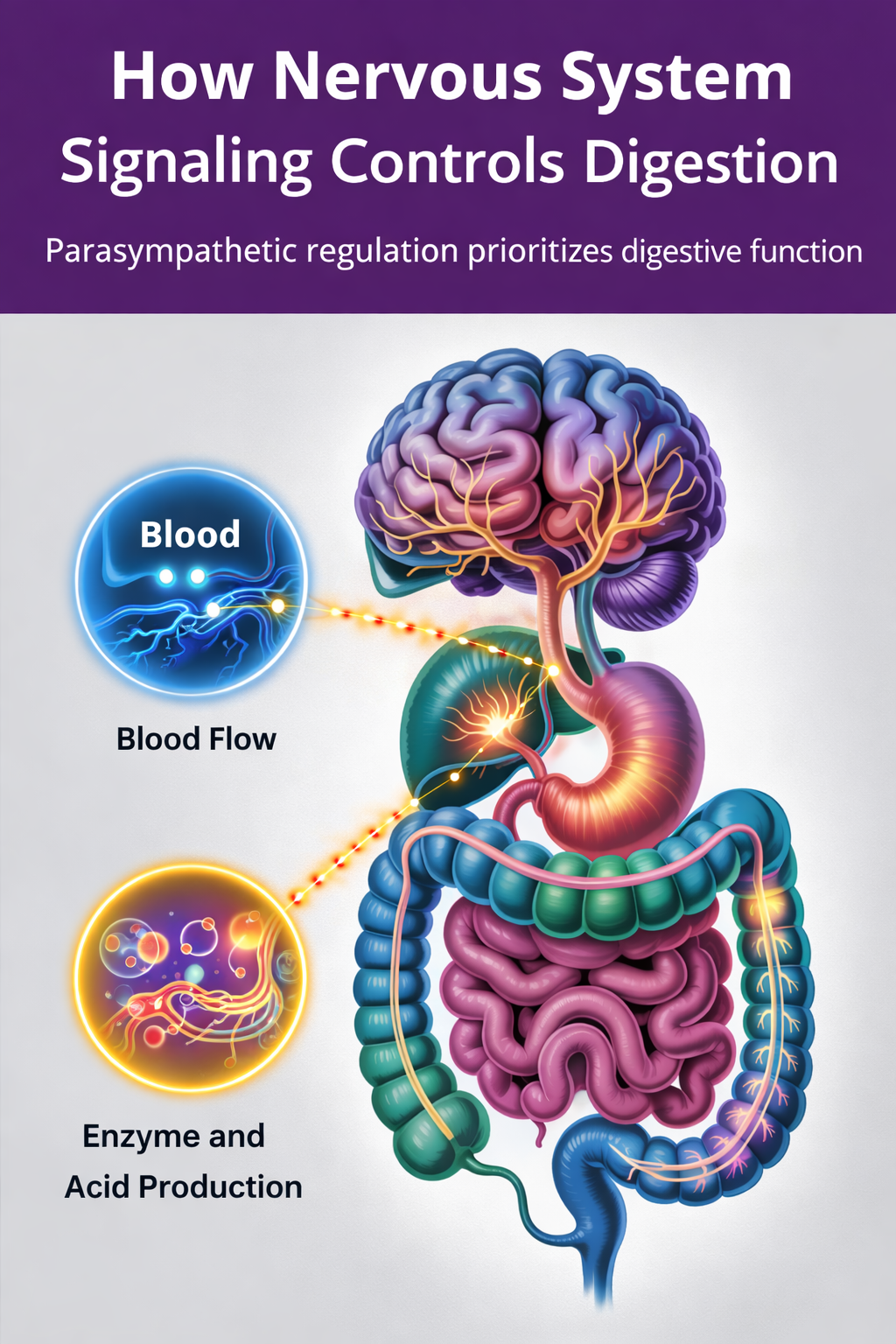
Digestion is directed by the autonomic nervous system. The brain communicates constantly with the gut through the vagus nerve. This signaling determines when acid is released, when enzymes activate, when the gut contracts, and when inflammation resolves.
If that communication is impaired, the ecosystem destabilizes.
Strengthening the gut means restoring coordination - not declaring war.
For an example of terrain supportive rebuilding strategies, see Spore Based Probiotics: Why They’re Smarter Than the Fridge Kind.
How the Nervous System Controls Digestion
Most people think digestion begins in the stomach.
It doesn’t.
Digestion begins in the nervous system.
Your gut is directly connected to your brain through a communication network known as the gut-brain connection. The vagus nerve carries signals between the brain and digestive organs, helping regulate:
- Stomach acid production
- Enzyme release
- Bile flow
- Intestinal motility
- Inflammatory response
When the nervous system is in a parasympathetic state, often called “rest and digest,” digestion is coordinated and efficient. Blood flow increases to the gut. Enzymes activate. Motility moves smoothly. The microbiome remains balanced.
But when the body shifts into fight-or-flight mode, digestion is deprioritized. Motility can slow or spasm. Acid production changes. Inflammatory signaling increases. Over time, this altered environment can contribute to recurrent IBS flare ups, bloating, and microbial imbalance.
This is why many people can remove the worst foods for gut health and still struggle. If nervous system regulation remains impaired, the terrain does not stabilize.
Improving gut health naturally requires more than removing irritants. It requires restoring coordination between the brain and the gut.
And that coordination is trainable.
Most people try to fix their gut by changing foods.
Few understand how regulation, sequencing, and terrain layering determine whether healing lasts.
Health Foundations continues below with deeper education on how this system works and how to think through next steps responsibly.
Health Foundations: The Terrain Layering Framework
Most gut advice focuses on what to remove.
Very little explains what must be rebuilt, and in what order.
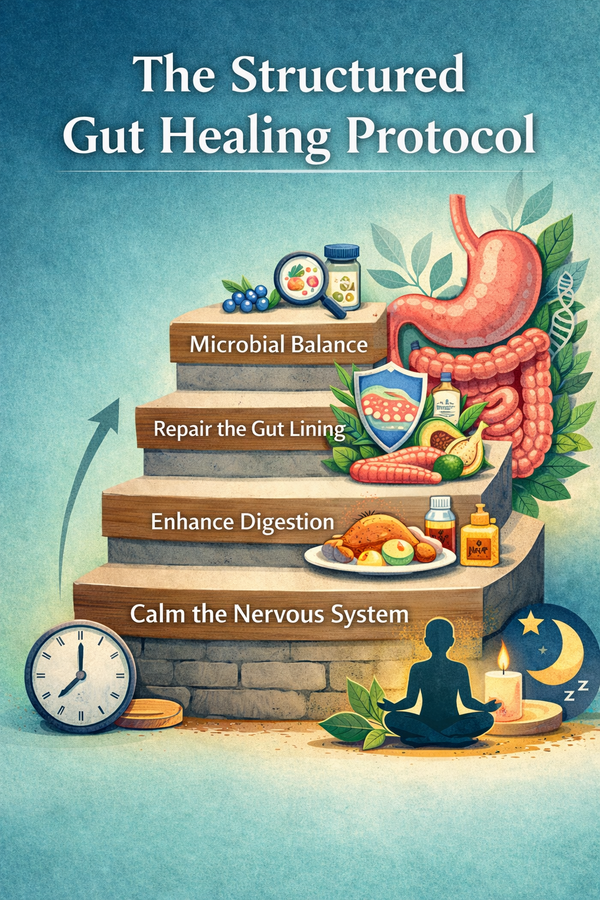
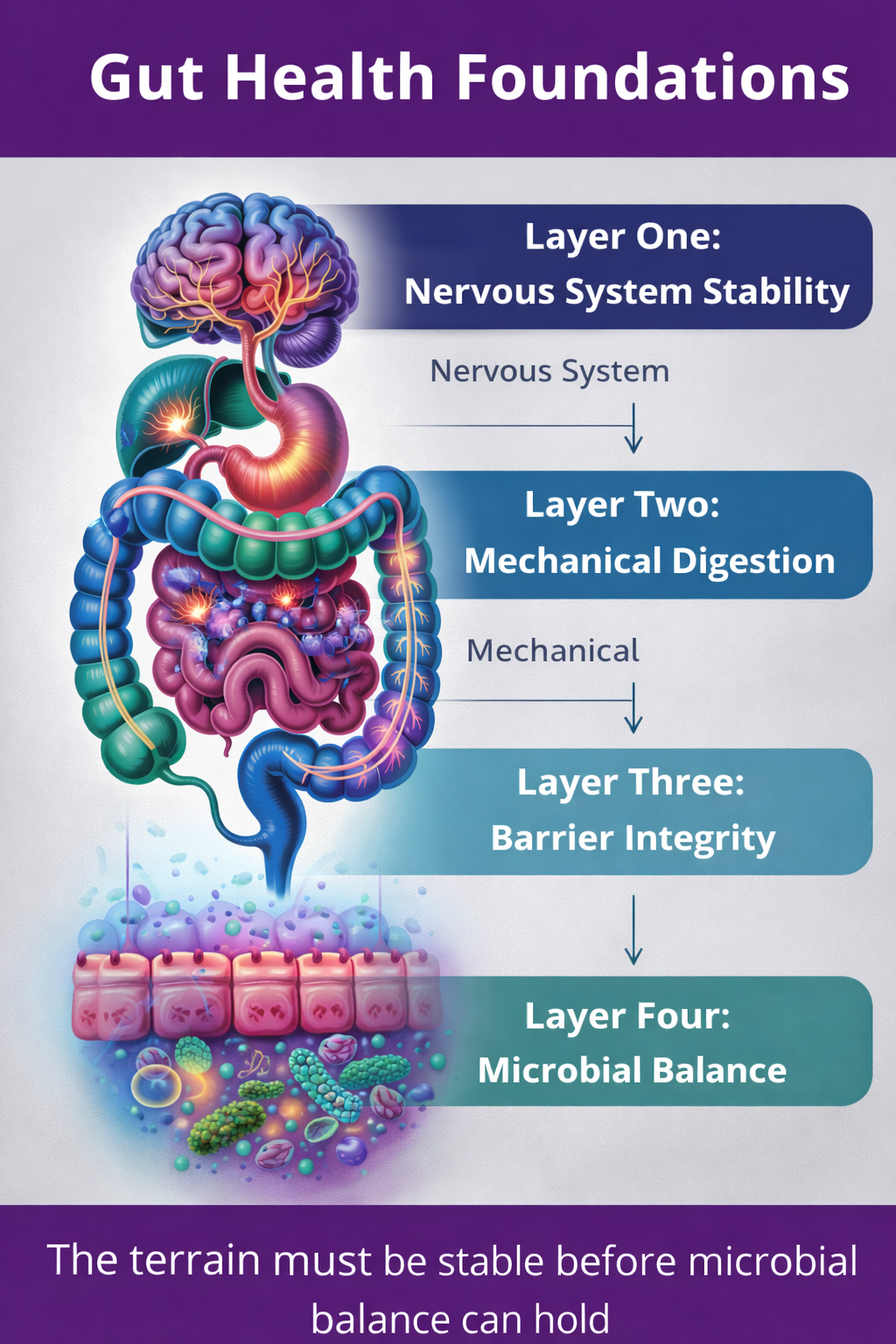
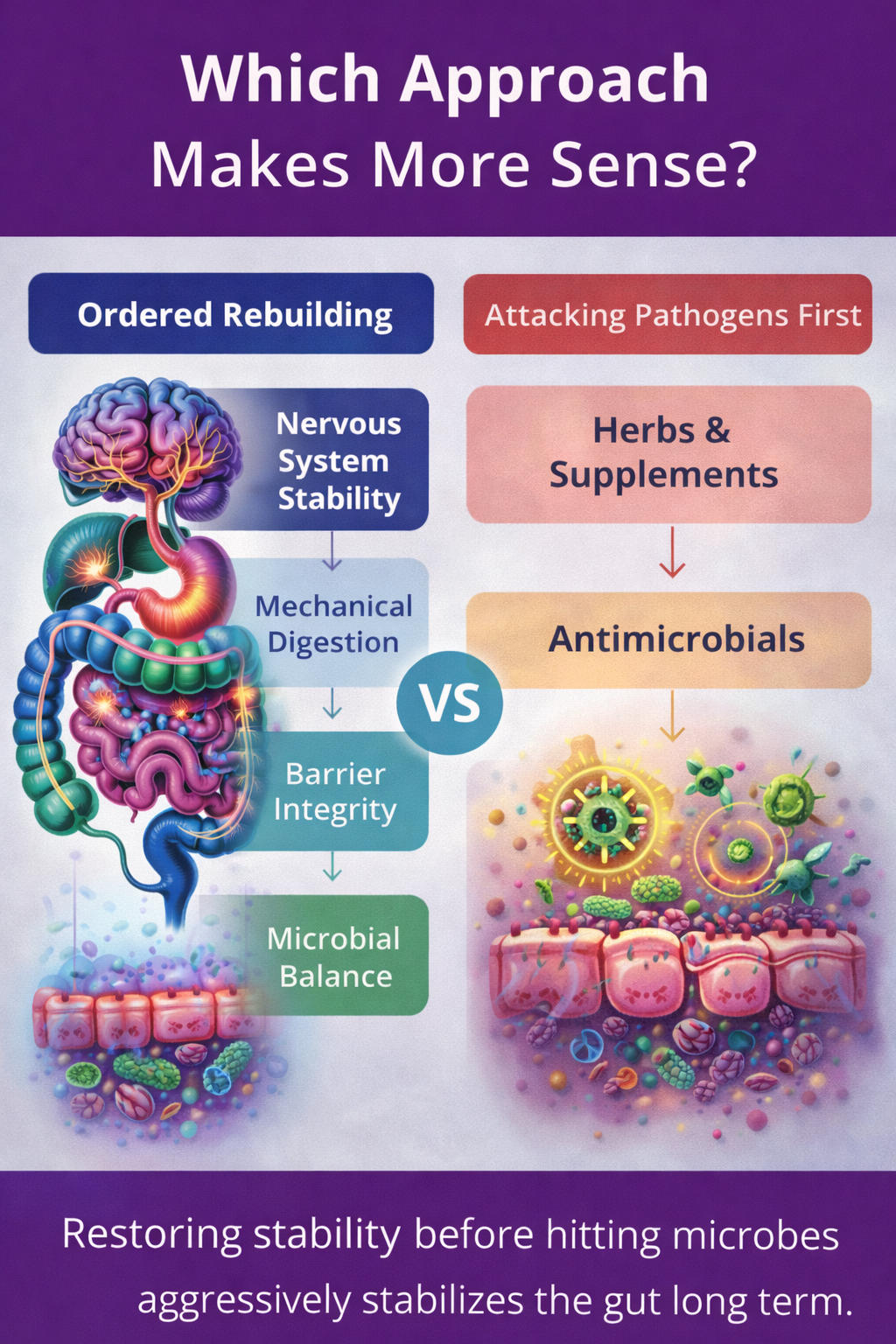
Digestive stability is not restored through elimination alone. It is restored through layered regulation. The gut is governed by sequence. First signaling stabilizes. Then mechanical digestion improves. Then barrier integrity strengthens. Only after those foundations are secure does microbial balance hold long term.
These layers matter because each one supports the next. If nervous system regulation remains unstable, digestion becomes inconsistent. If mechanical digestion is weak, food stagnates and imbalance follows. If the gut barrier is compromised, inflammation persists regardless of diet. And if microbial interventions are introduced before these layers are addressed, improvements often fade.
Terrain responds to order.
When the layers are understood and respected, symptoms begin to make sense. When they are ignored, people cycle through temporary fixes.