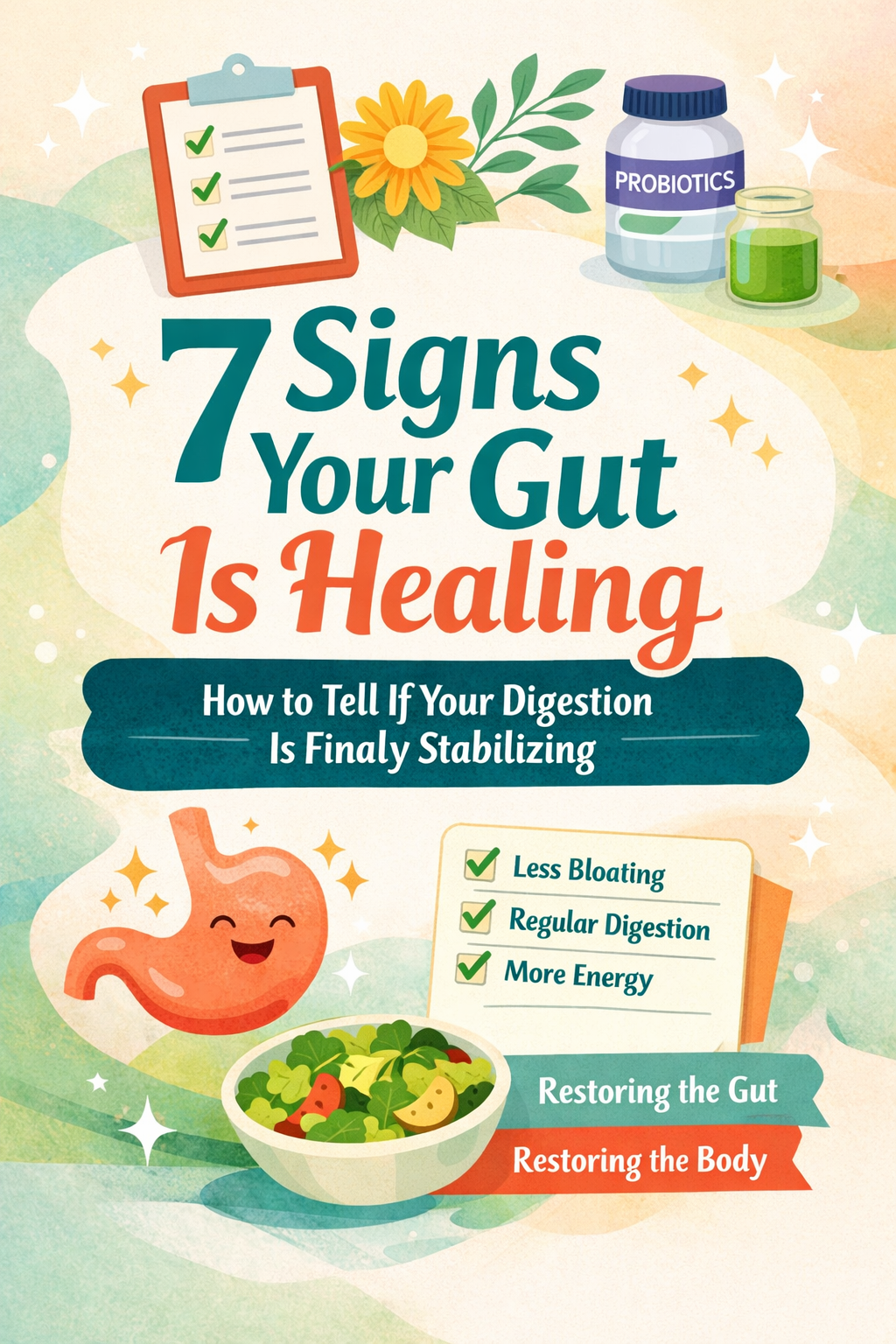
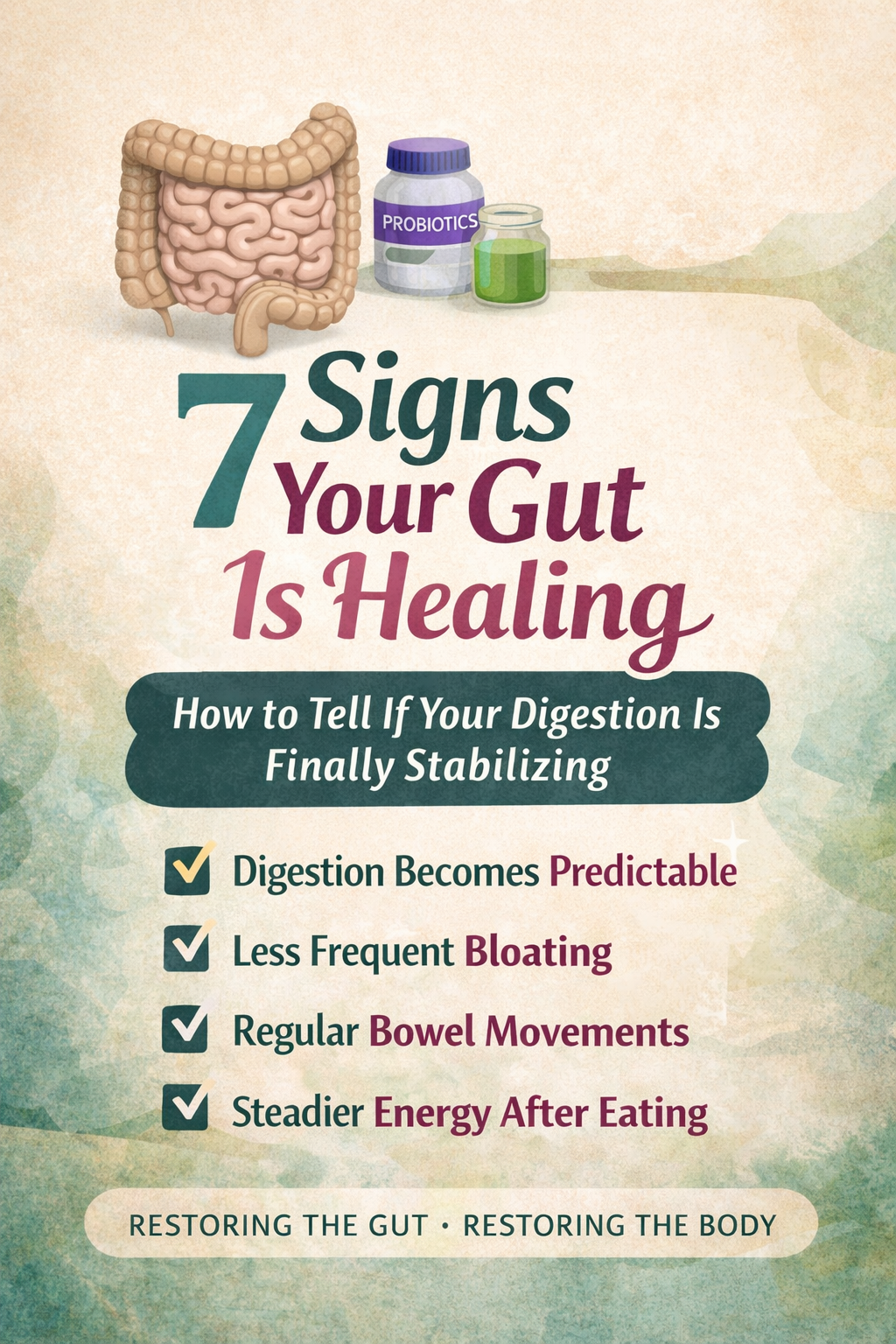
7 Signs Your Gut Is Healing: How to Tell If Your Digestion Is Finally Stabilizing
7 signs your gut is healing and digestion is finally stabilizing. Learn how to recognize improving gut health, including less bloating, steadier energy, fewer food reactions, and more regular digestion as inflammation begins calming and the gut microbiome becomes more balanced.
Your gut rarely heals all at once.
For most people, the process is quieter than expected. The bloating that used to happen after every meal slowly fades. Energy improves. Foods that once caused trouble suddenly digest without drama.
But because the change happens gradually, many people miss the signs that their digestive system is finally stabilizing.
Recognizing the signs your gut is healing helps you understand whether your body is moving toward recovery or still struggling with inflammation and instability.
If you're new to understanding digestive health, start with the Gut & Digestion Reset pillar, which explains how digestion influences inflammation, immunity, metabolism, and overall health.
Frequently Asked Questions About Gut Healing
How can you tell when your digestive system is starting to recover?
One of the earliest signs of digestive recovery is that symptoms become less chaotic. Bloating happens less often, bowel movements become more regular, and meals stop triggering the same level of discomfort. Many people also notice steadier energy and fewer unexpected reactions to foods that previously caused trouble.
What changes usually happen as gut health begins improving?
As gut health improves, digestion often feels calmer and more reliable. Meals digest more comfortably, energy becomes more stable throughout the day, and inflammatory symptoms such as skin irritation or brain fog may begin to ease. These changes suggest the digestive environment is becoming more balanced.
How long does it typically take for the gut to repair itself?
Recovery time varies depending on the cause of the imbalance and how long the digestive system has been struggling. Some people begin noticing improvement within a few weeks after reducing inflammation and supporting digestion, while deeper restoration of the gut lining and microbiome can take several months.
What symptoms suggest your gut health might be struggling?
Persistent digestive discomfort can signal that the gut environment is under stress. Common warning signs include frequent bloating, irregular bowel movements, fatigue after eating, food sensitivities, brain fog, and skin flare-ups. These symptoms often indicate inflammation or imbalance affecting how the digestive system processes food and nutrients.
In This Article
How do you know if your gut is healing
What does gut healing feel like
How long does it take for the gut to heal
What are signs of an unhealthy gut
7 signs your gut is finally becoming stable
Why gut stability matters more than quick fixes
How Do You Know If Your Gut Is Healing?
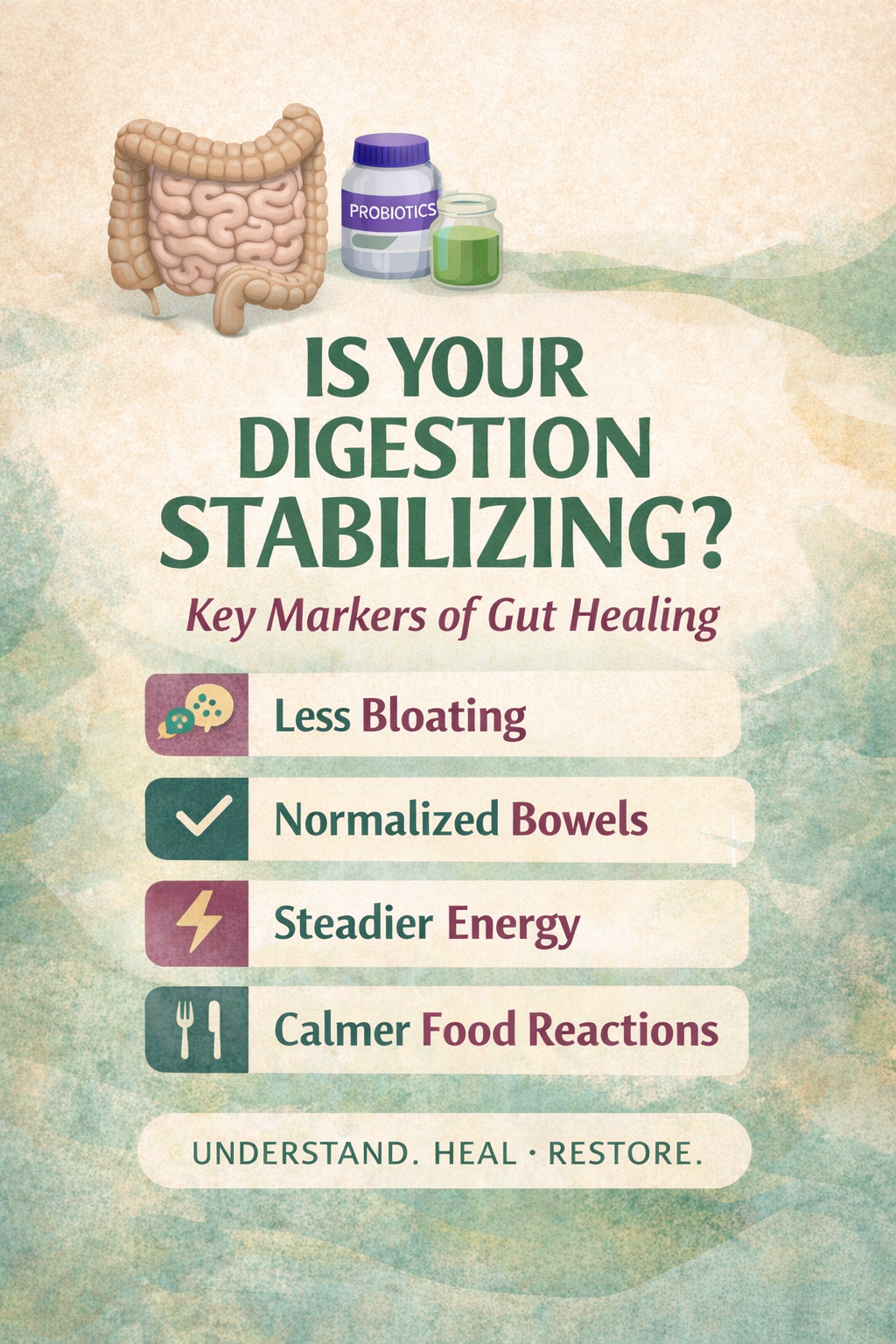
Your gut may be healing when digestion becomes more predictable, bloating decreases, and bowel movements normalize. Many people also notice improved energy and fewer reactions to foods that previously caused discomfort. These signs suggest inflammation is calming and the digestive environment is stabilizing.
Healing rarely happens overnight.
The digestive system is connected to:
• immune signaling
• hormone balance
• nervous system regulation
• metabolism
When the gut becomes unstable, these systems can begin misfiring. As stability returns, many symptoms begin improving together.
What Does Gut Healing Feel Like?
When the gut begins recovering, digestion often feels calmer and more predictable. Bloating happens less frequently, bowel movements become more comfortable, and food reactions decrease. Many people also notice steadier energy after meals, suggesting inflammation in the digestive system is starting to settle.
Instead of feeling like your body is constantly reacting to food, digestion begins to feel normal again.
This change is one of the clearest signals that the gut environment is stabilizing.
How Long Does It Take for the Gut to Heal?
Gut healing timelines vary depending on the cause of the imbalance and how long the digestive system has been struggling. Some people notice improvements within a few weeks after reducing inflammation, while deeper restoration of the intestinal lining and microbiome may take several months.
Many factors influence healing speed:
• chronic inflammation
• stress and nervous system signaling
• microbial imbalance
• digestive motility
• diet quality
Healing often happens in stages, which is why symptoms sometimes improve gradually rather than disappearing all at once.
→ Why Gut Symptoms Keep Coming Back
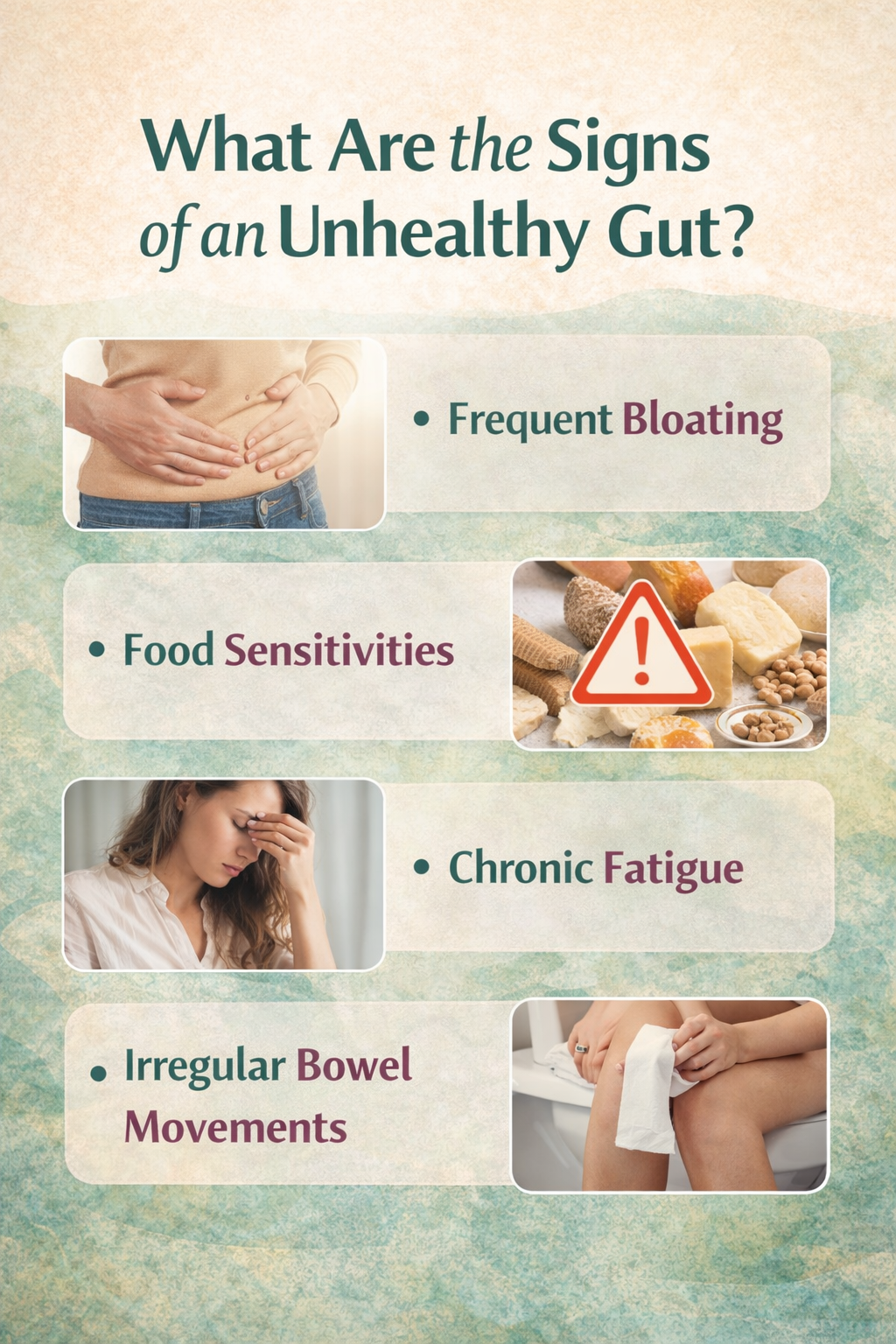
What Are Signs of an Unhealthy Gut?
An unhealthy gut often produces persistent symptoms that suggest the digestive system is struggling with inflammation or microbial imbalance. Common signs include chronic bloating, constipation or diarrhea, fatigue after meals, frequent food sensitivities, brain fog, and skin irritation.
These symptoms can occur when:
• digestion becomes inefficient
• the intestinal lining becomes irritated
• microbial balance is disrupted
If inflammation is present, it can affect much more than digestion. This article explains several subtle ways inflammation can appear in the body.
→ Is Your Gut Actually Inflamed? 7 Sneaky Clues
7 Signs Your Gut Is Finally Becoming Stable
Once inflammation decreases and digestion begins functioning normally again, the body starts sending clear signals that recovery is happening.
Here are some of the most common signs your gut is healing.
1. Digestion Becomes Predictable
Predictable digestion is one of the clearest signals that the gut environment is stabilizing.
Unstable digestion is unpredictable.
A meal that feels fine one day may cause bloating the next.
When the gut environment stabilizes, digestion becomes consistent. Meals digest normally and symptoms stop fluctuating dramatically.
Predictable digestion is one of the earliest signs that the intestinal environment is becoming more resilient.
2. Bloating Becomes Less Frequent
Regular bowel movements are one of the strongest indicators that digestion is functioning properly again.
Chronic bloating is often caused by excessive fermentation inside the digestive tract.
This can happen when:
• microbial balance is disrupted
• digestion slows
• inflammation irritates the intestinal lining
As gut health improves, fermentation becomes more controlled and bloating occurs less frequently.
Instead of feeling bloated after every meal, symptoms begin appearing only occasionally.
3. Bowel Movements Become More Regular
Healthy digestion usually produces one to two comfortable bowel movements daily.
When constipation or irregular motility persists, waste remains in the digestive tract longer than it should.
This can disrupt microbial balance and slow healing.
Chronic constipation can quietly sabotage gut recovery. If this is something you struggle with, this article explains why it matters more than many people realize.
→ Constipation and Gut Sabotage
4. Food Reactions Become Less Intense
When the intestinal lining becomes irritated, the immune system can begin reacting to foods unnecessarily.
This often appears as sudden food sensitivities.
As inflammation decreases and the intestinal barrier strengthens, these reactions often begin calming down.
Foods that once caused discomfort may slowly become easier to tolerate.
5. Energy Improves After Eating
Efficient digestion should produce energy, not exhaustion.
Digestion requires a tremendous amount of energy.
When the gut is inflamed, the body may divert large amounts of energy toward managing inflammation, leaving you feeling exhausted after meals.
As digestion becomes more efficient, the opposite often happens.
Instead of fatigue, many people notice improved energy after eating.
6. Inflammation Symptoms Begin Improving
Gut instability can affect many systems beyond digestion.
People often experience symptoms such as:
• joint discomfort
• skin irritation
• brain fog
• fatigue
As the gut environment stabilizes, these inflammatory symptoms often begin improving gradually.
Digestive stability frequently creates ripple effects throughout the body.
7. Nourishing Foods Become Easier to Digest
Many people recovering from digestive issues initially struggle with foods that support gut repair.
As healing progresses, the body begins tolerating nourishing foods again.
Foods that support the intestinal lining include:
• bone broth
• collagen
• gelatin
These foods provide amino acids that help maintain the intestinal barrier and support tissue repair.
If you want to understand why these foods are often recommended during digestive recovery, this article explains how they support the gut lining.
→ Bone Broth, Collagen, and Gelatin: Your Gut’s Dream Team
A Simple Way to Start Supporting Your Gut
If you're trying to calm gut inflammation and stabilize digestion, food choices make a huge difference.
Many readers find it easier to follow a structured plan rather than guessing which foods support gut repair.
I created a 4-week Anti-Inflammatory Gut Reset that walks through the exact meals, recipes, and grocery lists designed to support gut healing and digestive stability.
→ Explore the Anti-Inflammatory Gut Reset here
Why Gut Stability Matters More Than Quick Fixes
Many people try to fix gut issues using aggressive strategies:
• parasite cleanses
• antimicrobial protocols
• extreme detox plans
But if the digestive system is still unstable, these approaches can sometimes make symptoms worse.
The body often needs stability before intervention.
When digestion becomes predictable and inflammation calms, the gut environment becomes resilient enough to support deeper healing.
Understanding this stage of recovery is essential before moving to the next phase of rebuilding digestion.
In the next article we will explore what happens after gut stabilization and what should wait until the digestive system becomes stronger.
The article continues below for Health Foundations members, with deeper education on how this system works and how to think through next steps responsibly.
Health Foundations
What Actually Creates Gut Stability
Gut stability rarely comes from a single supplement, diet change, or short-term protocol.
Instead, stability develops when several systems begin working together again. The digestive system is influenced by far more than food alone, and long-term improvement usually reflects a shift in multiple areas of physiology.
The most important factors that create digestive stability include: