
Winter Herbs for Immunity, Digestion, and Seasonal Energy
Winter doesn’t bring more viruses, it brings weaker immunity. Shorter daylight, cold temperatures, heavier food, and stress all reduce immune resilience. Learn how simple winter herbs support digestion, warmth, and steady immune strength during flu season.
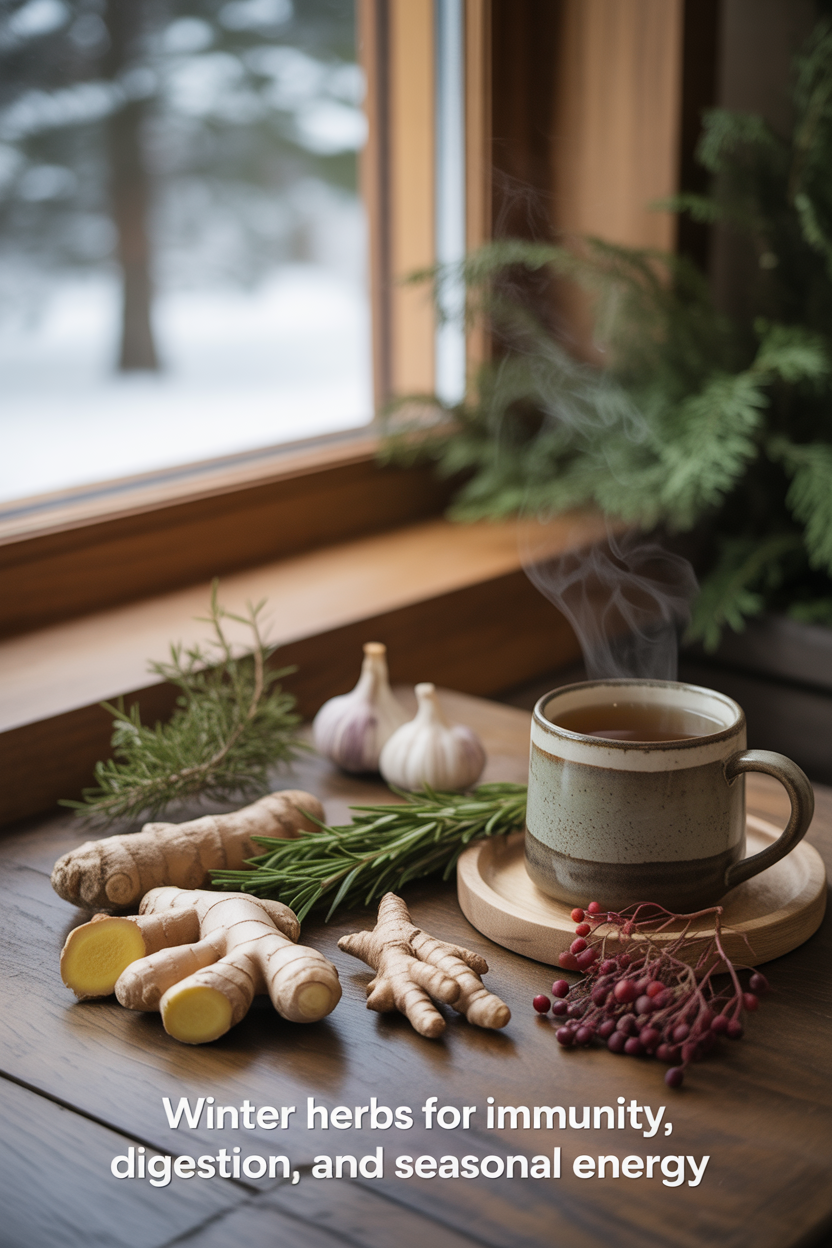
We are almost in the thick of winter. Even if the calendar says otherwise, flu season is here, daylight is shorter, and the holiday stretch brings more stress, heavier food, disrupted sleep, and usually more alcohol than usual.
Most people wait until they feel run down to do something about it. But winter is not the time to push harder or react after the fact. It is the time to build resilience before the body is overwhelmed.
Winter is a compression season. Metabolism slows, digestion weakens, circulation decreases, and the body naturally shifts into conservation mode. When we ignore this and continue living like it is summer, the immune system pays the price.
One of the simplest ways to support the body through this season is by adding supportive herbs into your daily routine. Not as a cleanse. Not as a quick fix. But as a steady way to support immunity, digestion, and energy during a season that naturally asks more of the body.
This is where winter herbalism actually shines.
Why Immunity Struggles in Winter
Winter does not bring more viruses. It brings conditions that weaken the body’s ability to respond.
Shorter daylight disrupts circadian rhythm, which immune cells rely on for timing, coordination, and repair. Hormones like cortisol and melatonin are tightly linked to this rhythm, and when they are off, immune response becomes slower and less efficient. The immune system still works, just not optimally.
Cold further compounds this. Immune function is temperature dependent. Colder tissue has reduced circulation, slower immune cell movement, and weaker first-line defense at the skin and airways. This is why maintaining body temperature is standard in medical settings. Cold increases infection risk.
Winter also demands more energy simply to stay warm. That energy has to come from somewhere. When more fuel is diverted toward thermoregulation, fewer resources are available for immune surveillance, digestion, lymphatic flow, and tissue repair. The issue is not increased exposure, but reduced resilience.
This is why winter support is about warmth, rhythm, digestion, and steady immune strength, not aggressive cleansing or overstimulation.
Key winter herbs and how they help
Ginger
Ginger warms the body, improves circulation, and strengthens digestion. It helps the stomach empty properly and reduces gas and bloating that often worsen in winter. Ginger also supports immune signaling by improving blood flow to tissues. It is especially helpful for people who feel cold easily or feel heavy and sluggish after meals.
Best used in the morning or with meals.
Turmeric
Turmeric supports inflammation balance and liver function. In winter, it helps prevent sluggish digestion and low-grade systemic inflammation that can suppress immune response. It works best when paired with fat and black pepper and is particularly supportive for joint stiffness and digestive heaviness.
Best used with meals.
Garlic
Garlic has antimicrobial properties and supports immune defense while also aiding digestion. It stimulates digestive secretions and supports the gut microbiome, which plays a central role in immune regulation. Garlic is most helpful during times of exposure or early symptoms, rather than constant high-dose use.
Best used in cooking or short-term support
Astragalus
Astragalus is a classic immune-modulating herb. It supports immune readiness and resilience rather than acting like a stimulant. It helps the body respond appropriately to stress and exposure and is ideal for winter prevention and recovery. It is not intended for use during active fever or acute infection.
Best used daily during winter months
Elderberry
Elderberry supports antiviral defense and immune signaling. It helps the immune system respond more efficiently when challenged. Elderberry is best used during times of increased exposure or at the first sign of symptoms, rather than as a long-term daily supplement.
Best used short term.
Rosemary
Rosemary improves circulation, supports digestion of heavier foods, and enhances mental clarity during darker months. It also supports mitochondrial function, helping sustain energy without overstimulation. Rosemary is particularly helpful for people who feel mentally foggy or sluggish in winter.
Best used in cooking or afternoon tea.
Who Winter Herbal Support Is For
Winter herbal support is especially helpful if you:
- Get sick every winter
- Feel cold easily or struggle to stay warm
- Experience sluggish digestion or bloating
- Feel mentally foggy or fatigued in darker months
- Crash after the holidays and take weeks to recover
These are not signs of weakness. They are signs the body needs seasonal support.
What Not to Do in Winter
Winter is not the season for:
- Aggressive cleanses or detox protocols
- Overstimulating immune supplements
- Skipping meals or under-eating
- Treating winter like summer
Pushing harder during winter often backfires and leaves the body depleted going into spring.
How to use winter herbs simply
You do not need complicated protocols.
Morning
Use warming herbs like ginger or turmeric to support circulation and digestion early in the day.
With meals
Add herbs like rosemary and garlic to heavier winter foods to improve digestion and reduce stagnation.
Evening
Choose calming or restorative herbs rather than stimulants to support rest and repair.
Throughout winter
Use immune-supporting herbs preventatively rather than reactively. Consistency matters more than intensity.
Winter is not the season to cleanse aggressively. It is the season to strengthen the terrain so the body is prepared for spring.
When winter support is done well, spring detox becomes easier, gentler, and far more effective.
Curator of forgotten wisdom with a modern understanding of why it works.
Jamie Shahan, MSN, CRNA, RN
Empowering Holistic Health
🌐 Connect with me on Social Media:
Disclaimer
The information provided on this website, in associated blogs, courses, and materials, is for general educational and informational purposes only. It is not medical advice and should not be interpreted as such.
I am not a medical doctor. The content I share reflects my personal opinions, experiences, and research. It is not intended to diagnose, treat, cure, or prevent any disease, condition, or illness.
You should not rely on the information here as a substitute for professional medical care, advice, or treatment. Always consult with a licensed healthcare provider before making any decisions regarding your health, especially if you are pregnant, nursing, taking prescription medications, or managing a medical condition.
By reading this website or using any related materials, you acknowledge and agree that:
- You are fully responsible for your own health decisions.
- The author and publisher of this content assume no liability for any harm, loss, or adverse effects arising directly or indirectly from the use, misuse, or interpretation of the information provided.
- No guarantees are made regarding the outcomes of applying any ideas, suggestions, or protocols discussed. Results will vary for each individual.
Affiliate Disclosure
Some products or tools mentioned may include affiliate links. This means that if you choose to purchase through those links, I may earn a small commission at no extra cost to you. I only recommend products I have personally used, researched, or would recommend to someone I love.
Use at Your Own Risk
By accessing this website and its materials, you agree that you are doing so voluntarily and that you assume full responsibility for any decisions you make regarding your health, lifestyle, or purchases.