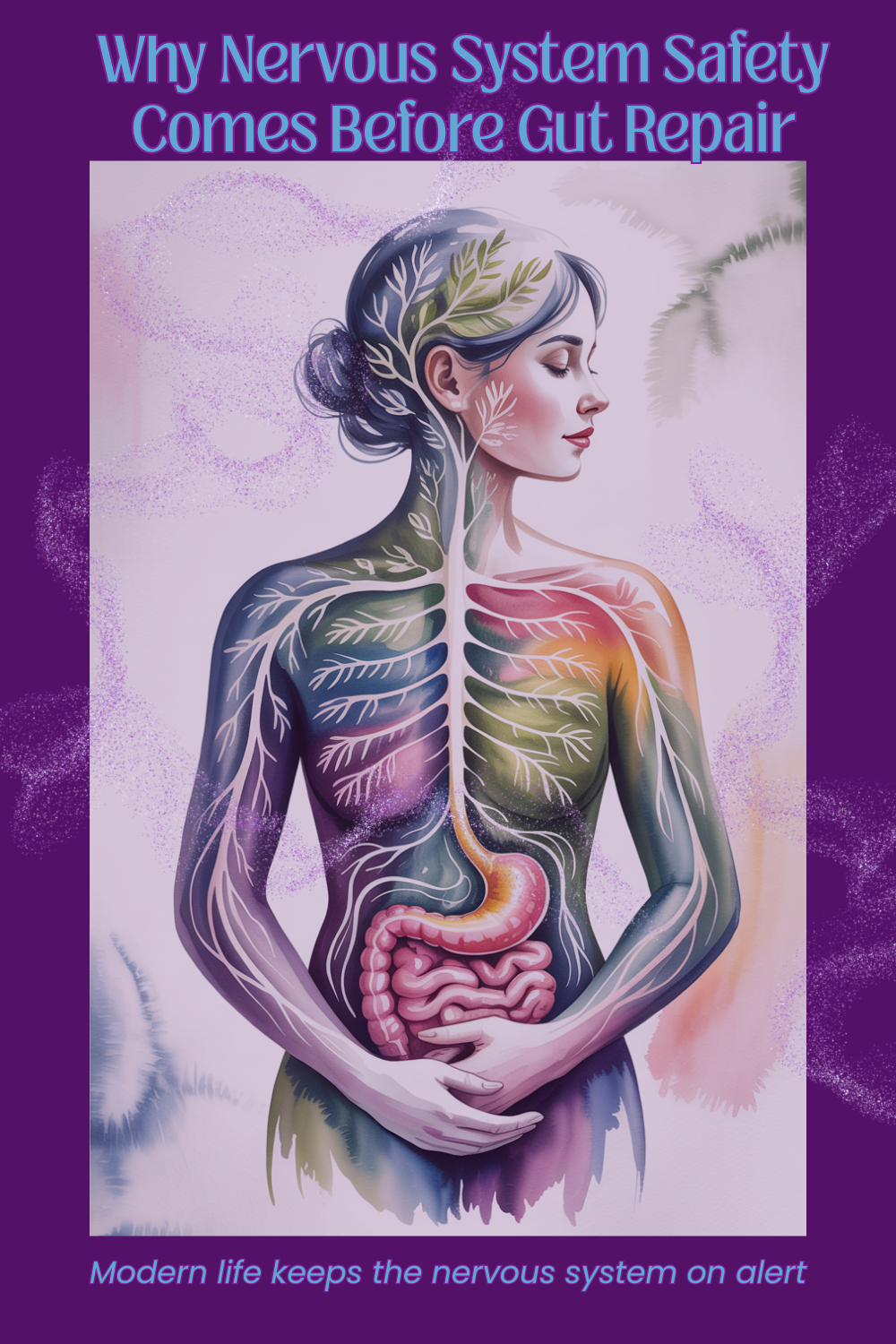
Why Nervous System Safety Comes Before Gut Repair
Gut health problems persist even with a perfect diet when the nervous system remains in chronic stress. This article explains how nervous system regulation, parasympathetic function, cortisol, and perceived safety directly control digestion, bloating, IBS, and gut healing capacity.
Everybody in the United States has gut problems.
Yes, even the people who do everything “right.” Organic only. No GMOs. Low carbs. No seed oils. No processed foods. No alcohol. Even them.
If you live in this environment, your gut is under constant pressure. Not because you’re careless or undisciplined, but because you don’t live in safety.
Most days begin already behind. Bills are due. Work demands attention. The house needs tending. Children need help. Groceries must be planned and prepared. Obligations pile up, and none of it registers as stress. It’s just life.
But the body keeps score.
Moving through the day in a constant state of responsibility and urgency places the nervous system on alert. And when the body doesn’t feel safe, digestion is not a priority.
FAQ
Why do gut protocols fail even when diet is “perfect”?
Because digestion and repair depend on nervous system state, not just food quality.
Can stress affect gut health even if I don’t feel stressed?
Yes. The body can remain in a chronic stress state without conscious awareness.
Why do symptoms sometimes get worse with supplements or fasting?
If the nervous system perceives threat, interventions can increase load instead of supporting repair.
Should I regulate the nervous system before gut repair?
Only if you want effective and sustainable gut support!
The Nervous System Is the Control Center
The gut does not operate in isolation.
It operates under instruction.
That instruction comes from the nervous system, which constantly decides how resources are allocated throughout the body. When the nervous system perceives safety, digestion, immune balance, detoxification, and tissue repair are supported. When it perceives threat, those functions are deprioritized in favor of survival.
This is why gut symptoms so often appear alongside anxiety, sleep disruption, hormonal changes, and immune issues. These systems are not failing independently. They are responding to the same upstream signals.
Digestion responds to state, not intention. Understanding this gut–brain relationship is essential for making sense of bloating, IBS, and food intolerance, which is why this connection is explored more deeply in Gut Health Starts in the Nervous System: The Real Cause of Bloating and IBS.
The gut is not just processing food. It is responding to information, a concept expanded on in Trust Your Gut: Why Your Belly Might Hold the Key to Your Mood, Hormones, and Health.
When the nervous system remains on alert, digestion adapts accordingly. When safety returns, digestion often improves without force.
Why “Healthy” Gut Protocols Backfire
Many people experience worsening symptoms when they try to fix their gut.
More bloating.
More fatigue.
New food sensitivities.
Anxiety.
Poor sleep.
This is often dismissed as detox, die-off, or “healing reactions.” Sometimes it isn’t.
Aggressive supplementation, fasting layered onto exhaustion, and heavy dietary restriction can register as additional threat to a system that is already under load. Instead of creating healing, these approaches increase demand on a body that doesn’t yet have the capacity to respond.
Stress hormones play a central role here. Cortisol alters gut motility, permeability, immune signaling, and inflammation. When cortisol remains elevated, digestion becomes less efficient and tolerance narrows. This relationship is explored more fully in Stress and Cortisol: Your Gut’s Worst Frenemy.
The body isn’t resisting healing.
It’s protecting itself.
Safety Is a Biological Requirement for Digestion
Digestion is governed by the parasympathetic nervous system.
Without sufficient parasympathetic signaling:
- stomach acid production declines
- digestive enzymes decrease
- bile flow becomes sluggish
- gut motility changes
- immune tolerance weakens
No amount of “perfect food” can override this state.
Safety is not a mindset.
It is a physiological condition that determines whether digestion is even allowed to function properly.
When safety signals are absent, the body reallocates energy away from digestion and toward protection. This is not dysfunction. It is prioritization.
Regulation Before Repair Is Sequencing, Not Slowing Down
Biology responds to order, not urgency.
Regulation creates capacity.
Capacity allows repair.
Repair restores resilience.
Skipping regulation doesn’t accelerate healing. It delays it.
When people push harder instead of stabilizing first, they often interpret the body’s resistance as failure. In reality, the body is signaling that the timing is wrong, not the intention.
Understanding sequencing prevents unnecessary frustration and helps explain why the same approach can help one person and overwhelm another.
What Nervous System Safety Actually Looks Like
Safety is not passive, and it is not rare moments of calm.
It is a baseline state built through predictable signals that tell the body it is not under immediate threat. These include consistent sleep rhythms, predictable nourishment, adequate hydration, exposure to natural light, manageable demand, and sufficient recovery.
These are not lifestyle extras.
They are regulatory inputs.
When these signals are present consistently, the body becomes more tolerant, digestion becomes more reliable, and symptoms fluctuate less dramatically.
The Gut Responds to the State of the System It Lives In
Your gut is not broken.
It is responding accurately to the state of the system it lives in.
When the internal environment is inflamed, depleted, or overwhelmed, digestion reflects that condition. When the environment stabilizes, digestive function often becomes more forgiving and resilient.
This is why approaches that focus on killing, forcing, or overriding symptoms frequently backfire. They ignore the terrain in which healing is expected to occur.
Supporting the internal environment changes how the body responds. This terrain-first perspective explains why context matters more than targets, a principle explored in Terrain vs. Bugs: Why Killing Isn’t the First Step.
When the system feels supported, the gut behaves differently.
Next Step
Everything above provides foundational context.
Below, Health Foundations explores the deeper physiology behind digestion, detoxification, immunity, metabolism, and nervous system regulation for readers who want to understand what’s really driving their symptoms.
In Case You Skimmed
- Modern life keeps the nervous system on alert
- Stress doesn’t have to feel stressful to disrupt digestion
- Gut repair fails when the system feels threatened
- Regulation creates capacity for healing
- Healing depends on state, not supplements