Why Metabolic Dysfunction Accelerates Aging (And What Most People Get Wrong)
Why metabolic dysfunction accelerates aging: insulin resistance, mitochondrial decline, and chronic inflammation disrupt cellular signaling. Learn how broken metabolic signals speed aging and what it means for energy, fat storage, and long-term health.
You’re doing what you’re supposed to do.
Eating better. Moving more. Trying to stay ahead of it.
And yet… something feels off.
Weight is easier to gain. Energy is harder to hold. Recovery takes longer.
And the most frustrating part?
You can’t point to when it changed.
So you start asking:
- “Is this just age?”
- “Is my metabolism slowing down?”
- “Is this just how it goes now?”
That’s the story most people accept.
But it’s incomplete.
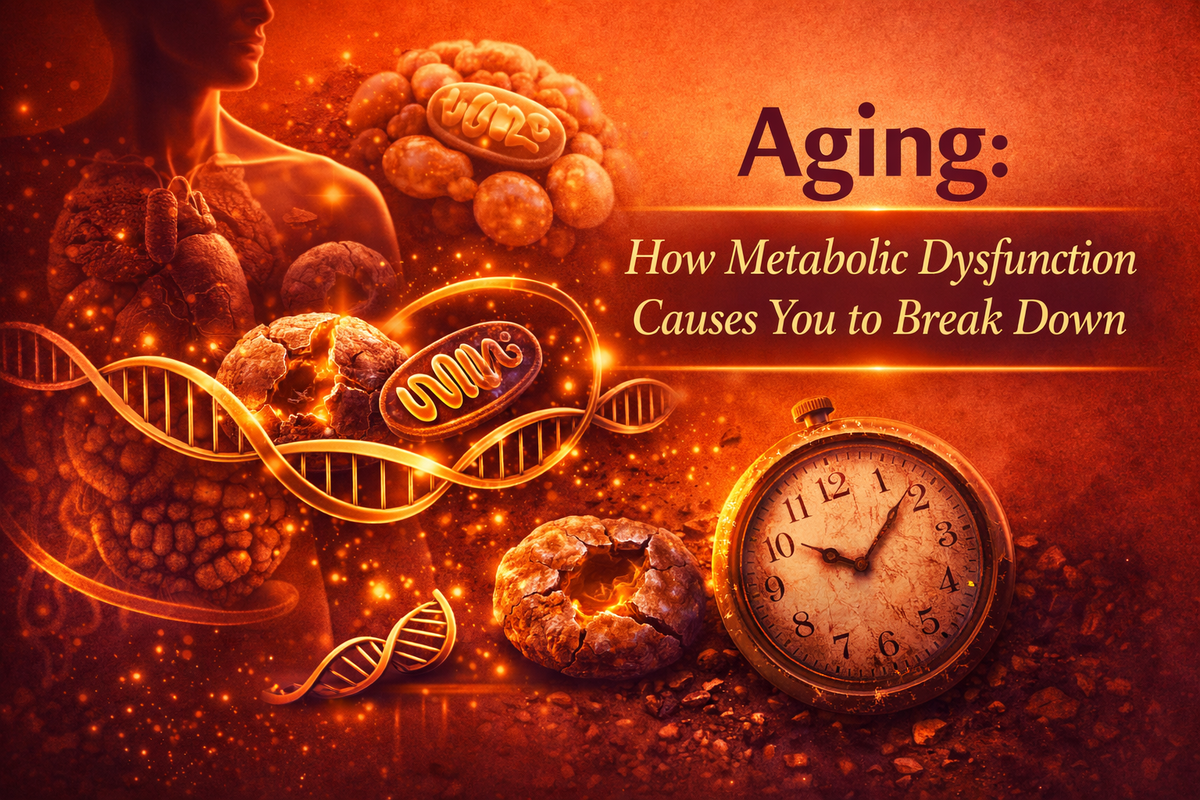
Because aging doesn’t just happen with time.
Aging speeds up when metabolic signaling breaks.
And once you see that… you stop chasing symptoms
and start understanding the system.
What People Are Actually Asking
Why does metabolic dysfunction accelerate aging?
Metabolic dysfunction disrupts how cells produce and use energy. When signaling becomes inefficient, cells accumulate damage, repair slows, and inflammation increases. Over time, this creates an internal environment where aging processes accelerate instead of remaining stable.
How does insulin resistance affect aging?
Insulin resistance keeps blood sugar and insulin levels elevated, increasing inflammation and oxidative stress. This damages tissues, disrupts cellular signaling, and accelerates processes like fat storage, mitochondrial decline, and impaired repair.
What role do mitochondria play in aging?
Mitochondria generate the energy cells need to function and repair. When they become inefficient, energy production drops while oxidative stress rises, leading to faster cellular damage and reduced ability to maintain healthy tissue.
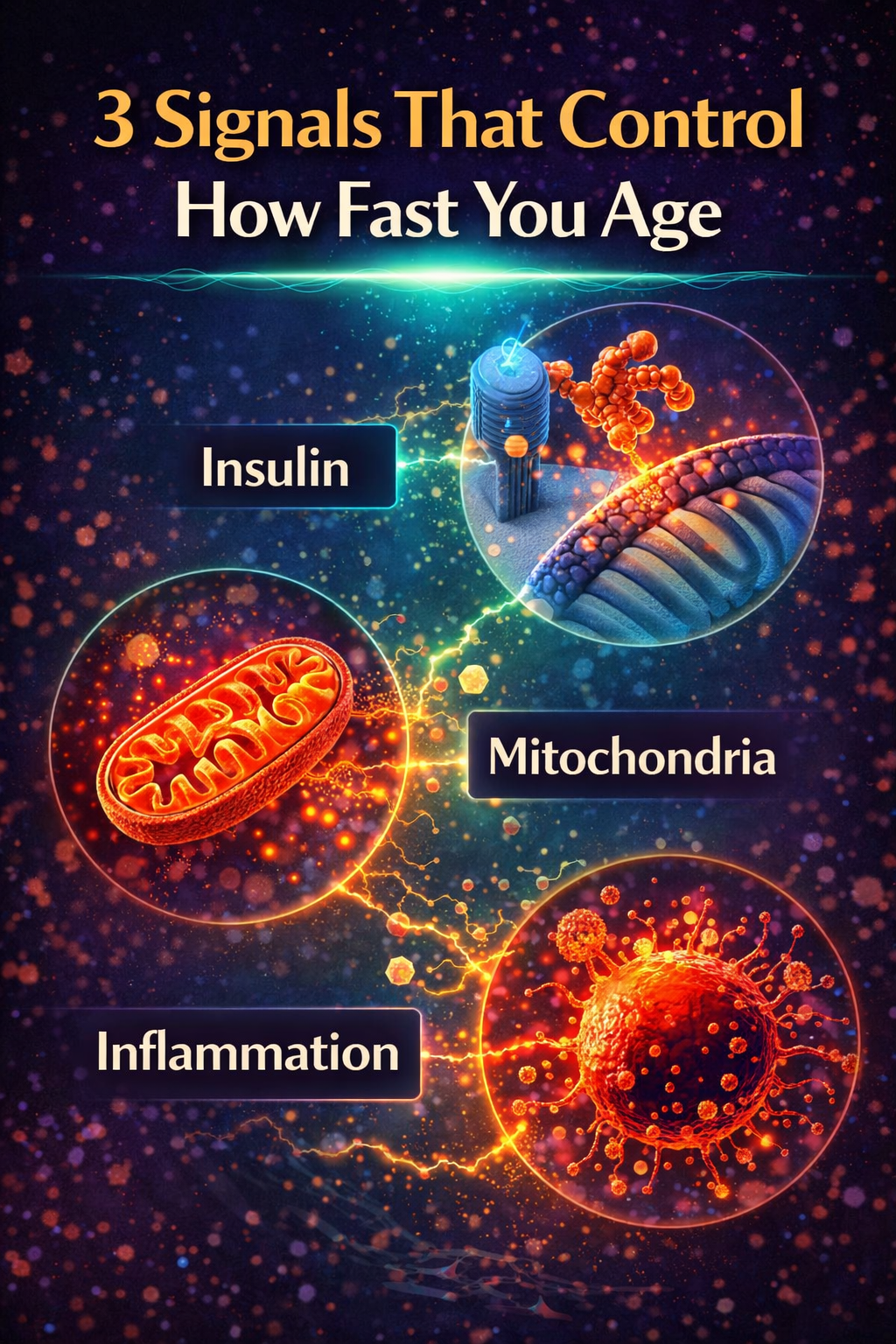
- What Is Metabolic Dysfunction, Really?
- Why Aging Is a Signal Problem, Not a Time Problem
- How Insulin Resistance Accelerates Aging
- Mitochondria, Energy, and the Speed of Aging
- The Inflammation Loop That Ages You Faster
- Why This Changes Everything About How You Age



What Is Metabolic Dysfunction, Really?
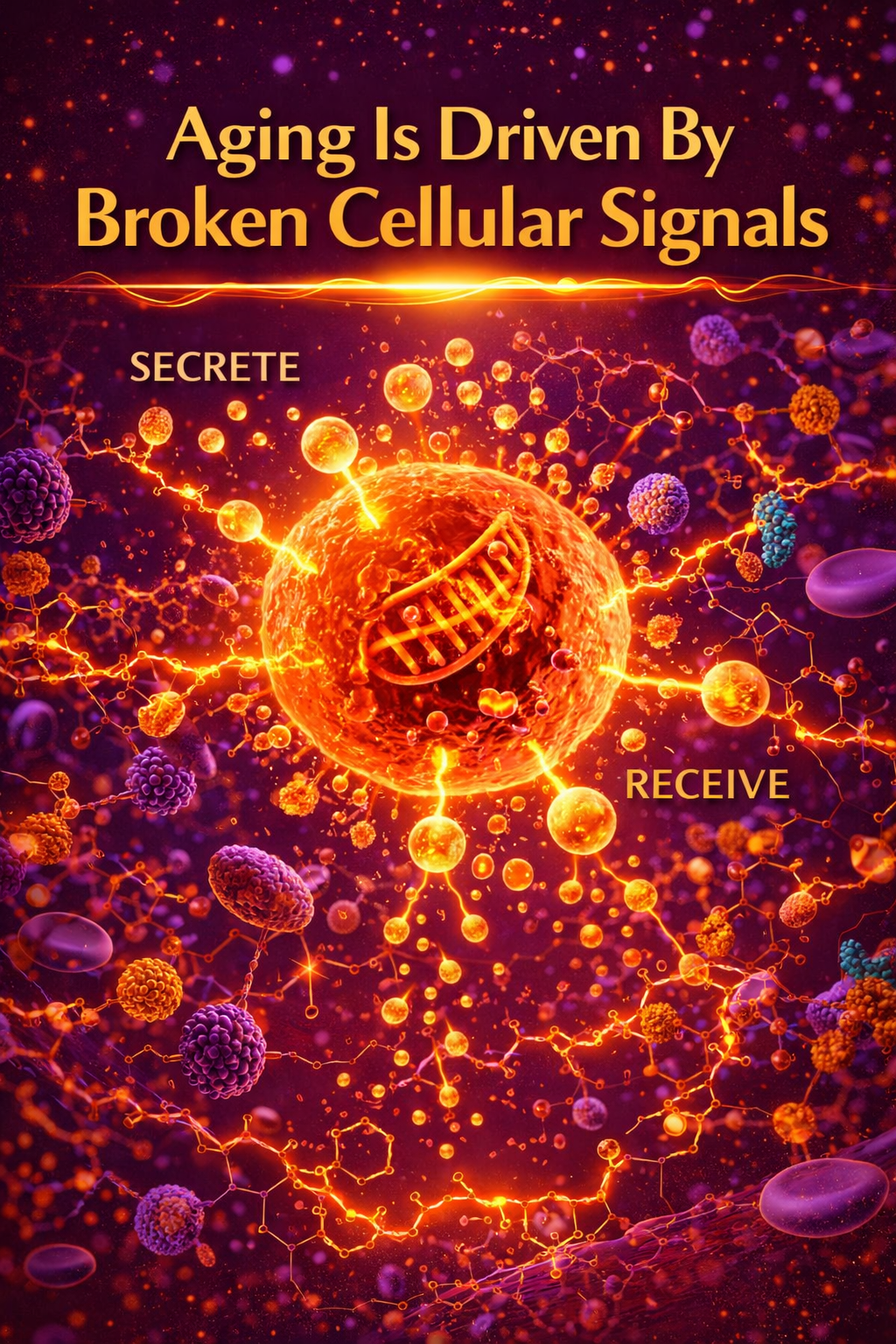
Metabolic dysfunction is a breakdown in how the body creates, uses, and regulates energy. It’s not just about a “slow metabolism.” It’s about disrupted communication between hormones, cells, and energy systems.
Most people think metabolism means:
- how fast you burn calories
- how easily you gain or lose weight
That’s surface-level.
Metabolism is communication.
It tells your body:
- when to store energy
- when to burn it
- when to repair
- when to rest
This is why everything in anti-aging, fasting, and cellular repair connects back to metabolism, because the signals that determine whether you store, burn, or repair are all part of the same system → Anti-Aging, Fasting & Cellular Repair
When that communication becomes distorted, the body doesn’t just gain weight.
It starts aging differently.
Why Aging Is a Signal Problem, Not a Time Problem
Aging is driven more by cellular signaling than by time alone. When metabolic signals become inefficient, cells shift away from repair and toward survival, leading to faster accumulation of damage.
Most people believe:
“I’m aging because I’m getting older.”
But what’s actually happening is:
“My cells are receiving different signals than they used to.”
And those signals determine:
- how well you repair
- how much inflammation you carry
- how efficiently you produce energy
Two people can be the same age…
and age completely differently.
The difference is signaling.
How Insulin Resistance Accelerates Aging
Insulin resistance accelerates aging by keeping insulin and glucose elevated, increasing inflammation, promoting fat storage, and disrupting cellular repair.
When insulin works properly:
- energy moves into cells efficiently
- blood sugar stays stable
- repair processes function normally
When it breaks:
- energy gets trapped in the bloodstream
- cells are under-fueled despite excess intake
- inflammation rises
This is why compounds that influence metabolic signaling are being studied, not as fat burners, but as regulators of the system → Semaglutide, Tirzepatide, and Tesofensine
The shift most people miss:
The body moves into storage mode instead of repair mode.
When the body also loses the ability to switch between fuel sources, aging accelerates further → What Is Metabolic Flexibility? What Causes Inflexibility and How Fasting Helps Restore It
Mitochondria, Energy, and the Speed of Aging
Mitochondria control how efficiently cells produce energy. When they decline, energy drops and oxidative stress increases, accelerating cellular damage.
Think of mitochondria as your internal power grid.
When they work well:
- energy is steady
- repair is efficient
- cells stay resilient
This system doesn’t operate in isolation. It is tightly connected to hormonal signaling → Hormones, Mitochondria, and Aging: The Hidden Connection
When mitochondria decline:
- less energy is produced
- more damage accumulates
- repair slows
So instead of:
produce → repair → recover
You get:
produce less → damage more → repair slower
That shift is aging.
The Inflammation Loop That Ages You Faster
Metabolic dysfunction creates a feedback loop of chronic inflammation that accelerates aging by impairing energy production and repair.
Once dysfunction starts, it compounds:
- insulin resistance increases inflammation
- inflammation damages mitochondria
- poor energy worsens signaling
Now you’re in a loop:
less energy → more damage → less repair → faster aging
This is why decline can feel like it speeds up over time.
Because it does.
Why This Changes Everything About How You Age
Understanding aging as a signaling issue shifts the focus from managing symptoms to restoring communication within the body.
If aging is time:
→ you manage decline
If aging is signaling:
→ you influence the system
That changes everything.
Because now the question becomes:
What is controlling the signals?
If you’re starting to see that this isn’t about calories or age, but about how your body is being directed at a cellular level, the next step is understanding how those signals can be influenced.
If this is starting to click, the next step isn’t doing more… it’s knowing what to fix first.
Below, we walk through how metabolic dysfunction actually progresses in your body, how to identify where your breakdown is happening, and how to prioritize what to address without guessing.