Why Healing Slows With Age: The Hidden Breakdown in Cellular Signaling
Why healing slows with age isn’t about getting weaker. It’s about cellular signaling breakdown. As hormone communication, inflammation control, and energy systems become less coordinated, recovery slows. Here’s what actually changes and how to think about it.
You didn’t suddenly become fragile.
But something changed.
The same workout hits harder.
The same injury lingers longer.
The same effort doesn’t bounce back the way it used to.
And it’s confusing… because you’re actually trying more now, not less.
So why does your body feel like it’s falling behind?
If healing is built into you…
why does it slow down at all?
What People Are Asking
Why does healing slow with age?
Healing slows with age because cellular signaling becomes less efficient. The messages that coordinate repair, between hormones, immune cells, and tissues, don’t transmit or respond as effectively, leading to slower recovery even when the body still has the ability to heal.
What affects recovery as you get older?
Recovery is affected by changes in inflammation, hormone signaling, mitochondrial energy production, and cellular communication. As these systems become less coordinated, the body’s ability to repair tissue efficiently declines.
Can the body still repair itself with age?
Yes, the body can still repair itself with age, but the speed and efficiency depend on how well cellular signaling systems are functioning. When communication pathways are intact, repair remains possible, even later in life.
Table of Contents
- Why Healing Slows With Age
- What Actually Breaks Down
- Where Peptides Fit In
- Why It Feels Worse Over Time
In This Article
- Why healing doesn’t just “decline”—it disconnects
- What changes inside your body as you age
- How signaling controls repair speed
- Where peptides and bioregulators fit into the system
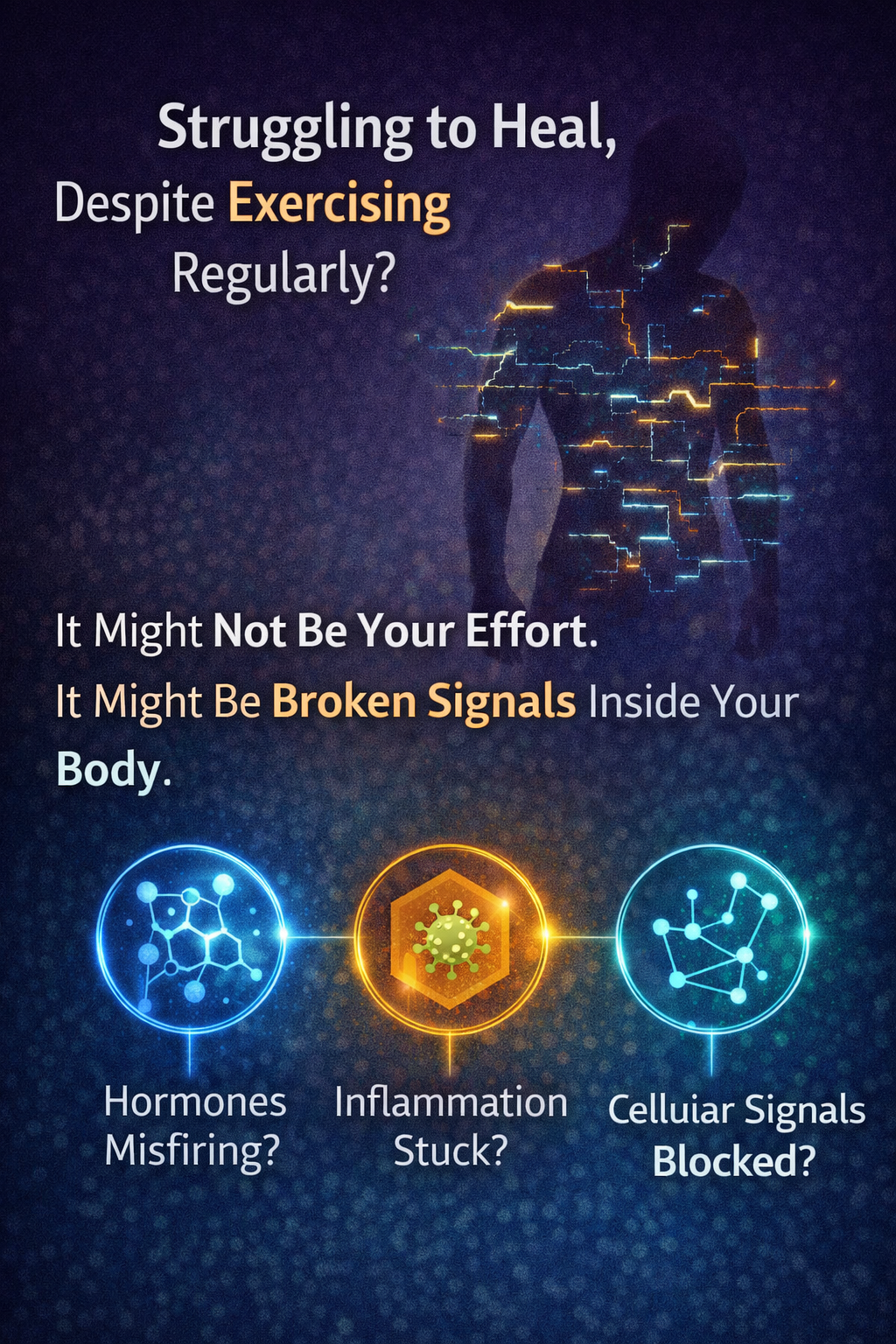
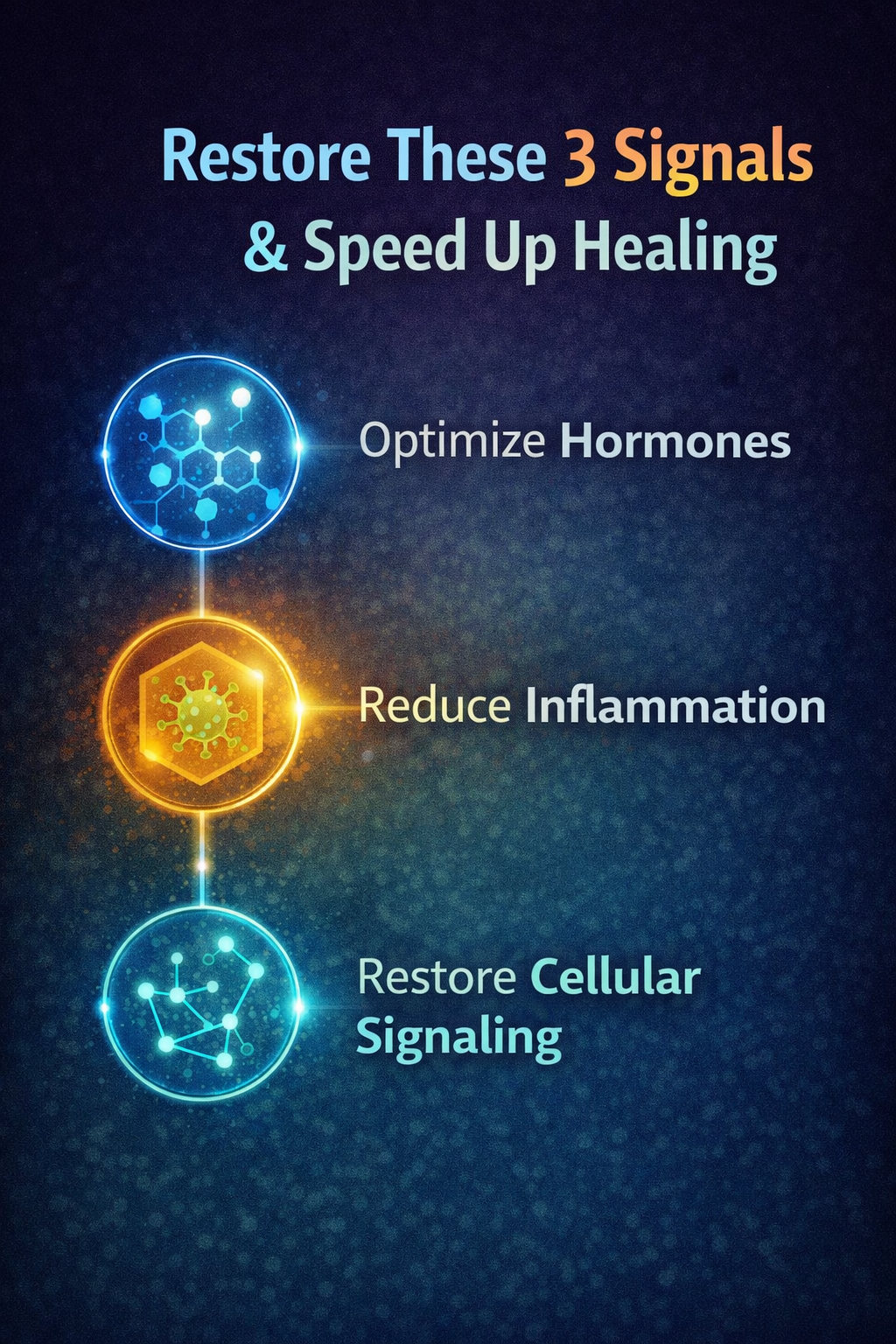
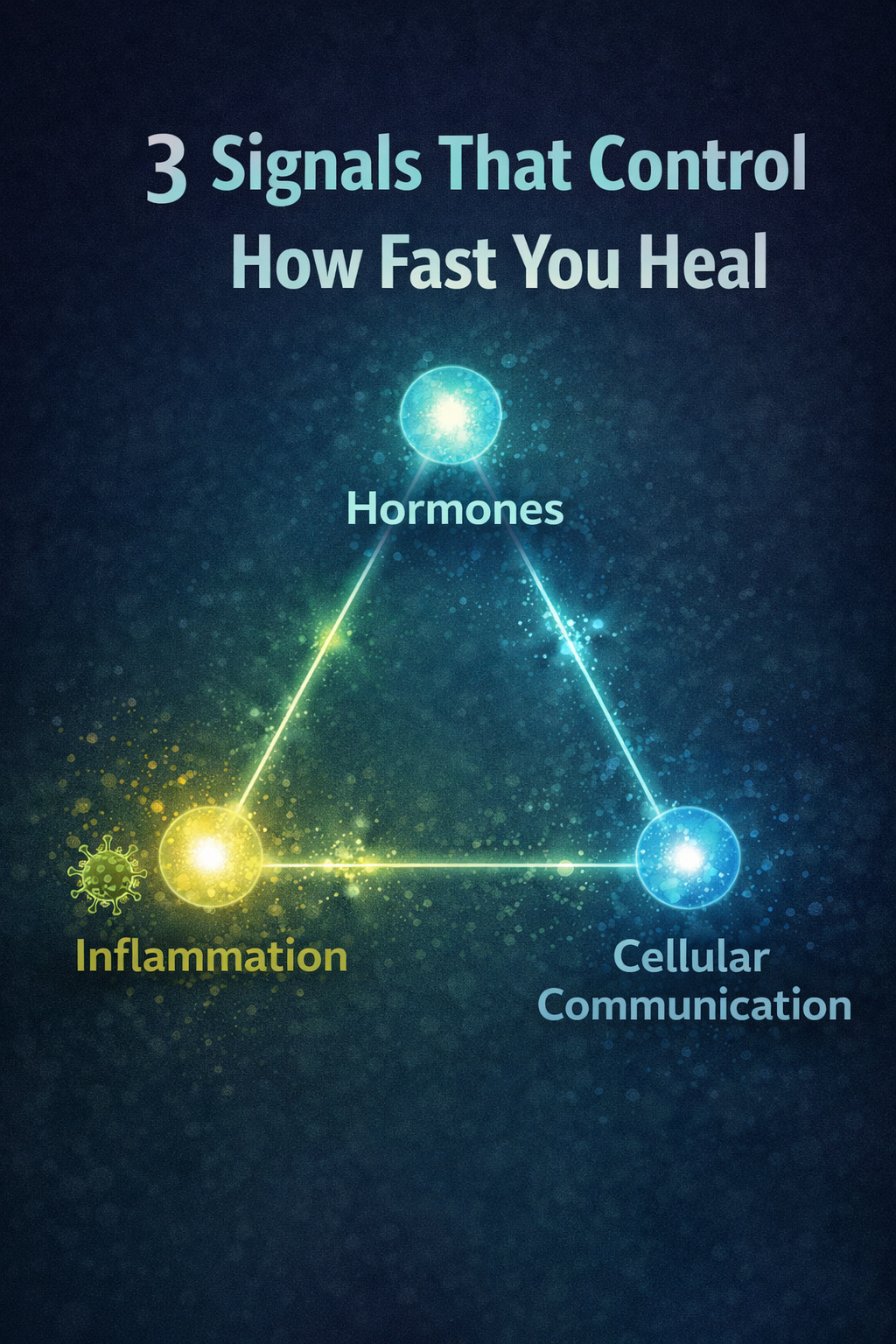
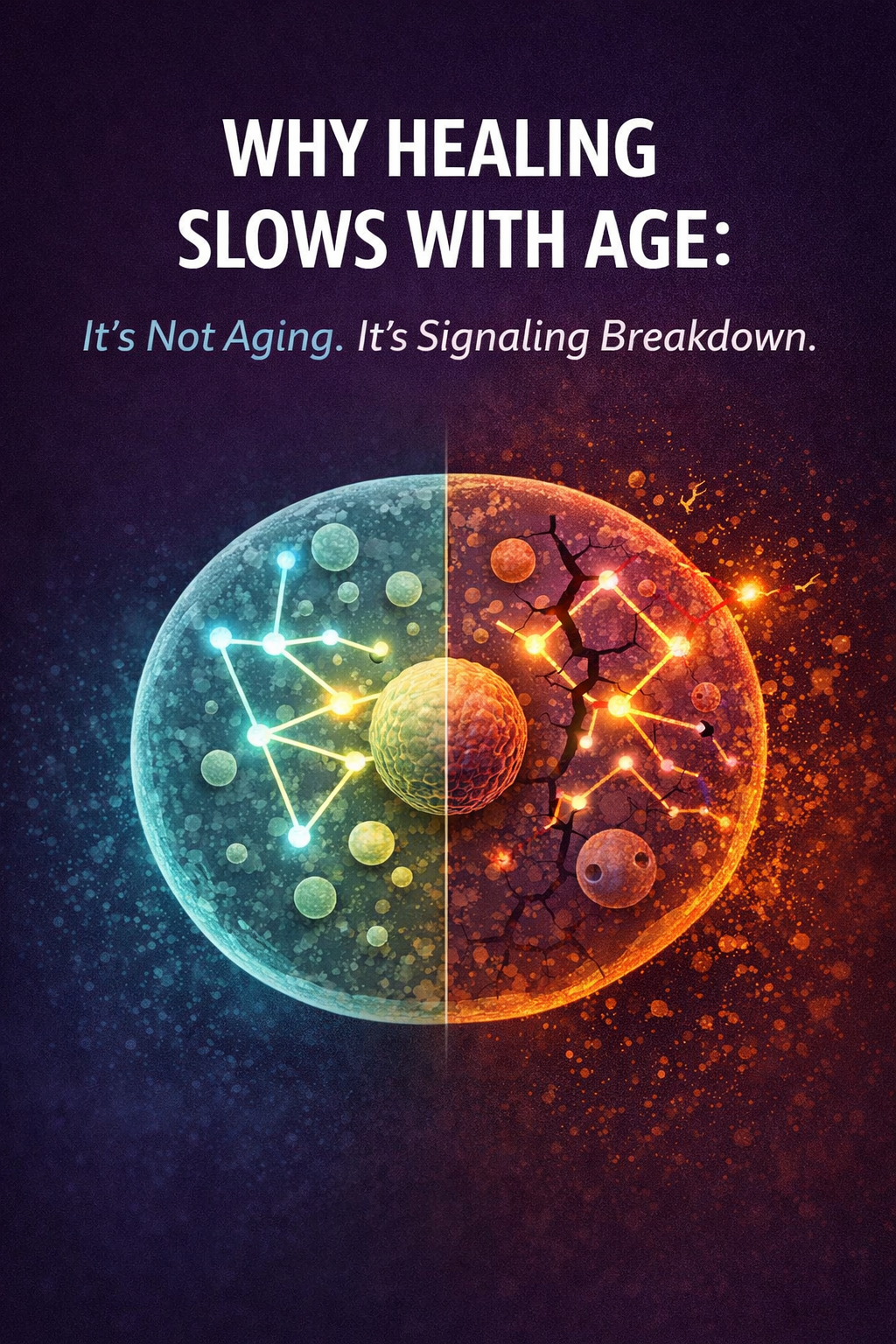
Your body didn’t suddenly fail you. The signals that control repair, energy, and recovery started breaking down. Fix the communication, and everything changes.
Why Does Healing Slow With Age?
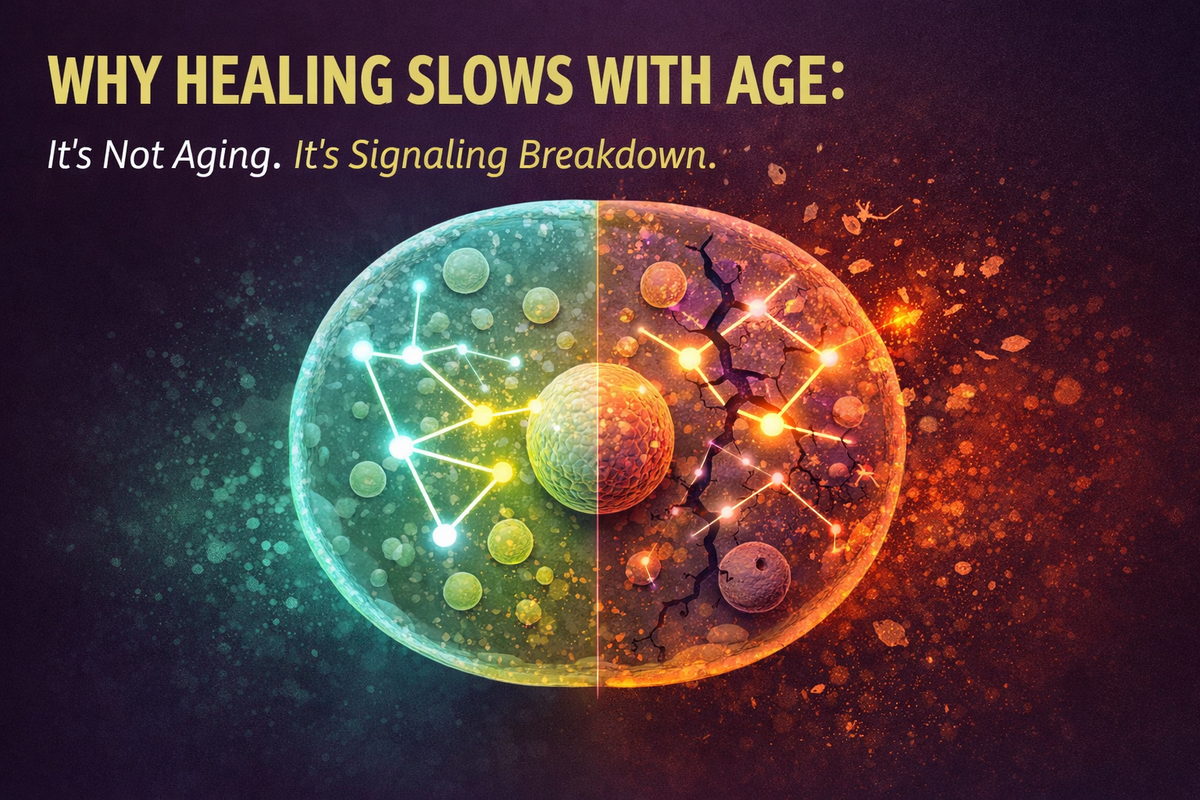
Healing slows with age because the signaling systems that coordinate repair become less efficient, leading to delayed communication between cells, hormones, and tissues. The body still has the capacity to heal, but the process becomes slower when signals are weaker, mistimed, or not fully received.
It’s not just that things “wear out.”
It’s that communication breaks down.
Your body relies on signals to:
- detect damage
- initiate repair
- coordinate rebuilding
When those signals weaken, everything slows.
This builds directly on how growth hormone signaling controls repair → growth hormone peptides and signaling explained
https://www.holisticlifewithjamie.com/growth-hormone-peptides-how-signaling-controls-tissue-repair/
What Actually Breaks Down As You Age?
As you age, several systems that control repair become less coordinated, including hormone signaling, immune response, mitochondrial energy production, and cellular communication pathways. These changes reduce the body’s ability to efficiently detect and respond to damage.
This isn’t one problem.
It’s a cascade.
- Hormones signal less effectively
- Cells respond more slowly
- Energy production drops
- Inflammation lingers longer
And most importantly:
The conversation between systems becomes fragmented.
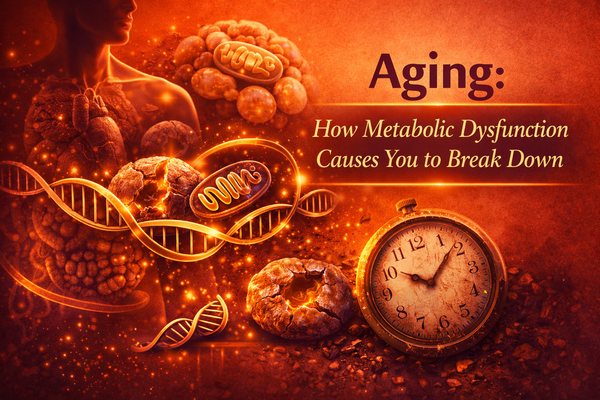
This is the deeper layer of aging that most people never see → why cellular communication breaks down over time
https://www.holisticlifewithjamie.com/why-do-cells-age-the-hidden-breakdown-in-cellular-communication/
Where Do Peptides and Bioregulators Fit In?
Peptides and bioregulators are being studied for their ability to influence cellular signaling pathways that regulate repair, inflammation, and regeneration. Rather than forcing outcomes, they act as signaling molecules that may help coordinate communication between systems involved in healing.
This is where the conversation shifts.
Peptides don’t replace the system.
They interact with it.
Some influence:
- growth hormone signaling
- tissue-specific repair pathways
- inflammatory responses
But their effect depends on one thing:
Can your body respond?
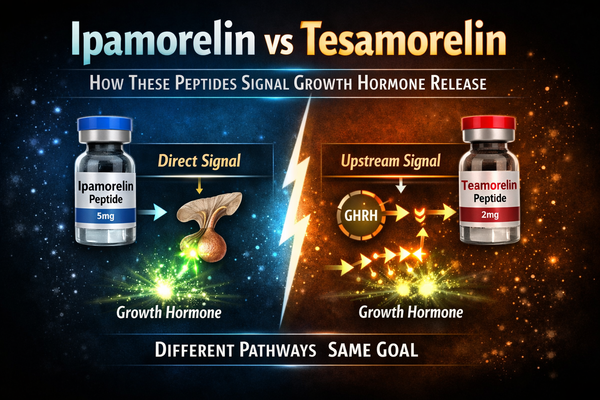
This is why two people can use the same peptide and get completely different results → how ipamorelin and tesamorelin signal differently
https://www.holisticlifewithjamie.com/ipamorelin-vs-tesamorelin-how-these-peptides-signal-growth-hormone-release/
To explore how these signaling systems connect across the body → explore the full peptides and bioregulators category
https://www.holisticlifewithjamie.com/tag/peptides-bioregulators/#google_vignette
Why Does It Feel Worse Over Time?
Healing feels slower over time because signaling delays accumulate, causing longer recovery periods, lingering inflammation, and incomplete repair cycles. As these delays stack, the gap between effort and recovery becomes more noticeable.
It’s not just slower.
It’s compounding.
Each delayed repair cycle:
- increases inflammation
- reduces efficiency
- adds to the next cycle
Until eventually…
You feel like your body isn’t keeping up with you anymore.
This is also why systems like autophagy and cellular renewal become more relevant over time → how fasting and cellular renewal affect aging
https://www.holisticlifewithjamie.com/the-anti-aging-power-of-fasting-autophagy-telomeres-stem-cells-and-cellular-renewal-explained/
If this is starting to make sense, you’re seeing the shift:
It’s not just that your body is aging.
It’s that the communication controlling repair is breaking down.
Inside Health Foundations, we go deeper into:
- how to recognize signaling breakdown
- how different systems influence repair
- how to think through what your body actually needs
Tools That Support Cellular Signaling
These support how your body responds to signals, but they don’t fix the underlying breakdown.
Energy & Response
CoQ10 (Ubiquinol)
Magnesium (glycinate or malate)
Electrolytes or trace minerals
Inflammation & Interference
Omega-3 (fish oil)
Curcumin (bioavailable)
Tissue Support
Collagen peptides
Bone broth protein
Vitamin C
These can support the system, but they don’t tell you what your body actually needs or when to use them.
That’s where most people stay stuck.
The article continues below for Health Foundations members, with deeper education on how this system works and how to think through next steps responsibly.
The article continues below for Health Foundations members, with deeper education on how this system works and how to think through next steps responsibly.