Why Am I Not Losing Weight? How Peptides Influence Fat Storage and Energy
Peptides like semaglutide, tirzepatide, and retatrutide are changing how we approach weight loss. This article breaks down how GLP-1 and metabolic signaling influence fat storage, appetite, and energy use—and why peptides don’t work the same for everyone.
Peptides.
Semaglutide. Tirzepatide. Retatrutide.
They’re everywhere right now.
Doctors are prescribing them.
Social media won’t stop talking about them.
People you know are suddenly losing weight.
And whether you went looking for them or not…
they found you.
Because what you’ve been doing hasn’t been working.
You’ve tried:
- eating less
- exercising more
- following the plan
And for a while… it works.
Then it doesn’t.
You end up right back where you started.
Same patterns.
Same frustration.
Same question:
Why?
Why does this keep happening…
even when you’re doing everything “right”?
Because this was never just about calories.
It’s about how your body is being signaled.
And once you see that…
everything starts to look different.
If you’re new to understanding how mitochondria control energy production, metabolism, and fat storage, start here:
Mitochondria & Energy Production
Frequently Asked Questions
Why am I not losing weight even though I’m eating less and exercising?
If you’re eating less and exercising but not losing weight, your body may be slowing energy use and holding onto fat due to stress, low energy availability, or metabolic signals. Fat loss depends on how your body responds internally, not just effort.
Can Semaglutide or GLP-1 drugs cause muscle loss?
Yes, weight loss from GLP-1 medications can include both fat and muscle. If protein intake, resistance training, and overall energy support are not maintained, the body may lose lean mass along with fat.
Why am I not losing weight on semaglutide or GLP-1?
GLP-1 medications affect appetite and blood sugar, but they don’t correct every layer of metabolism. If your energy, stress, or metabolism are off, your body may still resist fat loss.
Do GLP-1 medications cause gastroparesis?
GLP-1 medications slow gastric emptying, which is part of how they reduce appetite. In some people, this can lead to symptoms that resemble gastroparesis, such as nausea, fullness, or delayed digestion. The severity varies and often depends on dose, duration, and individual response.
Do peptides really work for weight loss?
Yes. Peptides influence weight loss by affecting signaling pathways related to energy use, appetite, and metabolism. They don’t directly burn fat, and their effectiveness depends on how well your body is functioning.
What is “Ozempic face” or “Wegovy face”?
“Ozempic face” refers to facial volume loss that can happen with rapid weight loss. As fat is lost in the face, skin can appear looser or more aged. This is not caused by the drug itself, but by how quickly weight is lost.
What peptides are used for weight loss?
Peptides used for weight loss include GLP-1–based drugs like semaglutide and dual-pathway peptides like tirzepatide, as well as newer compounds like retatrutide that target multiple signaling pathways.
Why am I not losing belly fat even after exercise and diet?
If you’re not losing belly fat despite diet and exercise, your body may still be receiving signals to store fat. Hormones, stress, and energy regulation all influence where and how fat is stored.
Table of Contents
- What is metabolic signaling and how does it affect weight loss?
- How do peptides affect metabolism and weight loss?
- How do peptides affect fat storage and energy use?
- How do GLP-1 medications like semaglutide change metabolism?
- What is retatrutide and why is it getting attention?
- Why don’t peptides work the same for everyone?
- Do peptides actually help with fat loss?
In This Article
- why weight loss stops working even when you’re doing everything right
- how your body decides to store fat or burn it
- what peptides actually change in the body
- how semaglutide affects appetite, blood sugar, and metabolism
- why retatrutide is getting so much attention
- why peptides do not work the same for everyone
- where peptides fit in fat loss and energy regulation
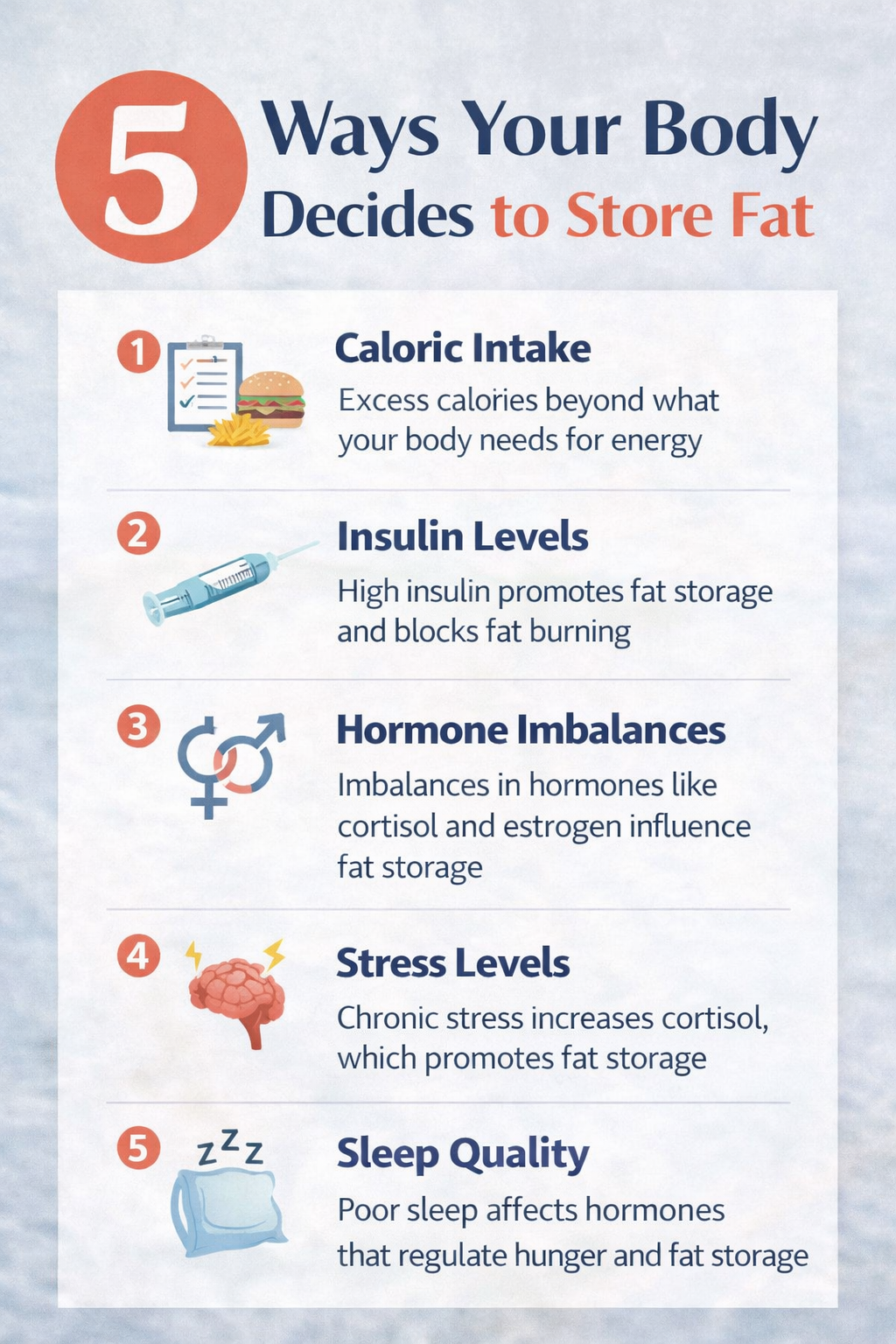



What is metabolic signaling and how does it affect weight loss?
Metabolic signaling is how your body decides whether to store energy or burn it. It responds to hormones, stress, and energy availability. When those signals are disrupted, your body shifts toward conservation, making weight loss harder even when you’re eating less or trying harder.
Your body is constantly reading what’s happening internally.
If energy feels inconsistent or stress is high, it protects you by holding onto fuel. That means storing fat and slowing energy output, even if your effort hasn’t changed.
Peptides are part of this conversation because they act as messengers that influence how those signals are sent and received.
They don’t force your body to do something unnatural. They influence how clearly your body communicates about energy and storage.
👉 This is where mitochondrial dysfunction starts to affect energy, fat loss, and overall metabolism:
Mitochondrial Dysfunction Masquerading as Brain Fog, Hormone Imbalance, and Chronic Fatigue
How do peptides affect metabolism and weight loss?
Peptides affect metabolism and weight loss by influencing the signals that control hunger, blood sugar, and energy use. They don’t directly burn fat. They change how your body interprets energy availability, which can either support fat loss or slow it down.
This matters because metabolism isn’t just about what you eat. It’s about how your body responds to what you eat.
The same meal can lead to completely different outcomes depending on how your body is signaling internally.
When signaling is clear, your body is more willing to use energy efficiently.
When signaling is disrupted, it shifts toward conservation, holding onto fuel even when you’re trying to lose weight.
👉 This is why metabolic flexibility determines whether your body burns fat or stays stuck storing it:
What Is Metabolic Flexibility? What Causes Inflexibility and How Fasting Helps Restore It
How do peptides affect fat storage and energy use?
Peptides affect fat storage and energy use by influencing how your body decides when to store energy and when to release it. If your body senses stress, instability, or inconsistent energy, it prioritizes storing fuel instead of burning it.
Fat is not the problem. It’s stored energy your body is trying to protect.
If signals suggest that energy might be limited or unreliable, your body holds onto fat as a safety mechanism.
That’s why fat loss can stall even when you’re doing everything right.
Peptides can shift those signals, helping your body feel more stable and more willing to use stored energy.
👉 This is where mitochondrial uncoupling changes how your body uses and wastes energy:
Mitochondrial Uncoupling: What It Is and Why It’s Trending
How do GLP-1 medications like semaglutide change metabolism?
GLP-1 medications like semaglutide change metabolism by reducing appetite, slowing gastric emptying, and improving blood sugar control. These effects help stabilize energy levels and reduce how much you eat, but they don’t fully correct the deeper signals that drive long-term fat loss.
GLP-1 is a signal your body naturally releases after eating.
It tells your brain you’re full and don’t need more food, while also slowing how quickly glucose enters your bloodstream.
Medications like semaglutide mimic that signal.
As a result, hunger quiets down, cravings decrease, and energy feels more stable.
Tirzepatide builds on this by targeting two pathways instead of one.
It influences both GLP-1 and GIP, which helps your body not only regulate appetite, but also decide how to use and store energy.
Your body doesn’t run on a single signal. It runs on a system.
When those signals start working together more effectively, your body becomes more willing to use stored fuel instead of constantly holding onto it.
These medications aren’t just helping you eat less.
They are changing how your body responds to food and energy in the first place.
What is retatrutide and why is it getting attention?
Retatrutide is a newer metabolic peptide that targets three signaling pathways at once: GLP-1, GIP, and glucagon. It’s getting attention because it may influence appetite, blood sugar, and energy use more broadly than single-pathway drugs.
Most metabolic drugs focus on one signal.
Retatrutide works across multiple signals at the same time.
That matters because your body doesn’t operate in isolated pathways. It coordinates multiple systems to decide how to use and store energy.
By influencing several signals at once, retatrutide may create a stronger and more coordinated metabolic response.
It’s still not widely available, and access is becoming more limited due to patent control and regulatory pressure.
But the interest around it reflects something bigger.
A shift away from targeting one pathway…
and toward understanding how the entire system works together.
Even with that broader reach, the response still depends on your body.
It can influence more signals, but it doesn’t override the system it’s working in.
Why don’t peptides work the same for everyone?
Peptides don’t work the same for everyone because your body’s response depends on its current condition. Stress, sleep, inflammation, energy production, and recovery all influence how well your system can respond to those signals.
No one is starting from the same place.
If energy production is low or stress is high, the response may be limited.
If your system is more stable, the same peptide can produce a much stronger effect.
That’s why outcomes vary so widely.
You may be dealing with:
- different levels of inflammation
- different toxin exposure
- different diets or restrictions
- different sleep patterns
- different stress loads
On top of that, you’re getting input from everywhere.
One doctor says one thing.
Another says something completely different.
Social media says something else entirely.
So you’re trying to make decisions while your body is already dealing with its own set of challenges.
Peptides don’t erase those differences.
They work within them.
That’s why the same peptide can feel life-changing for one person…
and barely noticeable for another.
It’s not just about the peptide.
It’s about the system it’s working in.
👉 This is why peptides are also being studied for brain signaling, focus, and cognitive performance:
Best Peptides for Brain Function: How Peptides Support Brain Health and Cognitive Performance
Do peptides actually help with fat loss?
Peptides can help with fat loss by improving the signals that control appetite, blood sugar, and energy use. But they don’t replace the foundation your body needs to respond. Their effectiveness depends on how stable your system is to begin with.
They don’t fix a broken system.
They help your body start responding differently.
If your body is already struggling with low energy, high stress, or poor recovery, a peptide won’t override that.
You might see a small change.
You might feel nothing at all.
That’s where people get frustrated.
Because they’re expecting the peptide to do the work their body isn’t ready to do yet.
If your system is more stable, that same peptide can feel completely different.
More noticeable.
More effective.
More consistent.
So the question isn’t:
“Which peptide should I take?”
The better question is:
“What is my body ready to respond to right now?”
Because peptides don’t create the result.
They support the signal your body is already trying to run.
Once you understand that, your approach changes.
You stop chasing the next tool…
and start paying attention to the system.
If You’re Tired of Guessing
If you’re realizing your body isn’t broken, just responding to deeper signals, this is where most people need to go further.
Inside Health Foundations, you’ll learn:
- how to understand what your body is responding to
- how to assess energy, stress, and metabolic patterns
- how to stop guessing and make targeted decisions
- how peptides fit into the bigger picture without relying on them blindly
So instead of chasing solutions, you finally understand what your body is responding to and what to do next.
The article continues below for Health Foundations members, with deeper education on how this system works and how to think through next steps responsibly.
Health Foundations: What This Actually Means for You
If peptides influence signaling, the next question becomes:
What is your body responding to right now?
This is where most people get stuck.
They look for the right tool instead of understanding the system.
If your body is holding onto fat, it is responding to something.
Low energy production.
High stress.
Inconsistent sleep.
Blood sugar swings.
Toxin exposure.
Poor recovery.
Those are not separate problems.
They are inputs your body is reacting to.
Peptides can influence signaling, but they don’t replace those inputs.
They work with them.
If the inputs don’t change, the response won’t either.
Where Do You Start?
Not with a complicated protocol.
Not with ten supplements.
You start by giving your body clearer signals.
Pick one area and clean it up.
That’s it.
Drink more water and actually stay hydrated.
Eat real food instead of constantly eating out.
Get consistent sleep instead of running on fumes.
Reduce alcohol so your body can recover.
Pay attention to what leaves you feeling worse, not just what sounds healthy.
Get hormonally optimized. If you are 35 or older you need your hormones checked.
You don’t have to fix everything.
You just have to stop sending mixed signals.
Why This Matters Before Peptides
Right now, your body is trying to interpret a lot of noise.
Peptides can help clarify signals.
But if the baseline is chaotic, the message still gets lost.
The goal is not perfection.
It’s consistency.
When your body starts receiving clearer, more stable inputs, it responds differently.
Energy improves.
Hunger stabilizes.
Recovery gets better.
And that’s when tools like peptides actually have something to work with.
The Shift Most People Miss
Most people wait until everything is perfect before starting.
Or they jump straight to tools without building a foundation.
Neither works well.
Start simple.
Make your body easier to work with.
Then, if you choose to use peptides, your body will actually be in a position to respond.
In Case You Skimmed
- Fat loss is controlled by signaling, not just calories
- Peptides influence how your body communicates internally
- GLP-1 and dual-pathway peptides affect multiple signals
- Newer peptides target multiple pathways for broader effects
- Results vary based on your body’s condition
- Peptides work within your system, not outside of it
Jamie Shahan, MSN, CRNA, RN
Empowering Holistic Health
Curator of forgotten wisdom with a modern understanding of why it works.
🌐 Connect with me on Social Media:
Disclaimer
The information provided on this website, in associated blogs, courses, and materials, is for general educational and informational purposes only. It is not medical advice and should not be interpreted as such.
I am not a medical doctor. The content I share reflects my personal opinions, experiences, and research. It is not intended to diagnose, treat, cure, or prevent any disease, condition, or illness.
You should not rely on the information here as a substitute for professional medical care, advice, or treatment. Always consult with a licensed healthcare provider before making any decisions regarding your health, especially if you are pregnant, nursing, taking prescription medications, or managing a medical condition.
By reading this website or using any related materials, you acknowledge and agree that:
- You are fully responsible for your own health decisions.
- The author and publisher of this content assume no liability for any harm, loss, or adverse effects arising directly or indirectly from the use, misuse, or interpretation of the information provided.
- No guarantees are made regarding the outcomes of applying any ideas, suggestions, or protocols discussed. Results will vary for each individual.
Affiliate Disclosure
Some products or tools mentioned may include affiliate links. This means that if you choose to purchase through those links, I may earn a small commission at no extra cost to you. I only recommend products I have personally used, researched, or would recommend to someone I love.
Use at Your Own Risk
By accessing this website and its materials, you agree that you are doing so voluntarily and that you assume full responsibility for any decisions you make regarding your health, lifestyle, or purchases.