What Are Peptides? How the Body’s Signaling Molecules Control Repair, Metabolism, and Aging
Peptides are small signaling molecules that help cells communicate. Researchers study peptides because they influence repair, metabolism, immune signaling, and aging biology. Understanding peptides helps explain how the body coordinates healing, energy production, and cellular function
What Are Peptides?
Most people think peptides are a new health trend.
They aren’t.
Your body has relied on peptides your entire life.
Peptides are small signaling molecules that help cells communicate with each other.
They send instructions telling tissues when to repair damage, regulate metabolism, release hormones, or respond to stress.
In other words, peptides help coordinate the signals that keep the body functioning.
When communication inside the body works well, systems stay balanced.
Cells repair more efficiently.
Energy production stays stable.
Tissues recover from stress.
But when cellular signaling begins to break down, coordination starts to fail.
Repair slows.
Metabolism becomes less efficient.
Aging accelerates.
Understanding peptides begins with one simple idea:
The body runs on communication.
And peptides are some of the molecules that carry those messages.
Frequently Asked Questions About Peptides
Is a peptide a steroid?
No. Peptides are not steroids. Peptides are short chains of amino acids that act as signaling molecules in the body, helping cells communicate and coordinate functions like repair, metabolism, hormone release, and immune responses. Steroids, by contrast, are lipid-based hormones that influence gene expression and inflammation through entirely different biological pathways.
Is there a downside to taking peptides?
Peptides are being actively studied in many areas of medicine and biology, but research is still ongoing for many compounds. Some peptides may cause side effects depending on the compound, dosage, and how they are used. Because peptides influence cellular signaling, responsible use and proper understanding are important when exploring them.
What foods are high in peptides?
Peptides naturally occur in many protein-rich foods. When the body digests proteins from foods like meat, eggs, dairy, fish, and legumes, enzymes break those proteins down into smaller peptides and amino acids. Some foods also contain bioactive peptides that may influence processes like blood pressure regulation or immune signaling.
What is an example of a peptide?
Many important biological molecules are peptides. Examples include insulin, which helps regulate blood sugar, and collagen peptides, which are involved in connective tissue structure. In research settings, peptides such as BPC-157, TB-500, and Epitalon are often studied for their potential roles in tissue repair and cellular signaling.
In This Article
In this article you’ll learn:
• what peptides are and how they function in the body
• how peptides act as signaling molecules between cells
• what peptides are made of
• what peptides are commonly used for in research and medicine
• examples of peptides studied for different systems in the body
• why peptides have become a major focus in metabolism, repair, and aging research
Table of Contents
- What Are Peptides?
- What Do Peptides Do in the Body?
- What Are Peptides Made Of?
- What Are Peptides Used For?
- Examples of Peptides Being Studied in Different Systems of the Body
- Are Peptides the Same as Steroids?
- Are Peptides Safe?
- Why Are People Taking Peptides?
- What Is an Example of a Peptide?


What Are Peptides?
Peptides are small chains of amino acids.
Amino acids are the building blocks that form proteins. When only a few amino acids link together in a short chain, the molecule is called a peptide rather than a full protein.
While proteins often perform structural or mechanical roles in the body, peptides frequently act as messengers.
They help cells communicate with one another.
Cells in the body constantly send chemical signals to coordinate what should happen next. Those signals may tell tissues to repair damage, release hormones, regulate metabolism, or respond to stress.
Peptides are one of the molecules that carry these instructions.
Many important biological signals depend on peptides. Hormones such as insulin, for example, are peptides that help control blood sugar and metabolic balance.
The body naturally produces thousands of peptides, each with a specific signaling role.
Researchers study peptides because they appear to influence how cells coordinate repair, regulate energy, and maintain normal biological function.
Understanding peptides helps explain how the body organizes communication between tissues and maintains balance across many systems.
What Do Peptides Do in the Body?
Peptides primarily function as signaling molecules.
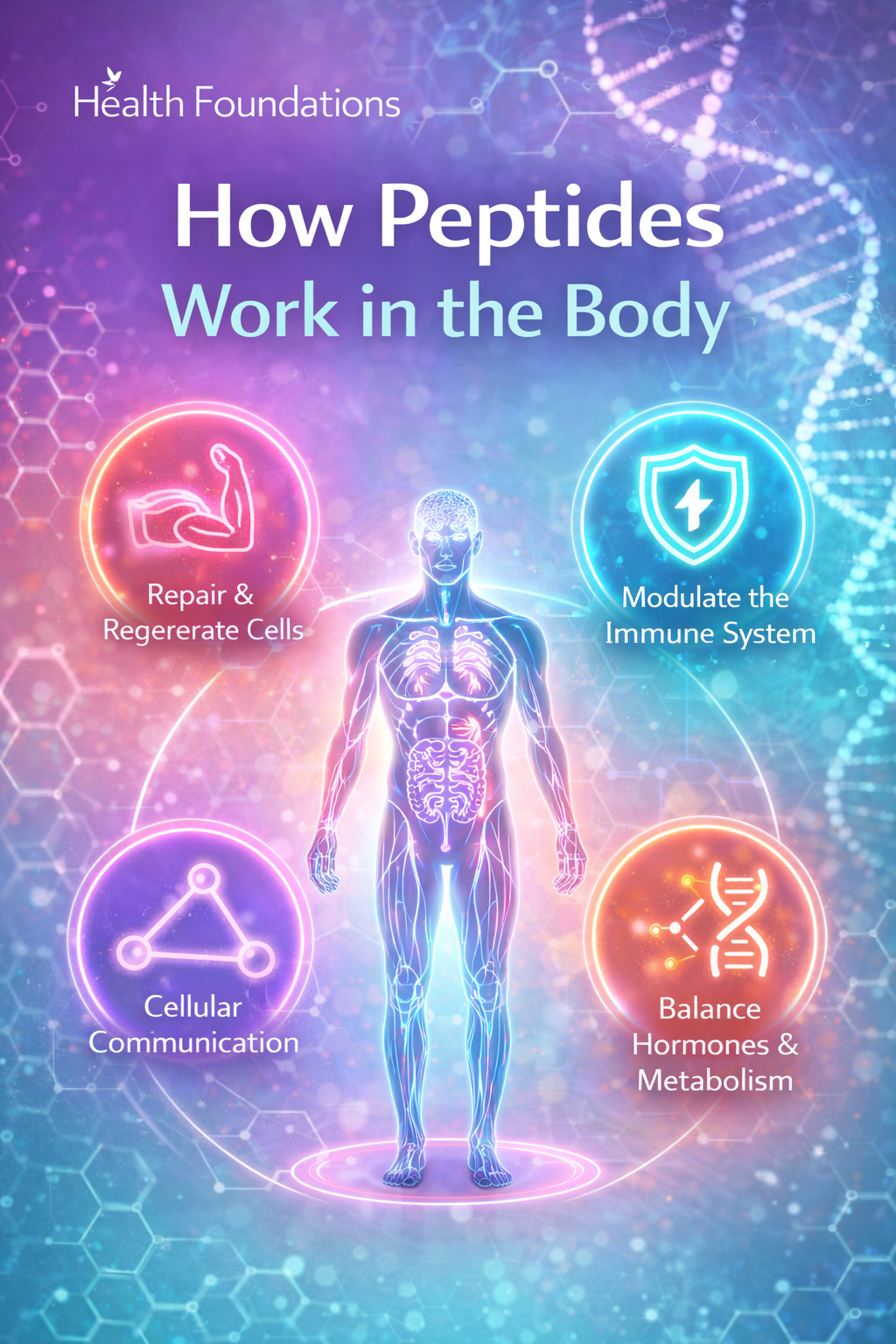
They help cells send instructions to one another so the body can coordinate processes like repair, metabolism, hormone release, immune activity, and brain function.
Every moment, trillions of cells are exchanging chemical messages.
These signals tell tissues when to grow, when to rest, when to release energy, and when to repair damage.
Peptides are some of the molecules that carry those instructions.
Because peptides influence cellular communication, researchers often study them in areas related to tissue repair, metabolism, brain function, and aging.
For example, some peptides are investigated for how they influence healing and tissue recovery.
Compounds such as BPC-157 and TB-500 frequently appear in discussions about peptides studied for gut repair and tissue recovery.
Similarly, peptides also play important roles in the nervous system.
Certain molecules are researched for their potential influence on cognitive signaling and brain performance, which is why compounds like Semax and Dihexa often appear in conversations about peptides that support brain health and cognitive performance.
Peptides influence many everyday biological processes.
Some help regulate appetite and metabolism.
Others influence immune signaling.
Some support structural tissues such as skin and connective tissue.
Because peptides act as communication signals, they help the body coordinate how different systems respond to stress, repair damage, and maintain balance across multiple organs.
What Are Peptides Made Of?
Peptides are made from amino acids.
Amino acids are the small molecules that serve as the building blocks of proteins. When amino acids link together in long chains, they form proteins. When only a short chain of amino acids connects, the molecule is called a peptide.
Most peptides contain between 2 and about 50 amino acids.
Once a chain becomes longer than that, scientists usually classify the molecule as a protein rather than a peptide.
The body uses about 20 different amino acids to build peptides and proteins. By combining these amino acids in different sequences, the body can create thousands of unique molecules with different biological roles.
The order of amino acids in a peptide determines how it behaves and what signals it sends.
Some peptides act as hormones.
Others influence immune responses.
Some help regulate metabolism or tissue repair.
Because peptides are built from the same basic building blocks as proteins, they are naturally produced throughout the body and participate in many normal biological processes.
Researchers study peptides because small changes in these amino-acid chains can influence how cells communicate and respond to stress, injury, and aging.
What Are Peptides Used For?
Peptides play roles in many normal biological processes.
Because they act as signaling molecules, peptides help regulate how different systems in the body communicate and respond to changing conditions.
Some peptides function as hormones.
For example, insulin is a peptide hormone that helps control blood sugar by signaling cells when to absorb glucose from the bloodstream.
Other peptides influence tissue repair and recovery.
Compounds such as BPC-157 and TB-500 frequently appear in research discussions about healing and regeneration. In Healing Peptides for Gut Repair: How TB-500 and BPC-157 Support Tissue Recovery, we look more closely at how researchers study these signaling molecules and their potential role in tissue recovery.
Peptides also play important roles in skin health and connective tissue.
In dermatology research, copper peptides are often studied for their influence on collagen production and structural repair. In Copper Peptides for Skin Health: How They Support Collagen, Repair, and a Youthful Glow, we explore how these signaling molecules are used in skin-focused research and skincare formulations.
Beyond these examples, peptides are studied across many areas of biology, including metabolism, immune regulation, neurological function, and aging.
Because peptides influence cellular communication, researchers continue investigating how these molecules may affect how tissues repair, adapt, and maintain biological balance.
Examples of Peptides Being Studied in Different Systems of the Body
Because peptides act as signaling molecules, researchers study them across many different biological systems.
Different peptides appear to influence different types of cellular communication depending on the tissues involved.
For example, some peptides are studied for their role in tissue repair and recovery.
Compounds such as BPC-157 and TB-500 often appear in research discussions related to healing and regeneration. In Healing Peptides for Gut Repair: How TB-500 and BPC-157 Support Tissue Recovery, we look more closely at how researchers investigate these peptides and their possible role in supporting tissue repair.
Other peptides are studied for their influence on brain signaling and cognitive function.
Certain compounds appear in neurological research examining memory, learning, and brain communication pathways. In Best Peptides for Brain Function: How Peptides Support Brain Health and Cognitive Performance, we explore how researchers study peptides such as Semax, Selank, and Dihexa in relation to cognitive signaling.
Peptides are also studied in relation to skin repair and connective tissue health.
Some molecules, particularly copper peptides, have been investigated for their potential influence on collagen production and skin recovery. In Copper Peptides for Skin Health: How They Support Collagen, Repair, and a Youthful Glow, we examine how these peptides appear in dermatology and skincare research.
Researchers have also explored a group of compounds known as bioregulator peptides.
These peptides are studied for their potential influence on cellular communication within specific organs and systems. In What Are Bioregulators and Why Are People Using Them?, we explain how these compounds are being researched in connection with cellular signaling and longevity.
Together, these examples illustrate how peptides are being studied across multiple systems in the body, helping researchers better understand how cellular communication influences repair, metabolism, and aging.
Are Peptides the Same as Steroids?
No. Peptides and steroids are completely different types of molecules.
Peptides are made from short chains of amino acids, which are the building blocks used to form proteins. Because of this structure, peptides usually act as signaling molecules, helping cells communicate and coordinate biological processes.
Steroids, on the other hand, are made from lipid-based molecules derived from cholesterol.
Instead of acting primarily as communication signals between cells, steroids typically influence how genes are expressed inside cells. This is why steroid hormones can strongly affect processes such as inflammation, muscle growth, and hormone balance.
Another key difference is how the body naturally produces these compounds.
The human body produces many natural peptides, including hormones like insulin and signaling molecules involved in immune regulation, metabolism, and tissue repair.
Steroid hormones also occur naturally in the body, such as cortisol, estrogen, and testosterone, but they function through different biological pathways than peptides.
Because peptides and steroids operate through different mechanisms, they are studied separately in medical and biological research. Peptides are often investigated for how they influence cellular communication and repair signaling, while steroids are typically associated with hormonal regulation and inflammation control.
Are Peptides Safe?
Safety depends on which peptide is being discussed and how it is used.
The human body naturally produces thousands of peptides. Many of them function as hormones, signaling molecules, or regulatory compounds that help coordinate normal biological processes.
Because peptides already exist in the body, researchers often study them to better understand how cellular communication influences repair, metabolism, and immune activity.
However, not every peptide that appears in research has been approved for medical use.
Some peptides are used in established medical treatments, while others are still being studied in laboratory or clinical research settings.
Like any biologically active compound, peptides can influence how cells behave. The effects depend on factors such as the specific peptide, dosage, and how it interacts with the body’s signaling systems.
For this reason, researchers continue investigating peptides to better understand their biological roles, potential benefits, and possible risks.
Understanding how peptides influence cellular communication is an important part of evaluating how they might affect health and physiology.
Why Are People Taking Peptides?
Interest in peptides has grown rapidly in recent years.
Part of this interest comes from scientific research exploring how cellular signaling influences processes like repair, metabolism, immune regulation, and aging.
Because peptides help regulate communication between cells, researchers often study them when investigating how tissues recover from stress or injury.
In some cases, peptides are used in medical treatments. In other cases, they are being studied in research settings to better understand how biological signaling influences health and disease.
Peptides have also gained attention in areas such as sports medicine, dermatology, metabolic research, and neuroscience.
For example, some peptides are studied for how they influence tissue recovery, while others are investigated for their role in metabolism or cognitive signaling.
Interest has also grown around bioregulator peptides, a group of compounds studied for their potential influence on cellular signaling within specific organs. In What Are Bioregulators and Why Are People Using Them?, we explore how these peptides are researched in relation to cellular communication and longevity.
As scientific understanding of cellular signaling continues to grow, peptides remain an active area of research across many fields of biology and medicine.
What Is an Example of a Peptide?
Many important molecules in the human body are peptides.
One well-known example is insulin, a peptide hormone that helps regulate blood sugar by signaling cells when to absorb glucose from the bloodstream.
Collagen peptides are another example. These peptides are fragments of collagen proteins that play an important role in supporting the structure of skin, connective tissue, and joints.
Researchers also study a wide variety of peptides that appear in discussions about tissue repair, metabolism, brain signaling, and aging.
Some peptides are investigated for their influence on healing and tissue recovery. Others are studied for their potential effects on cognitive signaling or cellular communication.
Because peptides function as signaling molecules, researchers continue examining how different peptides may influence the way cells communicate, repair damage, and maintain balance across many biological systems.
Want the deeper layer?
Health Foundations members continue below with a deeper look at how cellular signaling influences repair, metabolism, and aging.
Inside this section we cover:
• Why Cellular Signaling Matters
• What Happens When Signaling Works Well
• What Happens When Signaling Breaks Down
• Why Researchers Study Peptides
• Why This Matters for Long-Term Health
Why Cellular Signaling Matters
Most health conversations focus on symptoms.
• low energy
• poor recovery
• weight gain
• brain fog
• visible aging
But symptoms are usually surface signals.
Underneath them, the body is managing something deeper:
cellular communication.
Cells constantly send messages telling tissues when to:
• repair damage
• release energy
• regulate inflammation
• activate immune defenses
• adapt to stress
What Happens When Signaling Works Well
When cellular communication stays clear, systems coordinate efficiently.
You often see:
• faster tissue repair
• stable energy production
• balanced inflammation responses
• better recovery from stress
• stronger metabolic flexibility
In other words, the body adapts well.
What Happens When Signaling Breaks Down
When cellular communication weakens, coordination begins to fail.
This may contribute to:
• slower healing
• declining metabolic efficiency
• increased fatigue
• slower recovery from stress
• gradual loss of resilience
The body may still try to repair itself.
But the instructions are less clear and less coordinated.
Why Researchers Study Peptides
Peptides are interesting to researchers because they influence cellular communication.
Scientists study them across many biological systems.
Some peptides appear to influence:
• tissue repair and recovery
• metabolic signaling and energy regulation
• immune system communication
• brain signaling and cognitive function
• cellular aging and longevity pathways
Peptides help scientists better understand how the body organizes communication between cells.
Why This Matters for Health
Once you understand signaling, the health conversation changes.
Instead of focusing only on symptoms, the focus shifts to:
• how well cells communicate
• how efficiently the body coordinates repair
• how systems respond to stress and aging
Because when communication improves, coordination improves.
And coordination is what allows the body to:
• repair
• adapt
• maintain resilience over time
In Case You Skimmed
• Peptides are short chains of amino acids that act as signaling molecules in the body.
• They help cells communicate and coordinate processes such as repair, metabolism, immune responses, and hormone regulation.
• Researchers study peptides across many biological systems because cellular communication controls how tissues repair and adapt.
• Some peptides appear in research related to tissue repair, metabolism, brain signaling, immune regulation, and aging biology.
• Understanding peptides is really about understanding how the body organizes communication between cells.
• When cellular signaling stays clear, the body can repair, regulate energy, and maintain resilience over time.
Jamie Shahan, MSN, CRNA, RN
Empowering Holistic Health
Curator of forgotten wisdom with a modern understanding of why it works.
🌐 Connect with me on Social Media:
Disclaimer
The information provided on this website, in associated blogs, courses, and materials, is for general educational and informational purposes only. It is not medical advice and should not be interpreted as such.
I am not a medical doctor. The content I share reflects my personal opinions, experiences, and research. It is not intended to diagnose, treat, cure, or prevent any disease, condition, or illness.
You should not rely on the information here as a substitute for professional medical care, advice, or treatment. Always consult with a licensed healthcare provider before making any decisions regarding your health, especially if you are pregnant, nursing, taking prescription medications, or managing a medical condition.
By reading this website or using any related materials, you acknowledge and agree that:
- You are fully responsible for your own health decisions.
- The author and publisher of this content assume no liability for any harm, loss, or adverse effects arising directly or indirectly from the use, misuse, or interpretation of the information provided.
- No guarantees are made regarding the outcomes of applying any ideas, suggestions, or protocols discussed. Results will vary for each individual.
Affiliate Disclosure
Some products or tools mentioned may include affiliate links. This means that if you choose to purchase through those links, I may earn a small commission at no extra cost to you. I only recommend products I have personally used, researched, or would recommend to someone I love.
Use at Your Own Risk
By accessing this website and its materials, you agree that you are doing so voluntarily and that you assume full responsibility for any decisions you make regarding your health, lifestyle, or purchases.