The Gut Is Not a Single Organ: How Digestion, Immunity, and Detox Interlock
The gut is not just a digestive organ. It plays a central role in immune function, detox pathways, nervous system regulation, and whole-body signaling. This article explains how gut health and the immune system connect and why regulation and terrain matter for gut healing.
Most gut advice treats the digestive tract like a standalone tube.
Eat this. Avoid that. Kill that. Add this supplement.
But digestion is only one small part of what the gut actually does.
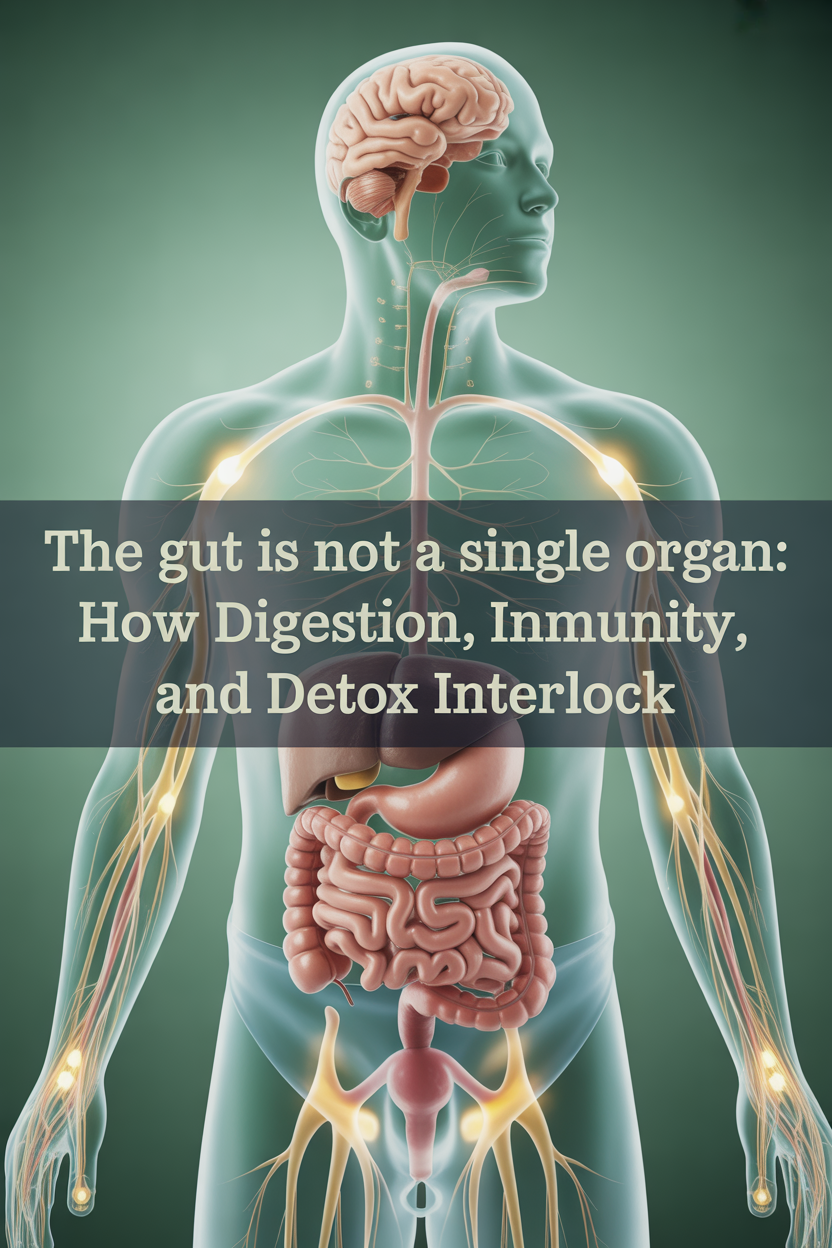
The gut functions as a coordination center, constantly communicating with the immune system, detox pathways, and the nervous system. When these systems work together, the body adapts, repairs, and clears waste efficiently. When they don’t, symptoms show up everywhere — not just in digestion.
This is why understanding the relationship between gut health and the immune system matters far more than chasing isolated fixes.
The Gut–Immune System Connection Is Structural, Not Optional
You’ll often hear that around 70 percent of immune activity is connected to the gut. What’s rarely explained is why.
The immune system doesn’t simply sit near the digestive tract. It is trained by it.
Every day, immune cells sample what moves through the gut — food particles, microbial signals, inflammatory cues, and metabolic byproducts. That constant sampling teaches the immune system how to respond appropriately, when to tolerate, and when to escalate.
When the gut environment is stable, immune responses stay measured and adaptive. When the gut is irritated or congested, immune signaling becomes reactive and confused. This pattern is easier to understand when you look at How Gut Health Shapes the Immune System and how immune balance is established at the gut level over time.
Detox Is a Network, Not a Single Organ
Detoxification is often framed as something the liver does on its own. In reality, detox only works when multiple systems cooperate.
The gut, liver, and lymphatic system function as a shared drainage network:
- the gut determines what enters and exits
- the liver processes metabolic and chemical waste
- the lymphatic system moves immune debris and cellular byproducts out of tissues
When one part of that chain slows down, pressure backs up into the others. This is why digestive symptoms often show up alongside fatigue, skin issues, headaches, or inflammation that doesn’t resolve. The mechanics of this coordination are explored more fully in The Gut–Liver–Lymph Axis Explained: Why This Detox Trio Controls Your Drainage (and Your Symptoms).
Supporting detox without supporting gut flow and elimination rarely leads to lasting change.
Regulation Comes Before Repair
Long before food choices come into play, the nervous system determines whether digestion, immune signaling, and detox pathways stay flexible or shut down.
When stress is chronic, digestion slows, immune signaling shifts toward defense, and detox pathways constrict. This is why people can follow every gut protocol perfectly and still feel stuck. Gut repair often depends less on what you eat and more on how regulated the nervous system is - a relationship explored in Gut Health Starts in the Nervous System: The Real Cause of Bloating and IBS.
Why Targeting the Problem So Often Backfires
When symptoms persist, the instinct is to hunt for a culprit - bacteria, yeast, parasites, or toxins.
But eliminating targets without stabilizing the internal environment rarely produces durable improvement.
The body operates within a larger terrain. If that terrain is inflamed, stressed, or congested, repair stalls no matter how many tools are applied. This systems-first perspective is central to Terrain vs. Bugs: Why Killing Isn’t the First Step
If you want a deeper understanding of how these systems influence one another — and why order matters — the article continues below for Health Foundations members.
FAQ: Gut Health, Immunity, and Whole-Body Systems
Can gut problems affect areas outside digestion?
Yes. The gut plays a role in immune balance, inflammation, and metabolic signaling, which is why symptoms often show up beyond the digestive tract.
Is the gut connected to the immune system?
Yes. The immune system is closely linked to the gut environment and is influenced by what passes through the digestive tract every day.
Why do gut symptoms keep coming back?
Symptoms often return when the underlying system interactions haven’t been addressed, even if short-term relief is achieved.