TB-500 Peptide: Benefits, Uses, Dosage, and How It Compares to BPC-157
TB-500 is often marketed as a healing peptide, but its real role is repair signaling. Learn what it does, how it compares to BPC-157, and why terrain matters more than tools.

If you have spent any time researching peptides, TB-500 comes up constantly. Injury recovery. Chronic inflammation. Mobility support. Hair growth claims. Often paired with BPC-157 and talked about as if it fixes everything.
That confusion is exactly the problem.
TB-500 is not a healing shortcut. It is a signaling peptide, and understanding that distinction changes how it should be viewed and used.
TB-500 is a synthetic peptide derived from thymosin beta-4, a naturally occurring protein studied for its role in tissue repair signaling, inflammation modulation, and recovery support. Once you understand that, the hype fades and what remains is something far more practical and grounded.
What Is TB-500?
TB-500 is a synthetic fragment modeled after thymosin beta-4, a protein found naturally throughout the body. Thymosin beta-4 is involved in how cells move, organize, and respond to injury.
TB-500 was designed to isolate the portion of that protein most associated with cell migration and repair signaling.
It does not force healing.
It does not override symptoms.
It supports the conditions that allow repair to take place.
TB-500 works through coordination, not control.
What Is TB-500 Used For?
Most interest in TB-500 centers on its role in supporting recovery signaling rather than acting as a direct repair agent. Much of the available data comes from preclinical research and observational use.
TB-500 is commonly discussed in relation to:
- Supporting tissue repair signaling across muscles, tendons, and connective tissue
- Modulating inflammation following strain or injury
- Encouraging angiogenesis, which supports oxygen and nutrient delivery to tissues
- Improving overall mobility and recovery capacity
One important distinction is that TB-500 acts systemically. It does not target a single injury site. It influences the broader repair environment of the body, which is why people often report generalized improvement rather than pinpoint relief.
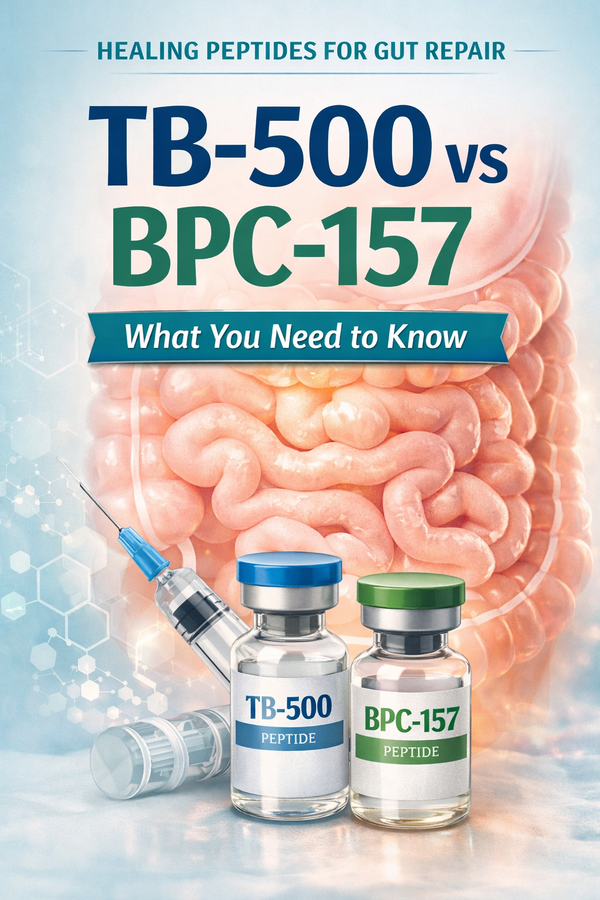
TB-500 vs BPC-157
TB-500 and BPC-157 are frequently mentioned together, but they perform different roles.
| Feature | TB-500 | BPC-157 |
|---|---|---|
| Primary role | Systemic repair signaling | Localized tissue signaling |
| Scope | Whole-body | Targeted, gut, tendon, ligament |
| Best known for | Coordinating recovery environment | Supporting site-specific repair |
| Common pairing | With BPC-157 | With TB-500 |
A simple way to understand the difference:
- TB-500 prepares the terrain
- BPC-157 focuses on the repair site
Healing is never purely local. It is systemic first, then specific.
What Do TB-500 and BPC-157 Do Together?
When paired, TB-500 and BPC-157 are often described as complementary rather than overlapping.
TB-500 supports the overall signaling environment needed for recovery.
BPC-157 supports targeted communication where tissue integrity is compromised.
This pairing mirrors how the body naturally coordinates repair. Broad systems stabilize first, then focused repair follows.
Does TB-500 Help With Hair Growth?
This question comes up frequently, and it deserves a clear answer.
TB-500 is not a hair growth peptide.
Interest in hair growth stems from thymosin beta-4’s role in angiogenesis and tissue signaling, which may indirectly support the scalp environment. Improved blood flow and tissue communication can support follicle health, but there is no direct evidence that TB-500 stimulates hair growth in humans.
Claims suggesting otherwise are largely speculative.
TB-500 Dosage and Safety Considerations
There is no FDA-approved dosage for TB-500 for human use.
Most dosing discussions online are based on experimental use, preclinical research, or anecdotal protocols. Any numerical dosing ranges discussed publicly are not standardized, medically approved, or clinically established.
This matters.
TB-500 is not a supplement. It is commonly sold as a research peptide, and long-term human safety data remains limited.
TB-500 Side Effects and Who Should Avoid It
Reported side effects are generally mild and anecdotal, but absence of data does not equal absence of risk.
Because TB-500 influences cellular signaling and blood vessel formation, caution is advised for:
- Individuals with active cancer or unexplained growths
- Pregnant or breastfeeding women
- Those with unassessed liver or kidney stress
- Anyone seeking cosmetic or performance shortcuts
Peptides amplify signaling. If the underlying terrain is unstable, amplification works in the wrong direction.
Buying TB-500: What to Know Without the Hype
Searches for “TB-500 peptide for sale,” “TB-500 Amazon,” or “buy TB-500 online” are common, but they often lead to unreliable products.
TB-500 is not sold through pharmacies. Products listed on large marketplaces are frequently mislabeled, improperly stored, or lack quality verification.
Responsible sourcing requires:
- Independent third-party testing
- Certificates of analysis
- Clear batch and purity verification
If that information is not available, that is a red flag.
The Bigger Picture
Peptides do not heal the body.
They communicate with it.
Communication only works when the system is prepared to respond.
If digestion is impaired, inflammation is unresolved, detox pathways are overloaded, and the nervous system remains in a chronic stress state, no peptide will correct that imbalance.
Advanced tools require stable foundations.
In Case You Skimmed
- TB-500 is a systemic signaling peptide derived from thymosin beta-4
- It supports coordination of repair rather than forcing healing
- TB-500 and BPC-157 serve different roles and are often paired for that reason
- Hair growth claims are indirect and overstated
- There is no FDA-approved dosing or pharmacy version
- Terrain and regulation matter more than tools
Want to Go Deeper?
Inside The Restoration Library, we focus on preparing the body for advanced tools like peptides by stabilizing digestion, inflammation, detox pathways, and nervous system regulation first.
Jamie Shahan, MSN, CRNA, RN
Empowering Holistic Health
Curator of forgotten wisdom with a modern understanding of why it works.
🌐 Connect with me on Social Media:
Disclaimer
The information provided on this website, in associated blogs, courses, and materials, is for general educational and informational purposes only. It is not medical advice and should not be interpreted as such.
I am not a medical doctor. The content I share reflects my personal opinions, experiences, and research. It is not intended to diagnose, treat, cure, or prevent any disease, condition, or illness.
You should not rely on the information here as a substitute for professional medical care, advice, or treatment. Always consult with a licensed healthcare provider before making any decisions regarding your health, especially if you are pregnant, nursing, taking prescription medications, or managing a medical condition.
By reading this website or using any related materials, you acknowledge and agree that:
- You are fully responsible for your own health decisions.
- The author and publisher of this content assume no liability for any harm, loss, or adverse effects arising directly or indirectly from the use, misuse, or interpretation of the information provided.
- No guarantees are made regarding the outcomes of applying any ideas, suggestions, or protocols discussed. Results will vary for each individual.
Affiliate Disclosure
Some products or tools mentioned may include affiliate links. This means that if you choose to purchase through those links, I may earn a small commission at no extra cost to you. I only recommend products I have personally used, researched, or would recommend to someone I love.
Use at Your Own Risk
By accessing this website and its materials, you agree that you are doing so voluntarily and that you assume full responsibility for any decisions you make regarding your health, lifestyle, or purchases.