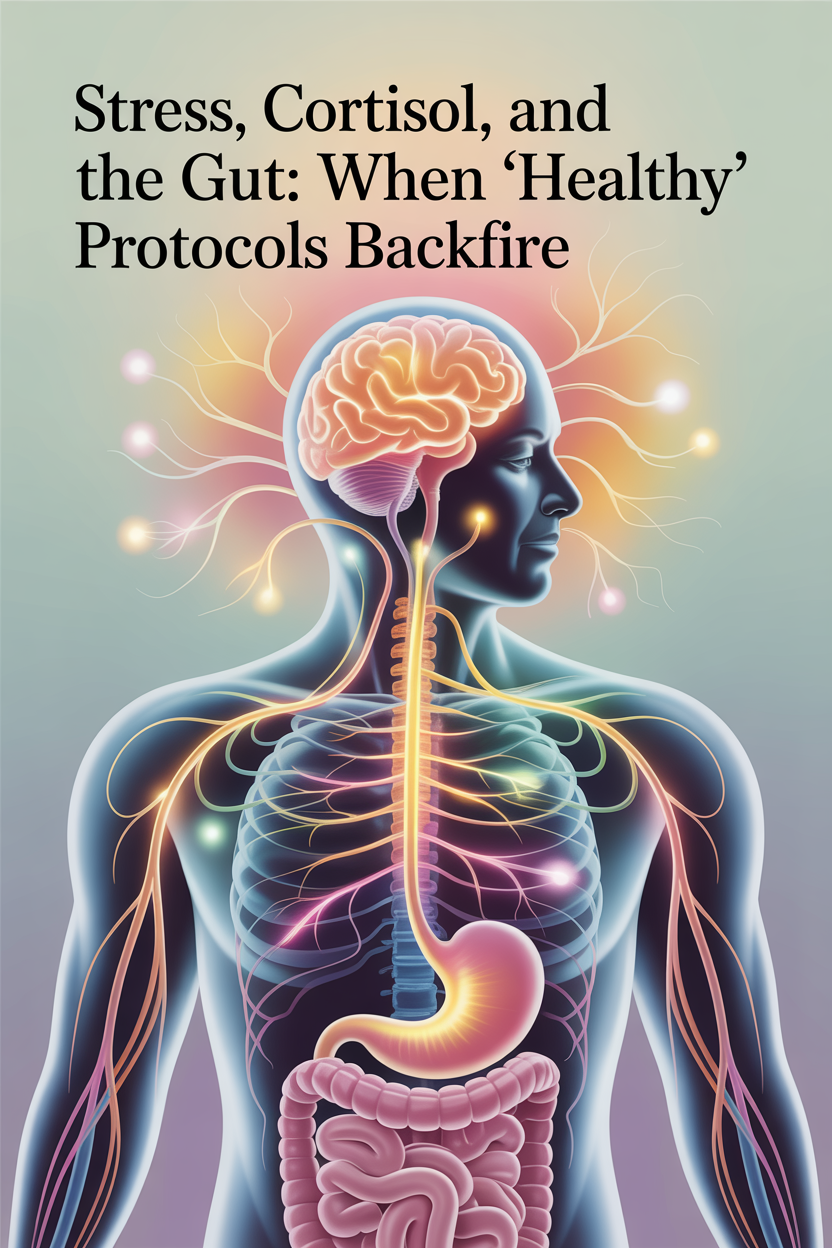
Stress, Cortisol, and the Gut: When “Healthy” Protocols Backfire
Stress and cortisol strongly affect gut health. Elevated cortisol can disrupt digestion, bile flow, motility, immune tolerance, and the microbiome, causing bloating and food reactions even with a clean diet. Learn why gut healing backfires under stress.
You can eat clean and still feel terrible.
Not because you’re doing it wrong.
Because your body is interpreting “healthy” as pressure instead of support.
Life stress doesn’t always feel dramatic. It feels normal. Full calendars. Responsibility. Noise. Productivity. You adapt. You keep going.
Your nervous system doesn’t adapt. It compensates.
When demand stays high, cortisol stays elevated. And when cortisol stays elevated, digestion is no longer a priority. That’s when gut symptoms worsen after you clean up your diet, add supplements, or try fasting.
The body doesn’t experience those changes as healing.
It experiences them as more demand.
FAQ
Why do gut symptoms get worse when I start doing “healthy” things?
Because stress physiology can override digestion and repair.
Can cortisol affect digestion even if I don’t feel anxious?
Yes. Cortisol reflects physiological load, not emotional awareness.
Why do I suddenly react to foods I used to tolerate?
Because stress changes gut motility, bile flow, immune tolerance, and microbial behavior.
Is cortisol the root cause of gut issues?
Not always. But it often determines whether healing is allowed to happen.
How Cortisol Alters Digestion
Cortisol is a survival hormone. It mobilizes energy during demand.
The problem isn’t cortisol.
The problem is duration.
When cortisol stays elevated:
- stomach acid production declines
- digestive enzymes decrease
- bile flow becomes inconsistent
- gut motility becomes erratic
- immune tolerance narrows
This isn’t dysfunction. It’s prioritization.
Digestion is not essential for immediate survival. Energy availability is. So resources are redirected.
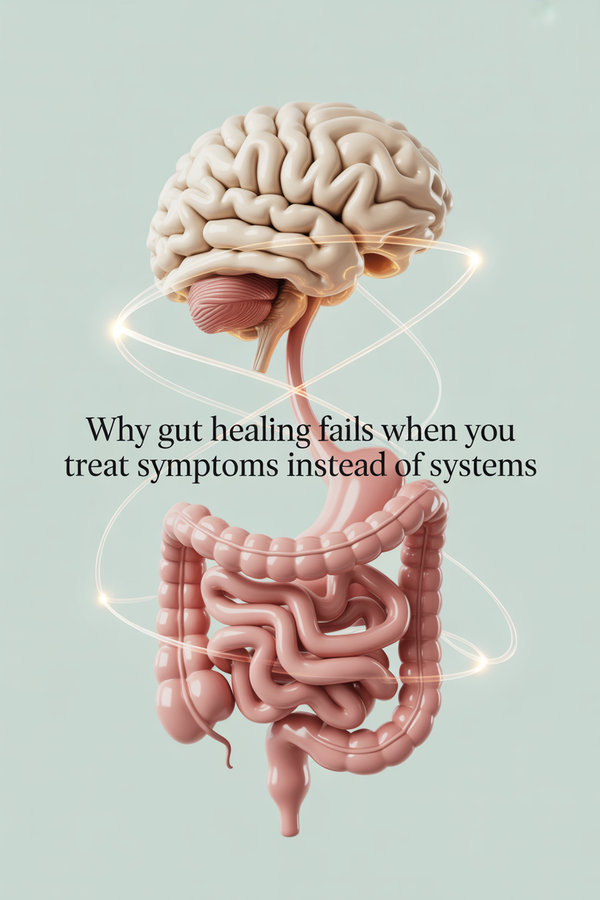
That’s why gut symptoms often show up alongside sleep disruption, anxiety, hormone changes, and immune issues. These systems are responding to the same upstream signal.
Stress Changes the Gut Terrain
Stress doesn’t just create symptoms.
It changes the internal environment.
Fermentation patterns shift.
Histamine tolerance narrows.
Microbial behavior changes.
Foods you tolerated for years suddenly feel like a problem.
This is why gut issues are often mislabeled as sudden intolerances or overgrowths. The food didn’t change. The terrain did.
This pattern is explored further in Sugar, Yeast, and the Fermented Freakshow in Your Belly, where symptoms are explained through environment, not food morality.
Why Gut Tools Backfire Under Stress
Many gut protocols fail because they’re layered onto exhaustion.
Supplement stacks.
Aggressive “kill” phases.
Strict restriction.
Fasting without recovery.
All of these increase load.
Cortisol further disrupts bile flow and fat digestion, which is why bloating and food reactions often worsen under stress. This relationship is expanded in Bitters and Bile Flow: Why Fat Digestion Matters More Than You Think.
Tools that rely on resilience fail when resilience is low. Context determines outcome. That’s why some interventions work beautifully for one person and backfire for another.
This same principle applies to force-based approaches, explored in Antibiotics: When They Save You… and When They Wreck You.
Timing matters more than intensity.
Capacity Comes Before Intervention
Biology doesn’t respond to urgency.
It responds to capacity.
When capacity is low, even helpful inputs feel threatening. When capacity improves, tolerance widens without force.
This is why some tools only work after regulation stabilizes. Survivability depends on environment, a concept expanded in Spore-Based Probiotics: Why They’re Smarter Than the Fridge Kind.
Healing doesn’t require more effort.
It requires the right order.
If you want deeper education on how cortisol, digestion, immunity, and the nervous system interact and how to recognize when the body is actually ready for repair, this continues below with expanded context and pattern recognition.
In Case You Skimmed
- Cortisol can block digestion even with a perfect diet
- Stress changes gut terrain, not just symptoms
- “Healthy” protocols can add load to stressed systems
- Timing matters more than intensity
- Regulation comes before repair
Why Cortisol Dominates When Regulation Is Weak
Cortisol rises when the body perceives demand, unpredictability, or insufficient recovery. That signal can come from obvious stress, but it can also come from under-eating, blood sugar instability, chronic inflammation, or poor sleep.
When regulation is weak, survival signaling takes priority.
In that state, digestion does not fail. It is deprioritized. Resources are shifted toward energy availability and vigilance, not maintenance. This is why people can be disciplined, consistent, and motivated while still struggling with gut symptoms.
Biology does not interpret discipline as safety.
What Rest and Digest Actually Means
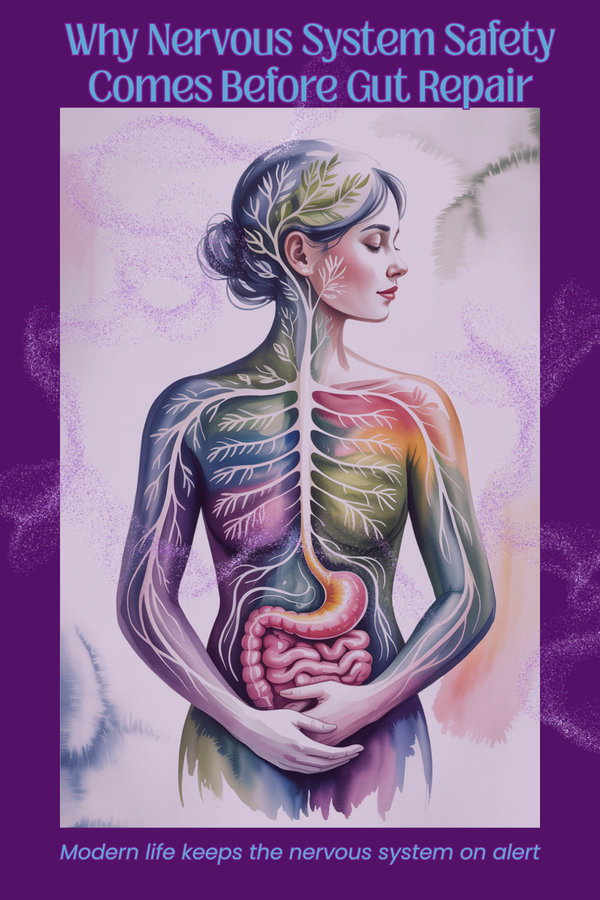
Parasympathetic regulation is not a feeling of calm. It is a biological state where the body perceives enough stability to invest in repair.
That state supports stomach acid production, enzyme output, bile flow, motility rhythm, immune tolerance, and barrier maintenance. When the signal is inconsistent, digestion becomes inconsistent.
This is why symptoms often fluctuate with life intensity rather than food alone. Busy schedules, poor sleep, and prolonged mental load can all reinforce cortisol dominance even when nutrition appears ideal.
How Regulation Shows Up Before Healing Does
As regulation improves, changes are subtle at first.
Digestion becomes more predictable. Food reactions soften. Symptom swings lose intensity. Healing often feels boring before it feels energizing.
That boredom is stability.
Repair resumes not because the right tool was added, but because the environment finally supports it.
Where Guided Application Fits
Health Foundations is about understanding what is happening and why. Application requires structure, sequencing, and support.
If you want guidance on how to restore regulation without overwhelming a stressed system and how to layer interventions at the right time, that work continues inside the Restoration Library.
Jamie Shahan, MSN, CRNA, RN
Empowering Holistic Health
Curator of forgotten wisdom with a modern understanding of why it works.
🌐 Connect with me on Social Media:
Disclaimer
The information provided on this website, in associated blogs, courses, and materials, is for general educational and informational purposes only. It is not medical advice and should not be interpreted as such.
I am not a medical doctor. The content I share reflects my personal opinions, experiences, and research. It is not intended to diagnose, treat, cure, or prevent any disease, condition, or illness.
You should not rely on the information here as a substitute for professional medical care, advice, or treatment. Always consult with a licensed healthcare provider before making any decisions regarding your health, especially if you are pregnant, nursing, taking prescription medications, or managing a medical condition.
By reading this website or using any related materials, you acknowledge and agree that:
- You are fully responsible for your own health decisions.
- The author and publisher of this content assume no liability for any harm, loss, or adverse effects arising directly or indirectly from the use, misuse, or interpretation of the information provided.
- No guarantees are made regarding the outcomes of applying any ideas, suggestions, or protocols discussed. Results will vary for each individual.
Affiliate Disclosure
Some products or tools mentioned may include affiliate links. This means that if you choose to purchase through those links, I may earn a small commission at no extra cost to you. I only recommend products I have personally used, researched, or would recommend to someone I love.
Use at Your Own Risk
By accessing this website and its materials, you agree that you are doing so voluntarily and that you assume full responsibility for any decisions you make regarding your health, lifestyle, or purchases.