Peptide Protocols: How Researchers Study Peptides for Repair, Metabolism, and Longevity
Peptides are signaling molecules that help cells communicate. This article explains how peptide protocols are organized by body system, including repair, metabolism, brain signaling, and longevity, along with commonly discussed research dose ranges and cycle structures.
Have you ever wondered why medicine is so good at treating symptoms, yet often struggles to prevent disease before it begins?
Many researchers believe the next frontier of health science isn’t simply stronger drugs or more treatments.
It’s understanding how to support the body’s own repair and communication systems.
Inside the body, cells constantly send signals to each other about when to repair tissue, regulate metabolism, manage inflammation, and adapt to stress.
Peptides are one of the ways those messages travel.
What makes peptides so fascinating is not the molecules themselves.
It’s the communication system inside the body that they appear to influence.
If you want the deeper explanation of how peptide signaling works, start here:
→ What Are Peptides? How the Body’s Signaling Molecules Control Repair, Metabolism, and Aging
Frequently Asked Questions About Peptide Protocols
Do you have to take peptides forever?
Not necessarily. Many peptide protocols are used in cycles, where a peptide is used for a period of time and then paused. The goal is often to influence a signaling pathway temporarily rather than create permanent dependence.
Are peptide doses the same for everyone?
No. Peptide protocols often vary depending on factors such as body weight, research goals, and the specific signaling system being studied. This is why many protocols discuss ranges rather than fixed doses.
How are peptides administered?
Peptides are administered in several different ways depending on the compound being studied. Common methods include:
• subcutaneous injections
• intranasal sprays
• oral capsules or tablets
• topical applications
The method depends on how the peptide is absorbed and how researchers are studying its effects.
How long do peptide protocols usually last?
Many peptide protocols discussed in research conversations last 4–12 weeks, although this varies widely depending on the compound and the biological system being studied.
Are peptides expensive?
The cost of peptides can vary widely depending on the specific compound, manufacturing quality, and how they are obtained. Some peptides are relatively affordable, while others used in specialized research settings can be more expensive.
Many people who explore peptide research are motivated by a broader perspective on health. Investing in approaches that support the body’s ability to repair and regulate itself may be far less costly than dealing with the long-term consequences of a major health crisis that might have been prevented through better optimization of the body’s healing systems.
For this reason, some individuals view peptides not simply as an expense, but as part of a larger strategy focused on prevention, resilience, and long-term health.
Are peptides new?
No. Scientists have studied peptides for decades. What is new is the growing understanding of how these signaling molecules influence multiple biological systems.
Table of Contents
- Why Peptide Protocols Focus on Signaling Systems
- How Researchers Think About Peptide Protocols
- Peptides by Body System
- Repair Signaling Protocols
- Metabolic Signaling Protocols
- Brain & Nervous System Protocols
- Longevity Signaling Protocols
In This Article
In this Restoration Framework guide, we move beyond the basic explanation of peptides and focus on how researchers organize peptide protocols around biological signaling systems.
You’ll learn:
• Why peptide protocols are organized by signaling systems
• How researchers think about structuring peptide protocols
• How peptides are grouped by body system
• Examples of peptides studied for repair, metabolism, brain function, and longevity
• How signaling-focused peptide protocols are commonly structured in research discussions
Why Peptide Protocols Focus on Signaling Systems
Most health conversations focus on substances.
Peptide research focuses on communication.
Cells constantly send signals to each other about when to:
• repair tissue
• regulate metabolism
• coordinate immune responses
• adapt to stress
Peptides are part of these signaling networks.
Different peptides appear in research discussions because they influence different communication pathways inside the body.
If you want the deeper explanation of how peptide signaling works, read:
→ What Are Peptides? How the Body’s Signaling Molecules Control Repair, Metabolism, and Aging
In this Restoration Framework guide, we’ll focus on something more practical:
how researchers organize peptide protocols around signaling systems.
How Researchers Think About Peptide Protocols
One of the biggest misunderstandings about peptides is the idea that they are chosen like supplements.
In reality, most research discussions start with a different question:
Which biological signaling system needs support?
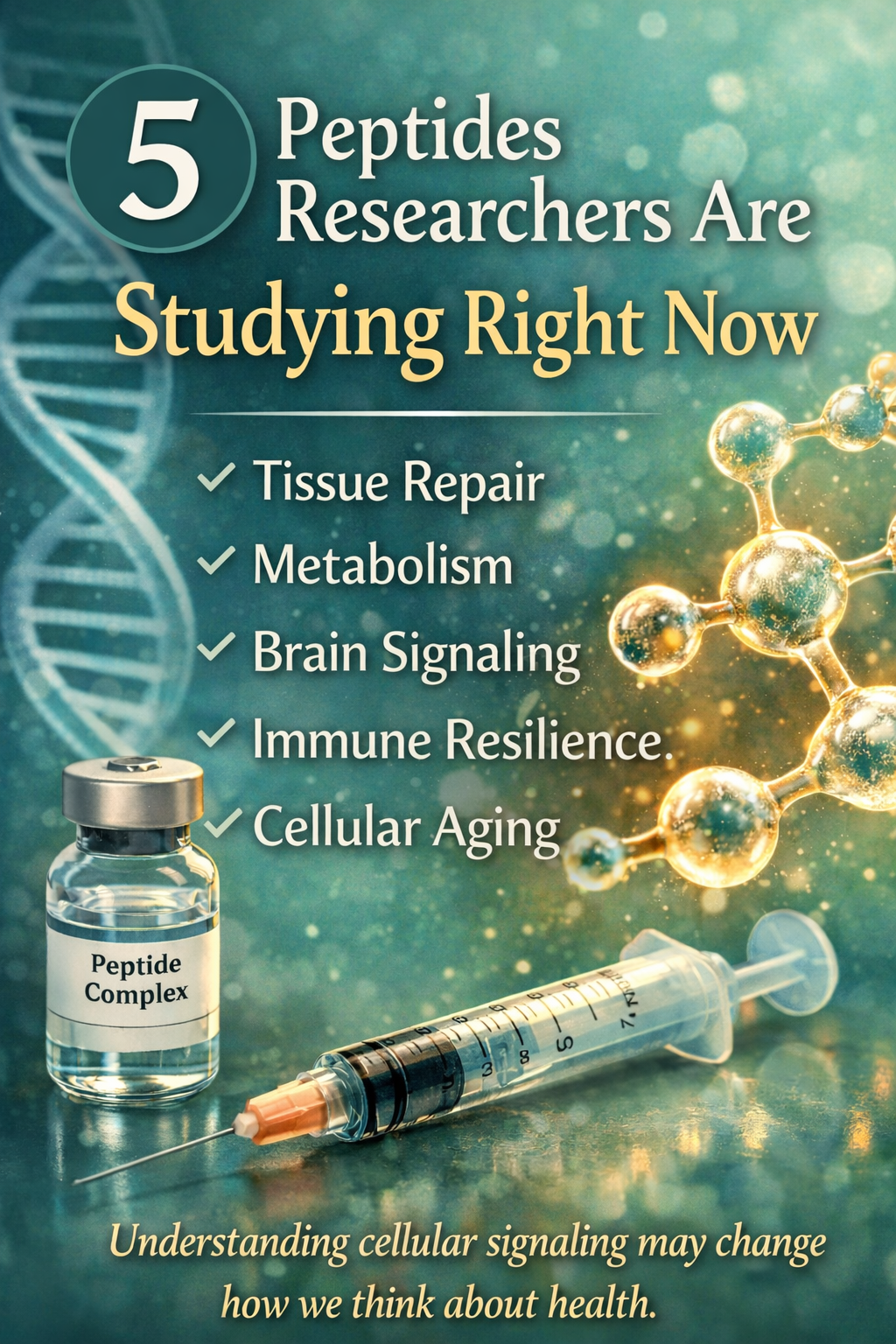
Researchers often organize peptide discussions around systems such as:
• repair signaling
• metabolic signaling
• neurological signaling
• immune regulation
• longevity signaling
Once the signaling goal is identified, peptides associated with that pathway are then studied.
Many protocols also follow cycles, allowing signaling systems to respond and then return to baseline regulation.
This systems-first approach is why peptides are often grouped by body system rather than by individual compound.
Ready to See How Peptide Protocols Actually Work?
Understanding the role peptides play in cellular signaling is one step.
Understanding how that knowledge translates into real protocols is the next.
Below, we’ll walk through:
• which peptides are commonly used for different body systems
• how peptide cycles are typically structured
• how peptides are used for tissue repair, metabolism, brain function, and longevity
• the dosing ranges commonly discussed in peptide research
If you’ve ever wondered how peptide science moves from theory into real-world protocols, that’s exactly what we’ll explore next.