Natural Alternatives to Tylenol: 13 Herbs That Actually Help Pain
Discover natural alternatives to Tylenol and ibuprofen. This guide covers 13 herbs proven to help with pain and inflammation, how to use them safely, and quick DIY teas, oils, and salves you can make at home.
What do you do when Tylenol is no longer an option? Maybe it is because of side effects. Maybe you just want to stop depending on a pill for every ache. Or maybe you are learning more about what those quick fixes can do long term.
We have been taught that relief comes in a bottle. But long before pharmacy aisles existed, humans reached for what the earth already offered: roots, bark, seeds, and oils with natural compounds our bodies recognize.
Somewhere along the way, we traded that ancient wisdom for speed and convenience. Yet the plants and remedies our ancestors leaned on have not disappeared. They have just been overshadowed. These natural tools do not belong to any brand. They are part of creation itself, here to support and restore rather than only numb pain.
This guide is not about rejecting medicine where it is truly needed. I thank God every day for Lidocaine when I go to the dentist. I am grateful for the epidural medicine when I had my babies. And I am thankful for the trauma surgeons who save lives after accidents. But for everyday aches and long-term wellness, it makes sense to know our natural options too.
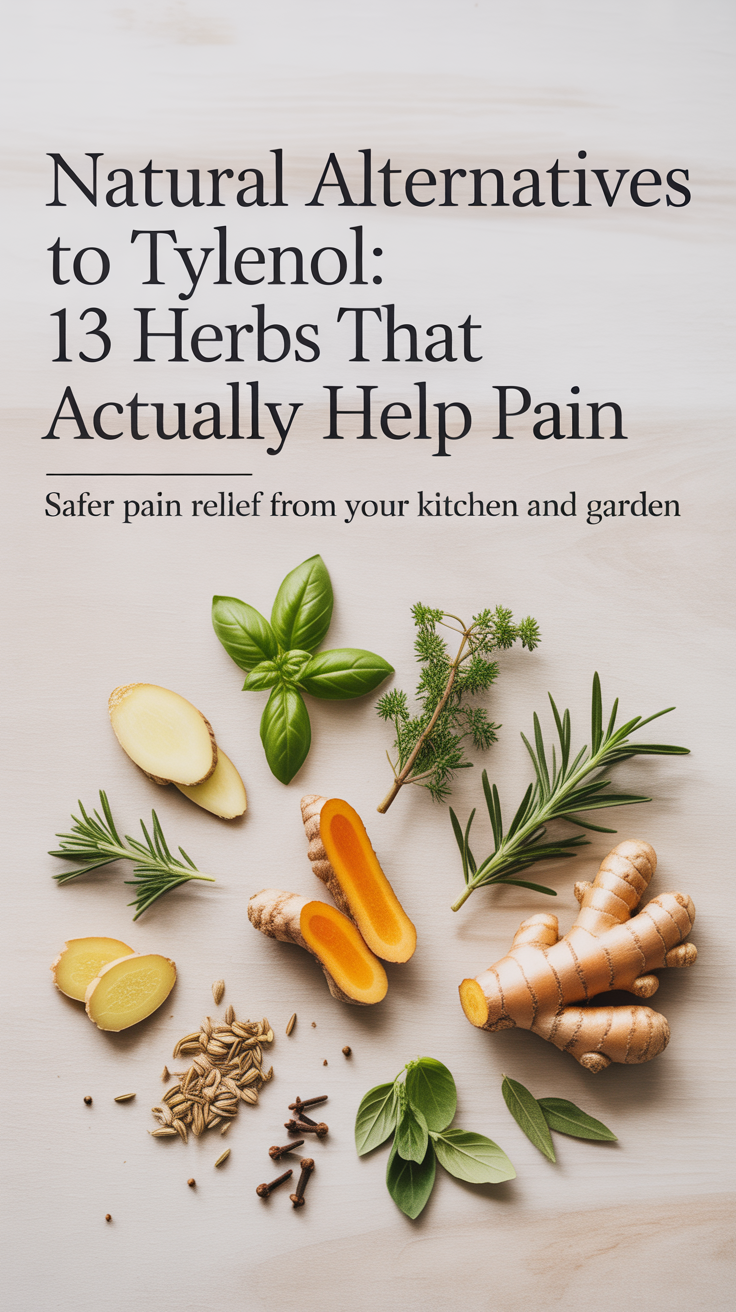
Here are 13 herbs and natural allies that have helped humans manage pain for centuries. Each one includes practical ways to use them and important safety notes so you can make choices that work for your body.
Important Safety Note
This article is for educational purposes only. Herbs can be powerful. Always check safety and interactions with your healthcare provider before trying new remedies — especially if you are pregnant, nursing, have chronic illness, or take prescription medication. Essential oils must be diluted before use and should not be ingested unless guided by a professional.
Cayenne
- Why it helps: Capsaicin blocks pain messages from nerves to the brain and supports healthy circulation.
- How to use: External salves or infused oils for sore muscles; internal tinctures, teas, or small amounts in food.
- Quick DIY: Make a warming massage oil by mixing 1 teaspoon cayenne powder with ½ cup carrier oil (like olive or almond). Infuse for 2 weeks, strain, and apply gently to sore joints.
- Possible interactions: May increase bleeding risk with anticoagulants and antiplatelets such as warfarin or aspirin and can irritate the stomach if combined with NSAIDs.
Willow Bark
- Why it helps: Contains salicin, the original pain-fighting compound that inspired aspirin but without synthetic fillers.
- How to use: Tea, tincture, or capsules.
- Quick DIY: Steep 1–2 teaspoons dried willow bark in hot water for 10 minutes. Strain before drinking for a mild pain-soothing tea.
- Possible interactions: Avoid with blood thinners (warfarin, heparin), other NSAIDs, or if you are pregnant or nursing. Do not give to children with viral illness due to risk of Reye’s syndrome. Avoid if allergic to aspirin.
Turmeric
- Why it helps: Curcumin, the active compound, has strong anti-inflammatory and antioxidant effects that support joint comfort.
- How to use: In cooking, tea, or high-quality capsules. Always pair with black pepper for better absorption.
- Quick DIY: Turmeric latte — warm 1 cup milk of choice with 1 teaspoon turmeric, a pinch of black pepper, ½ teaspoon cinnamon, and honey to taste.
- Possible interactions: May potentiate the effects of anticoagulants and antiplatelets, lower blood sugar, and interact with some chemotherapy or blood pressure drugs when used in supplement doses.
Ginger
- Why it helps: Acts similarly to COX-2 inhibitors, reducing inflammation and easing pain from arthritis, muscle aches, and menstrual cramps.
- How to use: Tea, salves, fermented drinks, or fresh in meals.
- Quick DIY: Fresh ginger tea — simmer 3–4 thin slices in 2 cups water for 10 minutes, strain, and sip warm.
- Possible interactions: May increase bleeding risk with anticoagulants and antiplatelets, lower blood sugar, and interact with blood pressure medications.
Fennel
- Why it helps: Relieves cramping and digestive discomfort, especially menstrual cramps.
- How to use: Tea, culinary seasoning, or infused oils.
- Quick DIY: Steep 1 teaspoon crushed fennel seeds in boiling water for 5–10 minutes for a soothing cramp tea.
- Possible interactions: Estrogenic activity may reduce the effectiveness of hormonal contraceptives or interact with estrogen therapy and tamoxifen. Reported interactions with ciprofloxacin.
St. John’s Wort
- Why it helps: Supports nerve-related pain such as neuralgia and sciatica and can lift mood associated with chronic discomfort.
- How to use: Tincture or tea (monitor dose carefully).
- Quick DIY: Infuse dried St. John’s wort in olive oil for 4 weeks to create a nerve-soothing topical oil.
- Possible interactions: Major drug interactions — can reduce effectiveness of oral contraceptives, antidepressants (risk of serotonin syndrome if combined), immunosuppressants, HIV medications, and anticoagulants.
Clove and Clove Oil
- Why it helps: Eugenol naturally numbs pain and offers antioxidant support.
- How to use: Diluted essential oil for topical relief; whole clove for dental discomfort.
- Quick DIY: For toothache, soak a cotton ball with 1 drop clove essential oil mixed in 1 teaspoon carrier oil and apply briefly to sore gum (do not swallow).
- Possible interactions: May slow blood clotting and potentiate anticoagulants and antiplatelets. Use caution if you have bleeding disorders. Avoid ingesting essential oil.
Wild Lettuce
- Why it helps: Contains natural compounds that calm mild pain and promote relaxation without addictive effects.
- How to use: Tincture or dried leaf tea (use with caution and low doses).
- Quick DIY: Create a gentle tincture by steeping dried wild lettuce leaf in 80-proof alcohol for 4–6 weeks. Strain and store in a dark glass bottle.
- Possible interactions: May increase sedation if combined with alcohol, sedatives, or central nervous system depressants.
Wintergreen Essential Oil
- Why it helps: Nearly pure methyl salicylate provides strong topical relief for joint and muscle pain.
- How to use: Topical only; must be diluted.
- Quick DIY: Mix 1–2 drops wintergreen essential oil into 2 tablespoons carrier oil and apply to a small area of sore muscle.
- Possible interactions: Do not combine with anticoagulants or other salicylates. Avoid if pregnant, nursing, or under 12 years old. Never ingest wintergreen oil.
Devil’s Claw
- Why it helps: Long used for back and joint pain; may rival some prescription anti-inflammatories.
- How to use: Capsules or tincture.
- Quick DIY: Infuse dried devil’s claw in olive oil for 3–4 weeks for a massage oil to ease joint stiffness.
- Possible interactions: May increase bleeding risk with warfarin and other anticoagulants and interact with NSAIDs.
Basil
- Why it helps: Relaxing effect on smooth muscles; helpful for tension headaches and mild aches.
- How to use: Fresh or dried in tea or cooking; oil infusion for massage.
- Quick DIY: Basil headache tea — steep 5 fresh basil leaves in boiling water for 5 minutes, cool slightly, and sip.
- Possible interactions: Extracts may lower blood pressure and increase bleeding risk when combined with anticoagulants.
Nutmeg
- Why it helps: Traditionally used for joint inflammation and digestive pain.
- How to use: Small amounts in tea, food, or oil infusions.
- Quick DIY: Warm compress — add a pinch of ground nutmeg to warm coconut oil, apply gently to sore abdomen or joints (avoid large areas or broken skin).
- Possible interactions: High doses are toxic, can cause hallucinations and interact with sedatives. Culinary amounts are considered safe.
Parsley
- Why it helps: Anti-inflammatory, digestive support, and vitamin-rich.
- How to use: Tea, garnish, or juice.
- Quick DIY: Parsley tea — steep ¼ cup fresh parsley in hot water for 10 minutes, strain, and sip for gentle detox and pain support.
- Possible interactions: High vitamin K may reduce warfarin effectiveness. Parsley’s diuretic effect can interact with prescription diuretics.
Quick Safety Recap
- Herbs are powerful; natural does not mean risk-free.
- Start small and watch for reactions.
- Essential oils should always be diluted and are rarely safe to ingest.
- Interactions with common drugs are real — double-check before combining with prescriptions.
Want More Holistic Swaps?
Grab my free How to Start a Holistic Lifestyle guide– your quick-start roadmap to detoxing your home and body, rethinking your medicine cabinet, and building health resilience naturally.
👉 Click here to download the free guide
You don’t need more opinions. You need results.
And you won’t find them by only managing symptoms.
But you’re here. You’re asking questions. You’re waking up.
Once you realize the power was in your hands all along,
you stop playing small and start building real health.
Jamie Shahan, MSN, CRNA, RN
Empowering Holistic Health
🌐 Connect with me on Social Media:
Disclaimer
The information provided on this website, in associated blogs, courses, and materials, is for general educational and informational purposes only. It is not medical advice and should not be interpreted as such.
I am not a medical doctor. The content I share reflects my personal opinions, experiences, and research. It is not intended to diagnose, treat, cure, or prevent any disease, condition, or illness.
You should not rely on the information here as a substitute for professional medical care, advice, or treatment. Always consult with a licensed healthcare provider before making any decisions regarding your health, especially if you are pregnant, nursing, taking prescription medications, or managing a medical condition.
By reading this website or using any related materials, you acknowledge and agree that:
- You are fully responsible for your own health decisions.
- The author and publisher of this content assume no liability for any harm, loss, or adverse effects arising directly or indirectly from the use, misuse, or interpretation of the information provided.
- No guarantees are made regarding the outcomes of applying any ideas, suggestions, or protocols discussed. Results will vary for each individual.
Affiliate Disclosure
Some products or tools mentioned may include affiliate links. This means that if you choose to purchase through those links, I may earn a small commission at no extra cost to you. I only recommend products I have personally used, researched, or would recommend to someone I love.
Use at Your Own Risk
By accessing this website and its materials, you agree that you are doing so voluntarily and that you assume full responsibility for any decisions you make regarding your health, lifestyle, or purchases.