Mitochondrial Signaling: How Peptides Influence Energy Production at the Cellular Level
Your energy isn’t just declining. It’s becoming unpredictable. This post explains how mitochondrial signaling, not just energy production, drives fatigue, recovery, and performance. Discover how peptides influence this system and why your body may not be responding the way it used to.

You’re not 21 anymore.
You’re a young mom, you’re supposed to be tired.
You work hard, of course you’re exhausted.
That’s what you’re told.
But it doesn’t explain why your energy never actually comes back.
Because this isn’t only about making energy.
It’s about signaling.
And something in that system isn’t working the way it used to.
WHAT PEOPLE ARE ASKING
How do peptides affect mitochondria
Peptides don’t create energy directly. They act as signaling molecules that help regulate when mitochondria produce, conserve, or redirect energy. When this signaling becomes inconsistent, energy output becomes unpredictable, even if the mitochondria themselves are still capable of functioning.
Which peptides support mitochondrial function
Peptides like MOTS-c and SS-31 are studied for their role in metabolic signaling and mitochondrial efficiency. Their primary role is not boosting energy directly, but improving how cells communicate about energy demand, stress, and adaptation.
Why does energy decline with age
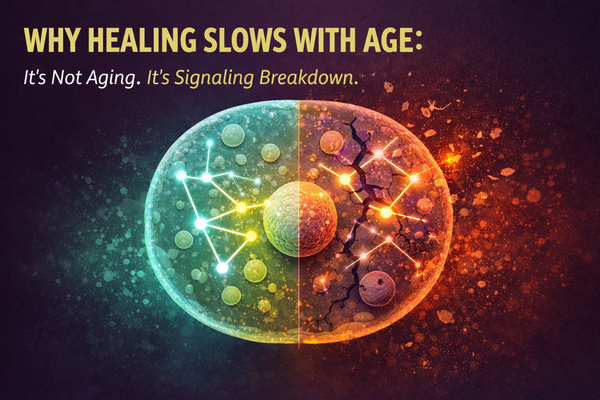
Energy declines with age not only due to mitochondrial damage, but because signaling between systems becomes less coordinated. Cells receive weaker or delayed instructions, leading to slower responses, reduced efficiency, and inconsistent energy production.
- Why Your Energy Feels Unreliable
- What Mitochondria Are Really Doing
- Where Signaling Starts to Break Down
- Where Peptides Fit Into This System
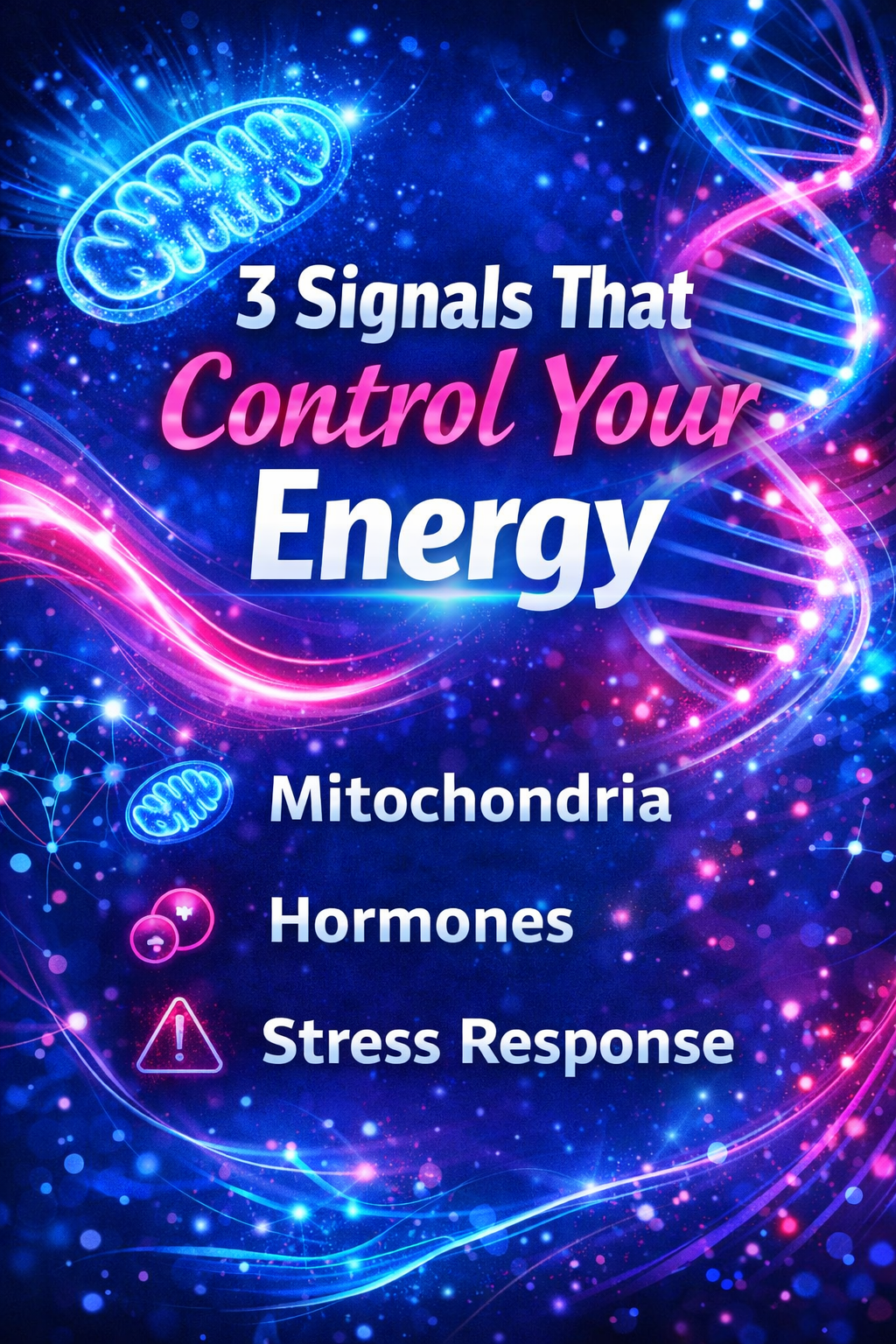



IN THIS ARTICLE
- Why energy problems are often coordination problems
- What mitochondria are actually responding to
- How signaling breakdown creates fatigue and slow recovery
- Where peptides begin to matter in this process
Why Does Energy Feel So Unreliable As You Get Older
Energy doesn’t just decline with age… it becomes inconsistent. This happens because the signaling systems that coordinate energy production lose precision. Instead of responding quickly and efficiently, cells receive delayed or unclear instructions, leading to unpredictable energy output.
You don’t just feel low energy.
You feel:
- fine one day
- exhausted the next
- slow to recover
- easily overwhelmed
That’s not just fatigue. That’s coordination failure.
What people think is happening:
- My mitochondria are worn out
What’s actually happening:
- your cells aren’t communicating timing and demand correctly
What Do Mitochondria Actually Respond To
Mitochondria don’t just produce energy on their own. They respond to signals from the rest of the cell and body that determine when, how much, and for what purpose energy should be produced. Without clear signaling, even healthy mitochondria can underperform or respond inefficiently.
They’re not running the show.
They’re responding to it.
Mitochondria listen to:
- nutrient signals
- stress signals
- hormonal signals
- movement and demand
They are reactors, not decision-makers.
Which means:
If signaling is off → energy output is off
👉 To understand how mitochondria shape recovery and resilience at a deeper level, explore how cellular energy influences healing and resilience:
https://www.holisticlifewithjamie.com/the-mitochondrial-connection-how-cellular-energy-shapes-healing-and-resilience/
Where Does Mitochondrial Signaling Break Down
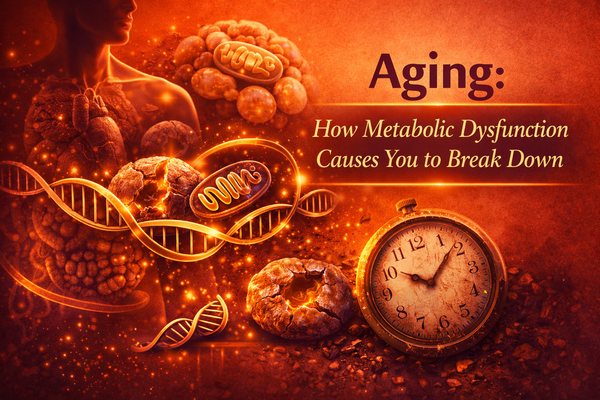
Signaling breaks down when communication between systems becomes delayed, inconsistent, or incomplete. This can happen due to chronic stress, metabolic dysfunction, or age-related changes in cellular communication. The result is slower response times and inefficient energy use.
This is where people get stuck.
Because they keep trying to add energy.
Instead of asking:
Why isn’t energy being coordinated properly?
Breakdown happens in:
- hormone signaling
- nutrient sensing
- stress response
- cellular communication pathways
You don’t lose capacity first.
You lose coordination first.
👉 If you’ve experienced symptoms like brain fog, fatigue, or hormone imbalance, this breakdown is often already happening beneath the surface:
https://www.holisticlifewithjamie.com/mitochondrial-dysfunction-masquerading-as-brain-fog-hormone-imbalance-and-chronic-fatigue/
Where Do Peptides Fit Into Mitochondrial Signaling
Peptides influence mitochondrial function by acting as signaling molecules that help regulate cellular communication. Instead of forcing energy production, they help restore coordination between systems, allowing mitochondria to respond more appropriately to demand and stress.
This is the part most people miss.
Peptides don’t give you energy.
They:
- improve communication
- refine signaling
- help restore timing
They help your cells talk again.
And when communication improves:
Energy doesn’t feel forced.
It feels available again.
👉 If you’re new to this concept, start here to understand what bioregulator peptides actually are and how they’re studied:
https://www.holisticlifewithjamie.com/what-are-bioregulator-peptides-the-compounds-studied-for-cellular-longevity/
👉 To see how peptides are studied for repair, metabolism, and longevity across different systems, this breakdown connects the bigger picture:
https://www.holisticlifewithjamie.com/peptide-protocols-how-researchers-study-peptides-for-repair-metabolism-and-longevity/
👉 And if you want to understand how signaling breakdown itself is the root issue behind slower healing and aging:
https://www.holisticlifewithjamie.com/why-healing-slows-with-age-the-hidden-breakdown-in-cellular-signaling/
Are you beginning to see the real problem?
It’s not that your body can’t produce energy.
It’s that the system coordinating that energy is breaking down.
Below, we go deeper into:
- how mitochondrial signaling actually works
- why this breakdown accelerates with age
- how to think through restoring coordination without guessing
Continue to Health Foundations
The article continues below for Health Foundations members, with deeper education on how this system works and how to think through next steps responsibly.