Ipamorelin vs Tesamorelin: How These Peptides Signal Growth Hormone Release
Ipamorelin and Tesamorelin both stimulate growth hormone, but they signal through different pathways. If results feel inconsistent or underwhelming, this explains why your body’s ability to respond-not just the peptide-determines fat loss, repair, and overall outcomes.
It’s not that nothing is happening.
It’s that nothing is changing.
You try something new…
maybe a peptide you’ve heard about…
and for a moment, you think this might be it.
More growth hormone. Better recovery. Faster results.
But then?
The results don’t match the promise.
And now you’re left wondering:
Was it the wrong peptide…
or is something deeper not responding?
What People Are Asking
What does Ipamorelin peptide do?
Ipamorelin is a growth hormone–releasing peptide that stimulates the pituitary gland to release growth hormone in a controlled, pulsatile manner. It acts on specific receptors to mimic natural signaling, meaning its effects depend on how well the body receives and responds to that signal.
What is the difference between Ipamorelin and Tesamorelin?
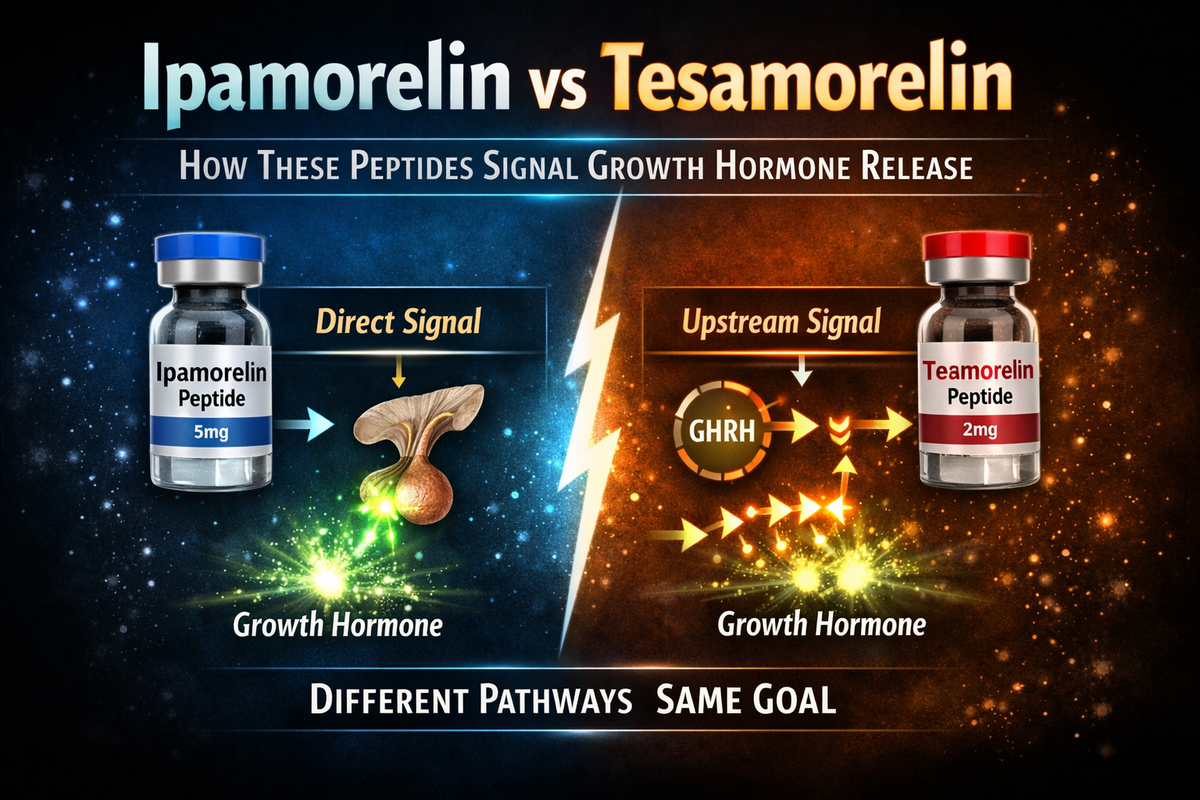
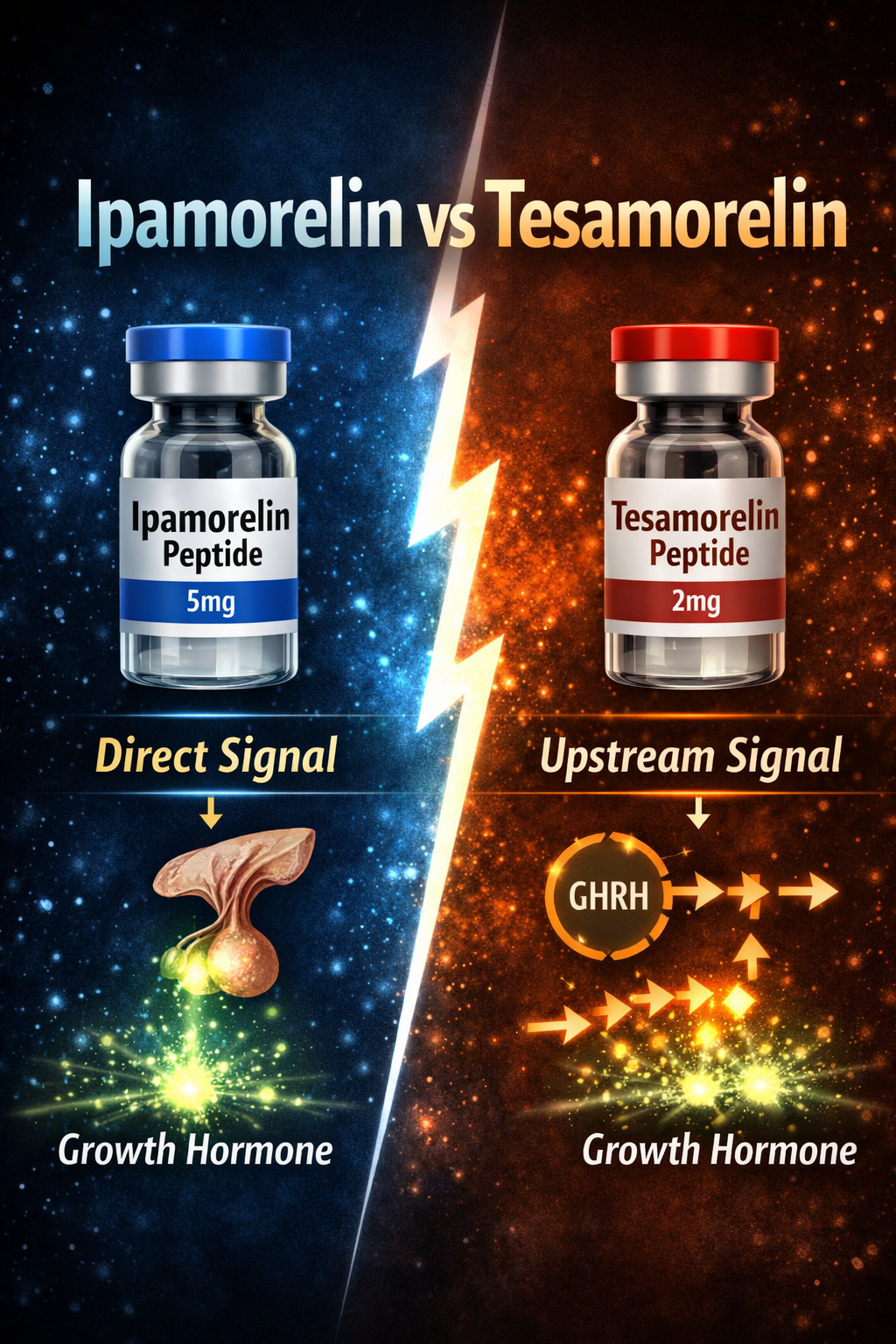
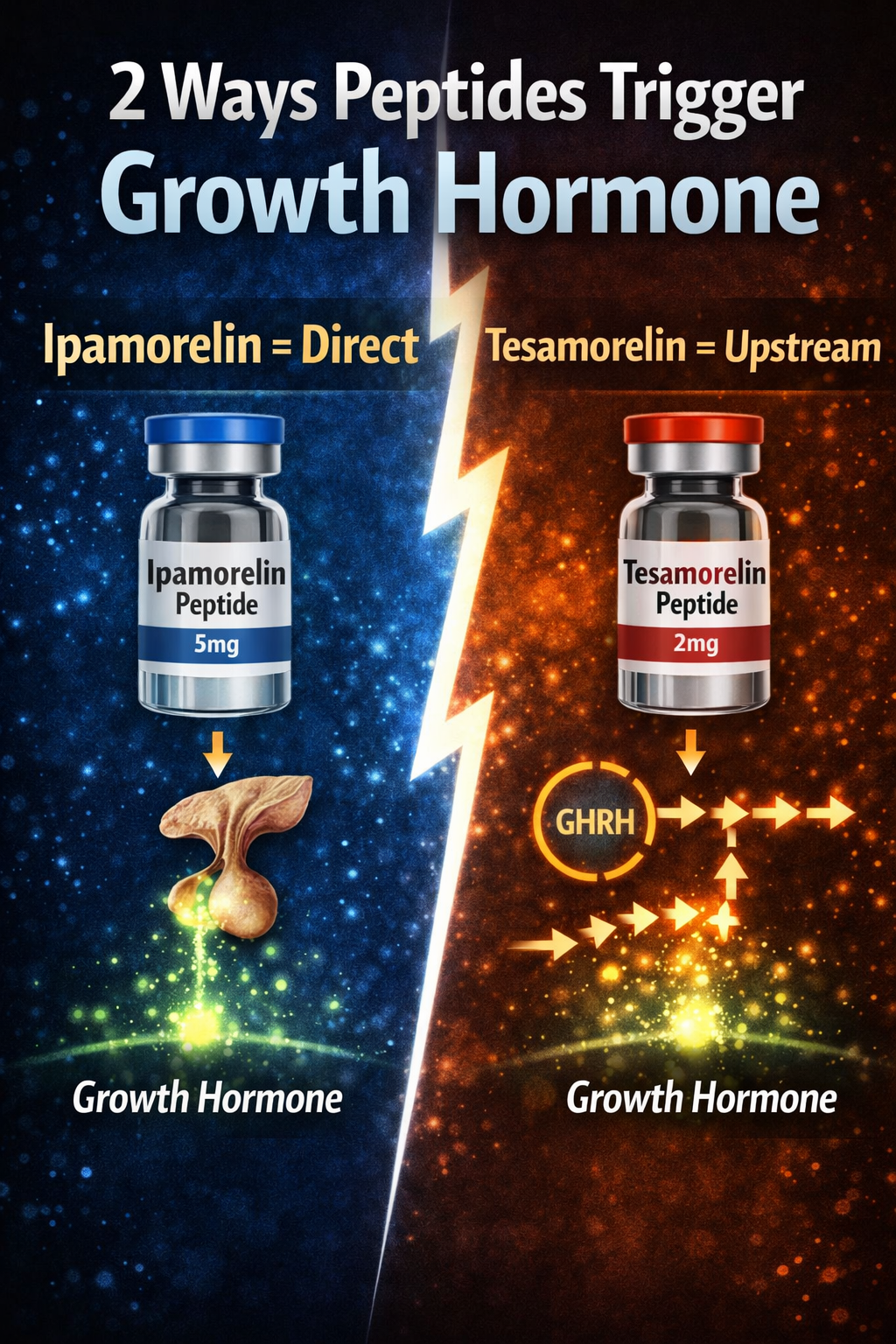
Ipamorelin primarily stimulates growth hormone release through ghrelin receptor pathways, while Tesamorelin mimics growth hormone–releasing hormone (GHRH). This difference influences how each peptide signals the pituitary and can affect outcomes like fat metabolism and tissue repair.
Does Tesamorelin help with fat loss?
Tesamorelin has been studied for its effects on reducing visceral fat by increasing growth hormone and IGF-1 levels. Its impact on fat loss depends on metabolic state, insulin sensitivity, and overall signaling response, not just the peptide itself.
- What Is Ipamorelin?
- What Is Tesamorelin?
- Ipamorelin vs Tesamorelin: What’s the Difference?
- Why Results Don’t Match Expectations
In This Article
- How Ipamorelin and Tesamorelin signal growth hormone differently
- Why one peptide doesn’t work the same for everyone
- What actually determines outcomes like fat loss and repair
- How signaling explains the variability

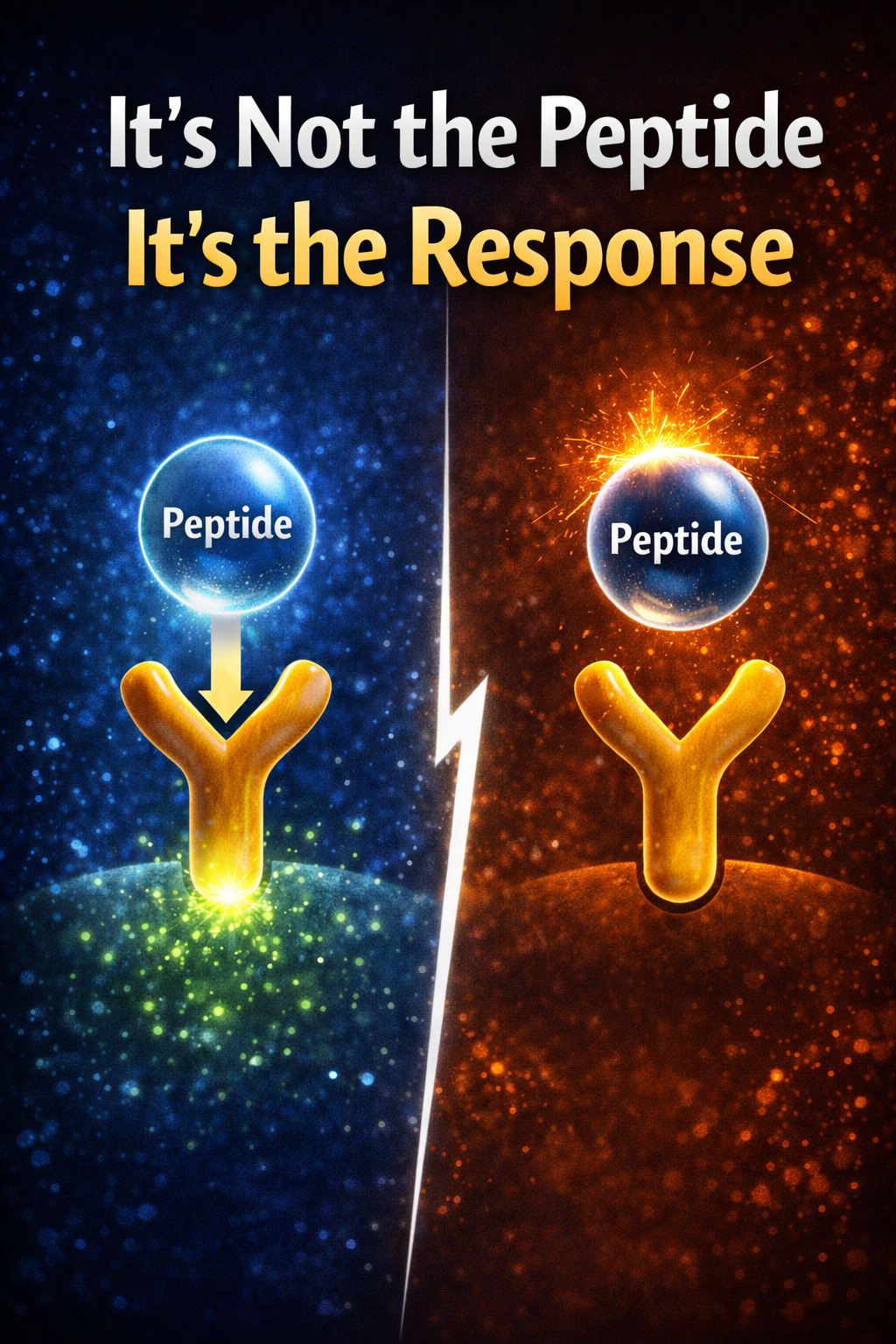
Peptides don’t force results, they send signals. If your body responds, everything changes.
What Does Ipamorelin Do?
Ipamorelin stimulates growth hormone release by activating ghrelin receptors in the pituitary gland, promoting a more natural pulse of hormone secretion. It does not supply growth hormone directly, meaning its effectiveness depends on the body’s ability to receive and respond to the signal it creates.
Ipamorelin is often seen as the “cleaner” signal.
More targeted. More controlled.
But here’s the part most people miss:
A clean signal still requires a responsive system.
If your body isn’t ready to respond,
the signal goes nowhere.
If you need a foundation for how peptides actually function as signaling molecules, start here → what are peptides and how they control repair and metabolism
https://www.holisticlifewithjamie.com/what-are-peptides-how-the-bodys-signaling-molecules-control-repair-metabolism-and-aging/
What Does Tesamorelin Do?
Tesamorelin mimics growth hormone–releasing hormone (GHRH), stimulating the pituitary gland to increase growth hormone production and downstream IGF-1 levels. This pathway has been studied for its role in fat metabolism, particularly visceral fat, but outcomes depend heavily on metabolic and hormonal context.
Tesamorelin signals differently.
It’s not just triggering release.
It’s influencing the upstream control.
Which is why it’s often associated with:
- fat distribution changes
- metabolic shifts
- more noticeable physical outcomes
But again…
Only if the system responds.
This connects directly to how growth hormone signaling actually controls repair → how growth hormone signaling works in the body
https://www.holisticlifewithjamie.com/growth-hormone-peptides-how-signaling-controls-tissue-repair/
If you want to see how this fits into the bigger picture of signaling, repair, and peptide function → explore the full peptides and bioregulators category
https://www.holisticlifewithjamie.com/tag/peptides-bioregulators/#google_vignette
What Is the Difference Between Ipamorelin and Tesamorelin?
Ipamorelin and Tesamorelin differ in how they signal the release of growth hormone. Ipamorelin acts through ghrelin receptors to promote pulsatile release, while Tesamorelin mimics GHRH to influence upstream signaling and IGF-1 production. These differences can affect outcomes like metabolism, fat distribution, and tissue repair.
Think of it like this:
Ipamorelin = direct signal trigger
Tesamorelin = system-level signal influence
Both increase growth hormone.
But they don’t operate the same way.
And that difference matters more than people think.
Because outcomes aren’t determined by:
→ what you take
They’re determined by:
→ how your system interprets the signal
Why Do Results Vary So Much?
Results from growth hormone–releasing peptides vary because outcomes depend on receptor sensitivity, metabolic health, inflammation levels, and cellular energy. Even with increased hormone signaling, impaired response pathways can limit effectiveness and lead to inconsistent results.
This is where most people get stuck.
They assume:
“If it worked for someone else… it should work for me.”
But that’s not how signaling works.
If your system has:
- inflammation
- insulin resistance
- poor cellular energy
Then the signal gets distorted.
Or ignored.
Or only partially executed.
This is the same breakdown that happens with aging and cellular communication → why cells lose their ability to communicate effectively
https://www.holisticlifewithjamie.com/why-do-cells-age-the-hidden-breakdown-in-cellular-communication/
And it’s also why broader systems like fasting and autophagy can influence outcomes → how cellular renewal and autophagy impact aging and repair
https://www.holisticlifewithjamie.com/the-anti-aging-power-of-fasting-autophagy-telomeres-stem-cells-and-cellular-renewal-explained/
If this is starting to click, you’re seeing the pattern:
It’s not about picking the “right” peptide.
It’s about whether your body can respond to the signal it sends.
Inside Health Foundations, we go deeper into:
- how to recognize signaling breakdown
- how different peptides influence different pathways
- how to think through what your body actually needs
The article continues below for Health Foundations members, with deeper education on how this system works and how to think through next steps responsibly.