How to Improve Gut Health When Bloating and Reactions Keep Returning
Struggling with bloating, gas, diarrhea, or constipation? Learn how to improve gut health naturally by reducing digestive workload. This guide explains why gut symptoms persist and how consistent meals and digestion support can help bloating and food reactions improve.
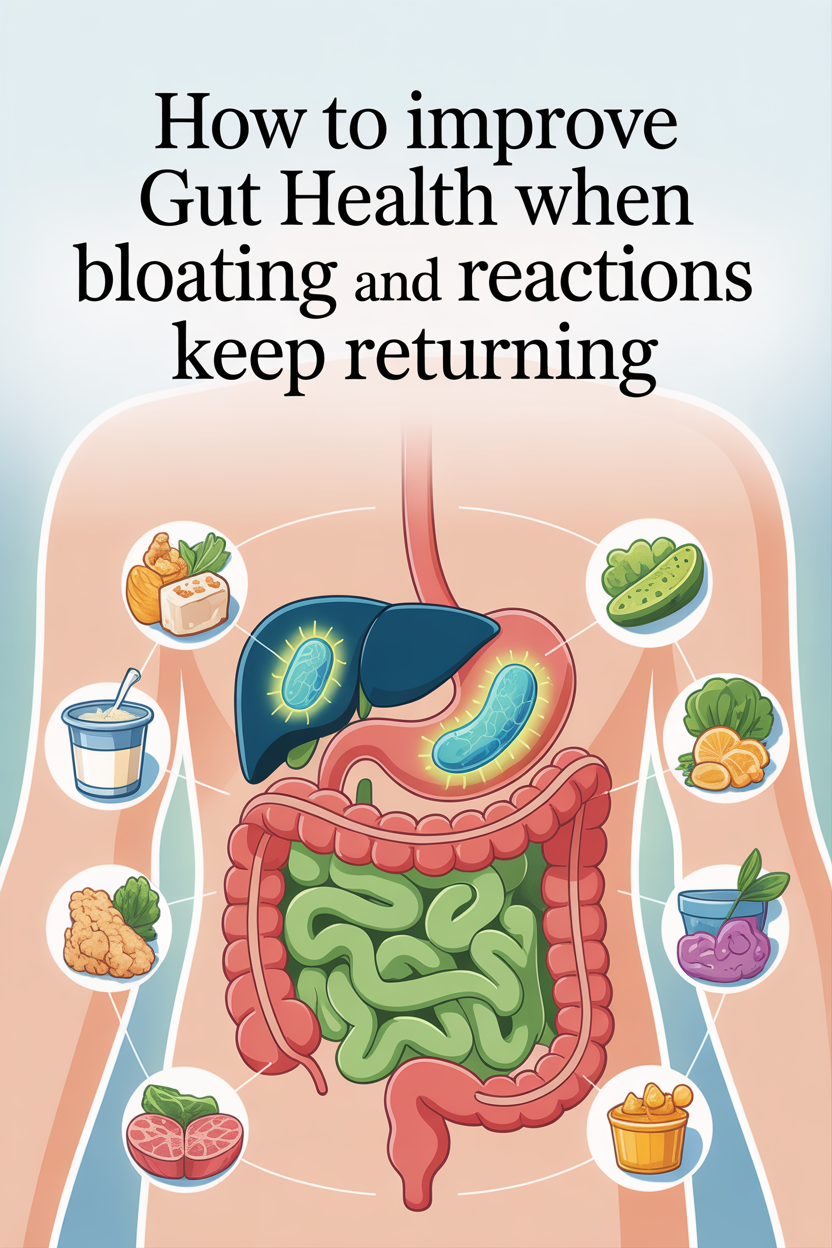
If your gut stays bloated, gassy, or uncomfortable even though you eat well, sleep reasonably, and keep trying gut protocols, the problem is often not what you’re missing.
It’s that you may be doing too much.
When digestion is already struggling, piling on strict elimination diets, very low calorie eating, prolonged fasting, antimicrobial cleanses, or large supplement stacks can make digestion work harder instead of easier.
Let’s walk through how to support your gut in a way that reduces digestive workload, even when life is busy and stress is not going away, so healing can actually move forward.
The Real Issue Most People Miss
Ongoing gut symptoms are not always a sign that you need stronger gut work.
Very often, they mean digestion is inefficient and overburdened.
When digestion is inefficient:
- food is not broken down well
- bile flow is inadequate or poorly timed
- fermentation increases
- bloating becomes constant or frequent
- food tolerance narrows
Adding more restriction or aggressive protocols in this state increases demand on a system that is already struggling.
Why Many People Don’t Realize This Is Happening
Most people with gut issues are not acutely ill.
They are functional, responsible, and busy.
Symptoms become background noise.
Bloating becomes “normal.”
Discomfort is tolerated and ignored.
Many people assume:
“If I’m bloated all the time, I must need stronger gut protocols.”
In reality, constant bloating often means digestion needs support, not pressure.
Step One: Observe Before You Change Everything
Before starting another plan, take 7 to 10 days to observe.
Do not overhaul your diet yet.
Each day, make a simple note of:
- when bloating shows up
- how long it lasts
- stool frequency and consistency
- pressure or heaviness after meals
- energy after eating
- sleep quality
This is not about fixing anything yet.
It is about noticing patterns you may have stopped paying attention to.
Many people realize for the first time that symptoms are constant, not occasional.
That awareness matters.
What Constant Bloating Usually Means
Constant or near-constant bloating usually means digestion is not processing food efficiently.
It does not automatically mean:
- you’re eating the wrong foods
- you’re eating too many vegetables
- your diet isn’t clean enough
- you need to cut out more foods
More often, it means:
- food is sitting too long before being broken down
- bile flow is sluggish or poorly timed
- fermentation is happening instead of digestion
- the gut is working harder than it needs to
In other words, bloating is often a processing problem, not a food-quality problem.
Step Two: Stop the Things That Make Digestion Work Harder
Before adding anything new, remove what increases digestive workload.
Pause or scale back:
- strict elimination diets
- very low calorie eating
- prolonged fasting
- aggressive antimicrobial or cleanse protocols
- large supplement stacks
This is not quitting.
It is reducing demand so digestion has room to function.
Step Three: Make Digestion Easier First
This is where progress begins.
The goal is not perfect digestion.
The goal is easier digestion.
Start with these foundations:
- eat meals at consistent times each day
- avoid grazing or skipping meals
- choose simpler meals with fewer ingredients
- eat enough food to meet basic needs
If food feels like it sits heavy after meals, digestive enzymes can help reduce the effort required to break food down.
If bloating is worse after fatty foods, bile support can help fats move and digest properly instead of lingering and fermenting.
Rule:
If something makes digestion feel harder, it is the wrong move right now.
Step Four: How to Tell If You’re Helping or Hurting
You are moving in the right direction when:
- bloating still happens but resolves faster
- meals feel lighter afterward
- stools become more predictable
- food reactions decrease
- you think about digestion less, not more
Stress does not need to disappear.
Life does not need to calm down.
Digestion can improve inside real life.
Step Five: Why Timing Matters and How to Know When a Tool Will Help
Antimicrobials, cleanses, extended fasting, and aggressive gut protocols are not wrong.
They are demanding.
These tools:
- increase digestive workload
- require strong breakdown capacity
- ask the body to adapt quickly
When digestion is already inefficient, these approaches often:
- worsen bloating
- increase fermentation
- narrow food tolerance
- create cycles of flare and crash
Holding off is not avoidance.
It is strategy.
What you gain by waiting:
- better food breakdown
- improved bile flow
- less fermentation
- wider tolerance
- fewer reactions
When these foundations are in place, advanced gut tools work more effectively and with fewer side effects.
Discipline Is Not the Same as Progress
Many people confuse discipline with healing.
They push through discomfort.
They ignore symptoms.
They only count progress if something feels hard.
Real progress often feels quieter:
- bloating resolves sooner
- digestion is less dramatic
- fewer bad days
- less mental effort around food
These are signals that digestive workload is decreasing.
Learning to listen to them prevents years of unnecessary struggle.
A Simple Starting Point: Eat at Consistent Times and Pay Attention
Before moving into deeper gut healing, start here.
Eat meals at roughly the same times each day.
No grazing. No skipping. No “saving calories for later.”
While doing this, monitor the following for 7–10 days:
Digestive symptoms
- Bloating
- Gas
- Diarrhea
- Constipation
- Alternating diarrhea and constipation
- Urgency after meals
- Feeling overly full or heavy after eating
- Reflux or pressure
Appetite and blood sugar signals
- Sugar cravings
- Excessive hunger
- Feeling shaky, irritable, or foggy if meals are delayed
After-meal responses
- Energy crashes after eating
- Brain fog after meals
- Feeling better when you don’t eat
You are not looking for perfection.
You are looking for patterns.
Where This Leads Next
Consistent meal timing and symptom awareness create the foundation for real gut healing.
Once digestion feels easier instead of harder, the next step is a structured gut healing plan designed to restore tolerance, improve digestion, and support the microbiome without triggering flares.
That’s where we’re going next.
In Case You Skimmed
- Constant bloating usually means digestion is inefficient, not that you’re eating the wrong foods
- Doing more gut protocols can make symptoms worse when digestion is already overworked
- The first goal is to make digestion easier, not more aggressive
- Strict diets, fasting, cleanses, and large supplement stacks often increase digestive workload
- Eating meals at consistent times helps regulate digestion and reduce symptoms
- Digestive enzymes support food breakdown when meals feel heavy
- Bile support helps when bloating is worse after fatty foods
- Progress often looks quieter, not harder
- Symptom awareness comes before targeted gut healing protocols
Jamie Shahan, MSN, CRNA, RN
Empowering Holistic Health
Curator of forgotten wisdom with a modern understanding of why it works.
🌐 Connect with me on Social Media:
Disclaimer
The information provided on this website, in associated blogs, courses, and materials, is for general educational and informational purposes only. It is not medical advice and should not be interpreted as such.
I am not a medical doctor. The content I share reflects my personal opinions, experiences, and research. It is not intended to diagnose, treat, cure, or prevent any disease, condition, or illness.
You should not rely on the information here as a substitute for professional medical care, advice, or treatment. Always consult with a licensed healthcare provider before making any decisions regarding your health, especially if you are pregnant, nursing, taking prescription medications, or managing a medical condition.
By reading this website or using any related materials, you acknowledge and agree that:
- You are fully responsible for your own health decisions.
- The author and publisher of this content assume no liability for any harm, loss, or adverse effects arising directly or indirectly from the use, misuse, or interpretation of the information provided.
- No guarantees are made regarding the outcomes of applying any ideas, suggestions, or protocols discussed. Results will vary for each individual.
Affiliate Disclosure
Some products or tools mentioned may include affiliate links. This means that if you choose to purchase through those links, I may earn a small commission at no extra cost to you. I only recommend products I have personally used, researched, or would recommend to someone I love.
Use at Your Own Risk
By accessing this website and its materials, you agree that you are doing so voluntarily and that you assume full responsibility for any decisions you make regarding your health, lifestyle, or purchases.