How to Rebuild Gut Health Naturally (In the Right Order)
We are breathing polluted air.
Eating chemically altered food.
Drinking water that isn’t as clean as we assume.
Sleeping under artificial light.
Living in chronic stress.
And then we wonder why our digestion is a mess.
It’s no surprise so many people are searching for how to improve gut health naturally, how to fix their gut microbiome, what destroys your gut biome, or whether they need a 7-day gut reset.
But this is where we oversimplify the problem.
We assume gut symptoms are just about bad bacteria.
So we try to kill something.
Remove something.
Flush something.
Reset the microbiome.
As if improving gut health naturally is simply about rearranging microbes.
But the modern environment doesn’t just irritate gut bacteria.
It disrupts digestive signaling.
It alters motility.
It weakens stomach acid and bile flow.
It shifts immune balance.
It destabilizes the gut lining.
What most people are experiencing is not just microbiome imbalance.
It is digestive dysregulation.
And dysregulation is not corrected through eradication.
It is corrected through order.
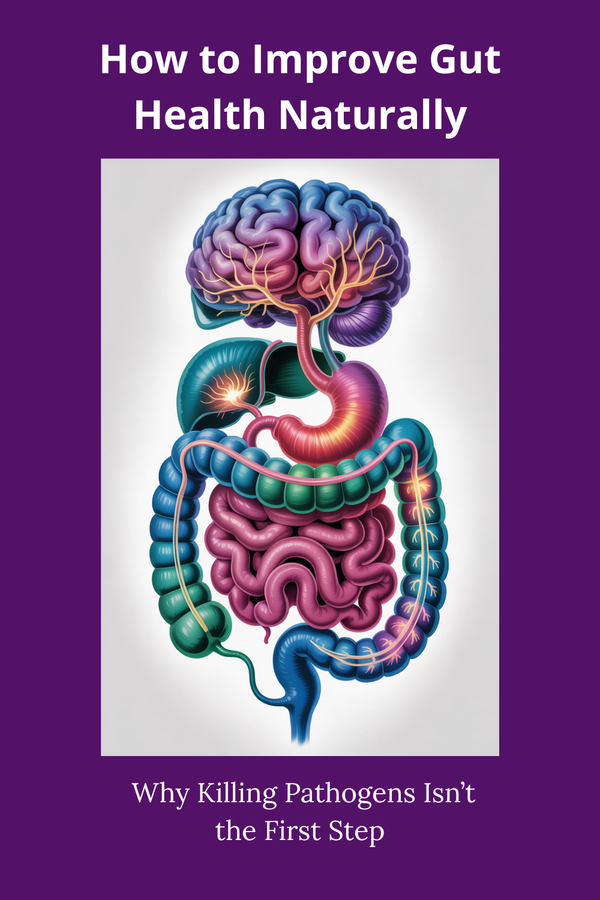
In How to Improve Gut Health Naturally: Why Killing Pathogens Isn’t the First Step, we break down why declaring war on microbes often backfires. If you haven’t read that yet, start there before moving forward.
Frequently Asked Questions About Rebuilding Gut Health
How do you improve gut health naturally in a lasting way?
To improve gut health naturally in a way that actually lasts, you must restore digestive regulation in sequence.
Most advice focuses on removing inflammatory foods or adding probiotics. While those can help temporarily, long-term gut stability depends on restoring nervous system signaling, strengthening mechanical digestion, supporting gut lining integrity, and only then addressing microbial balance.
Lasting gut health is built through coordination, not just elimination.
Why does gut health improve temporarily but symptoms return?
Temporary improvement often happens when irritants are removed. But if digestive signaling remains unstable, symptoms tend to cycle back.
If stress remains elevated, motility becomes inconsistent.
If bile flow is sluggish, microbial balance shifts.
If stomach acid is weak, fermentation increases.
Without restoring digestive coordination, the gut microbiome rarely stabilizes long term. Improvement fades because the terrain underneath it was never rebuilt.
What actually destroys your gut microbiome?
Several factors can weaken gut microbiome diversity and function:
- Ultra-processed foods
- Excess sugar
- Repeated antibiotic use
- Chronic stress
- Poor sleep
- Lack of dietary diversity
But these exposures do more than shift bacteria. They alter digestive signaling, immune tone, and gut lining integrity. Over time, this creates digestive dysregulation, not just microbial imbalance.
Can you heal your gut microbiome in 7 days?
A 7-day gut reset may reduce inflammation temporarily, especially if processed foods and common irritants are removed. However, rebuilding gut health naturally is not a one-week process.
True gut repair requires restoring nervous system regulation, improving digestion, strengthening the gut lining, and stabilizing microbial balance in sequence.
Short-term resets may reduce irritation. Long-term stability requires structured rebuilding.
Are probiotics enough to fix gut health?
Probiotics can support microbial diversity, but they are not a complete gut healing strategy.
If digestive signaling is unstable, bile flow is inconsistent, or motility is impaired, introduced microbes often fail to hold.
Probiotics work best when the terrain is already improving. They are a supportive layer, not the foundation.
What are signs your gut is dysregulated?
Common signs of digestive dysregulation include:
- Bloating even with “healthy” eating
- Recurring IBS flare ups
- Brain fog after meals
- Shifting food sensitivities
- Alternating constipation and loose stools
- Symptoms that improve temporarily but return
These patterns often signal coordination breakdown within the digestive system, not simply bad bacteria.
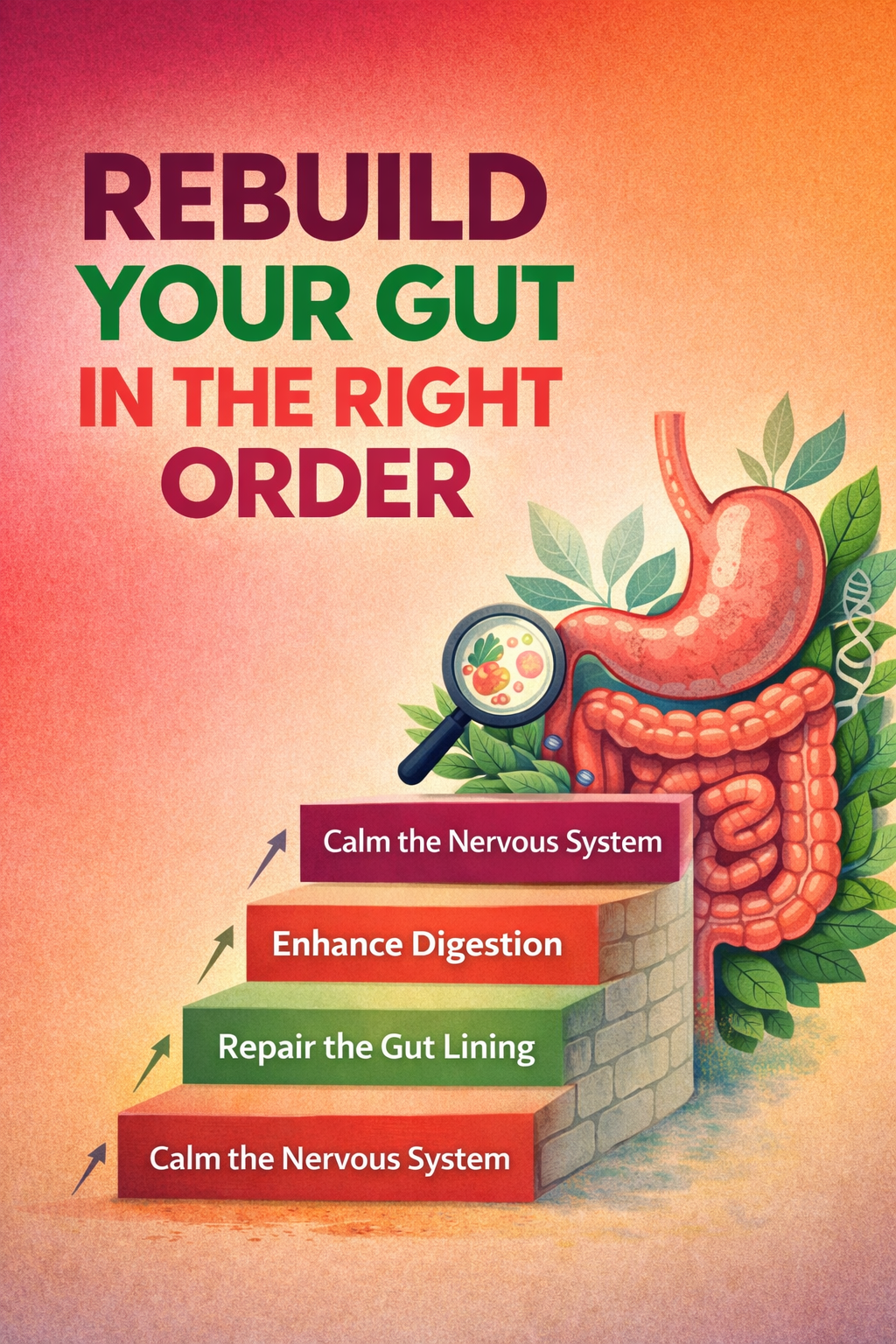
Why Order Matters
Your gut is not just bacteria.
It is a regulated system governed by:
- Autonomic tone
- Digestive secretions
- Motility
- Blood flow
- Immune signaling
- Microbial diversity
If you strengthen these layers in the wrong order, improvement becomes fragile.
Layer One: Nervous System Regulation
Digestion begins with signaling.
When the body stays in fight-or-flight mode:
- Acid production shifts
- Enzymes weaken
- Motility becomes irregular
- Inflammatory signaling rises
You can remove every “bad food” and still struggle if signaling remains unstable.
This is why chronic stress quietly disrupts digestion, even when diet looks clean.
If this concept is new, it connects directly with Antibiotics: When They Save You… and When They Wreck You, because rebuilding after disruption requires regulation first.
Without parasympathetic access, digestion does not coordinate properly.
This layer must stabilize first.
Layer Two: Mechanical Digestion
Once signaling improves, mechanical digestion can strengthen.
Mechanical digestion includes:
- Adequate stomach acid
- Enzyme release
- Bile flow
- Intestinal motility
When this layer is weak:
- Food ferments
- Gas increases
- Bloating becomes predictable
Many symptoms blamed on “bad bacteria” are actually incomplete digestion.
If you want a practical example of terrain-supportive rebuilding, see Spore-Based Probiotics: Why They’re Smarter Than the Fridge Kind.
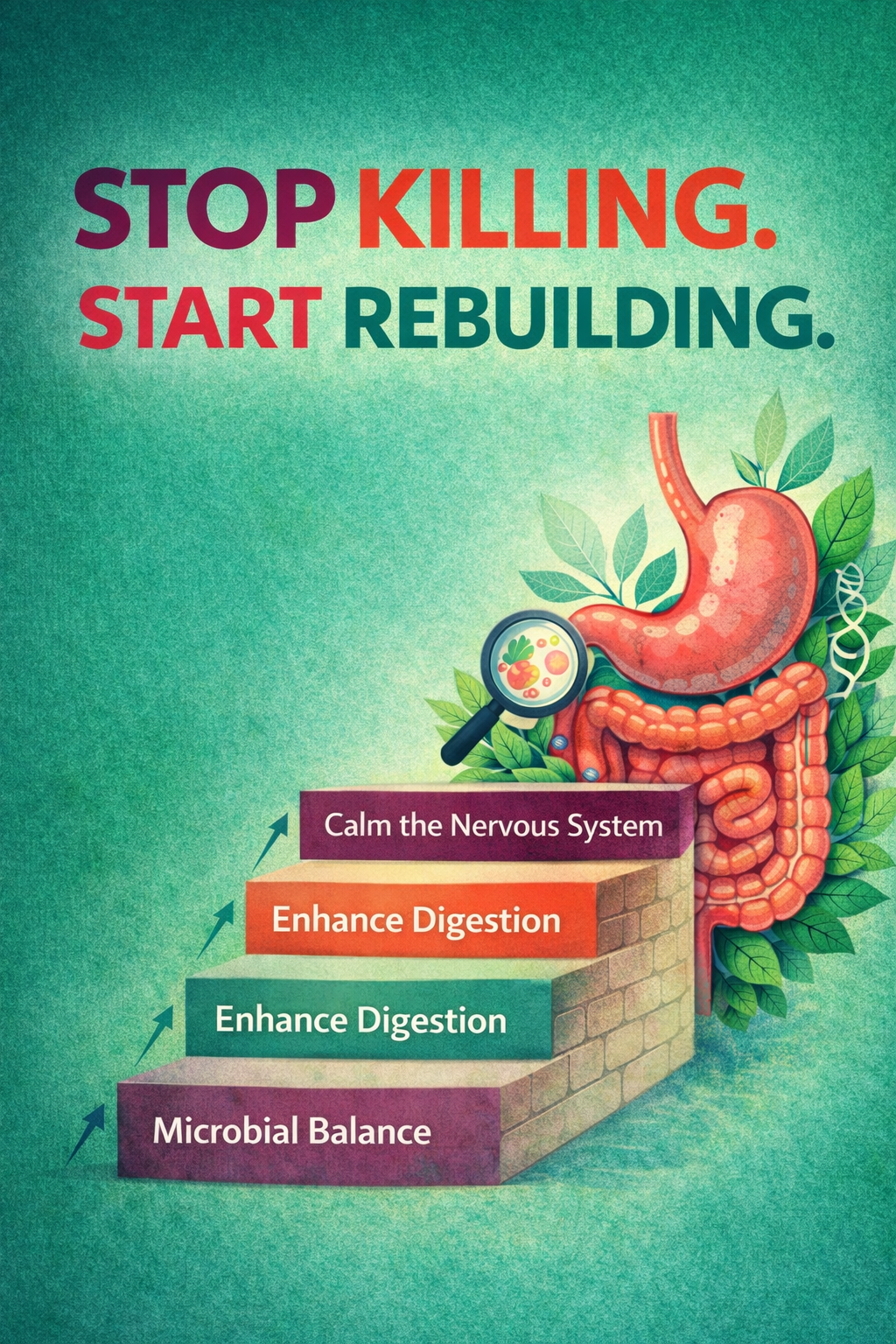
Layer Three: Barrier Integrity
The gut lining regulates permeability and immune signaling.
When barrier integrity weakens:
- Food sensitivities increase
- Skin flares
- Brain fog rises
- Joint discomfort appears
Barrier repair requires:
- Protein sufficiency
- Micronutrients
- Stable blood flow
- Functional digestion
Without the first two layers, barrier repair remains fragile.
When barrier integrity weakens, inflammation increases, sensitivities multiply, and symptoms extend beyond digestion. If you haven’t yet explored why the mucosal layer determines long-term digestive resilience, read Healing the Mucosal Barrier: The Forgotten Layer of Gut Health before moving forward.
Layer Four: Microbial Balance
This is where most people begin.
Probiotics.
Antimicrobials.
Cleanses.
But microbes respond to terrain.
If motility is slow or bile is inconsistent, imbalance returns.
Microbial correction is the final layer, not the first.
The Restoration Framework Shift
Most people collect gut information.
Few follow structured sequencing.
The Restoration Framework translates this terrain layering model into:
- Clear order
- Practical regulation strategies
- Digestive strengthening steps
- Decision-making structure
No intensity spirals.
No protocol stacking.
No guessing what to fix first.
Just sequence.
If you’re ready to stop cycling through temporary fixes and rebuild your gut health naturally in the right order, start here.
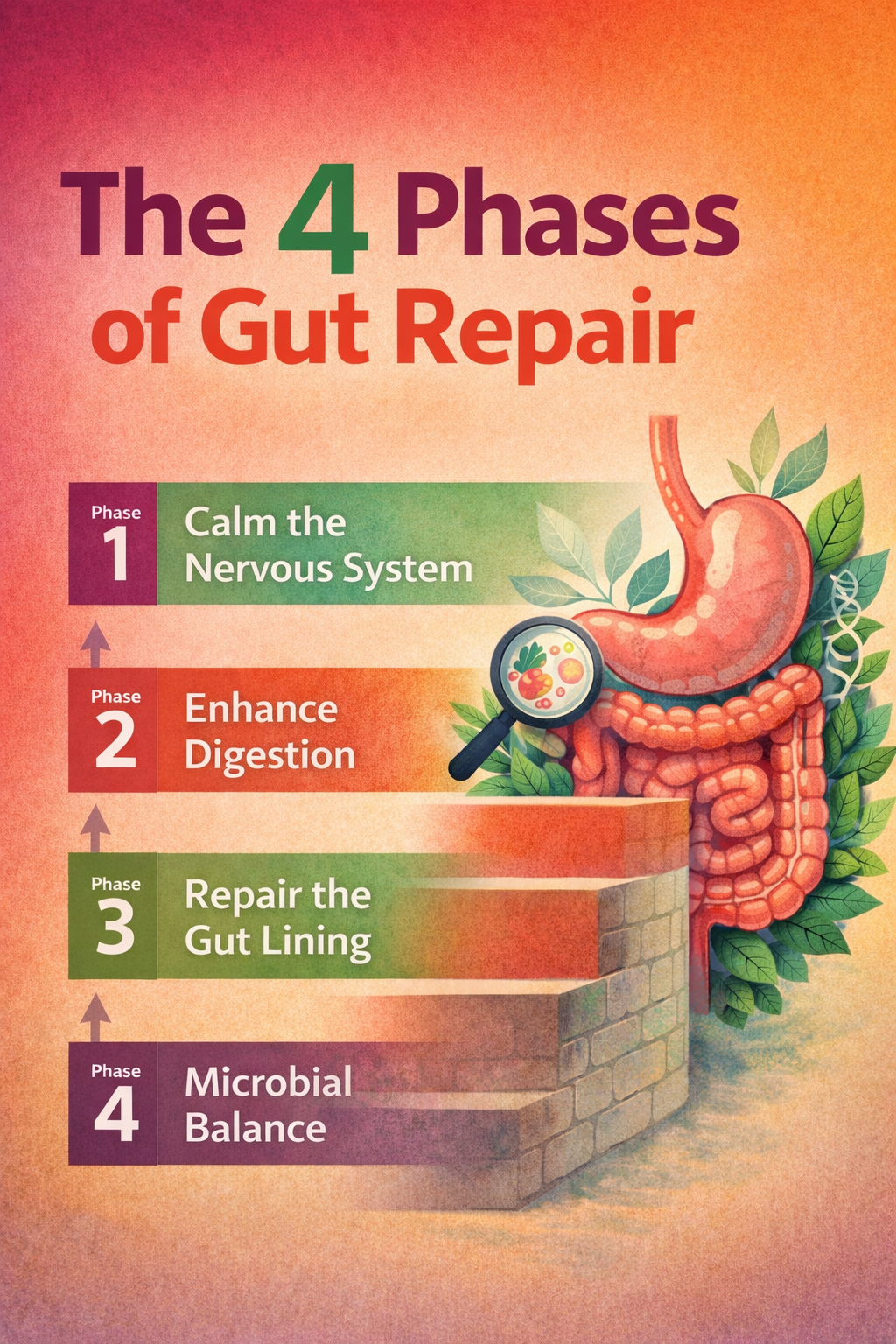
In Case You Skimmed
If you want to rebuild gut health naturally:
- Stabilize nervous system signaling
- Strengthen mechanical digestion
- Repair barrier integrity
- Then address microbes
Most people start at step four.
That’s why symptoms cycle.
Sequence creates stability.
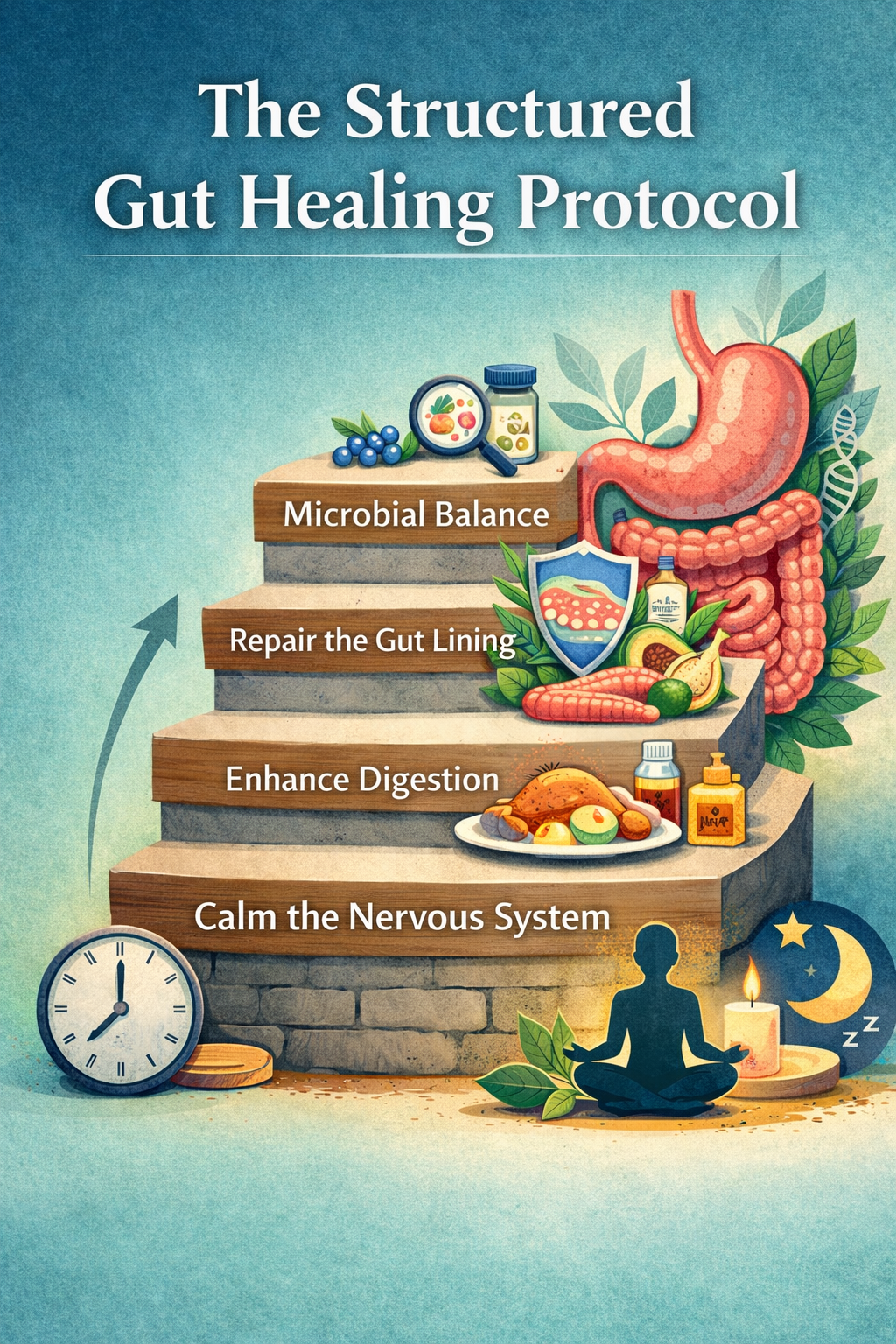
Health Foundations: The Structured Gut Rebuild Protocol
This protocol follows the exact layering model discussed above.
Do not start at the bottom.
Work from the top down.
Phase 1: Stabilize Nervous System Signaling (Weeks 1-2 Minimum)
You do not fix digestion in fight-or-flight.
Your first job is to create predictable parasympathetic access daily.
Daily Instructions
1. Pre-Meal Downshift (Non-Negotiable)
Digestion does not begin in the stomach.
It begins in the nervous system.
When you are in a sympathetic state - rushed, distracted, mentally stimulated - blood flow shifts away from the digestive organs. Stomach acid production decreases. Enzyme release weakens. Motility becomes irregular.
The vagus nerve is the primary communication pathway between the brain and the gut. It carries parasympathetic signals that tell the body:
- “It is safe to digest.”
- “Release stomach acid.”
- “Activate enzymes.”
- “Move food forward smoothly.”
Slow nasal breathing with a prolonged exhale increases vagal tone. The extended exhale activates parasympathetic signaling and reduces sympathetic dominance.
That shift improves digestive coordination before the first bite is taken.
Before Every Meal:
- Sit down.
- Place both feet on the floor.
- Take 5 slow nasal breaths.
- Make the exhale longer than the inhale.
- Drop your shoulders.
- Do not scroll your phone.
This is not relaxation for its own sake.
It is a neurological signal.
You are telling your body:
We are safe.
Digestion can begin.
If you skip this step, you are asking your gut to perform under stress.
2. Meal Environment Rules
- Digestion improves when the body feels safe and undistracted.
During the gut rebuild:
- Eat at a table.
- Do not eat in front of the TV.
- Do not scroll your phone.
- Avoid working while eating.
- Sit upright with both feet on the floor.
Meals should feel deliberate, not accidental.
Your nervous system needs to associate eating with stability.
Optional: Candle Regulation Tool
Lighting a candle during dinner can be surprisingly helpful.
The soft, flickering light provides a gentle visual focal point. For people with ADD or racing thoughts, this subtle movement can anchor attention and reduce overstimulation.
Lower, warmer light also signals safety to the nervous system, supporting parasympathetic activation.
Dim light + slower breathing + seated posture = better digestive signaling.
3. Light Regulation
Your digestive system follows your light exposure.
The eyes are not just for vision. They are neurological sensors.
Specialized cells in the retina detect light spectrum and intensity. Those signals travel directly to the brain’s circadian control center, which regulates:
- Cortisol rhythm
- Melatonin production
- Sleep timing
- Autonomic balance
- Digestive motility
- Microbial cycling
If light exposure is chaotic, digestion becomes chaotic.
Morning Sunlight (Within 30 Minutes of Waking)
- Go outside.
- No sunglasses.
- 5–10 minutes minimum.
- Do not look directly at the sun, but allow natural light to enter your eyes.
Morning sunlight contains blue-enriched spectrum light that helps set your cortisol rhythm appropriately. When cortisol rises at the right time in the morning, the nervous system becomes more organized throughout the day.
Organized signaling improves digestive coordination.
Evening Light Reduction
After sunset:
- Reduce overhead lighting.
- Use lamps instead of ceiling lights.
- Choose warmer light tones.
Bright artificial light at night confuses retinal signaling and delays melatonin production. When melatonin release shifts, gut motility and microbial rhythms shift with it.
Screen Curfew (60 Minutes Before Bed)
- No bright screens.
- If necessary, use night mode and lower brightness significantly.
The goal is to allow the eyes to perceive darkness.
Darkness is a biological signal.
It tells the nervous system to transition into repair mode.
Circadian rhythm regulates digestion, immune signaling, and microbial balance. If your light exposure is unstable, your gut repair process will be unstable.
4. Sleep Requirement (Non-Negotiable During Gut Repair)
Digestion does not fully repair during the day.
It repairs at night.
While you sleep, the body:
- Regulates cortisol rhythm
- Releases melatonin
- Repairs the gut lining
- Resets immune signaling
- Synchronizes microbial cycling
- Restores motility patterns
If sleep is fragmented, shallow, or hormonally disrupted, gut stability will not hold.
Minimum Standard
- 7-8 hours in bed nightly
- Consistent sleep and wake window
- In bed before midnight
Circadian rhythm governs digestion. Chaos at night creates chaos in the gut.
Practical Sleep Protocol During Rebuild
1. Eliminate Blue Light 60-90 Minutes Before Bed
- No bright screens.
- Use night mode and dim brightness if unavoidable.
- Avoid overhead lighting.
- Use warm, low lamps.
Blue-enriched light suppresses melatonin. Melatonin influences not only sleep, but also gut motility and immune repair.
If melatonin is suppressed, repair signaling weakens.
2. Blackout the Room
- Use blackout curtains.
- Cover small LED lights.
- Remove light from chargers and electronics if possible.
Even small amounts of light detected through the eyelids can alter melatonin signaling.
Darkness is a biological instruction: repair.
3. Cool the Environment
Aim for approximately 65-68°F.
Core body temperature must drop for deep sleep to occur. If the room is too warm, sleep becomes fragmented and less restorative.
4. Reduce EMF Exposure (Simple Version)
- Do not sleep with your phone next to your head.
- Put devices on airplane mode.
- Avoid sleeping directly next to Wi-Fi routers.
The goal is not paranoia. It is nervous system quieting.
Sleep should feel electrically calm.
5. Do Not Go to Bed on a Full Stomach
- Finish eating 2-3 hours before bed.
- Avoid heavy late meals.
Late digestion competes with nighttime repair. If the gut is working hard on food, it is not prioritizing barrier repair and immune recalibration.
6. Address Hormonal Disruption
If you are waking repeatedly from:
- Hot flashes
- Night sweats
- Frequent urination
- Racing thoughts
You will not reach deep restorative sleep.
Women in perimenopause and menopause may require hormone optimization to restore stable sleep architecture.
Men with low testosterone, elevated cortisol, or metabolic instability may experience similar fragmentation.
Hormonal rhythm and circadian rhythm are connected.
If hormones are unstable, sleep will be unstable. If sleep is unstable, gut repair will stall.
How to Know Sleep Is Improving Gut Stability
- You fall asleep within 20-30 minutes.
- You wake 0-1 times nightly.
- You wake feeling steady instead of wired.
- Morning bowel movements become more predictable.
Sleep is not a luxury during gut repair.
It is a biological requirement.
You stay here until:
- Bloating intensity decreases
- Bowel patterns become more predictable
- You feel calmer during meals
Then you move forward.
Phase 2: Restore Mechanical Digestion (Weeks 2-4)
Now we strengthen breakdown and movement.
Step 1: Chewing Protocol
- Each bite: chew until texture is uniform.
- Put fork down between bites.
- Meals should last at least 15-20 minutes.
Mechanical digestion begins in the mouth.
Step 2: Protein Anchor
Each meal must include a meaningful protein source.
Protein drives stomach acid production and gut repair signaling.
No protein-light meals during rebuilding.
Step 3: Bitters Before Meals
10-15 minutes before meals:
- Use a digestive bitter formula or whole-food bitter source.
- Small amount.
- Consistent use.
Bitters stimulate:
- Stomach acid
- Bile flow
- Enzyme release
Do not layer 5 supplements. Start simple.
Step 4: Bowel Rhythm Audit
You should be having:
- 1-2 well-formed bowel movements daily
- Minimal straining
- Complete evacuation sensation
If not:
- Increase hydration
- Add mineral support
- Increase whole-food fiber gradually
Do not jump to antimicrobials if elimination is weak.
Stay in Phase 2 until:
- Gas decreases
- Meals digest without heaviness
- Bowel rhythm stabilizes
Then move forward.
Phase 3: Repair Barrier Integrity (Weeks 4-8)
Now we strengthen the lining.
Daily Requirements
1. Protein Sufficiency
Aim for consistent protein intake spread across meals.
Undereating protein stalls repair.
2. Micronutrient Density
Daily inclusion of:
- Zinc-rich foods
- Omega-3 sources
- Colorful polyphenol foods
- Mineral support if diet is insufficient
3. Remove Ongoing Irritants
Temporarily reduce:
- Ultra-processed foods
- Excess sugar
- Alcohol
- Known trigger foods
This is not permanent restriction.
This is strategic quieting.
4. Blood Flow Support
- 10-20 minutes walking daily
- Light strength training 2-3x per week
- Deep diaphragmatic breathing
Blood flow feeds repair.
Stay here until:
- Food reactions reduce
- Energy improves
- Brain fog lessens
- Stool becomes consistently formed
Only then move forward.
When barrier integrity weakens, inflammation increases, sensitivities multiply, and symptoms extend beyond digestion. If you haven’t yet explored why the mucosal layer determines long-term digestive resilience, read Healing the Mucosal Barrier: The Forgotten Layer of Gut Health before moving forward.
Phase 4: Target Microbial Balance (After Stability)
Now - and only now - do you layer microbial correction.
Options
- Spore-based probiotics
- Short targeted antimicrobial courses
- Increased dietary diversity
- Fermented foods if tolerated
Introduce one change at a time.
Wait 5-7 days before adding another.
If symptoms flare aggressively, return to Phase 1 and 2.
Microbes follow terrain.
Weekly Structure During Rebuild
Daily:
- Parasympathetic activation
- Structured meals
- Protein anchor
- Hydration
- Light movement
Weekly:
- Review symptom trends
- Assess bowel rhythm
- Adjust fiber slowly
- Do not stack interventions
Progress is measured by:
- Predictability
- Reduced volatility
- Improved tolerance
- Less reactivity
Not perfection.
Guardrails
- Do not attempt aggressive detox while digestion is unstable.
- Do not combine multiple antimicrobials without elimination working.
- Do not remove 12 foods at once.
- Do not chase every symptom with a supplement.
Order > intensity.
How to Know It’s Working
- Meals digest without heaviness
- Bloating becomes rare instead of daily
- Bowel movements are consistent
- Energy stabilizes
- Food fear decreases
- Symptoms stop cycling
Stability feels boring.
That’s how you know it’s real.
The Work Ahead
You now understand the order. Not just what to remove or what to add, but how digestion stabilizes in sequence. This is not a cleanse or a 7-day reset. It is a rebuilding process. You calm signaling before chasing microbes. You strengthen digestion before repairing aggressively. You restore barrier integrity before layering complexity.
As you move through these phases, progress will feel organized rather than dramatic. Meals become more predictable. Bloating becomes occasional instead of daily. Energy steadies. Food fear decreases. Stability replaces volatility.
You are not declaring war on your gut. You are restoring coordination. And coordination creates durability.
Move deliberately. Respect the sequence. Track what changes. Your gut is not fragile; it has been dysregulated. Now you have a structured path forward.
Jamie Shahan, MSN, CRNA, RN
Empowering Holistic Health
Curator of forgotten wisdom with a modern understanding of why it works.
🌐 Connect with me on Social Media:
Disclaimer
The information provided on this website, in associated blogs, courses, and materials, is for general educational and informational purposes only. It is not medical advice and should not be interpreted as such.
I am not a medical doctor. The content I share reflects my personal opinions, experiences, and research. It is not intended to diagnose, treat, cure, or prevent any disease, condition, or illness.
You should not rely on the information here as a substitute for professional medical care, advice, or treatment. Always consult with a licensed healthcare provider before making any decisions regarding your health, especially if you are pregnant, nursing, taking prescription medications, or managing a medical condition.
By reading this website or using any related materials, you acknowledge and agree that:
- You are fully responsible for your own health decisions.
- The author and publisher of this content assume no liability for any harm, loss, or adverse effects arising directly or indirectly from the use, misuse, or interpretation of the information provided.
- No guarantees are made regarding the outcomes of applying any ideas, suggestions, or protocols discussed. Results will vary for each individual.
Affiliate Disclosure
Some products or tools mentioned may include affiliate links. This means that if you choose to purchase through those links, I may earn a small commission at no extra cost to you. I only recommend products I have personally used, researched, or would recommend to someone I love.
Use at Your Own Risk
By accessing this website and its materials, you agree that you are doing so voluntarily and that you assume full responsibility for any decisions you make regarding your health, lifestyle, or purchases.