How the Immune System Really Works and What Weakens It Over Time
The immune system is not broken or weak. It responds to the environment it’s given. This article explains how immune dysfunction develops over time and why clearance, energy, gut health, and nervous system signaling matter more than immune “boosting.”
Most people think immunity is something you “boost.”
That belief keeps people stuck.
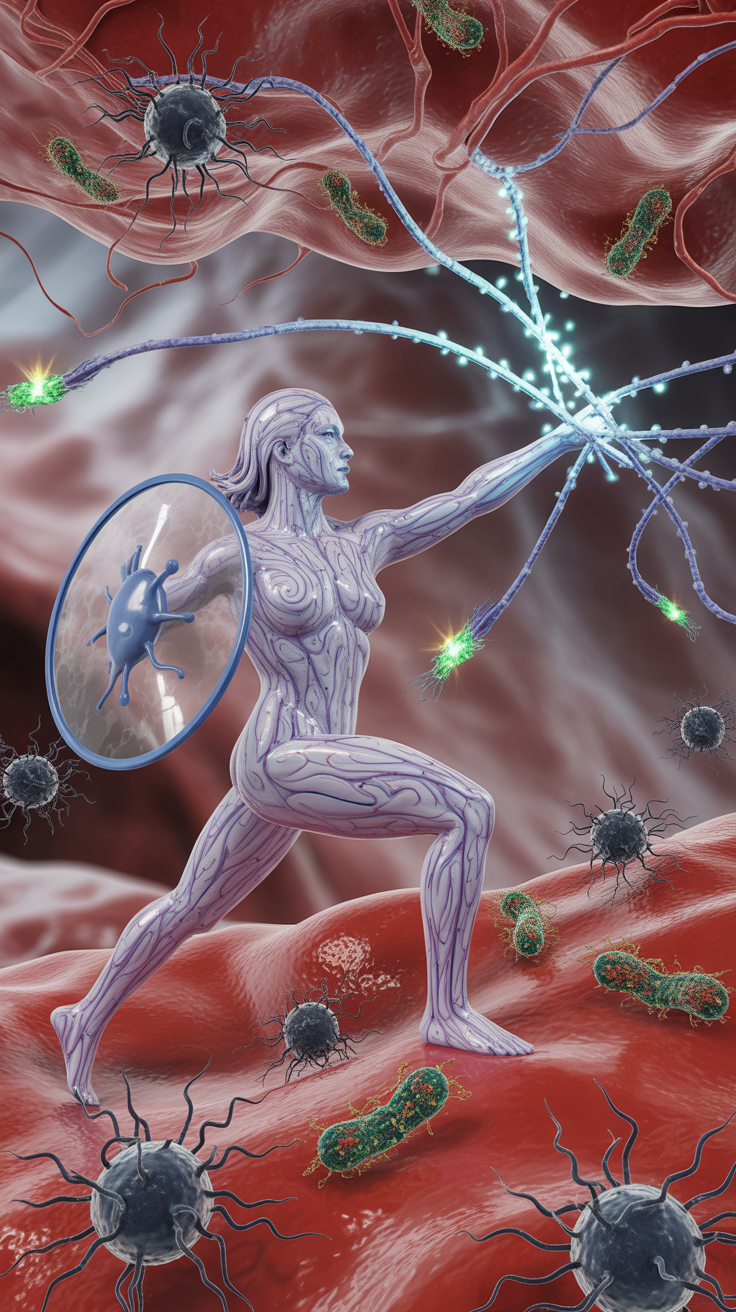
The immune system is not a volume knob. It is a decision-making network designed to identify what does not belong, respond with precision, and return the body to balance once the job is done.
When immune health declines, it is rarely because the body forgot how to defend itself. It is because the system became overloaded, misdirected, or unable to resolve what it started.
Understanding how immunity actually works is the first step toward restoring it.
What People Are Asking
What does the immune system actually do?
The immune system continuously identifies abnormal cells, infections, and debris, removes them, and then returns the body to balance. Problems arise when detection, clearance, or resolution fails, leading to chronic inflammation or illness.
Why does “boosting” the immune system not work?
Boosting the immune system often fails because most immune issues are not caused by weakness but by dysregulation. Stimulating an already confused or overactive system can worsen inflammation, autoimmunity, and symptoms.
What causes immune system dysfunction?
Immune dysfunction is typically caused by issues in other systems, including poor detoxification, low cellular energy, gut barrier breakdown, and chronic nervous system stress, all of which disrupt immune signaling and response.
- What the Immune System Does Daily
- The 3 Ways the Immune System Breaks Down
- Why the Immune System Is Not the Root Problem
- What the Immune System Depends On
- Why Immune Boosting Backfires
- What Strengthening Immunity Actually Looks Like
IN THIS ARTICLE
- Why immunity is about precision, not power
- The 3 failure patterns behind chronic illness
- Why your immune system is often blamed for problems it didn’t create
- The 4 systems that actually control immune function
- What real immune strength looks like in the body
What Does the Immune System Do Every Day?
The immune system performs constant surveillance, identifying and clearing abnormal cells, infections, and debris. Disease begins not when threats appear, but when the body fails to properly clear and resolve them.
Every single day, your body produces:
- damaged cells
- mutated cells
- infected cells
- inflammatory waste
This is normal.
A functioning system:
- detects early
- tags correctly
- clears efficiently
- shuts down after resolution
Disease doesn’t start with a threat.
It starts when resolution fails.
What Are the 3 Ways the Immune System Breaks Down?
Most chronic conditions fall into three patterns: suppression, confusion, or overactivation. These are not separate diseases but different expressions of immune dysregulation.
1. Immune Suppression
- frequent illness
- slow recovery
- low resilience
This is not weakness.
This is energy depletion.
2. Immune Confusion
- autoimmunity
- allergies
- histamine reactions
The system is active… but targeting the wrong things.
3. Immune Overactivation
- chronic inflammation
- cytokine excess
- tissue damage
Not strength.
Failure to shut off.
Why Isn’t the Immune System the Root Problem?
The immune system is not the origin of disease but a responder to underlying dysfunction. When the environment is disrupted, the immune system reacts accordingly.
This is where most people get it wrong.
The immune system doesn’t start the fire.
It responds to:
- toxins that aren’t cleared
- energy that isn’t available
- gut barriers that are leaking
- stress signals that never turn off
You don’t fix immunity by targeting it directly.
You fix what it’s reacting to.
This is the same principle behind why killing symptoms without fixing the environment rarely works, which is explained in Terrain vs. Bugs: Why Killing Isn’t the First Step
What Systems Control the Immune System?
Immune function depends on four core systems: drainage, cellular energy, gut integrity, and nervous system regulation. When these fail, immune dysfunction follows.
Drainage & Elimination
- lymph congestion
- sluggish liver
- poor bile flow
If waste stays ➡️ immune activation rises.
Cellular Energy
Immune cells are energy-intensive.
Low energy =
- poor targeting
- slow recovery
- chronic fatigue
Gut Integrity
Over 70% of immune tissue lives in the gut.
- dysbiosis ➡️ distorted signaling
- leaky gut ➡️ constant activation
If the gut leaks…
the immune system never rests.
This is why restoring the gut barrier is often the turning point in immune regulation, especially when you understand Healing the Mucosal Barrier: The Forgotten Layer of Gut Health
Nervous System Regulation
Chronic stress shifts the body out of healing mode.
- cortisol suppresses immune precision
- resolution pathways shut down
A stressed body cannot regulate immunity.
The connection between stress, digestion, and immune signaling becomes much clearer when you understand why nervous system safety comes before gut repair, especially how perceived stress directly shuts down digestion and immune balance.
Why Does Immune Boosting Make Things Worse?
Immune stimulation without correcting underlying dysfunction increases inflammation and worsens symptoms. The system does not need more activation, it needs better regulation.
This is where people unintentionally make things worse.
They add:
- immune supplements
- stimulants
- protocols
Without fixing:
- drainage
- energy
- gut
- signaling
Result:
- flares
- autoimmune reactions
- worsening symptoms
You’re pushing the gas…
while the engine is flooded.
What Does a Strong Immune System Actually Look Like?
A strong immune system responds quickly, resolves efficiently, and returns to baseline without excessive inflammation or misdirected attacks.
Real immune strength looks like:
- fast response
- clean resolution
- return to baseline
Not:
- constant activation
- inflammation
- reactivity
Signs you’re moving in the right direction:
- fewer infections
- faster recovery
- better energy
- clearer thinking
This is not luck.
This is systems alignment.
If You’re Ready to Stop Guessing
If you’re starting to see your patterns…
but you’re not sure:
- what to address first
- what to ignore
- what actually moves the needle
that’s the gap most people stay stuck in.
Because knowing what’s wrong isn’t the same as knowing what to do next.
➡️ Inside the Restoration Framework, this is broken down into:
- what to prioritize first based on your pattern
- how to sequence changes without overwhelming your system
- how to read your body and adjust in real time
So you’re not:
- stacking random protocols
- second-guessing every decision
- starting over every few weeks
➡️ Explore the Restoration Framework