How the Body Regulates Stress: Adrenal & Stress-Response Bioregulators Explained
How does the body regulate stress? This deep dive explains adrenal bioregulators, stress-response peptides, cortisol rhythm, and how the HPA axis connects to gut health, immune function, and whole-body regulation.
Chronic stress affects digestion, immune balance, hormone rhythm, and gut stability. When the stress response loses coordination, cortisol rhythm fragments, motility shifts, and gut repair slows. Understanding how the body regulates stress is essential before exploring adrenal fatigue support or stress-response bioregulators.
Most people try to suppress stress.
Few people understand how stress regulation actually works.
Before you attempt to fix cortisol, you need to understand the signaling hierarchy that governs it.
Frequently Asked Questions
What are adrenal bioregulators?
Adrenal bioregulators are short peptide fragments studied for their role in supporting stress-response signaling within adrenal and neuroendocrine tissues.
Do stress-response bioregulators lower cortisol?
They are not designed to blunt cortisol. They are studied for supporting normalization of stress signaling patterns.
How does stress affect gut health?
Stress alters motility, bile flow, immune tone, and barrier integrity. Dysregulated stress signaling is one of the most common hidden drivers of gut instability.
Is adrenal fatigue real?
The term adrenal fatigue is debated. What is widely accepted is that chronic stress alters HPA axis regulation and cortisol rhythm.
Table of Contents
- How the Body Regulates Stress
- What Stress Does to the Gut
- Adrenal & Stress-Response Bioregulators
- Regulation vs Suppression
How the Body Regulates Stress
The stress response is governed by the HPA axis. The hypothalamus signals the pituitary. The pituitary signals the adrenal glands. The adrenal glands release cortisol and other stress mediators.
When functioning rhythmically:
- Cortisol rises in the morning
- Gradually declines throughout the day
- Allows restorative processes to occur at night
When rhythm destabilizes:
- Sleep becomes shallow
- Blood sugar fluctuates
- Inflammation rises
- Digestive rhythm shifts
Cortisol is not the villain. Loss of rhythm is the problem.
For deeper context on cortisol’s effect on digestion, see Stress and Cortisol: Your Gut’s Worst Frenemy.

What Stress Does to the Gut
Stress signaling directly influences:
- Peristalsis
- Bile secretion
- Mucosal integrity
- Immune surveillance
- Microbial balance
This is why gut repair fails when stress regulation is ignored.
If you have not yet explored the nervous system connection, revisit Gut Health Starts in the Nervous System: The Real Cause of Bloating and IBS and Why Nervous System Safety Comes Before Gut Repair.
Stress does not just create anxiety.
It reshapes digestion.
It also influences immune balance, which is explored further in How Gut Health Shapes the Immune System.
Adrenal & Stress-Response Bioregulators
Adrenal and stress-response bioregulators are short peptide fragments studied for their influence on tissue-level signaling within stress-regulation systems.
Examples often discussed in regulatory medicine include:
- Glandokort
- Cortexin
- Epitalon
- Selank
These compounds are not stimulants.
They are not sedatives.
They are studied for their role in supporting regulatory coordination within neuroendocrine pathways.
The goal is not suppression of cortisol.
The goal is restoration of rhythm.

Regulation vs Suppression
Many stress interventions attempt to flatten cortisol.
True recovery requires coordinated signaling, not chemical force.
When stress rhythm stabilizes:
- Motility improves
- Bile flow normalizes
- Immune tone steadies
- Gut repair becomes sustainable
Stress regulation is structural, not optional, in gut stabilization.
Continue Reading
If you want a deeper understanding of HPA axis physiology, gene-expression signaling, and how adrenal bioregulators are theorized to support regulatory balance, the advanced breakdown continues inside Health Foundations.
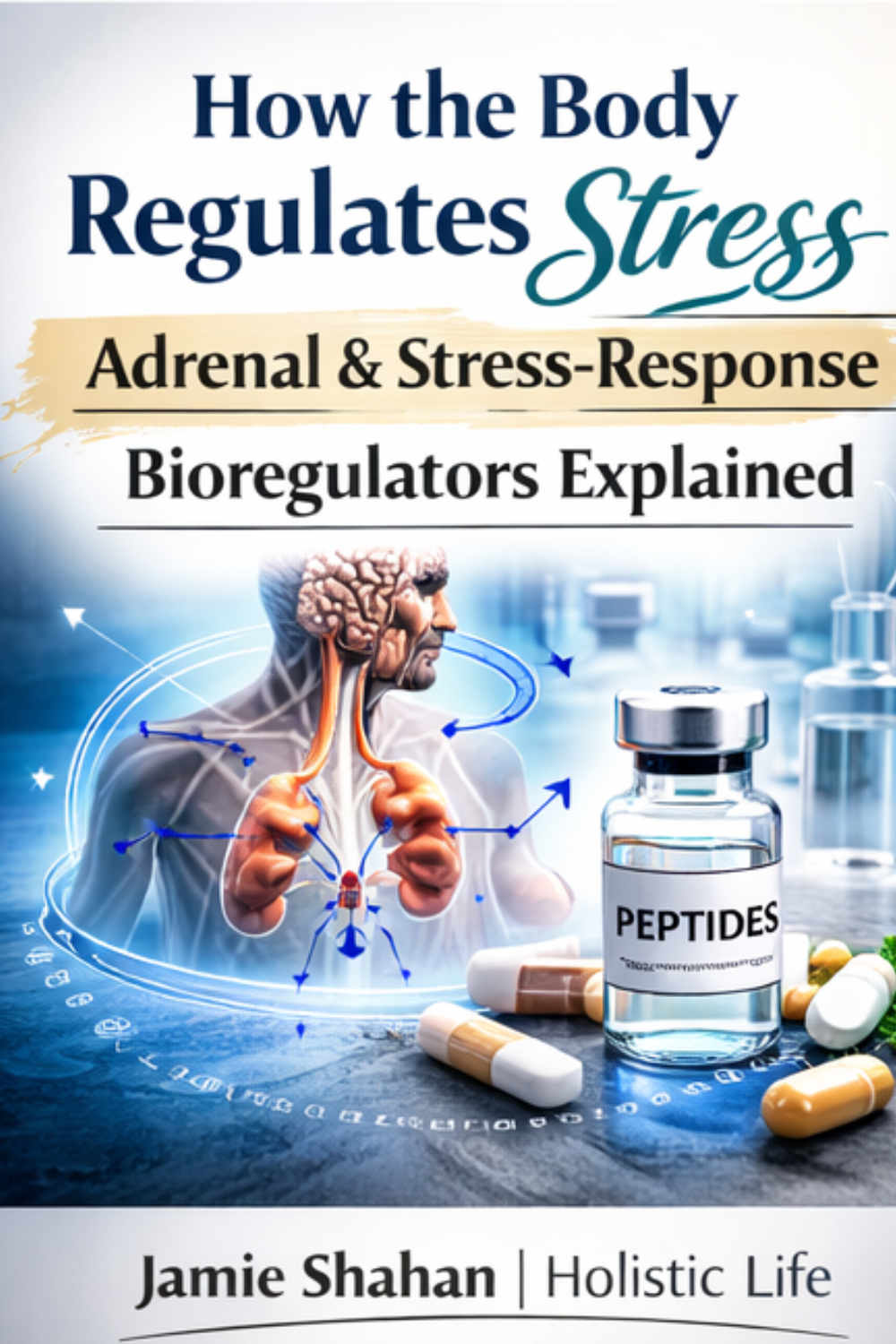
Stress Regulation Is Hierarchical
The stress response is not a single gland issue.
It is hierarchical.
The hypothalamus interprets environmental input.
The pituitary amplifies or tempers that signal.
The adrenal glands execute it.
If you attempt to “fix” stress at the adrenal level alone, you are intervening at the bottom of the signaling chain.
True regulation begins upstream.