
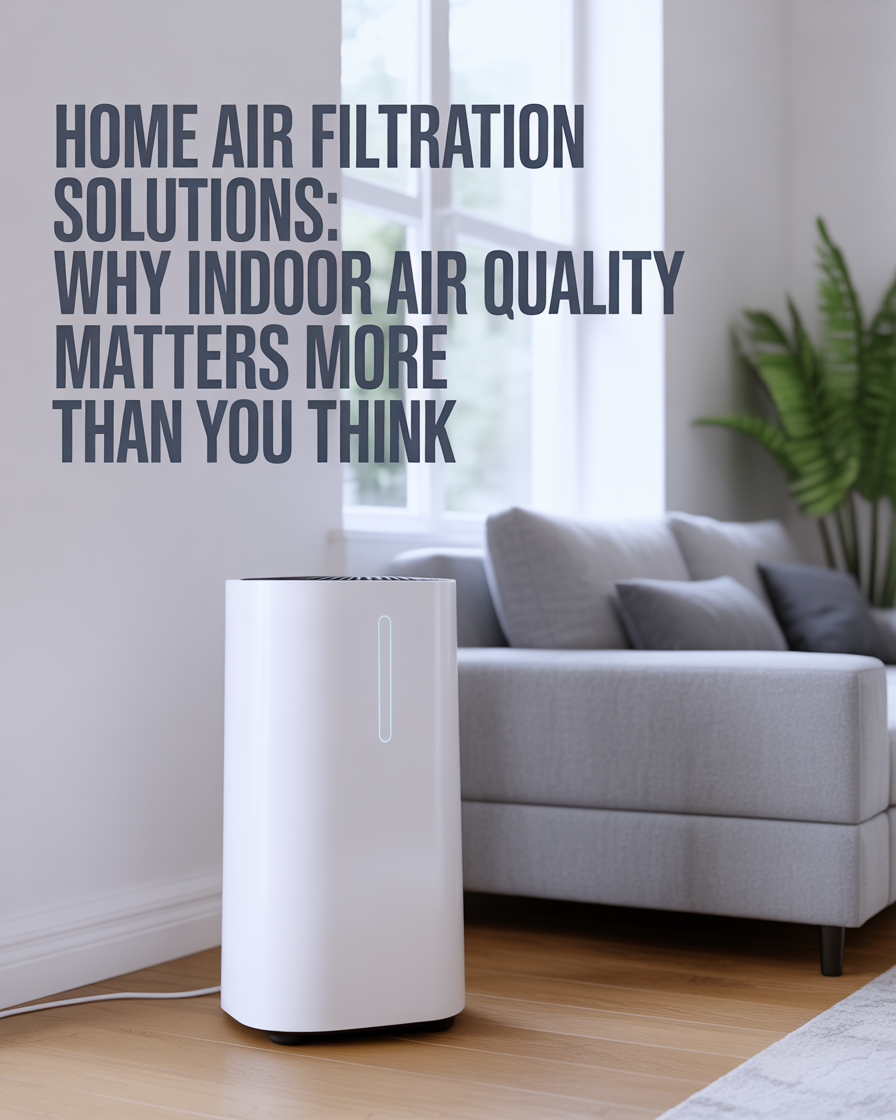
Home Air Filtration Solutions: Why Indoor Air Quality Matters More Than You Think
Indoor air quality affects inflammation, immunity, and nervous system regulation more than most people realize. This guide explains how home air filtration works, what actually improves indoor air, and where ozone-based systems fit into the conversation safely
Most people think of air quality as an outdoor problem. Smog. Wildfires. Pollution alerts.
But the air inside your home quietly shapes your health every single day.
You breathe roughly 11,000 liters of air daily. Most of it happens indoors. If that air is carrying dust, mold fragments, volatile chemicals, pet dander, or combustion byproducts, your body has to process it whether you notice or not.
This is where home air filtration becomes less about gadgets and more about long-term health support.
Not perfection. Not fear. Just intelligent reduction of unnecessary load.
Why Indoor Air Quality Matters
Your lungs are not just passive air sacs. They are an active exchange surface that interacts with your immune system, nervous system, and detox pathways.
When indoor air quality is poor, the body compensates by:
- Increasing inflammatory signaling
- Burdening the liver with airborne toxins
- Activating immune defenses unnecessarily
- Disrupting sleep and nervous system regulation
This is why people with fatigue, headaches, allergies, chronic inflammation, or poor sleep often improve when air quality improves, even without changing anything else.
Air filtration is not a cure.
It is a pressure release valve.
What Home Air Filtration Actually Does
At its core, air filtration removes particles and chemicals from the air before they reach your lungs.
Different systems target different problems:
Mechanical filtration
These physically trap particles like dust, pollen, and pet dander.
Common examples:
- HVAC furnace filters
- HEPA air purifiers
Adsorptive filtration
These bind gases and chemicals rather than particles.
Common examples:
- Activated carbon filters
- Charcoal-based systems
Electrostatic and ionizing technologies
These charge particles so they clump together or settle out of the air.
This category includes:
- Ionizers
- Ozone-generating devices
Each has strengths and limitations. Understanding those differences matters more than brand names.
Choosing the Right Type of Filtration for a Home
For most households, the foundation of clean indoor air includes three basics:
1. A quality HVAC filter
If your home has central air, this is your first line of defense.
Look for:
- A MERV rating appropriate for your system
- Regular replacement
- Fit that does not allow air to bypass the filter
A clogged or poorly fitted filter does more harm than good.
2. Targeted room filtration
Standalone air purifiers can reduce particulate load in bedrooms, offices, or high-use areas.
HEPA-based systems are effective for:
- Allergens
- Dust
- Smoke particles
Adding activated carbon helps with:
- Odors
- Chemical off-gassing
- Volatile organic compounds
3. Ventilation awareness
Even the best filters cannot compensate for stagnant air.
Simple habits help:
- Opening windows when outdoor air quality allows
- Using exhaust fans in kitchens and bathrooms
- Avoiding unnecessary indoor chemical use
Filtration works best as part of a system, not as a single solution.
What About Air Purifiers That Use Ozone?
Ozone-based air purification is where confusion often enters the conversation.
Ozone is a reactive gas that can neutralize certain odors and microorganisms. Because of this, ozone generators are sometimes marketed as powerful air cleaners.
However, ozone behaves very differently from standard filtration.
Ozone does not filter air.
It alters it chemically.
While ozone can break down certain compounds, it can also:
- Irritate lung tissue
- Trigger inflammation
- Worsen respiratory symptoms
- React with indoor chemicals to create new irritants
For most residential settings, ozone-generating devices are not necessary and may introduce more risk than benefit.
There are specific industrial and unoccupied-use cases where ozone is applied intentionally under controlled conditions. That is not the same as continuous household air cleaning.
Understanding that distinction matters.
A Safer Way to Think About Clean Air
The goal of home air filtration is not sterility.
It is reduction.
Reducing:
- Particle load
- Chemical exposure
- Immune overactivation
- Chronic background stress on the body
When filtration is chosen thoughtfully, the body does less compensating and more regulating.
That is where long-term benefit comes from.
The article continues below for Health Foundations members, with deeper education on how this system works and how to think through next steps responsibly.