Healing Peptides for Gut Repair: How TB-500 and BPC-157 Support Tissue Recovery
Many people try to heal their gut by removing foods, lowering inflammation, or killing harmful microbes.
Those strategies can reduce symptoms for a while. But for many people, their symptoms quietly return months later.
The reason is simple: calming inflammation is not the same thing as repairing damaged tissue.
Real healing requires something else entirely: repair signaling.
Certain peptides like TB-500 and BPC-157 are studied because they influence how cells communicate during repair. Instead of forcing the body to do something unnatural, they appear to support the signaling systems the body already uses to rebuild tissue and restore function. Understanding how these healing peptides influence tissue repair helps explain why gut recovery sometimes requires more than simply lowering inflammation
Frequently Asked Questions
What is the difference between BPC-157 and TB-500?
The difference between BPC-157 and TB-500 is how they influence tissue repair signaling in the body. BPC-157 is often discussed for supporting localized healing, especially in the digestive tract and connective tissues. TB-500 is associated with broader systemic repair by influencing cell migration and regeneration throughout multiple tissues.
What does TB-500 peptide do in the body?
TB-500 peptide is studied for its role in supporting tissue repair, cell migration, and recovery from injury. Derived from the naturally occurring protein thymosin beta-4, TB-500 appears to influence how cells move to damaged areas and participate in regeneration, which is why it is often discussed in relation to tendon, muscle, and connective tissue healing.
Which peptide is better for tissue repair, BPC-157 or TB-500?
When comparing BPC-157 and TB-500 for tissue repair, they appear to support healing in complementary ways rather than competing roles. BPC-157 is often associated with localized repair and gut barrier support, while TB-500 may influence broader cellular migration and regeneration. Some researchers discuss them together when exploring recovery and tissue restoration.
How do healing peptides support gut repair?
Healing peptides may support gut repair by influencing the signaling processes that guide tissue regeneration. Instead of simply reducing inflammation, certain peptides appear to affect how cells communicate during recovery. This signaling may help support the rebuilding of the mucosal barrier and other structures involved in digestion and intestinal integrity.
Are TB-500 and BPC-157 safe to use?
The safety of TB-500 and BPC-157 is still being studied, and neither peptide is approved as a prescription medication in the United States. Research on these compounds comes largely from laboratory studies and experimental use. Similar peptide therapies have been explored for decades in countries such as Russia, where some related peptides have been available in clinical settings.
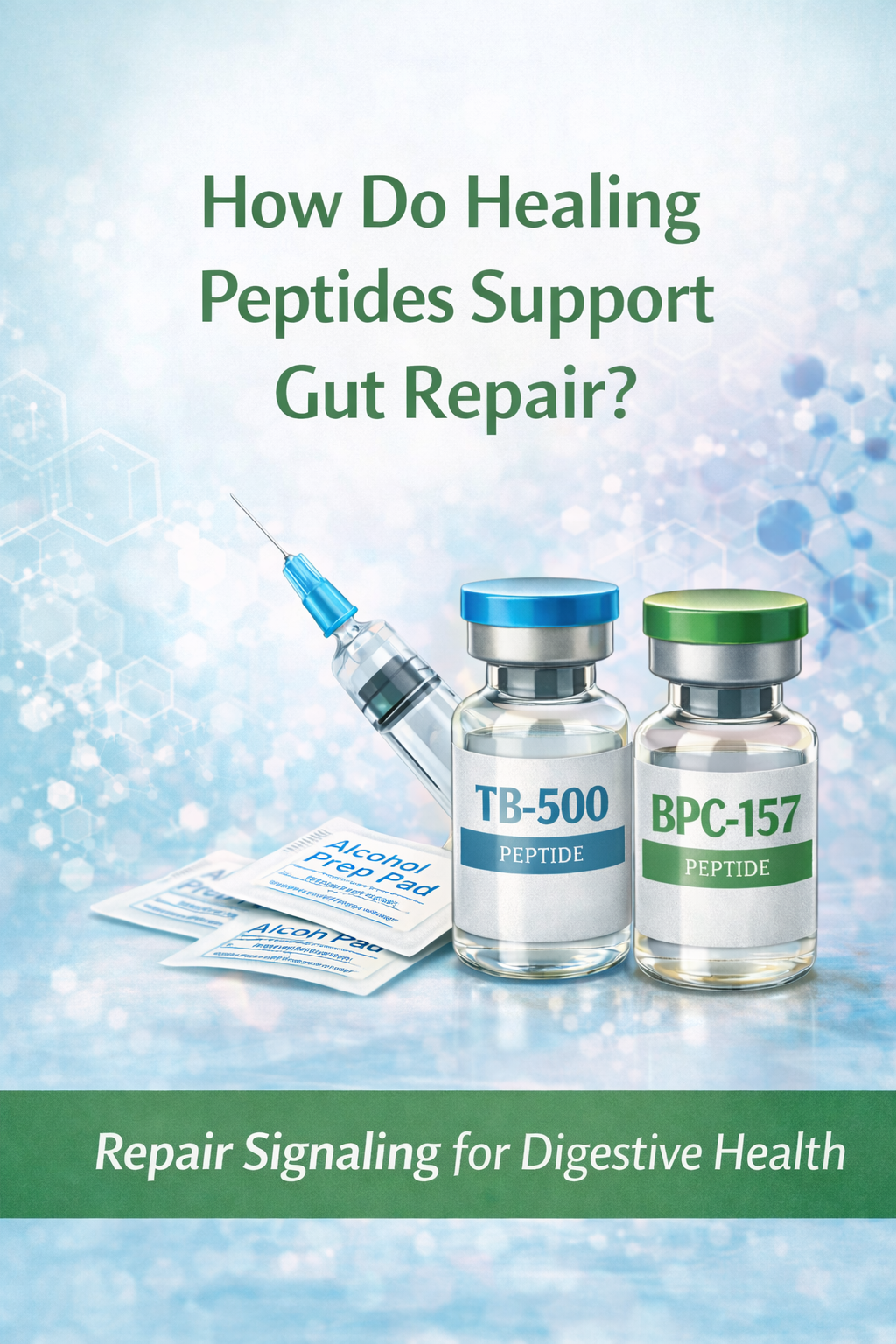
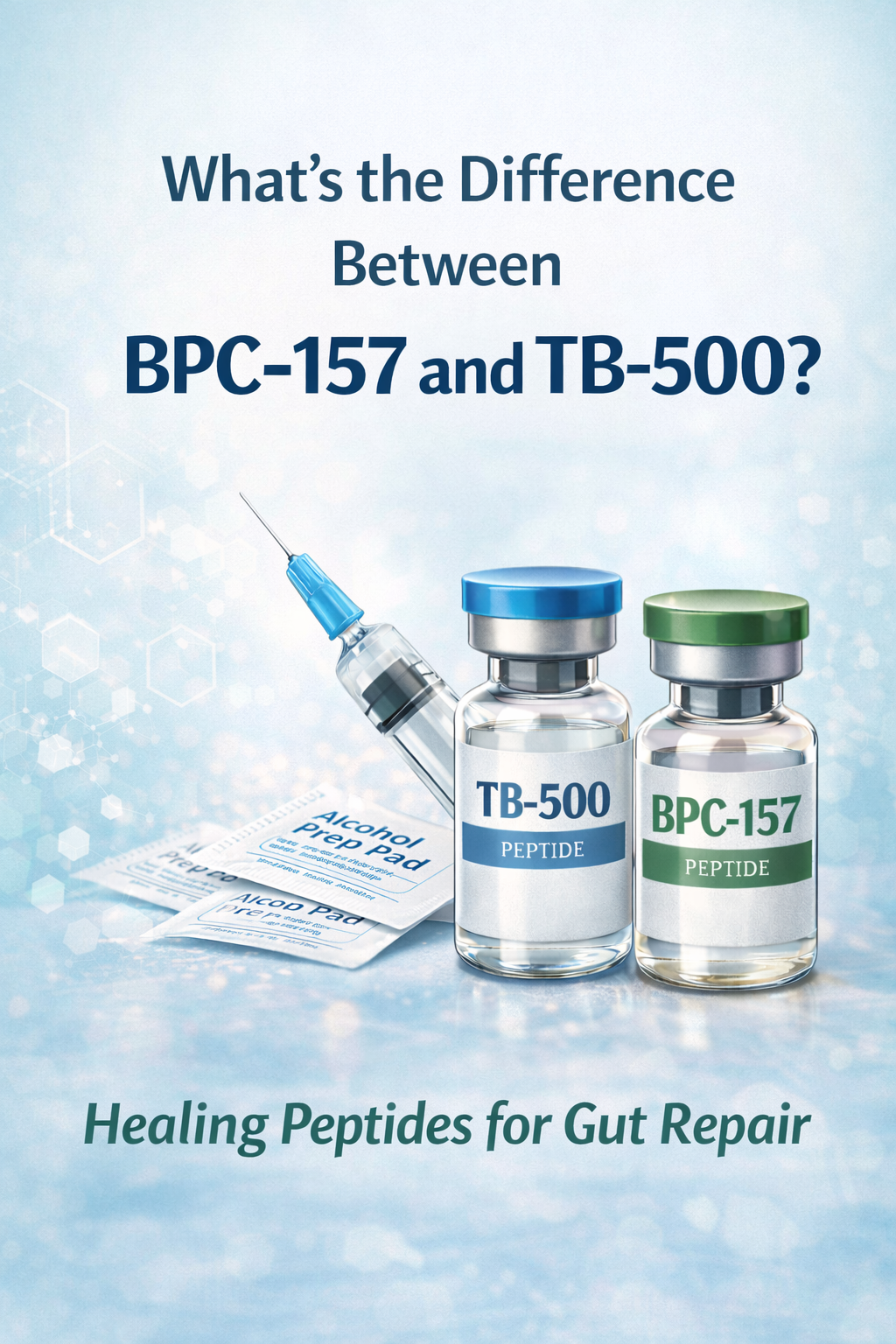
Healing peptides for gut repair including TB-500 and BPC-157 supporting tissue recovery and regenerative signaling
In This Article
This article explains how certain healing peptides are studied in relation to tissue repair and gut recovery.
We will explore:
• what TB-500 and BPC-157 are and how they influence cellular signaling
• how these peptides are discussed in relation to tissue repair and regeneration
• why repair signaling may matter when rebuilding the gut lining
• how TB-500 and BPC-157 differ in how they influence healing processes
• how peptides fit into a broader gut recovery strategy
Understanding these mechanisms helps explain why some gut symptoms improve temporarily but return later if deeper repair processes are not supported.
Table of Contents
What Are Healing Peptides and How Do They Support Gut Repair?
Healing peptides are small protein fragments that influence how cells communicate during tissue repair. Some peptides appear to affect processes such as cellular migration, regeneration, and structural recovery. Because of these signaling effects, certain peptides like TB-500 and BPC-157 are often discussed in relation to tissue healing and gut barrier support.
The body constantly repairs itself.
Every day, cells are replaced, damaged tissue is rebuilt, and the lining of the digestive tract renews itself. These processes depend heavily on cellular communication signals that tell the body where repair is needed.
Peptides are part of that signaling environment.
Rather than acting like drugs that force a specific outcome, peptides often function more like messengers. They can influence how cells respond to damage, coordinate repair processes, and help organize the rebuilding of tissue structures.
This signaling role is one reason peptides are frequently discussed in regenerative research.
Some peptides appear to influence:
• cell migration to injured areas
• tissue remodeling during healing
• communication between repair pathways
• recovery of connective and epithelial tissues
When these signaling processes work properly, tissues can recover more efficiently.
When they are disrupted, healing may stall.
This concept is especially important when discussing the digestive tract, because the intestinal lining constantly undergoes repair and renewal.
If you're interested in how signaling peptides interact with gut healing, you may want to read Bioregulator Peptides for Gut Health: How Peptides Support Healing Through Signaling, which explores how certain peptides are studied in relation to cellular communication and digestive recovery.
Understanding these signaling processes helps explain why some gut symptoms improve temporarily but return later if deeper repair mechanisms are not supported.
What Is TB-500 and How Does It Support Tissue Repair?
TB-500 is a peptide derived from the naturally occurring protein thymosin beta-4 that is studied for its role in tissue repair, cellular migration, and regeneration. Because TB-500 appears to influence how repair cells move toward damaged tissue, it is frequently discussed in research exploring connective tissue healing and recovery.
TB-500 is often described as a systemic repair peptide.
Instead of acting only at a single injury site, research discussions frequently focus on its ability to influence cellular migration, the process where repair cells travel to areas of tissue damage.
This process is important for healing because recovery requires multiple coordinated steps.
These steps include:
• signaling that damage has occurred
• mobilizing repair cells
• rebuilding structural tissue
• restoring normal function
Peptides such as TB-500 are studied because they appear to influence several of these processes simultaneously.
Much of the interest surrounding TB-500 comes from research exploring muscle, tendon, ligament, and connective tissue repair, where cellular migration plays a major role in recovery.
Because connective tissue repair is also involved in maintaining the digestive tract lining, researchers sometimes discuss TB-500 within broader conversations about tissue regeneration throughout the body.
For a deeper look at how these peptides function in healing environments, you can also read TB-500 Peptide: Benefits, Uses, Dosage, and How It Compares to BPC-157, which explores TB-500 research in more detail.
What Is BPC-157 and Why Is It Often Discussed for Gut Healing?
BPC-157 is a peptide derived from a protective protein sequence found in gastric juice and is often discussed in research exploring gut barrier repair and tissue regeneration. Because of this connection to digestive tissue, BPC-157 frequently appears in conversations about intestinal healing, connective tissue recovery, and regenerative signaling.
Unlike peptides primarily associated with systemic repair, BPC-157 is often discussed in relation to localized healing processes.
Much of the research interest surrounding BPC-157 involves its potential role in supporting tissues such as:
• intestinal lining
• tendons and ligaments
• connective tissue structures
• blood vessel formation during repair
These processes are relevant to digestive health because the intestinal lining is one of the fastest-renewing tissues in the body.
The gut barrier must constantly repair itself.
Every day the digestive tract replaces damaged cells while maintaining a protective layer that separates the bloodstream from the contents of the intestines.
If this barrier becomes compromised, digestive symptoms and inflammatory signaling can increase.
For readers who want to explore this concept further, Healing the Mucosal Barrier: The Forgotten Layer of Gut Health explains why rebuilding the intestinal lining is often a central step in long-term digestive recovery.
You can also read BPC-157: Supporting Repair, Communication, and the Body’s Ability to Respond, which explores the peptide’s potential role in cellular repair signaling.
Why Does Repair Signaling Matter in Gut Recovery?
Repair signaling refers to the cellular communication processes that coordinate tissue healing. While reducing inflammation can calm symptoms, true recovery often requires rebuilding damaged structures. Without effective repair signaling, tissues may remain vulnerable, and symptoms can return even after inflammation temporarily improves.
Many gut healing strategies focus on removing irritants.
People eliminate trigger foods.
They reduce inflammation.
They address microbial imbalances.
These steps can be helpful.
But removal alone does not rebuild tissue.
Healing requires the body to actively repair the intestinal lining, restore connective structures, and rebuild normal digestive function.
This is where repair signaling becomes important.
Repair signaling helps coordinate processes such as:
• cellular migration
• tissue remodeling
• epithelial regeneration
• structural repair of the gut barrier
Without these processes functioning well, digestive symptoms may improve temporarily but fail to stabilize long term.
This concept also explains why simply lowering inflammation does not always restore normal digestive function. If you want to explore that idea further, Why Lowering Inflammation Alone Doesn’t Restore Gut Function explains why inflammation reduction and tissue repair are not the same process.
Similarly, many gut protocols focus on eliminating pathogens first. However, Terrain vs. Bugs: Why Killing Isn’t the First Step explores why restoring the body’s repair environment is often just as important as addressing microbes.
What Is the Difference Between TB-500 and BPC-157?
The difference between TB-500 and BPC-157 primarily relates to how they influence tissue repair signaling. BPC-157 is often associated with localized repair and digestive tissue support, while TB-500 is discussed in relation to broader cellular migration and systemic tissue recovery. Because of these differences, they are sometimes discussed together in regenerative research.
Although the peptides are frequently compared, they are not identical in how they function.
Researchers often describe their roles in healing environments as complementary.
General comparisons often include:
BPC-157
• frequently discussed in relation to gut barrier support
• associated with localized tissue repair
• often mentioned in digestive system research
TB-500
• associated with systemic tissue repair
• influences cellular migration during healing
• commonly discussed in connective tissue recovery
Because tissue repair involves multiple coordinated pathways, researchers sometimes discuss these peptides together when exploring regenerative signaling.
However, it is important to remember that research into peptides continues to evolve, and many discussions around their use come from experimental or laboratory settings.
Understanding how these signaling peptides differ helps clarify why they often appear together in conversations about tissue recovery, regenerative biology, and gut repair.
The article continues below for Health Foundations members with deeper education on how these peptides are discussed in research and how readers can think through next steps responsibly.
How Are TB-500 and BPC-157 Discussed in Research Protocols?
In research discussions, TB-500 and BPC-157 are often mentioned in relation to tissue repair protocols that aim to support cellular recovery. These discussions typically focus on how peptides influence regeneration signaling rather than acting as traditional medications.
Because these peptides influence different repair pathways, they are sometimes discussed together in regenerative research.
General research discussions often focus on concepts such as:
• supporting connective tissue recovery
• improving structural repair signaling
• encouraging cellular migration
• assisting tissue regeneration processes
However, peptide research is still evolving, and much of the available information comes from experimental settings rather than large clinical trials.
This is one reason many practitioners emphasize understanding the repair environment of the body before exploring any advanced interventions.
What Factors Influence Tissue Repair in the Gut?
Peptides are only one part of the repair equation.
Tissue recovery depends on several foundational conditions that allow regeneration to occur efficiently.
These include:
• adequate circulation to digestive tissues
• stable immune signaling
• proper nutrient availability
• healthy gut barrier integrity
• balanced inflammatory responses
If these foundations are not in place, even powerful repair signals may not produce lasting improvement.
This is why many regenerative frameworks focus first on restoring the terrain that allows healing to occur.
In Case You Skimmed
Healing the gut requires more than reducing irritation.
True recovery often depends on repair signaling, the communication systems that guide tissue regeneration.
Research discussions around peptides such as TB-500 and BPC-157 focus on how these molecules may influence cellular migration, connective tissue recovery, and gut barrier repair.
Understanding how these signaling pathways function helps explain why digestive symptoms sometimes return after temporary improvement.
Long-term gut recovery typically requires addressing both inflammation and tissue repair processes.
Jamie Shahan, MSN, CRNA, RN
Empowering Holistic Health
Curator of forgotten wisdom with a modern understanding of why it works.
🌐 Connect with me on Social Media:
Disclaimer
The information provided on this website, in associated blogs, courses, and materials, is for general educational and informational purposes only. It is not medical advice and should not be interpreted as such.
I am not a medical doctor. The content I share reflects my personal opinions, experiences, and research. It is not intended to diagnose, treat, cure, or prevent any disease, condition, or illness.
You should not rely on the information here as a substitute for professional medical care, advice, or treatment. Always consult with a licensed healthcare provider before making any decisions regarding your health, especially if you are pregnant, nursing, taking prescription medications, or managing a medical condition.
By reading this website or using any related materials, you acknowledge and agree that:
- You are fully responsible for your own health decisions.
- The author and publisher of this content assume no liability for any harm, loss, or adverse effects arising directly or indirectly from the use, misuse, or interpretation of the information provided.
- No guarantees are made regarding the outcomes of applying any ideas, suggestions, or protocols discussed. Results will vary for each individual.
Affiliate Disclosure
Some products or tools mentioned may include affiliate links. This means that if you choose to purchase through those links, I may earn a small commission at no extra cost to you. I only recommend products I have personally used, researched, or would recommend to someone I love.
Use at Your Own Risk
By accessing this website and its materials, you agree that you are doing so voluntarily and that you assume full responsibility for any decisions you make regarding your health, lifestyle, or purchases.