Growth Hormone Peptides: How Signaling Controls Tissue Repair
Growth hormone peptides don’t repair tissue directly. They influence the signaling that tells your body when and how to repair. If recovery has slowed, this explains why more hormone doesn’t fix the problem and what actually controls tissue repair at the cellular level.
You don’t notice it all at once.
It’s subtle.
The cut that lingers longer.
The workout that takes days to recover from.
The joint that never quite goes back to normal.
Nothing dramatic. Just… slower.
And the confusing part?
You’re doing more than you used to.
Trying harder. Paying attention. Even looking into things like growth hormone peptides.
So why does your body feel like it’s responding less?
If growth hormone drives repair…
why does increasing it not guarantee healing?
What People Are Asking
Which peptides increase growth hormone?
Growth hormone-releasing peptides like Ipamorelin and Tesamorelin stimulate the pituitary gland to release more growth hormone. They don’t replace the hormone directly, they signal the body to produce it, which may influence repair, metabolism, and recovery depending on the body’s current state
How do peptides help tissue repair?
Peptides support tissue repair by acting as signaling molecules that tell cells when to regenerate, reduce inflammation, and rebuild damaged structures. They don’t perform the repair themselves—they coordinate the biological processes that allow repair to occur.
What is growth hormone signaling?
Growth hormone signaling is the process by which growth hormone binds to receptors and triggers a cascade of cellular events that influence repair, metabolism, and regeneration. The effectiveness of this process depends on receptor sensitivity, downstream signaling, and overall cellular health.
- What Is Growth Hormone Signaling?
- How Do Peptides Increase Growth Hormone?
- Why Growth Hormone Doesn’t Equal Repair
- What Actually Controls Tissue Repair
In This Article
- Why growth hormone is only part of the equation
- How peptides influence signaling-not just levels
- Why repair slows even when hormones look “normal”
- The hidden breakdown between signal and response
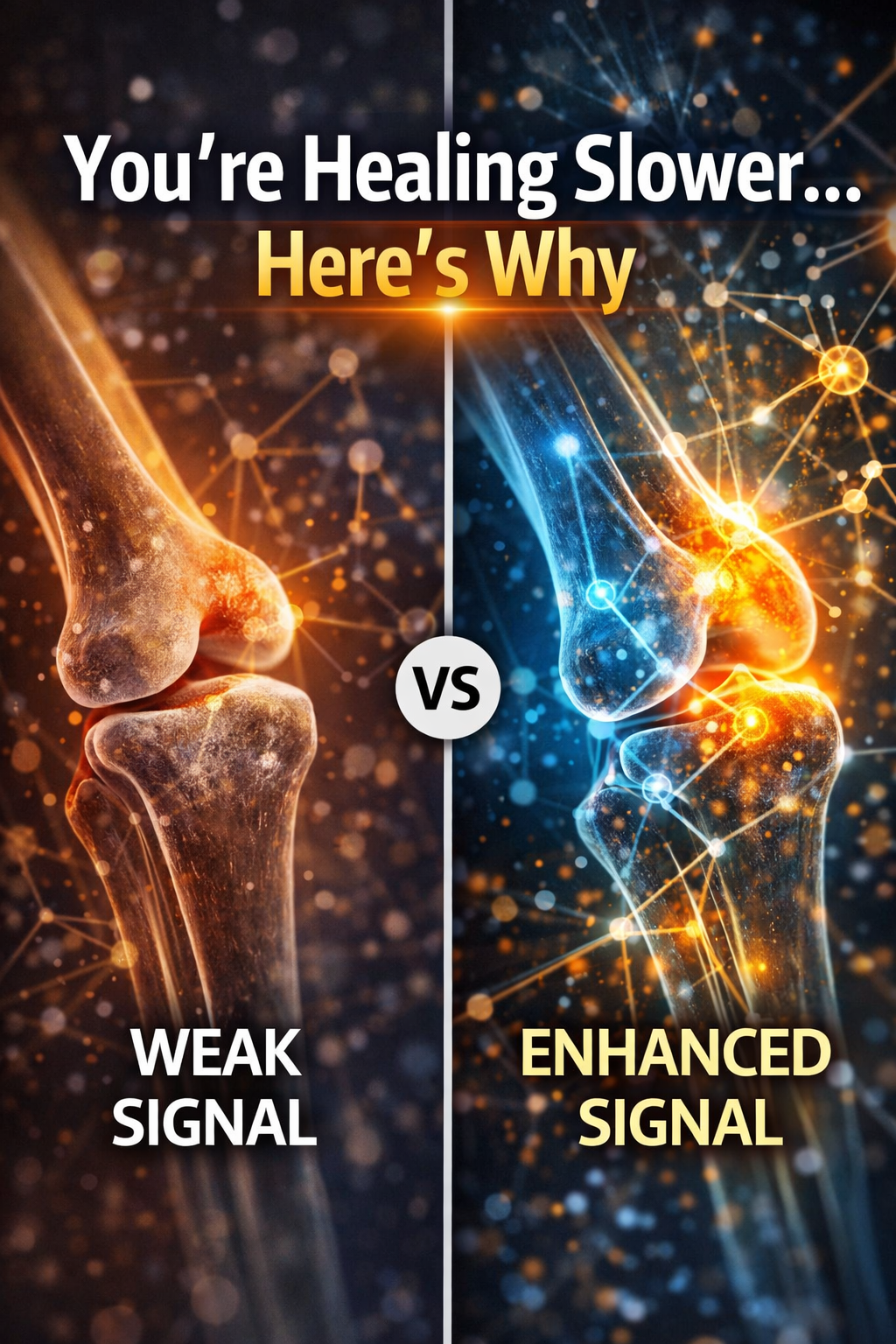
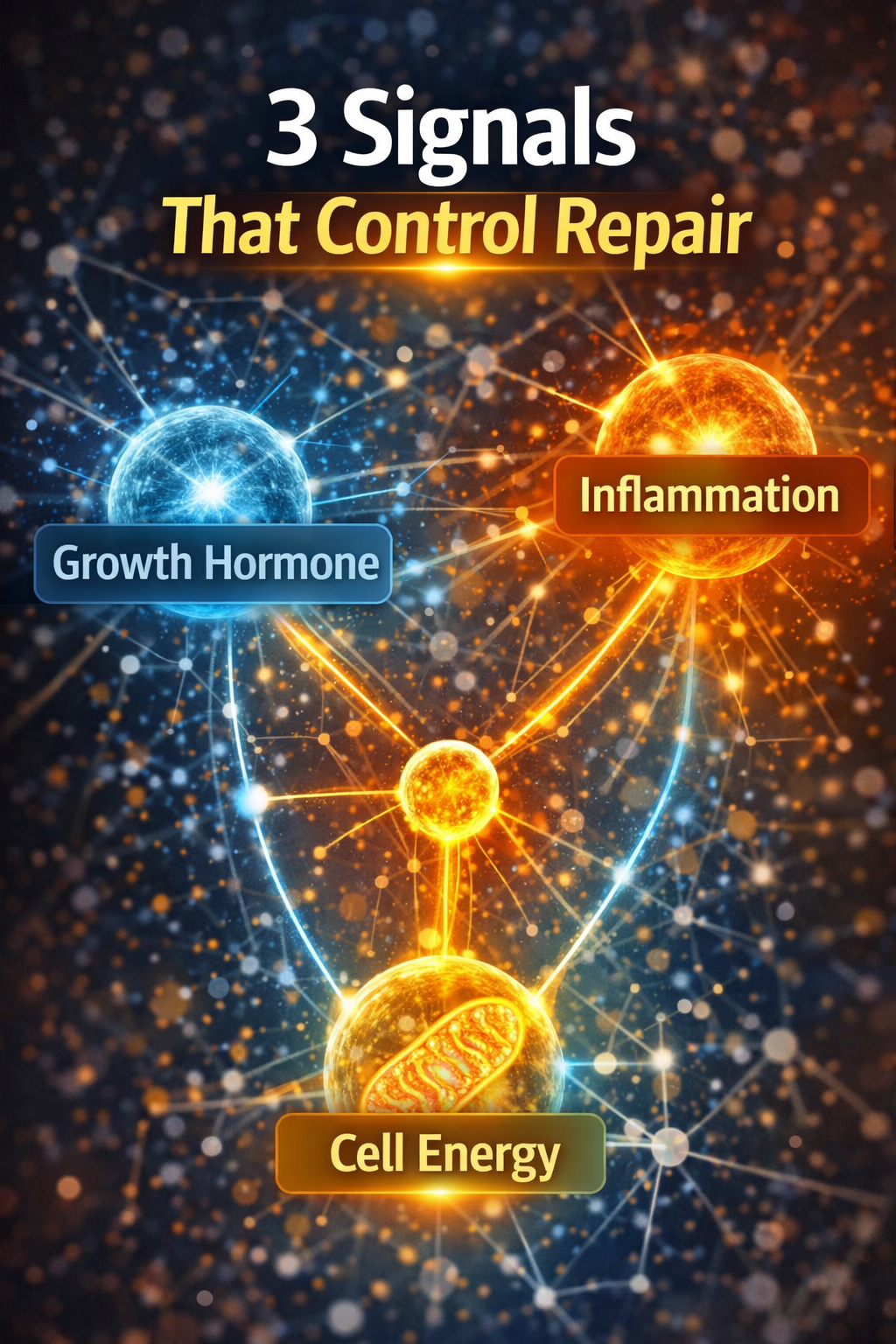

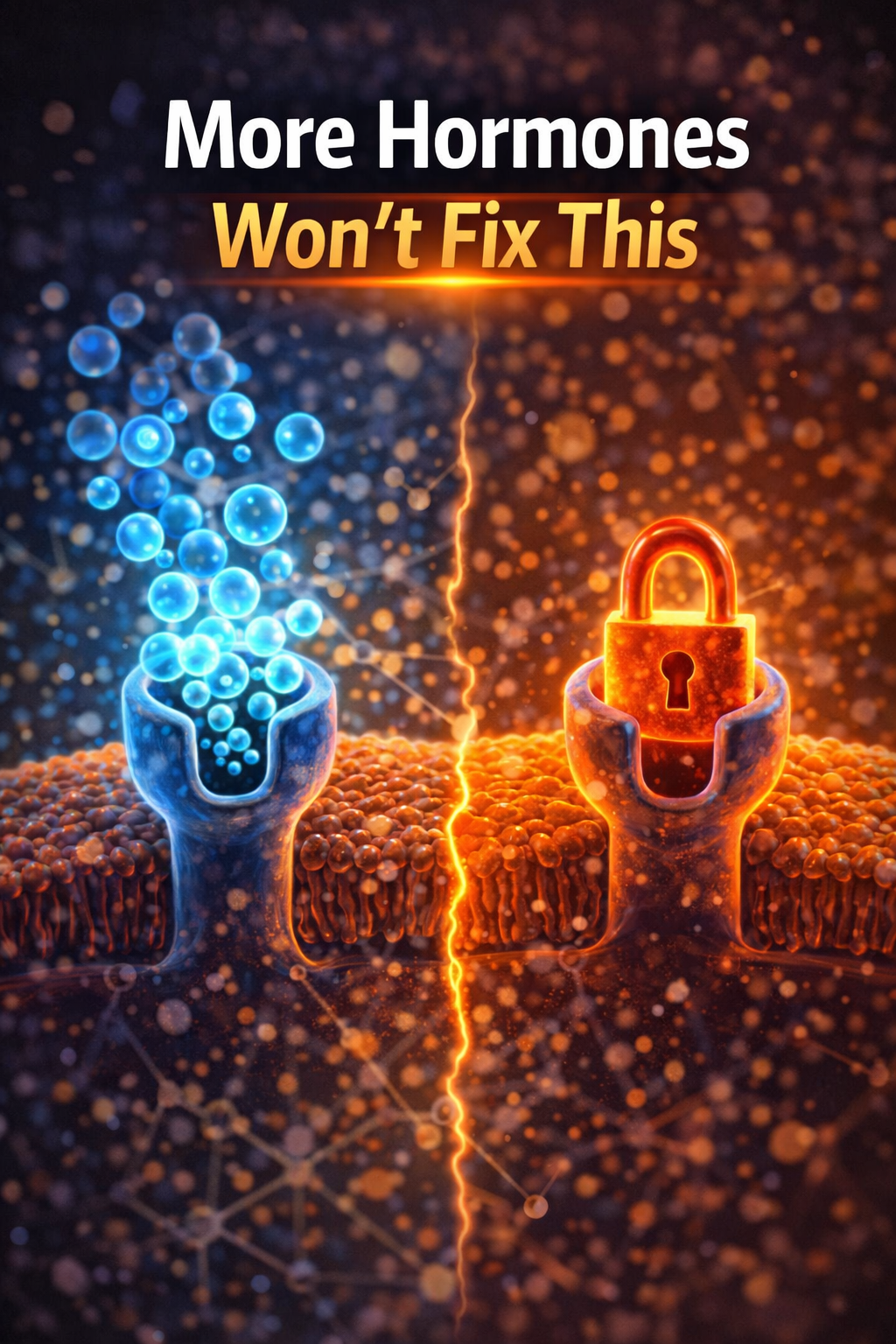
Your body doesn’t stop healing, it stops responding. When signals break down, repair slows. When they’re restored, everything changes.
What Is Growth Hormone Signaling?
Growth hormone signaling is the process where growth hormone binds to cellular receptors and activates pathways that regulate repair, metabolism, and regeneration. This signaling cascade determines whether cells respond effectively, meaning repair depends not just on hormone levels but on how well the signal is received and executed.
Growth hormone is not the worker.
It’s the messenger.
And like any message, it only matters if it’s:
- sent properly
- received clearly
- acted on correctly
This is where most breakdown happens.
If you haven’t read how peptides function as signaling molecules, it’s worth grounding yourself in that first ➡️ what are peptides and how they control repair and metabolism
How Do Peptides Increase Growth Hormone?
Peptides like Ipamorelin and Tesamorelin increase growth hormone by stimulating the pituitary gland through specific receptor pathways. They enhance the body’s natural release patterns rather than replacing the hormone, making their effect dependent on the body’s existing signaling capacity.
They don’t “add” growth hormone.
They ask your body to release it.
That distinction matters.
Because if the system is dysregulated:
- the signal may be weak
- the timing may be off
- the response may be incomplete
And this is where people start to feel like “nothing is working.”
If you’ve ever wondered why peptides don’t always deliver the expected results, this breaks it down further ➡️ why peptides don’t work the way you expect
Why Growth Hormone Doesn’t Equal Repair
Growth hormone alone does not guarantee tissue repair because repair depends on downstream signaling, receptor sensitivity, nutrient availability, and cellular readiness. Even with adequate hormone levels, impaired signaling pathways can prevent effective repair from occurring.
This is where the illusion breaks.
More signal ≠ better outcome
If the cell:
- doesn’t recognize the signal
- can’t process the signal
- or is too damaged to respond
Nothing happens.
This is why repair slows with age.
Not just because hormones drop…
…but because communication breaks down.
This is explored deeper here ➡️ why cells age and communication breaks down
What Actually Controls Tissue Repair?
Tissue repair is controlled by coordinated signaling between hormones, peptides, immune factors, and cellular energy systems. Growth hormone plays a role, but effective repair requires proper communication across multiple systems, including inflammation control, nutrient delivery, and cellular regeneration pathways.
Repair is a system.
Not a switch.
Growth hormone is just one signal in a network that includes:
- inflammation signaling
- immune activation
- mitochondrial energy
- structural rebuilding
This is why targeted peptides like BPC-157 and TB-500 are studied-not because they “heal,” but because they influence communication in damaged tissue.
You can see how that applies specifically to tissue recovery here ➡️ how peptides support gut and tissue repair
If this is starting to click, you’re realizing something important:
It’s not that your body can’t repair.
It’s that the signals controlling repair may not be getting through.
Inside Health Foundations, we go deeper into:
- how signaling pathways actually break down
- how to think about repair vs stimulation
- how to identify where your system is getting stuck
The article continues below for Health Foundations members, with deeper education on how this system works and how to think through next steps responsibly.