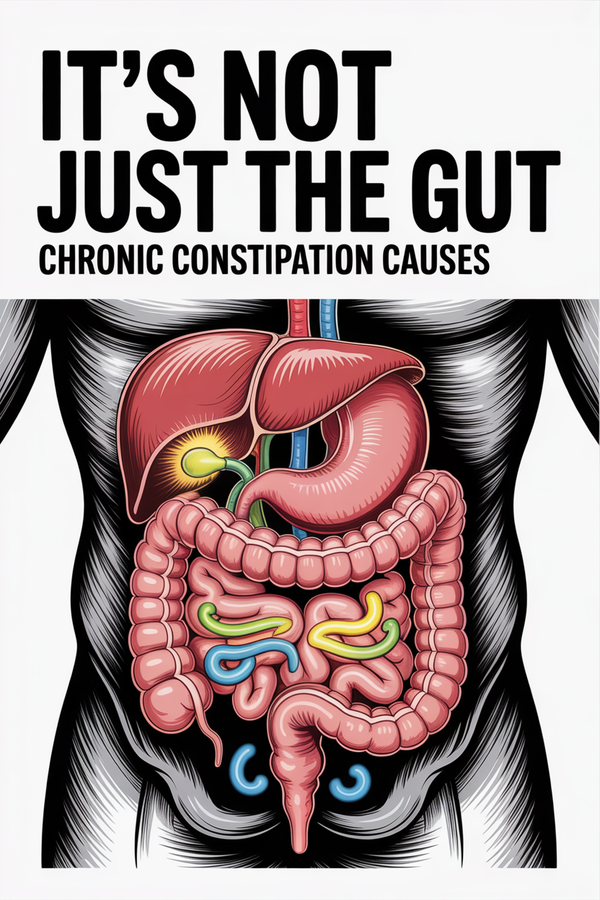
Chronic Constipation: The 4 Dials That Control Elimination
Chronic constipation is rarely solved by fiber alone. This deep dive explains the 4 Dials that regulate elimination - movement, bile flow, motility rhythm, and lymphatic circulation - and how to begin adjusting them based on your body’s feedback.
Constipation is not a personal flaw.
It is not laziness.
It is not a lack of fiber.
And it is rarely solved by forcing the stool to move.
Chronic constipation is a systems message.
Elimination depends on pressure, rhythm, lubrication, circulation, and regulation working together. When one dial shifts, the others respond. When multiple dials drift out of coordination, clearance slows.
The body is not broken.
It is adaptive.
This article explains the four physiological dials that control elimination - and how to begin adjusting them intelligently.
Frequently Asked Questions About Chronic Constipation
What is considered chronic constipation?
Chronic constipation generally refers to infrequent, difficult, incomplete, or strained bowel movements that persist for weeks or months. It may include hard stools, bloating, abdominal discomfort, or alternating constipation and loose stools.
Frequency alone does not define it. Quality and completion matter./
Can you be constipated if you go every day?
A daily bowel movement does not guarantee full clearance. Small, dry, fragmented, or incomplete stools can indicate sluggish motility or poor bile flow even if frequency appears normal.
If you want help interpreting stool quality and what it signals, read: Constipation: What Your Poop Says About Your Detox.
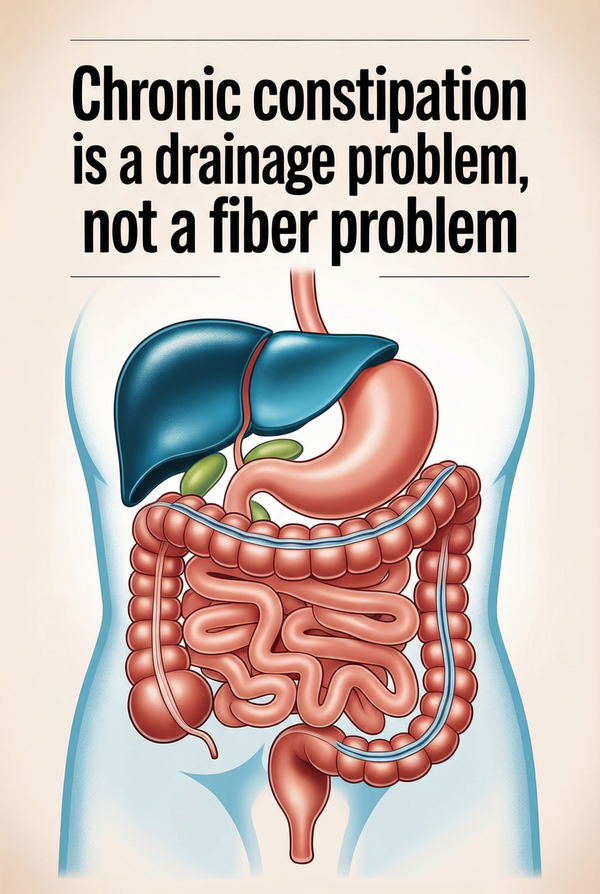
Why doesn’t fiber fix chronic constipation?
Fiber adds bulk.
But if bile flow is insufficient, hydration is inadequate at the cellular level, motility is slow, or nervous system regulation is impaired, bulk alone can increase pressure without restoring coordination.
Fiber without flow often increases bloating.
What does lymphatic drainage have to do with constipation?
The lymphatic system helps clear metabolic waste and inflammatory byproducts from tissues. When lymph circulation slows, abdominal congestion can increase.
Congestion upstream often affects clearance downstream.
Constipation is sometimes a symptom of impaired drainage rather than insufficient stool volume.
For the habit-based sequence that supports drainage first, read: Drainage Before Detox: Daily Habits That Support Elimination.
Table of Contents
- Why Fiber and Laxatives Often Fail
- The 4 Dials That Control Elimination
- Dial 1: Movement & Pressure Signaling
- Dial 2: Bile Flow
- Dial 3: Motility Rhythm
- Dial 4: Lymphatic Circulation
Why Fiber and Laxatives Often Fail
Fiber is not the enemy. It is simply not the master lever.
Fiber increases stool bulk. Laxatives stimulate contraction. Both can produce a bowel movement.
Neither automatically restores coordinated elimination.
Elimination depends on:
• Adequate bile flow for lubrication
• Effective motility waves
• Balanced nervous system tone
• Lymphatic clearance from abdominal tissues
• Hydration at the cellular level
If those systems are impaired, adding bulk may increase pressure without improving flow.
This is why many people rotate between fiber, magnesium, stimulants, coffee, and cleanses without long-term resolution.
Constipation is rarely a willpower problem.
It is usually a coordination problem.
If you have not read it yet, start here for the upstream foundation: Why Nervous System Safety Comes Before Gut Repair.
The 4 Dials That Control Elimination
Chronic constipation is not a single failure.
It is usually mild discoordination across four regulatory dials:
- Movement and pressure signaling
- Bile flow
- Motility rhythm
- Lymphatic circulation
Think of elimination like a control board with four sliders.
You do not fix constipation by turning one dial to maximum.
You adjust gently and observe how the system responds.
If stool is dry, bile may need support.
If bloating dominates, lymph circulation may need attention.
If timing is unpredictable, rhythm may be unstable.
If everything feels stagnant, movement signaling may be low.
Constipation improves when the dials become coordinated.
Not when one is forced.
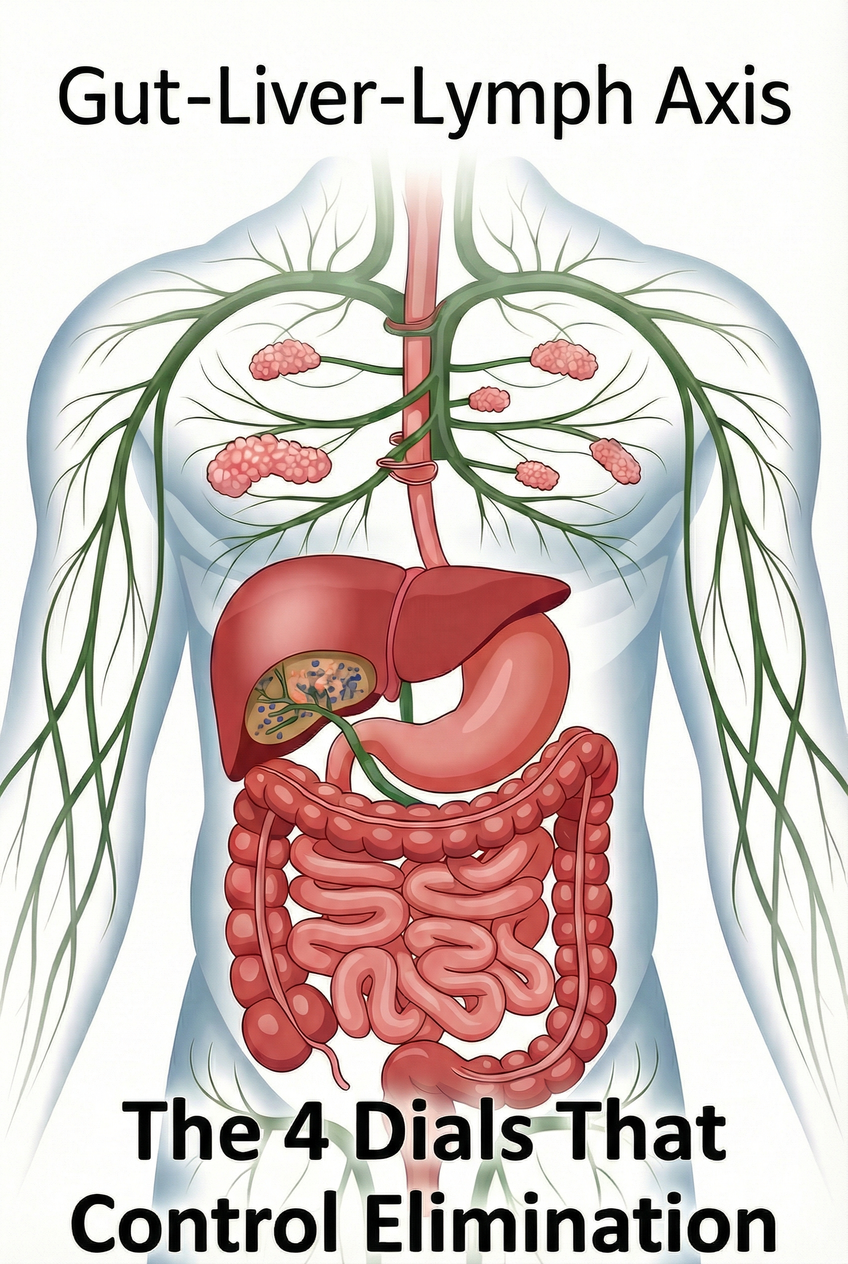
For deeper context on how these systems coordinate, read: The Gut–Liver–Lymph Axis Explained.
Dial 1: Movement & Pressure Signaling
The colon responds to pressure changes.
Muscle contraction, abdominal compression, and diaphragmatic breathing all influence motility and lymph flow.
Sedentary patterns reduce these signals.
You do not need a gym.
Start where you are.
Twice daily, choose one:
• 5 slow squats beside your chair
• Walk your stairs 5 times
• March in place for 60 seconds
• 10 slow calf raises at the counter
Immediately follow with:
• Overhead reach with slow breathing
• Gentle torso twists
• Forward fold breathing
These movements create rhythmic compression and decompression through the abdomen, stimulating motility and lymph circulation.
Consistency matters more than intensity.
If you already go to the gym, lift weights, or walk regularly, do not skip this.
Constipation is rarely caused by a lack of intensity. It is often caused by a lack of coordinated pressure variation and parasympathetic access.
For this dial, prioritize stretching and slow breathing even on gym days.
Dial 2: Bile Flow
Bile is critical for stool formation and lubrication.
When bile flow is sluggish, stool often becomes:
• Dry
• Pale
• Hard to pass
• Incomplete
Bile also helps carry metabolic waste out through the digestive tract.
You can support this dial by:
• Including real fats at meals
• Avoiding constant grazing
• Chewing thoroughly
• Using bitter foods before meals
Bulk without lubrication increases pressure.
Coordination improves clearance.
Dial 3: Motility Rhythm
Regulation is the root. Rhythm is the implementation.
The colon responds to nervous system tone and daily timing.
Chronic stress patterns can slow peristalsis and disrupt coordination.
Signs this dial needs attention:
• Wired at night, tired in the morning
• Bowel habits shift with stress
• Alternating constipation and loose stools
• Inconsistent meal timing
You can begin stabilizing rhythm by:
• Eating within a consistent 10–12 hour window
• Allowing 3–4 hours between meals
• Maintaining a predictable bedtime
• Taking 5 slow nasal breaths before meals
The body responds to predictability.
Rhythm restores coordination.
Dial 4: Lymphatic Circulation
The lymphatic system actively transports fluid through vessel contractions and one-way valves.
Flow increases with muscle movement and diaphragmatic breathing.
When lymph circulation slows, abdominal congestion can increase.
This may present as:
• Persistent bloating
• Abdominal heaviness
• Puffiness
• Brain fog
Gentle daily movement and stretching support natural lymph flow.
If needed, tools such as rebounding, contrast showers, sauna, manual lymphatic massage, or low-intensity vibration platforms can enhance circulation once elimination is stable.
Tools amplify signals.
They do not replace daily movement.
Constipation is not a sign that your body is broken.
It is a signal that coordination needs attention.
If you are ready to move from explanation into structured application - including how to adjust each dial based on your feedback patterns and how to start ridiculously simple - continue below.
The article continues below for Restoration Framework members, with deeper education on how this system works and how to think through next steps responsibly.