Chronic Constipation Is a Drainage Problem, Not a Fiber Problem
Chronic constipation is often treated with fiber and laxatives, yet many people remain bloated and backed up. This article explains why constipation is frequently a drainage issue involving bile flow, lymphatic movement, and nervous system regulation-not just stool bulk.
Chronic constipation is one of the most common digestive complaints, yet most people seeking constipation relief are still asking the wrong question.
They ask, “What fiber should I take?”
They ask, “What is the best constipation remedy?”
They ask, “What drink helps constipation fast?”
All of those questions assume the problem is inside the stool.
But what if the real question is this:
Is my body draining properly?
Because elimination is not just about what you eat. It is about whether waste can move through the entire system without resistance.
“I feel bloated… but I still poop.”
That sentence disqualifies thousands of women from realizing they are constipated.
Constipation is not just about frequency. It is about quality and completion.
Ask yourself:
Did I eliminate fully yesterday?
Was it easy and unforced?
Was the stool formed but soft?
Or was it small, dry, fragmented, or incomplete?
Do I depend on coffee, magnesium, or laxatives to make it happen?
If elimination requires assistance, strain, or leaves you feeling unfinished, that is not optimal function.
You may also want to read Constipation: What Your Poop Says About Your Detox if you are unsure what your bowel movements are actually signaling.
And constipation does not always look like “not going.”
It can look like:
• Small, hard stools
• A daily bowel movement that still feels incomplete
• Alternating constipation and diarrhea
• A diagnosis of IBS
• Persistent bloating that never fully resolves
In many cases labeled as IBS or chronic constipation, the underlying issue is congestion.
When stool sits too long, the colon becomes irritated. Liquid can move around retained waste, creating what looks like diarrhea. But the system is still backed up.
That is not a fiber deficiency.
It is a flow problem.
What are signs of poor lymphatic drainage?
Poor lymphatic drainage does not always feel dramatic. It often shows up subtly as:
• Persistent bloating
• Puffiness in the face, abdomen, or legs
• Sluggish digestion
• Brain fog
• Frequent infections
• Skin congestion
• Feeling heavy or inflamed
The lymphatic system helps move waste and immune byproducts out of tissues. When it slows, congestion builds.
Does lymphatic drainage make you poop more?
It can.
When lymphatic flow improves, waste that was stored in tissues and circulating fluid can move toward the liver and digestive tract for elimination. Some people notice increased bowel movements temporarily.
That is not diarrhea. It is improved clearance.
Can diarrhea be a sign of constipation?
Yes.
In chronic constipation, stool can become impacted. Liquid stool may leak around retained waste, creating what looks like diarrhea. This is sometimes called overflow diarrhea.
The colon may still be backed up even if stools are loose.
Why does fiber not always fix constipation?
Fiber adds bulk.
But if bile flow is sluggish, hydration is poor at the cellular level, or motility is slow due to nervous system imbalance, adding bulk does not fix the root issue.
In some cases, excess fiber can worsen bloating and pressure.
What drinks help constipation fast?
Certain drinks like warm fluids, coffee, or magnesium-containing beverages may stimulate bowel movement temporarily.
But stimulation is not the same as restoration.
True relief requires improving flow through the gut, liver, and lymphatic system so the body clears waste without force.
How do I improve lymphatic drainage naturally?
Support usually includes:
• Regular movement
• Deep breathing
• Proper hydration
• Supporting bile flow
• Reducing inflammatory load
• Addressing chronic stress
In the deeper sections of this article, we explain how these systems connect and why sequence matters.
Table of Contents
- Why Fiber and Laxatives Often Fail
- What a “Flow Problem” Actually Means
- The Gut–Liver–Lymph Connection
- Why Diarrhea Can Still Mean You’re Backed Up
- Drainage Before Detox
- Practical Ways to Support Natural Elimination
Why Fiber and Laxatives Often Fail
Fiber is not evil. It is simply not the lever most people think it is.
Fiber adds bulk. But if motility is slow, bile flow is sluggish, hydration is poor at the tissue level, or the nervous system is stuck in stress mode, adding bulk can increase pressure without improving movement.
For some people, more fiber means more bloating.
Laxatives can create a similar illusion. They stimulate movement, but they do not fix why movement slowed in the first place. Over time, this can create dependency, irritation, and fear of missing a day.
If you are doing all the “right gut things” and still stuck, this is usually not a willpower problem.
It is usually a systems problem.
What a “Flow Problem” Actually Means
When I say flow, I mean the body’s ability to move waste out, not just break food down.
Elimination depends on multiple systems working together:
• Motility — the muscular waves that push stool forward
• Bile flow — necessary for proper stool formation and fat digestion
• Liver processing — packaging metabolic waste into bile
• Lymphatic movement — clearing tissue congestion so drainage can reach the gut
• Nervous system regulation — setting the pace for digestion and peristalsis
If this piece is new to you, start with Why Nervous System Safety Comes Before Gut Repair.
If one of these slows, constipation often follows.
If more than one slows, chronic constipation develops.
For a deeper look at how these systems coordinate, read The Gut–Liver–Lymph Axis Explained.
You can eat clean, drink water, and take supplements. But if the system is congested upstream, the exit route will struggle.
The Gut–Liver–Lymph Connection
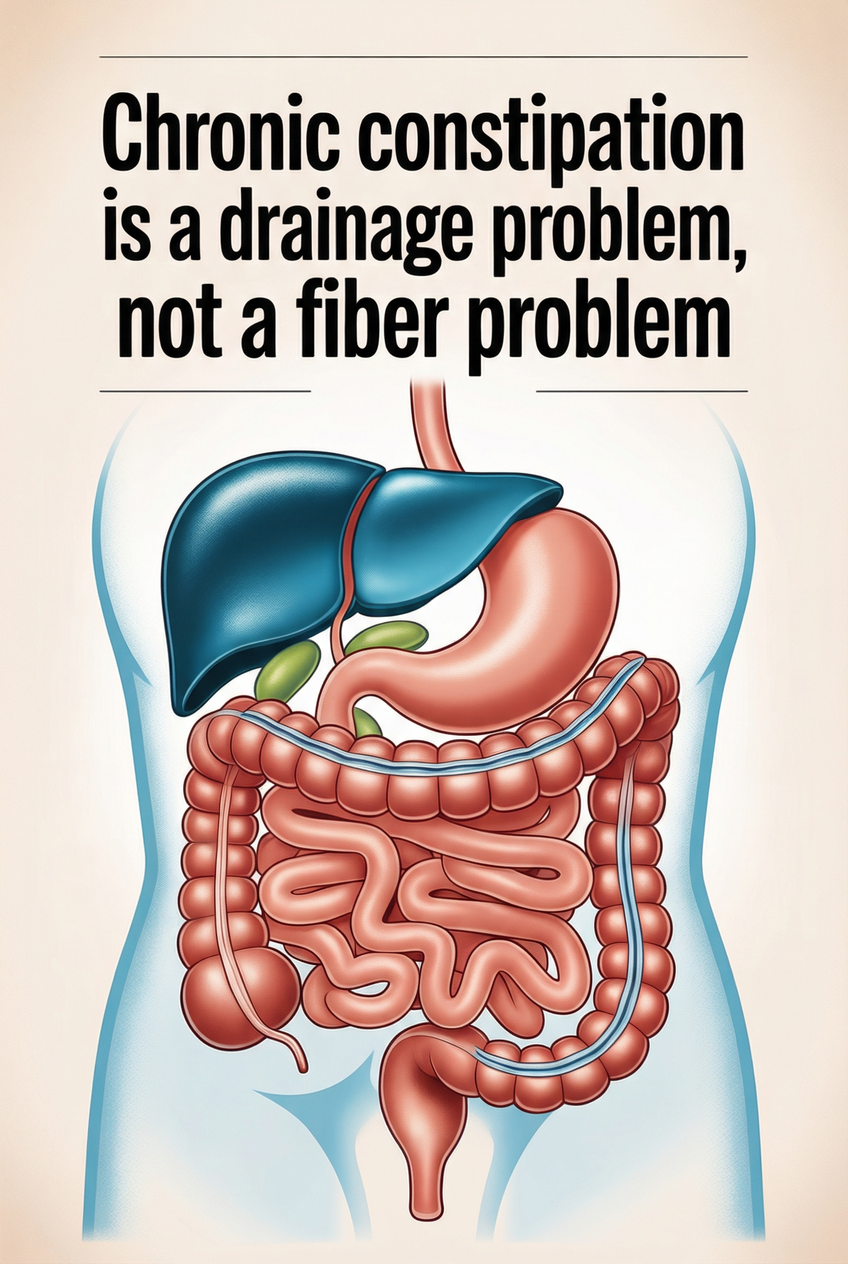
The gut is the exit route.
The liver is the processing center. It packages daily metabolic waste, hormone byproducts, and environmental exposures into bile.
The lymphatic system is tissue cleanup. It moves immune byproducts, cellular debris, and inflammatory fluid out of the spaces between cells.
When lymph slows, the abdomen can feel puffy, tight, or heavy.
When bile flow slows, stools can become dry, pale, or difficult to pass.
When motility slows, everything sits longer than it should.
Constipation is often what happens when the exit route is too slow for the daily load.
Why Diarrhea Can Still Mean You’re Backed Up
This surprises people.
Diarrhea does not automatically mean you are clearing well.
In chronic constipation, retained stool can irritate the colon. Liquid stool may move around that retained waste, creating what looks like diarrhea.
This is sometimes called overflow diarrhea.
You can alternate between hard stools and loose stools and still be congested.
This is common in people diagnosed with IBS.
The issue is not randomness.
It is inconsistent flow.
Drainage Before Detox
Many people try to detox while constipated.
That backfires.
If you increase mobilization of waste but your exit routes are slow, you can feel worse:
More bloating
More headaches
More fatigue
More irritability
More skin flares
Drainage comes before detox.
If you want practical examples, read Drainage Before Detox: Daily Habits That Support Elimination.
Not because it is trendy.
Because it is basic physiology.
If waste cannot exit, pushing harder rarely helps.
Practical Ways to Support Natural Elimination
Before aggressive protocols, start with fundamentals.
• Walk daily. Movement stimulates motility and lymph flow.
• Breathe deeply. The diaphragm acts as a pump for abdominal lymphatic movement.
• Hydrate with minerals, not just plain water.
• Eat fats consistently to stimulate bile release.
• Create predictable meal timing to support digestive rhythm.
• Reduce chronic stress signals that suppress peristalsis.
None of these are magic tricks.
They reduce friction.
They remove barriers.
They allow the body to do what it was designed to do.
Want to understand how bile flow, lymphatic drainage, and nervous system regulation work together in chronic constipation?
The deeper physiology and sequencing continue inside Health Foundations, where we break down how these systems interact and how to think through next steps responsibly.