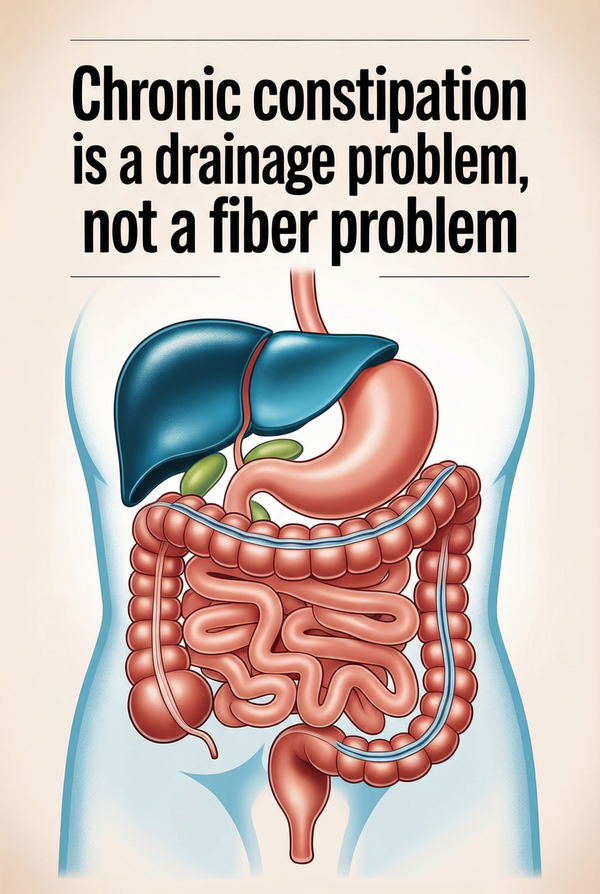
Chronic Constipation Causes: Why It’s Not Just a Gut Problem
Chronic constipation causes often reflect slowed coordination between hormones, bile flow, nervous system rhythm, and abdominal circulation. This article explains why persistent constipation signals whole-body regulation, not just a gut issue.
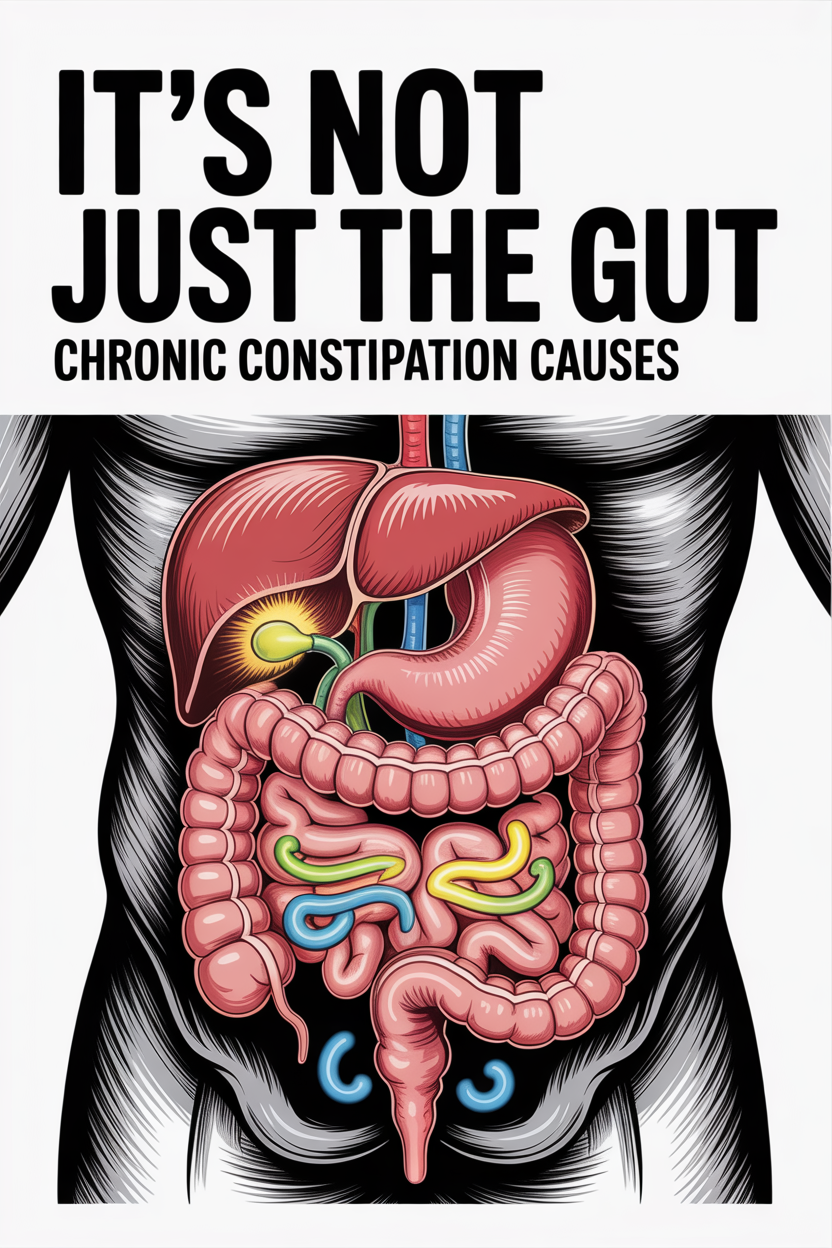
Constipation is rarely a plumbing issue.
When it becomes chronic, it is usually a regulatory issue.
Most lists of chronic constipation causes will tell you to eat more fiber, drink more water, or take a supplement. But persistent constipation is often the body signaling that coordination has slowed across multiple systems.
If elimination is delayed long enough, the problem is rarely confined to the colon.
It reflects whole-body flow.
Frequently Asked Questions
What are the most common chronic constipation causes?
Slow motility, hormonal shifts, bile flow issues, nervous system imbalance, low thyroid signaling, and chronic stress are among the most common contributors.
Can hormone imbalance cause constipation?
Yes. Progesterone, estrogen, cortisol, and thyroid hormones all influence motility and bile flow.
What does chronic constipation do to your body?
It can increase bloating, hormone recycling, fluid retention, and metabolic strain when elimination is delayed consistently.
Why am I constipated all the time even when I eat healthy?
Because elimination depends on coordination between the gut, liver, lymphatic system, and nervous system - not just food quality.
Table of Contents
- The Real Chronic Constipation Causes
- Hormones and Constipation
- What Chronic Constipation Does to the Body
- Why You’re Constipated All the Time
The Real Chronic Constipation Causes
Chronic constipation causes are rarely isolated.
Motility depends on:
- Coordinated muscular contraction
- Adequate bile flow
- Liver processing of metabolic waste
- Nervous system regulation
- Hormonal signaling
If one slows, symptoms appear.
If several slow together, constipation becomes persistent.
The colon is the exit route - not the origin.
When bile is sluggish, stool becomes dry or difficult to pass. If you have not yet explored this, read Bitters and Bile Flow: Why Fat Digestion Matters More Than You Think
When tissue congestion increases, clearance slows upstream. This is explained in The Gut–Liver–Lymph Axis Explained
Constipation is often the downstream symptom of upstream delay.
Hormones and Constipation
Hormonal shifts are frequently overlooked in discussions about chronic constipation causes.
Progesterone can slow intestinal movement.
Low estrogen can alter bile dynamics.
Elevated cortisol disrupts digestive rhythm.
Low thyroid signaling slows metabolic pace - including bowel transit.
This is why many women notice constipation during perimenopause, high-stress seasons, or thyroid fluctuations.
It is not random.
It is regulatory.
What Chronic Constipation Does to the Body
Constipation does not stay local.
Delayed elimination increases:
- Abdominal pressure
- Bloating
- Hormone recirculation
- Fluid retention
- Metabolic strain
When clearance slows, storage increases.
This is one reason weight resistance often appears alongside constipation. The deeper metabolic connection is explored in Why You Can’t Lose Weight: The Truth About Toxins, Drainage, and Stubborn Fat
Constipation is not just discomfort.
It is inefficient clearance.
Why You’re Constipated All the Time
If you find yourself asking, “Why am I constipated all the time?” the answer is rarely a single food.
Common patterns include:
- Chronic stress dominance
- Irregular meal timing
- Sedentary rhythm
- Slowed bile release
- Tissue congestion
- Under-recovery
Supportive tools like Castor Oil Packs and Abdominal Massage: Old-School Tools That Still Work can gently encourage circulation, but tools work best when the system is understood.
Chronic constipation causes are rarely about force.
They are about coordination.
Continue Reading
If you want to understand how hormonal signaling, bile flow, nervous system tone, and tissue clearance interact - and how to think through next steps responsibly - the deeper physiological breakdown continues inside Health Foundations.