Brain & Nervous System Bioregulators: How Regulatory Signaling Supports Brain Health
Brain and nervous system bioregulators are studied for how they support regulatory signaling rather than forcing stimulation. This article explores how compounds like Pinealon, Cerebrolysin peptides, and Cortexin peptides are researched for nervous system resilience, timing, and adaptation.
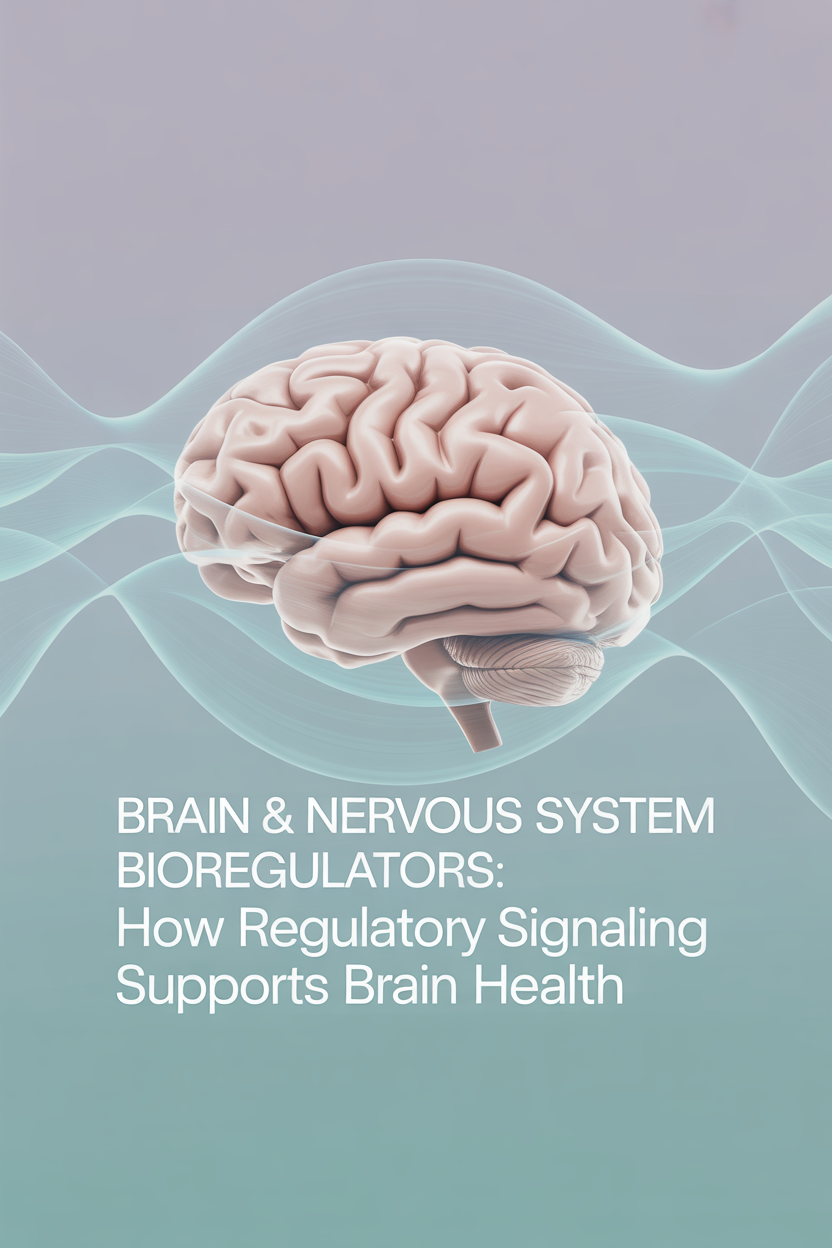
Supporting Nervous System Signaling, Not Stimulation
When people talk about “brain support,” the conversation usually jumps straight to stimulation or suppression.
More focus.
Less anxiety.
Better sleep.
Faster thinking.
But the brain is not a machine that responds well to being pushed.
It is a signaling network. And when that signaling becomes disrupted by chronic stress, inflammation, aging, or circadian mismatch, the problem is often not a shortage of chemical messengers. It is a breakdown in communication and timing.
This is where brain bioregulators enter the conversation.
They’re not drugs.
They’re not stimulants.
They’re not quick fixes.
They are compounds studied for how they support regulatory signaling within the nervous system.
What Are Brain Bioregulators?
Bioregulators are short peptide sequences studied for their role in cellular communication and regulation.
Unlike pharmaceutical drugs, bioregulators are not designed to override the body’s chemistry or force a specific outcome. They are studied for how they interact with existing regulatory systems, helping cells communicate more effectively within their intended biological roles.
When we talk about brain bioregulators, we are referring to bioregulators studied specifically for their interaction with neuronal signaling, neuroendocrine timing, and nervous system resilience.
They are not stimulants.
They are not sedatives.
They are not neurotransmitters.
They are studied for how they support the environment in which signaling occurs.
Regulation vs Stimulation in the Nervous System
Most modern approaches to brain health rely on stimulation or suppression.
Stimulants increase activity.
Sedatives reduce activity.
Both can be useful in certain situations. But neither addresses the underlying issue of signal quality.
The nervous system depends on:
- timing
- coordination
- appropriate responses to stress
- recovery after activation
When signaling becomes distorted, the result may look like:
- mental fatigue
- poor sleep regulation
- cognitive fog
- heightened stress responses
Bioregulators are studied for their role in supporting regulation, not forcing performance. The goal is not to make the brain do more, but to help it communicate more accurately.
Bioregulators vs Peptides: What’s the Difference?
All bioregulators are peptides, but not all peptides are bioregulators.
The term “peptide” simply refers to a short chain of amino acids. Many peptides are used in research, medicine, and cosmetics for very different purposes.
Bioregulators are a specific subset of peptides studied for:
- tissue-specific signaling
- regulatory effects rather than stimulation
- interaction with existing biological rhythms
This distinction matters, especially when discussing the brain, where forced signaling often creates downstream imbalance.
Brain & Nervous System Bioregulators
Brain and nervous system bioregulators are studied for how they support:
- neuronal communication
- repair-related signaling
- stress adaptation
- age-related changes in signaling quality
Rather than targeting symptoms directly, these compounds are researched for how they influence the regulatory environment of the nervous system.
Below are three commonly discussed examples.
Pinealon
Pinealon is studied for its relationship to pineal gland function and circadian rhythm regulation.
The pineal gland plays a central role in neuroendocrine timing, helping coordinate sleep–wake cycles and broader biological rhythms. Pinealon is associated with melatonin signaling and circadian coordination, not sedation.
In research contexts, it is discussed as a compound that supports timing and synchronization rather than stimulating or suppressing brain activity.
This distinction is important. Circadian regulation is foundational to nervous system resilience, cognitive clarity, and stress recovery.
Cerebrolysin Peptides
Cerebrolysin peptides are studied for their role in neuronal metabolism, neuroplasticity, and repair-related signaling, all processes that influence how well the brain functions and adapts over time.
Rather than acting as cognitive stimulants, these peptides are researched for how they support the brain’s adaptive and recovery processes. This matters because many brain-related struggles are not caused by a lack of stimulation, but by an overwhelmed or poorly regulated signaling environment, especially during periods of chronic stress, injury, or aging.
They are often discussed in relation to:
- neuronal resilience, the brain’s ability to tolerate stress without becoming dysregulated
- neuroplasticity, the brain’s capacity to adapt and reorganize in response to change
- metabolic support within brain tissue, which influences energy availability and cellular function
The emphasis in research is on support and adaptation, not forced enhancement. In other words, the focus is on helping the brain regain balance and flexibility, rather than pushing it to perform beyond its current capacity.
Cortexin Peptides
Cortexin peptides are studied for their interaction with cortical regulation and adaptive stress responses.
The cortex plays a major role in cognition, emotional processing, and decision-making. Cortexin peptides are associated with supporting clarity and nervous system balance through regulatory pathways rather than direct neurotransmitter manipulation.
In research literature, they are often discussed in the context of:
- stress adaptation
- cognitive signaling
- nervous system resilience
Again, the focus is regulation, not stimulation.
Why These Compounds Are Studied, Not Supplemented
In the United States, many peptide-based compounds exist in a regulatory gray area.
Some brain bioregulators and research peptides are discussed extensively in scientific and international medical literature, but they are not approved by the FDA as dietary supplements or medications. Because of this, they cannot legally be marketed with health claims, dosing instructions, or consumer use guidance.
Although some of these compounds are available for purchase online, they are often sold under research-only or laboratory-use designations, which reflects regulatory classification rather than intended consumer use. Availability does not equal approval.
Understanding how the nervous system regulates itself is different from attempting to intervene directly, and this distinction matters.
Supporting the Brain’s Built-In Intelligence
The nervous system is not broken. It is adapting to the environment it has been exposed to.
Chronic stress, inflammation, and circadian disruption can distort signaling over time, but the body retains an inherent capacity for regulation when the right conditions are present.
Brain bioregulators are studied because they align with this principle: support communication, timing, and regulation rather than force outcomes.
Understanding this shift changes how we think about brain health entirely.
Want to go deeper?
If you’re interested in nervous system regulation, signaling, and long-term resilience, I share deeper education and future posts like this with email subscribers.
Get future posts like this
Jamie Shahan, MSN, CRNA, RN
Empowering Holistic Health
Curator of forgotten wisdom with a modern understanding of why it works.
🌐 Connect with me on Social Media:
Disclaimer
The information provided on this website, in associated blogs, courses, and materials, is for general educational and informational purposes only. It is not medical advice and should not be interpreted as such.
I am not a medical doctor. The content I share reflects my personal opinions, experiences, and research. It is not intended to diagnose, treat, cure, or prevent any disease, condition, or illness.
You should not rely on the information here as a substitute for professional medical care, advice, or treatment. Always consult with a licensed healthcare provider before making any decisions regarding your health, especially if you are pregnant, nursing, taking prescription medications, or managing a medical condition.
By reading this website or using any related materials, you acknowledge and agree that:
- You are fully responsible for your own health decisions.
- The author and publisher of this content assume no liability for any harm, loss, or adverse effects arising directly or indirectly from the use, misuse, or interpretation of the information provided.
- No guarantees are made regarding the outcomes of applying any ideas, suggestions, or protocols discussed. Results will vary for each individual.
Affiliate Disclosure
Some products or tools mentioned may include affiliate links. This means that if you choose to purchase through those links, I may earn a small commission at no extra cost to you. I only recommend products I have personally used, researched, or would recommend to someone I love.
Use at Your Own Risk
By accessing this website and its materials, you agree that you are doing so voluntarily and that you assume full responsibility for any decisions you make regarding your health, lifestyle, or purchases.