Boost Energy and Longevity with Tiny Doses of Stress That Strengthen Mitochondria
Discover how small, intentional stressors like heat, cold, exercise bursts, breathwork, and plant hormetins can build a stronger mitochondrial network. Learn the science behind hormesis, how to start safely, and why these challenges activate the renewal systems God designed within you.
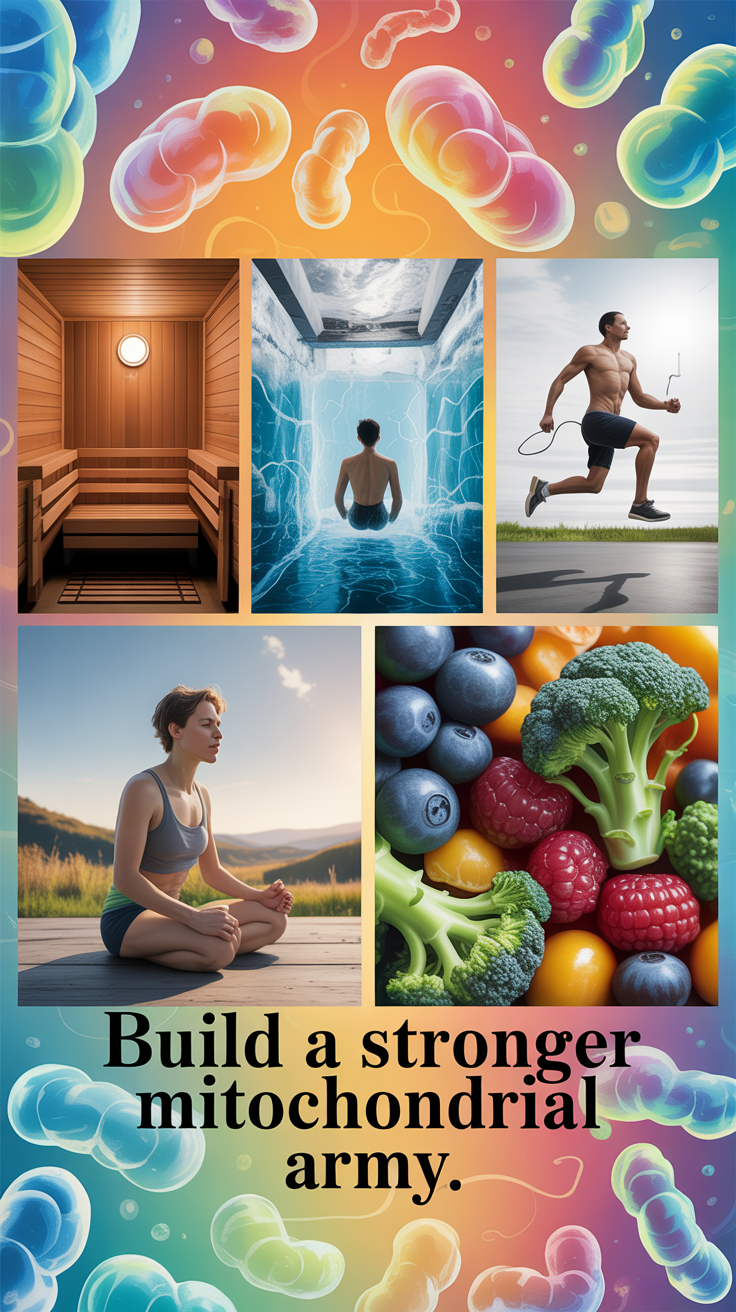
Tiny Doses of Stress That Build a Bigger, Stronger Mitochondrial Army
Our bodies were never meant to live in constant comfort. They were designed to rise to challenges, to adapt, to get stronger when tested, just like the rest of creation. You see it in the way a tree deepens its roots in the wind, or the way your heart races in joyful exertion. This same principle lives deep inside your cells.
When we give our body brief, controlled challenges, the kind it was divinely equipped to handle, we activate powerful repair systems. Your mitochondria respond by multiplying, fortifying, and becoming more efficient. Over time, these tiny energy producers become an army, ready to fuel every thought, movement, and heartbeat with the strength you were made to have.
What “Tiny Stress” Really Means
Science calls it hormesis. This is small, intentional doses of stress that push your cells to adapt and grow stronger. It is not the kind of stress that wears you down day after day, but the kind that wakes your body up to its full God-given potential.
The key is dosage. Too much strain can break you down. Just enough, repeated over time, builds resilience and longevity into your very cells.
The Cellular Switches You Are Flipping
When you apply these gentle challenges, you activate systems the Creator wove into your biology from the beginning.
- AMPK senses energy use and shifts the body into repair mode
- SIRT1 and FOXO protect your cells from damage and extend their functional lifespan
- PGC-1α signals your body to create brand-new mitochondria
These are not random processes. They are coordinated, precise, and beautifully designed to keep you alive and thriving.
Five Practical Ways to Challenge Your Mitochondria
1. Heat Exposure
- Try a sauna, steam room, or even a hot bath to raise your core temperature and stimulate your body’s heat-shock proteins. These specialized proteins protect and rebuild cells, enhancing mitochondrial resilience.
- A traditional sauna uses heated air to warm your body from the outside in, which raises heart rate and circulation similar to moderate exercise.
- An infrared sauna penetrates more deeply using wavelengths of light, gently heating your body from the inside out. For full-body benefits, look for a sauna that emits far infrared wavelengths in the 8–12 micron range, which are especially effective at deep tissue heating and supporting detox pathways.
- Start with 10–15 minutes and gradually work up as your body adapts.
- Hydrate with mineral-rich water before and after, and give thanks for the way your body can adjust, heal, and grow stronger through these short bursts of heat.
2. Cold Exposure
- A cool shower, a walk in crisp air, or splashing your face with cold water can activate brown fat, a mitochondria-rich tissue that burns energy for heat.
- For a more intense challenge, try an ice bath. Start with just 30–60 seconds in water between 50–59°F (10–15°C) and gradually increase your time as your body adapts.
- Always enter and exit calmly, focusing on steady breathing, and allow your body to rewarm naturally afterward.
- Begin gently and listen to your body. The goal is to build resilience, not shock your system.
3. Exercise Bursts
- Short intervals of effort, such as 20 seconds of brisk movement followed by rest, spark mitochondrial growth in muscles and brain
- Movement is not just for calorie burn. It is a celebration of the strength you have been given
4. Breath-Based Hypoxia
- Controlled breath holds or gentle breath-restriction exercises encourage the body to adapt to lower oxygen levels for short periods
- This stimulates mitochondrial efficiency and should be approached gradually and safely
5. Plant Hormetins on Your Plate
- Foods like broccoli sprouts, olives, and deeply colored vegetables contain natural compounds that mildly stress cells and trigger protective responses
- Eat them regularly as part of a whole-food diet
How to Stack These Without Overdoing It
Introduce one or two of these stressors at a time. Keep sessions short. Allow your body to recover with quality sleep, nutrient-rich food, and periods of rest. Just like in all of God’s creation, there is a rhythm to stress and recovery.
Who Should Modify or Skip These Practices
Avoid or adjust if you have any of the following:
- Pregnancy or breastfeeding
- Recovering from an eating disorder
- Uncontrolled medical conditions
- Heart or blood pressure instability
- Cold urticaria (allergic reaction to cold)
- Neuropathy
- Dysautonomia
Always listen to your body, start gently, and proceed with wisdom.
Final Takeaway
Your body was created with extraordinary capacity to grow stronger when challenged. Tiny, intentional doses of stress activate the systems God placed in you to repair, renew, and multiply energy-producing mitochondria. These challenges, paired with rest and nourishment, can transform not just your cells but your whole life.
You don’t need more opinions. You need results.
And you won’t find them in a broken system built on prescription pads and profit.
But you’re here. You’re asking questions. You’re waking up.
You’re just living in a world that profits off you.
But once you realize the power was in your hands all along,
you stop playing small and start healing for real.
Jamie Shahan, MSN, CRNA, RN
Empowering Holistic Health
🌐 Connect with me on Social Media:
⚠️ Disclaimer
The information on this website is for educational purposes only and is not intended to diagnose, treat, cure, or prevent any disease. The content reflects the personal research, experiences, and opinions of Jamie Shahan and should not be considered medical advice. Always consult with your healthcare provider before making any decisions about your health, especially if you are pregnant, nursing, have a medical condition, or are taking medications.
Some links on this site may be affiliate links, which means I may earn a small commission if you choose to make a purchase at no additional cost to you. I only recommend products I use myself or would confidently recommend to someone I love