Why BPC-157 Comes Up in Gut Healing Conversations (And When It’s Premature)
BPC-157 for gut health is often discussed for gut inflammation and leaky gut, but it does not replace digestion, elimination, or hormone stability. Learn when BPC-157 is appropriate and when it is premature.
At Some Point, the Conversation Gets Advanced
If you stay in gut health long enough, you eventually hear about BPC-157.
Usually not at the beginning.
Not when someone is just cutting seed oils or removing gluten.
It comes up later. After diet changes. After probiotics. After lining support. After someone still feels fragile and wants something stronger.
It is described as regenerative. Protective. Advanced. Something that supports tissue repair at the signaling level.
And that is where discernment becomes important.
Because advanced tools do not fix foundational instability.
BPC-157 can be powerful in the right terrain.
It can also be disappointing when used too early.
This post explains why.
FAQ
What is BPC-157 peptide?
BPC-157 is a synthetic peptide derived from a protein found in gastric juice. It has been studied primarily in animal models for tissue repair, blood vessel formation, and protective signaling in the gastrointestinal tract.
Does BPC-157 heal the gut?
Research suggests it may support tissue repair and protective signaling in the gut lining. It does not replace foundational digestive function or elimination.
Is BPC-157 anti-inflammatory?
It appears to influence inflammatory signaling, but it is not simply an anti-inflammatory compound. It works at the level of cellular communication and repair pathways.
Does BPC-157 help leaky gut?
It is often discussed in conversations about barrier integrity because of its potential effects on tissue repair. It does not correct underlying digestive dysfunction on its own.
Should I take probiotics with BPC-157?
Not automatically. Microbial layering requires stable digestion and elimination first.
Is BPC-157 for IBS?
IBS is functional. BPC-157 is typically discussed more in the context of structural tissue repair rather than motility regulation.
What We’re Covering
What BPC-157 Actually Is
BPC-157 is a synthetic peptide modeled after a compound found in gastric juice. Most research has been conducted in animal models, where it has shown effects on tissue repair, angiogenesis, and cellular signaling.
It is not a hormone.
It is not a steroid.
It is not simply an anti-inflammatory agent.
It is a signaling molecule.
That distinction matters.
Why It Gets Mentioned in Gut Healing
BPC-157 often surfaces in gut conversations because of its potential influence on tissue repair and vascular signaling in the gastrointestinal tract.
When people are discussing mucosal injury or barrier compromise, it naturally enters the conversation. If you have read Healing the Mucosal Barrier: The Forgotten Layer of Gut Health, you already understand why structural repair becomes relevant in some cases.
In animal research, BPC-157 has been associated with improved healing in models of stomach ulcers and intestinal injury. That is why people searching for BPC-157 for gut inflammation or stomach ulcers often encounter it.
But repair signaling is only one layer of gut health.
What It Is Not
This is where maturity enters the conversation.
BPC-157 is not a digestion fixer.
It is not a bile enhancer.
It is not a motility regulator.
It is not a substitute for protein adequacy.
It does not override poor elimination.
If constipation is unresolved, if bile flow is sluggish, if stress derails digestion, or if blood sugar is unstable, adding a regenerative signal does not automatically create coordination.
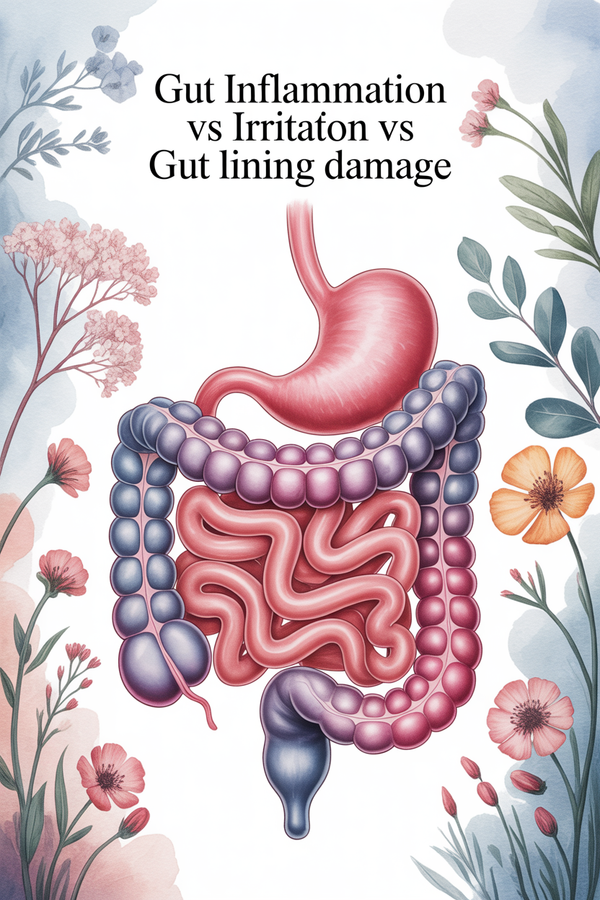
If you have not yet understood why lowering inflammation alone does not restore gut function, review Gut Inflammation vs Irritation vs Gut Lining Damage: Why the Difference Changes Everything
Repair without function leads to fragility.
When It Becomes Premature
BPC-157 becomes premature when the basics are unstable.
Constipation is still present.
Fat digestion is weak.
Sleep is fragmented.
Stress collapses digestion.
Food tolerance is narrowing.
In those states, the system lacks infrastructure.
Many people assume that because something is regenerative, it should be used early. In reality, regenerative tools amplify what already exists.
If elimination is inconsistent, repair agents can increase internal pressure.
If microbial balance is unstable, adding fuel may increase reactivity. If you are unsure whether your barrier is truly compromised, Leaky Gut 101: How to Tell If Yours Is Leaking provides context.
Premature use often leads to disappointment, not because the tool is ineffective, but because the terrain is not ready.
The Order That Actually Matters
There is a hierarchy in gut healing.
First comes regulation.
Then elimination.
Then digestion.
Then structural repair.
Then microbial diversification.
Killing pathogens is not step one. Terrain vs. Bugs: Why Killing Isn’t the First Step explains why foundational stability must precede force.
Peptides sit high in the hierarchy.
They are amplifiers, not foundations.
If You Want to Go Deeper
Understanding whether BPC-157 belongs in your personal sequence requires discernment, not hype.
Inside Health Foundations, we go deeper into:
- How to determine whether your system is stable enough for regenerative tools
- Why hormone optimization is part of the conversation but not the only prerequisite
- Why peptides amplify terrain rather than replace it
- How to think through advanced tools without wasting time or money
If you are ready to move beyond surface-level gut conversations, continue below.